Uncovered and bringing Australia’s aviation history back to light.
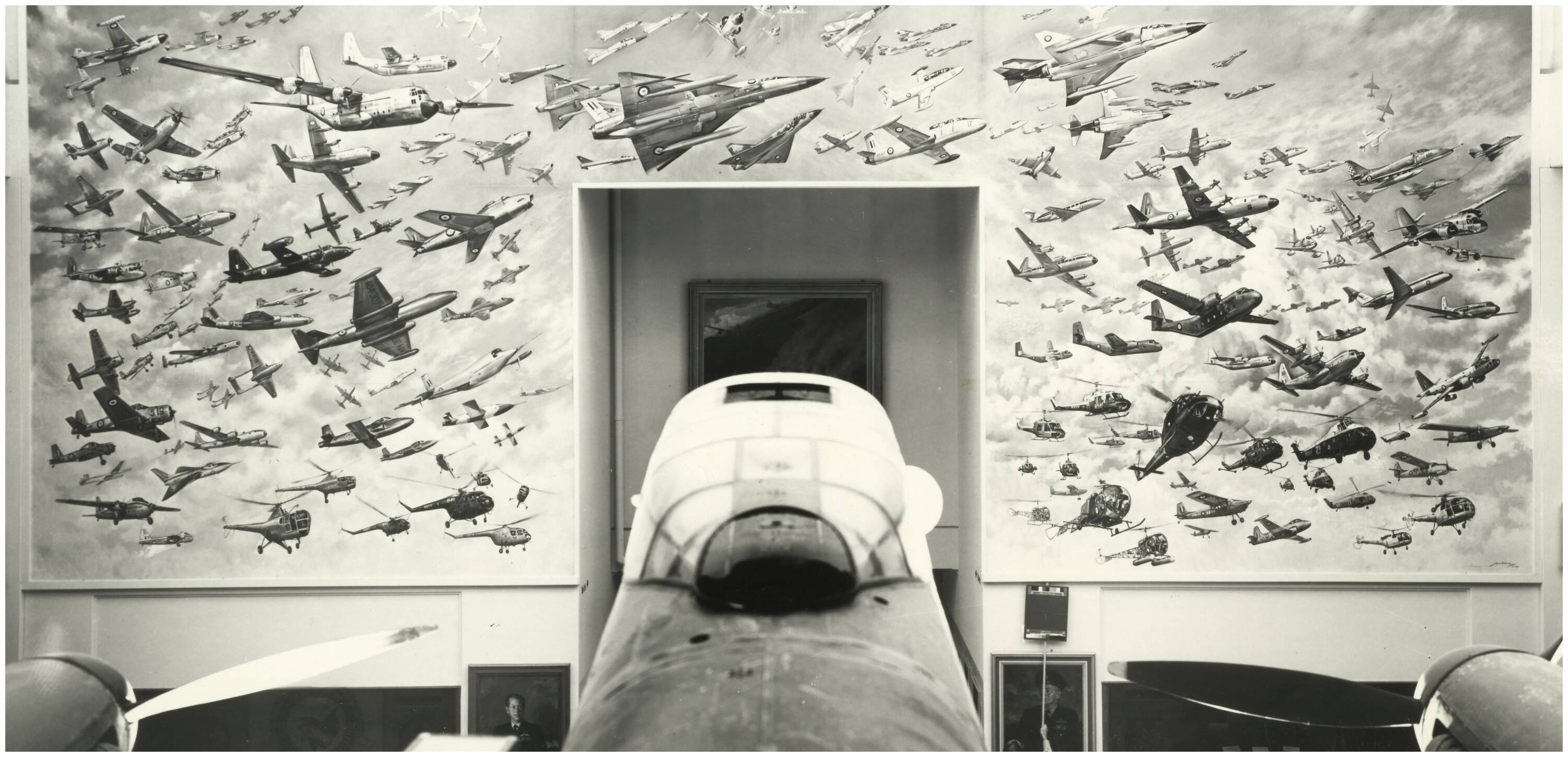
‘The biggest painting since Michelangelo did the ceiling of the Sistine Chapel was finished today,’ announced a newspaper in 1972, heralding the completion of Harold Freedman’s mural.
It was, however, not the biggest, nor complete. What was monumental and resolved, though, was Freedman’s vision for the mural. Intended to be more than decorative, it was also to be an accurate pictorial record of Australian military aviation history from 1909 to 1972.
Freedman, a former senior war artist attached to the Royal Australian Air Force War History Section, was commissioned by the Memorial to re-invigorate what the Memorial deemed to be an ‘inadequate’ RAAF display in Aircraft Hall. In 1968 Freedman wrote a letter to Director Bill Lancaster with his inspired proposal. He wanted to paint a “large mural, the subject would record every aircraft that has been used in the defence of this country.” The Memorial took this up as an exciting idea that would spruce up what Lancaster regarded as drab display spaces. Freedman estimated that it would take him about two years to accomplish; it was to be ready in time for the 50th anniversary of the establishment of the RAAF. Unfortunately, this ambition would not be achieved.
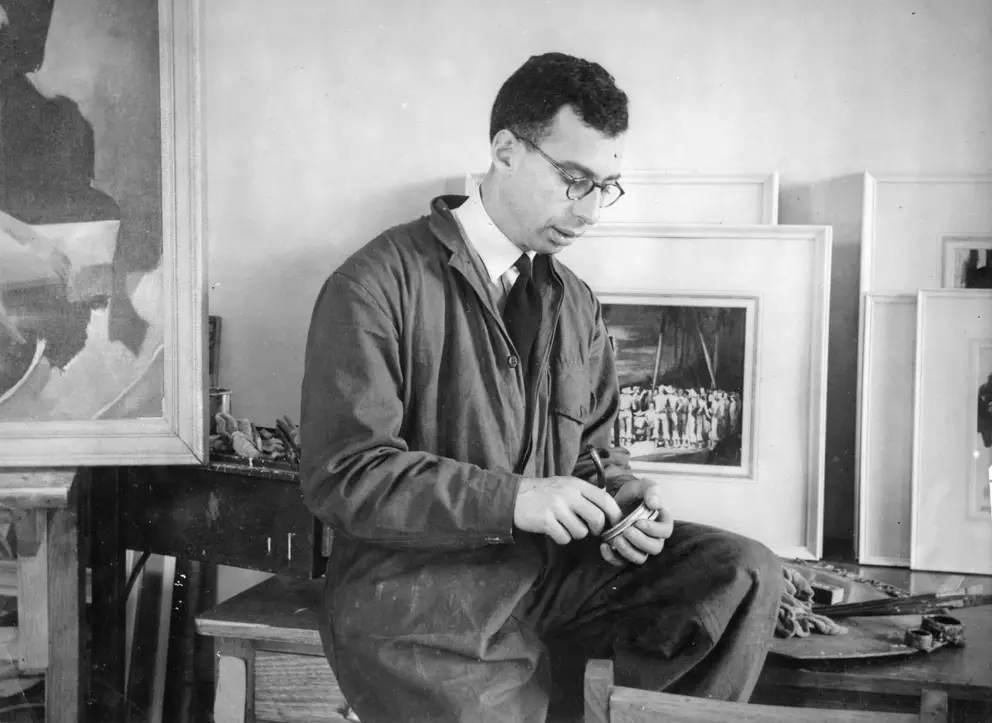
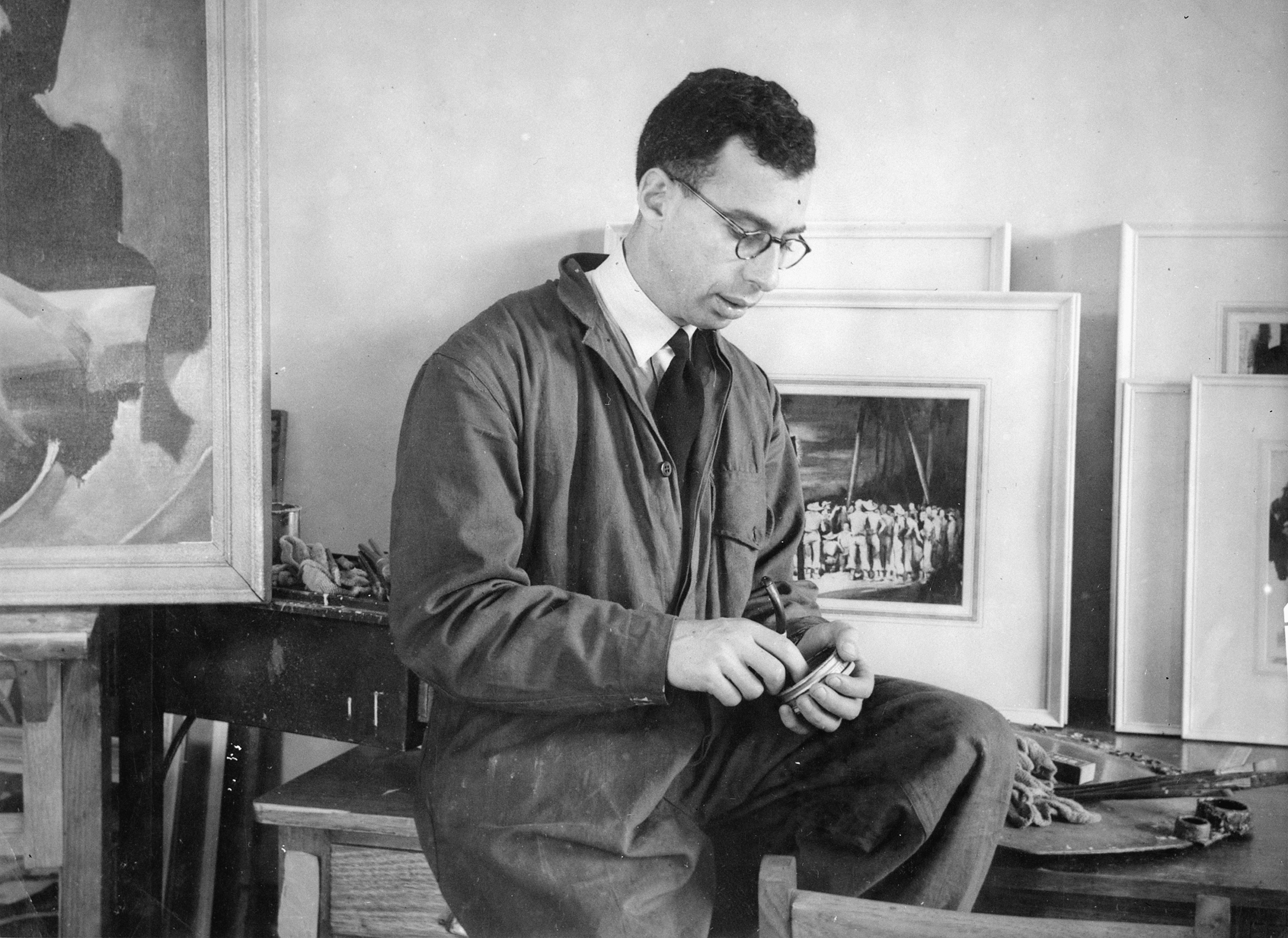
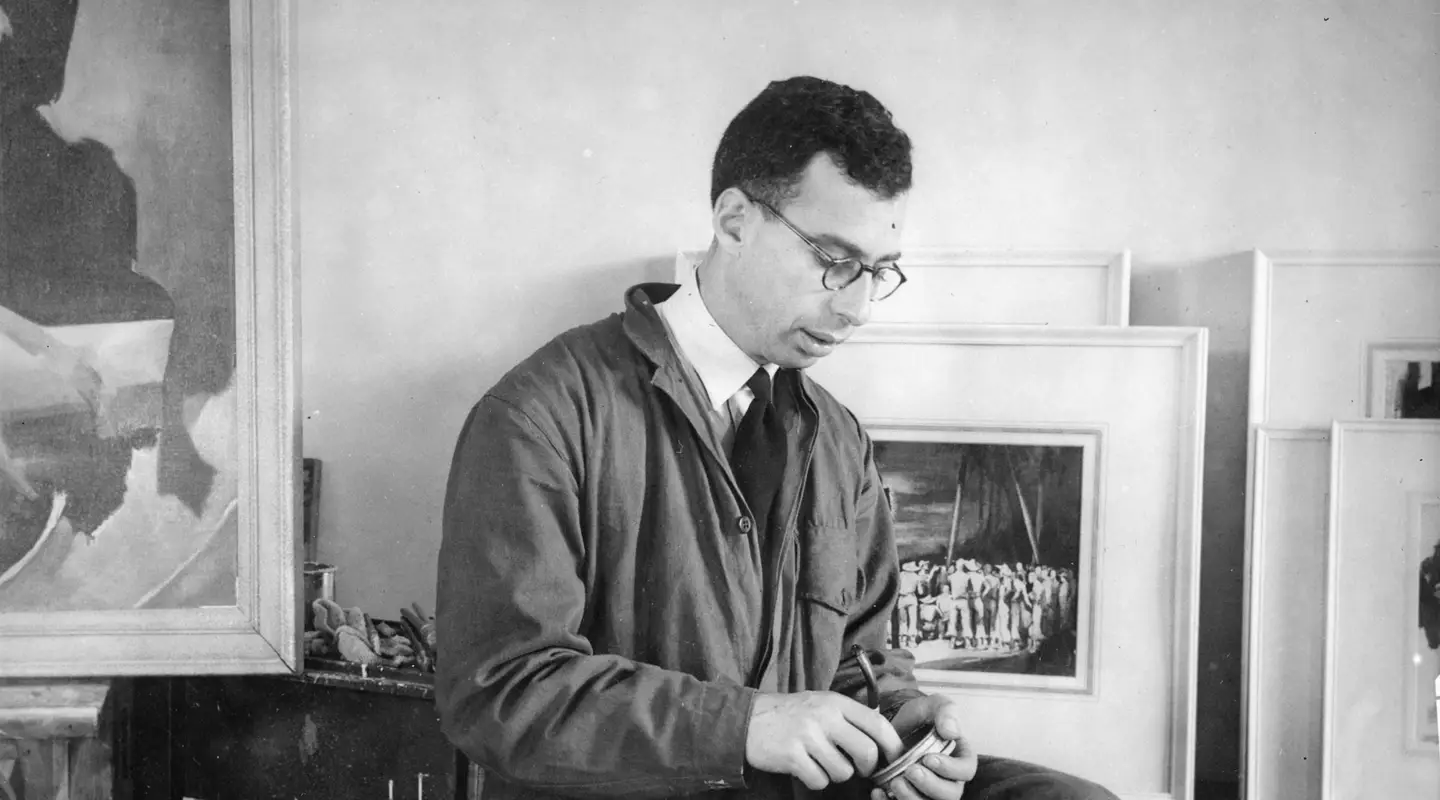
Harold Freedman in his studio, Melbourne 1946.
A solo artist's composition
To accommodate the 15-foot-tall canvas-covered panels of the mural, Freedman expanded his home studio in Melbourne to include an 18-foot [5.5 metre] ceiling. He and his wife Heather endured the typical inconveniences associated with building projects.
The large studio, once completed, was abuzz with another kind of productivity, with Freedman aloft ladders or scaffolding, painting planes in oils. Model airplanes dangling from the ceiling were useful reference tools, enabling him to sketch aircraft at various angles. Adding to the energy of the space was his enthusiasm, palpable even during the final year of painting.
Freedman worked on the mural for 10 to 14 hours a day, seven days a week. The energy he poured into the massive artwork produced a mural visually bustling with the flight patterns of 900 aircraft.
Behind the scenes – research and alterations to the mural
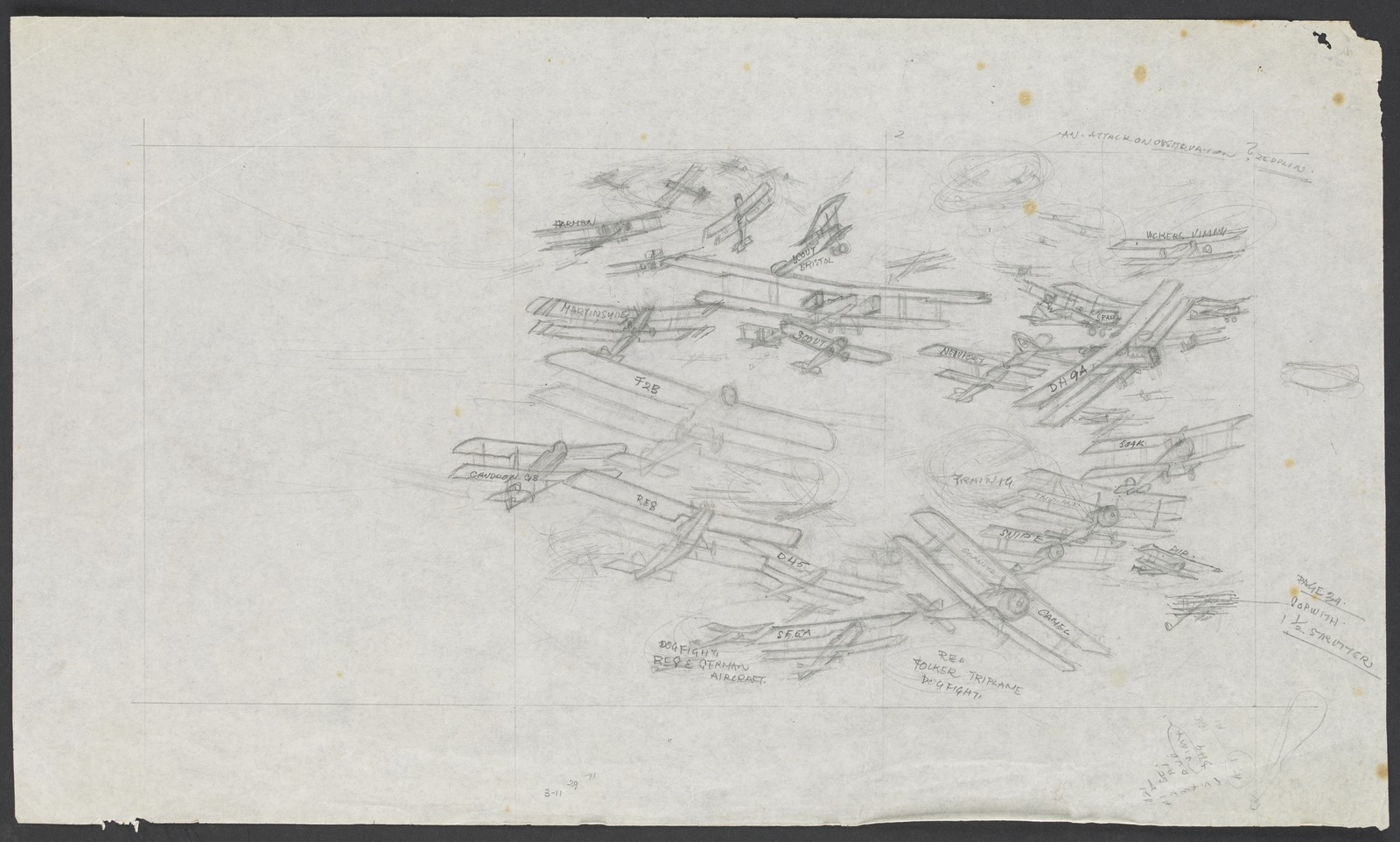
Although the mural was painted solely by Freedman, he sought the Memorial’s assistance with the research required to create it. He worked with RAAF historian Wing Commander Keith Isaacs who, as Lancaster described him, was a ‘goldmine’ of information. Isaacs provided Freedman with piles of aircraft photographs and helped him by reviewing thousands of his preparatory charcoal sketches as well as the final version of the mural.
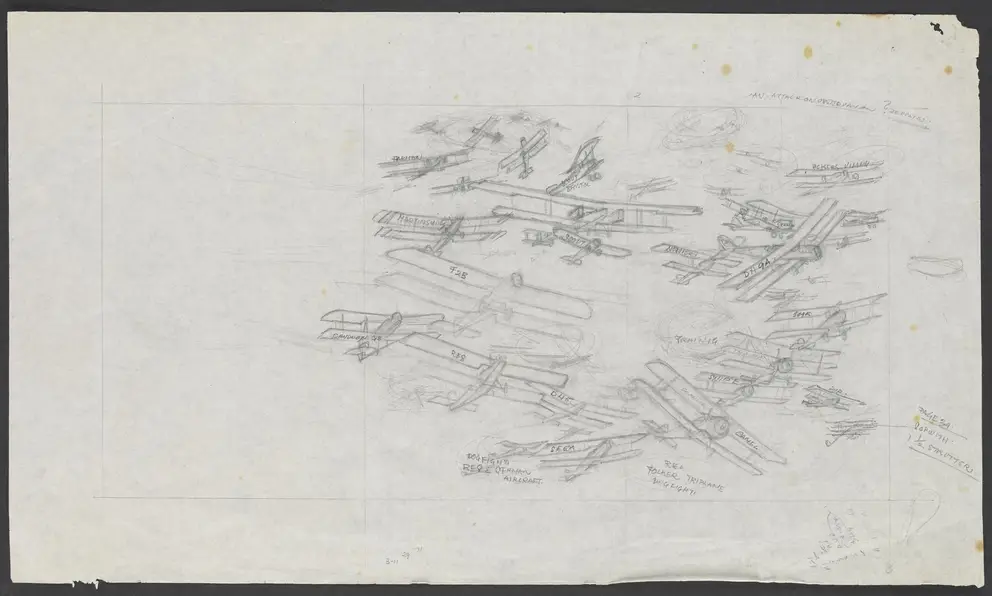
Harold Freedman, Preparatory sketch of World War I aircraft for first of History of Military Aviation murals, Australian War Memorial (c. 1968–9, pencil on paper, 27.6 x 47.0 cm) State Library of Victoria, H2011.131/132.
The mural had not long hung on the Memorial’s walls when it received some criticism for perceived inaccuracies. So Isaacs was brought in to verify or debunk those assertions. Some proved correct, obliging Freedman to return to make alterations to the mural. Other critiques, however, were just a consequence of poor eyesight or fallible memory. For example, a complaint made in 1974: “I would like to point out that it does not show every type of aircraft flown by Australians because the Martin Mariner is missing” (it wasn’t).
Apart from being concerned with accurate technical representations, Freedman’s intent was to tell the human story of the RAAF. He wanted “to find the details of a special plane of each type which is historically important because of its record or because of the pilot who flew it.”
That’s why visitors today can have an interactive learning experience, scanning the mural for aircraft bearing the markings of famous flyers. Next time you’re at the Memorial, see if you can spot the plane of Captain Robert Alexander Little, Australia’s top flying ace of the First World War.
Transport and installation
Once completed, each section of the mural was transported from Melbourne to Canberra. The first three panels of the mural, it was later learned, were at risk of falling out on the highway en route from Melbourne. Nails used to brace the panels in the truck had worked loose on the journey to Canberra.
Installation also had its challenges. Lancaster warned Freedman of the ‘dirty big ditch’ on the road that had to be crossed to move the initial panels into Aeroplane Hall; the unwieldy scale of the works also caused considerable stress. At one point two of the painted panels had to be sawn in half to allow them to be manoeuvred into position: Lancaster remarked that “this did not help the blood pressure of quite a few of us – particularly Harold Freedman.”
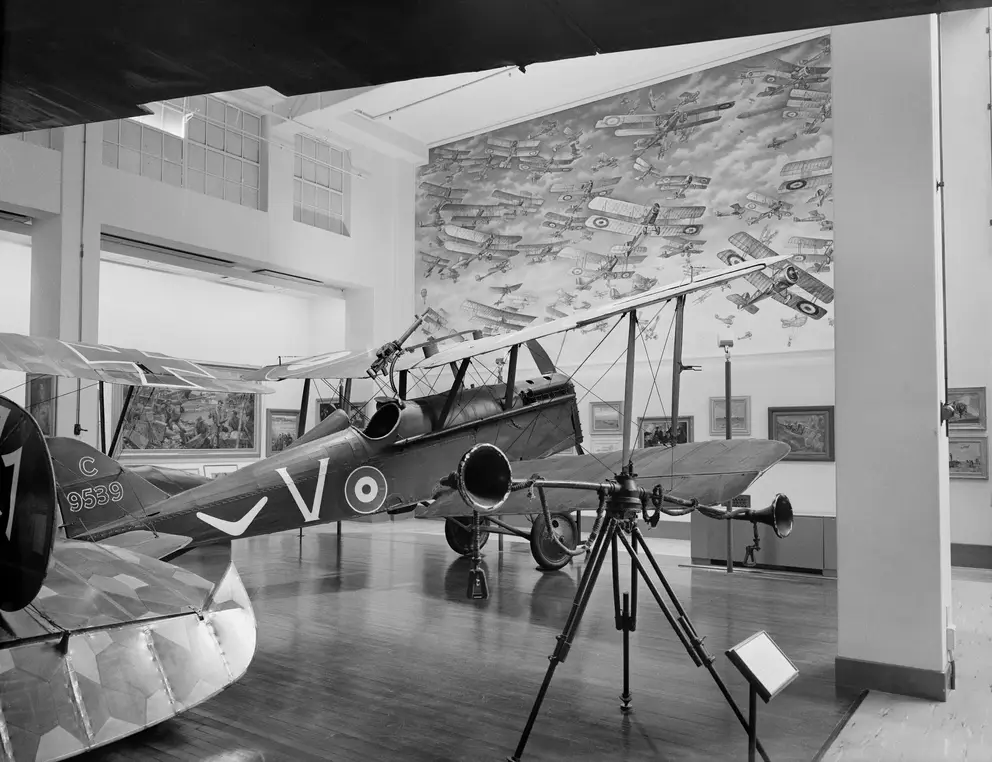
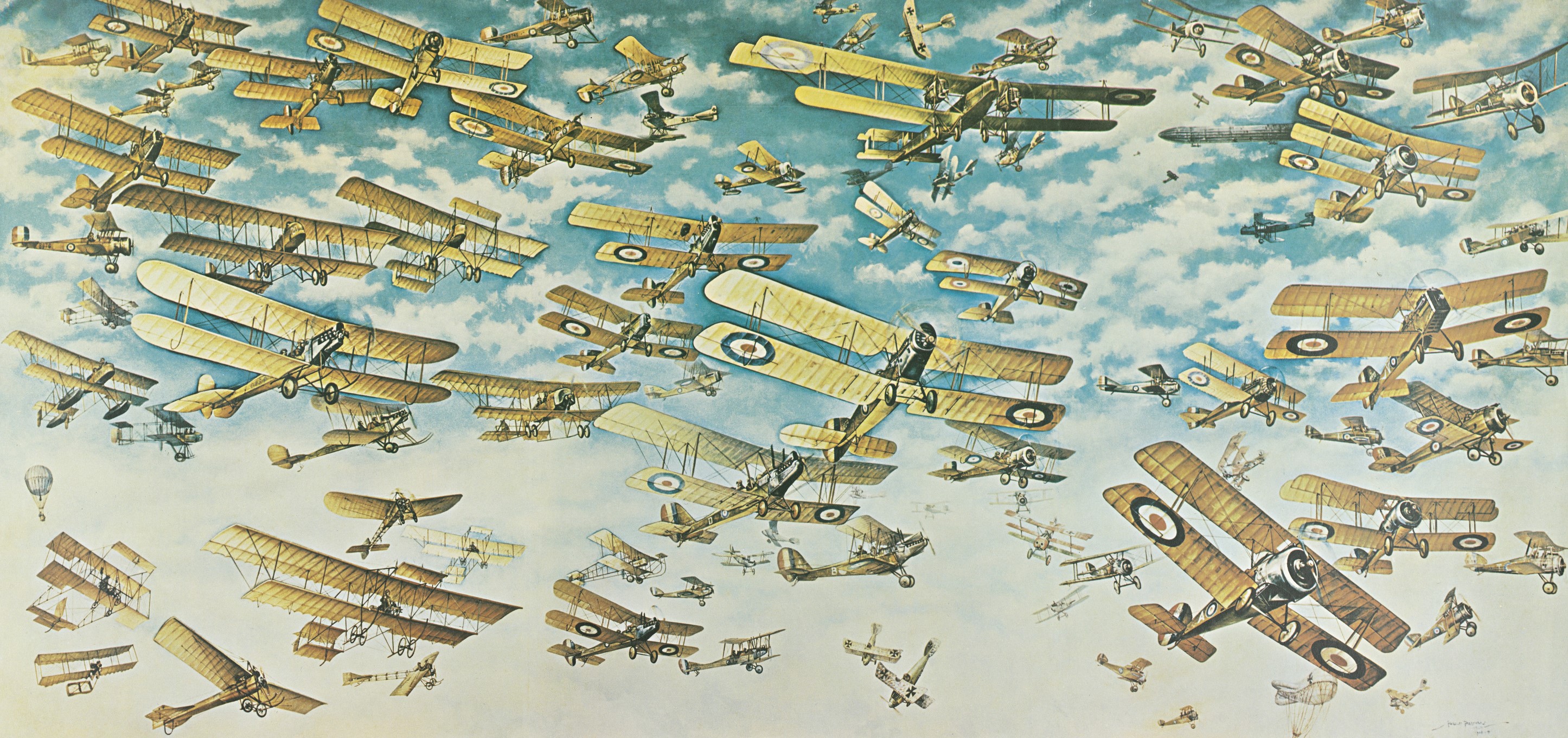
The first section of the mural depicting aircraft from 1909 to 1918.
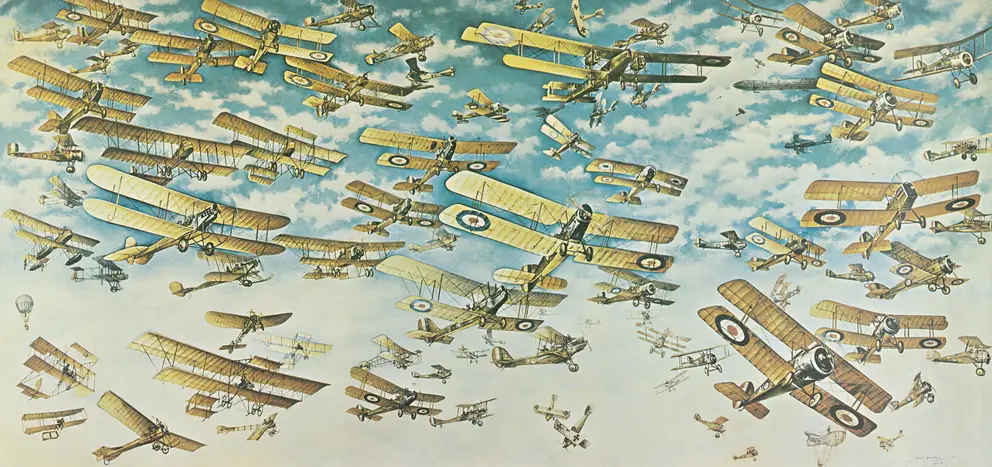
First section of mural depicting aircraft 1909–1918. Harold Freedman, untitled [Mural of Australian military aircraft] (1968–69, oil on canvas on hardboard, oil on canvas on hardboard, 460 cm x 910 cm)
From ending to beginning
Freedman continued with the gruelling physical daily regimen of painting for almost five years, with little reprieve apart from the occasional cocktail party hosted in his gigantic studio.
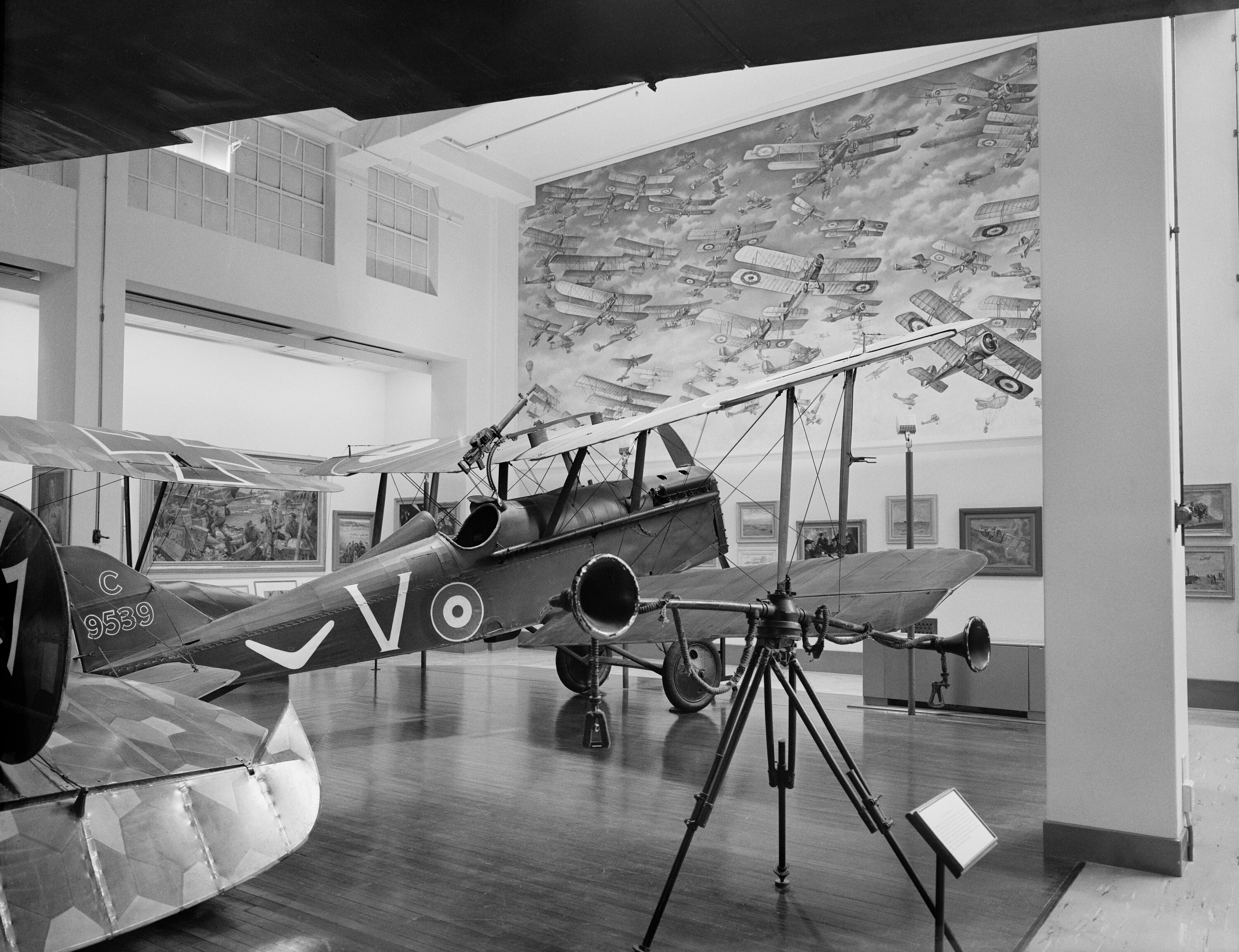
Completed in 1972, the work was made up of 26 panels covering almost 256 square metres. One newspaper described it as something a visitor to the Memorial could not fail to be impressed by. It was divided into six sections, each depicting a distinct era of Australian aviation history.
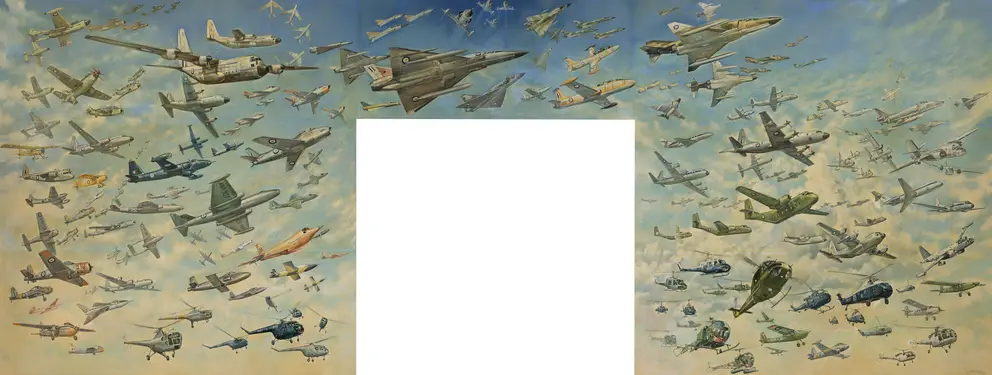
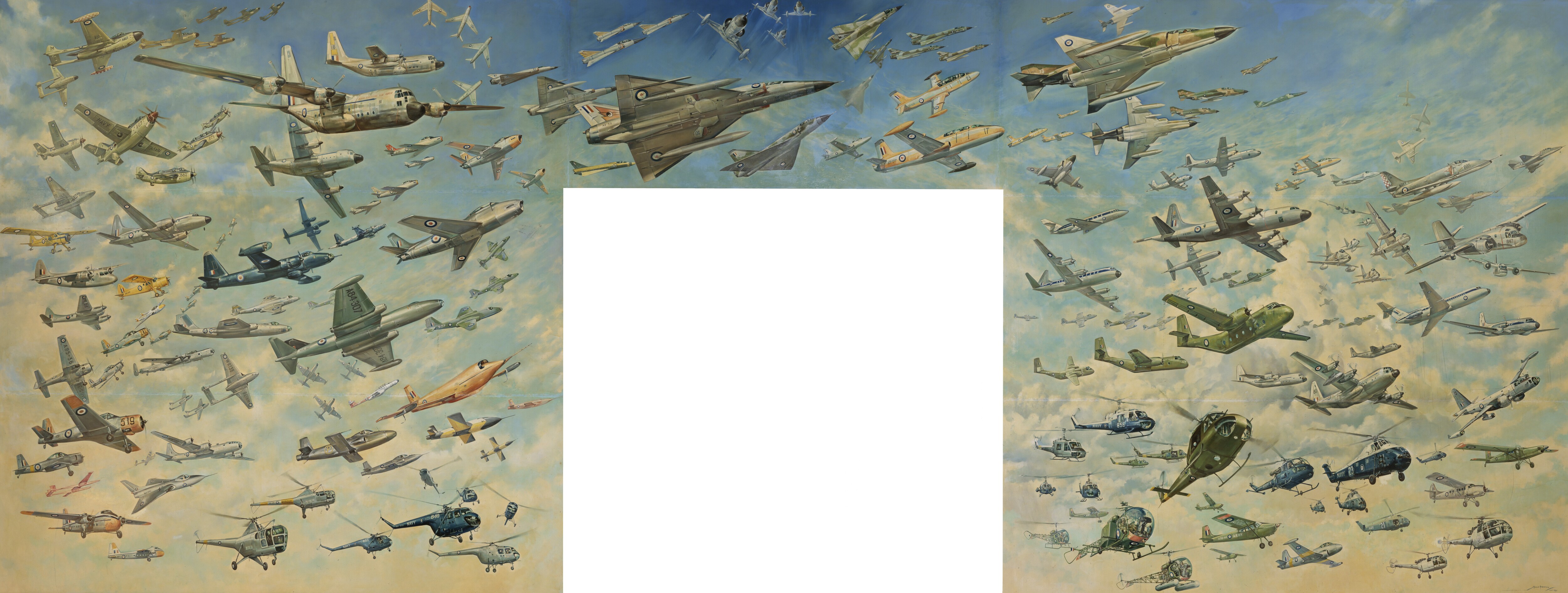
Sixth section of the mural depicting Korean and Vietnam–era aircraft. Freedman left empty sky in the top right corner in anticipation of future additions to the mural. Harold Freedman, untitled [Mural of Australian military aircraft Korea - Vietnam period] (1972, oil on canvas on hardboard, 5.4 x 14 m (inverted U shape))
The Memorial released a set of six wall charts corresponding to the sections. These posters became a feature on the bedroom walls of many aspiring young Australian aviators during the 1970s.
Once the final panel of the mural had been installed on the walls of Aircraft Hall, Freedman was physically depleted, and spent several days sleeping. He wrote to the Acting Director, Bill Sweeting, “as I never quite knew what a constant strain that I have been under for a long time, but now it is on the wall I can relax … as I mentioned to you, in a little while you will hear from me, because I really do not believe that the Air Force history is finished, but rather just beginning.”
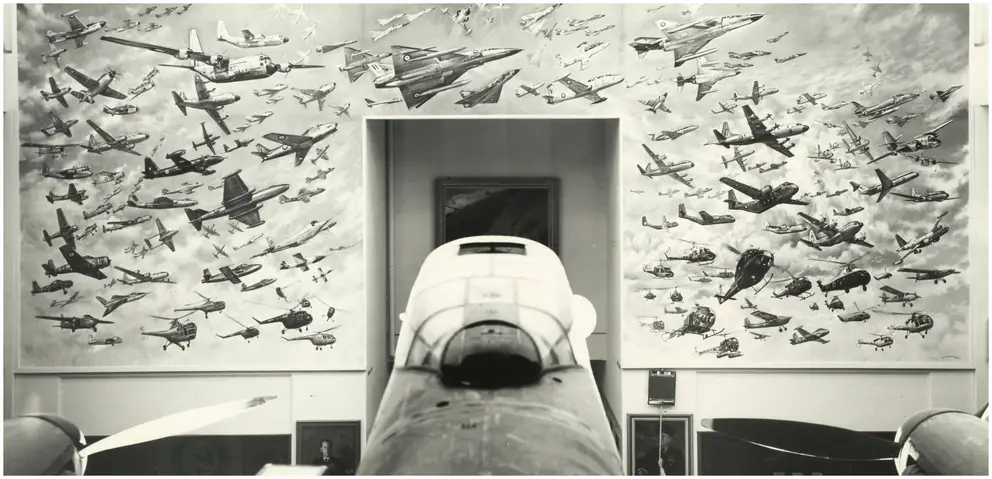
The sixth section of the mural depicting aircraft from 1954–1971. AWM2025.532.4
Freedman envisioned the mural as an accurate historical record, deliberately leaving empty painted sky on the canvas in anticipation of future additions to the mural. The Memorial agreed with Freedman that he would be the only artist to make changes to the mural while he was able. What could not be foreseen was that his mural would eventually become hidden from sight for nearly three decades.
Cover and rediscovery
In 1998, proposed extensions to Aircraft Hall required the mural to be covered with false walls. The mural was considered incompatible with future display plans. Freedman at this time was in a nursing home, having suffered a stroke in earlier years. He died one year after his work was covered, having missed the opportunity to fill in the gap as he had intended.
Today, after many years of concealment, the mural remains intact, exactly as Freedman painted it. It is currently being restored to its original state and will be ready to be rediscovered by visitors to the Memorial. As Freedman’s son David predicted, “One day this mural will be discovered and people will wonder how it ever got lost.”