

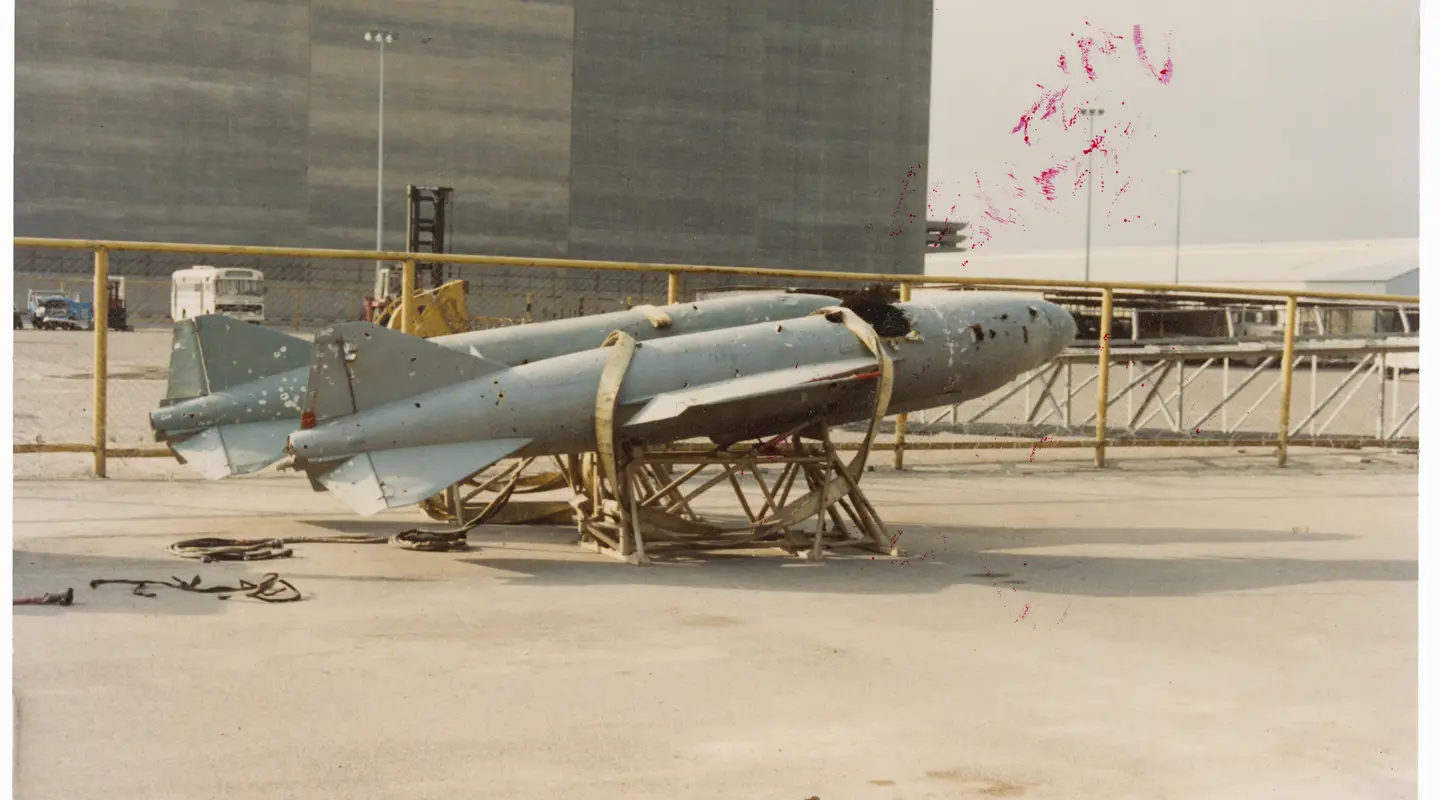
In the aftermath of the Gulf War, Australian clearance divers pulled off a daring recovery mission retrieving a Chinese-made Silkworm missile from a dangerous Kuwaiti bunker.
Ian ‘Nosey’ Parker and the Clearance Diving Team were on a mission. American forces had discovered a Chinese-made HY-2 Silkworm missile in an ammunition bunker near the Kuwait–Iraq border during the 1991 Gulf War. Little was known about the missiles, and the Australians were keen to learn more. But first, they had to get one.
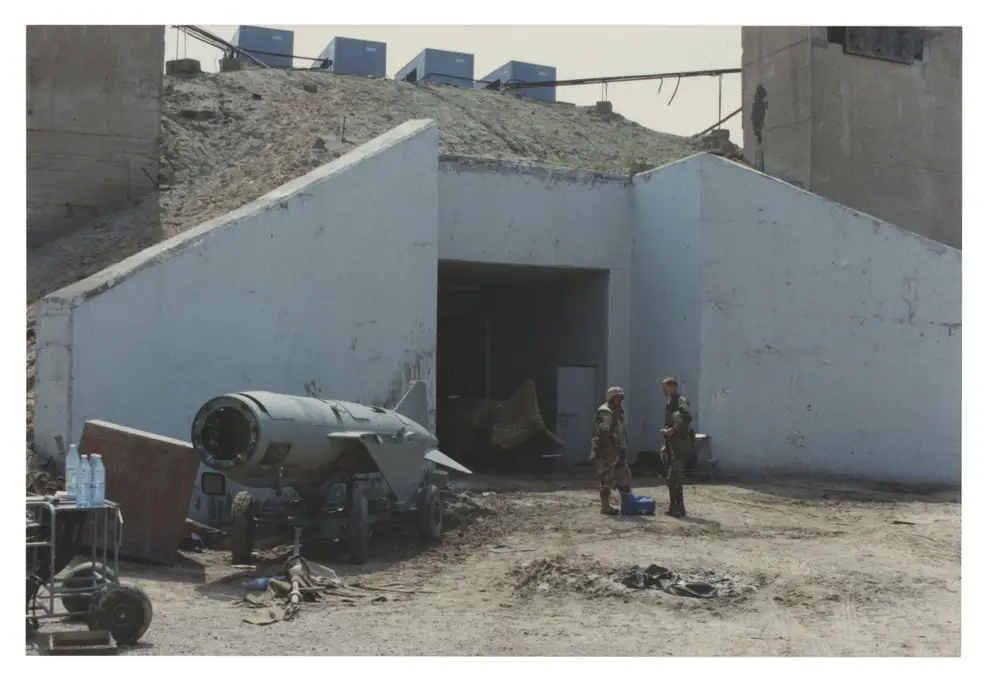
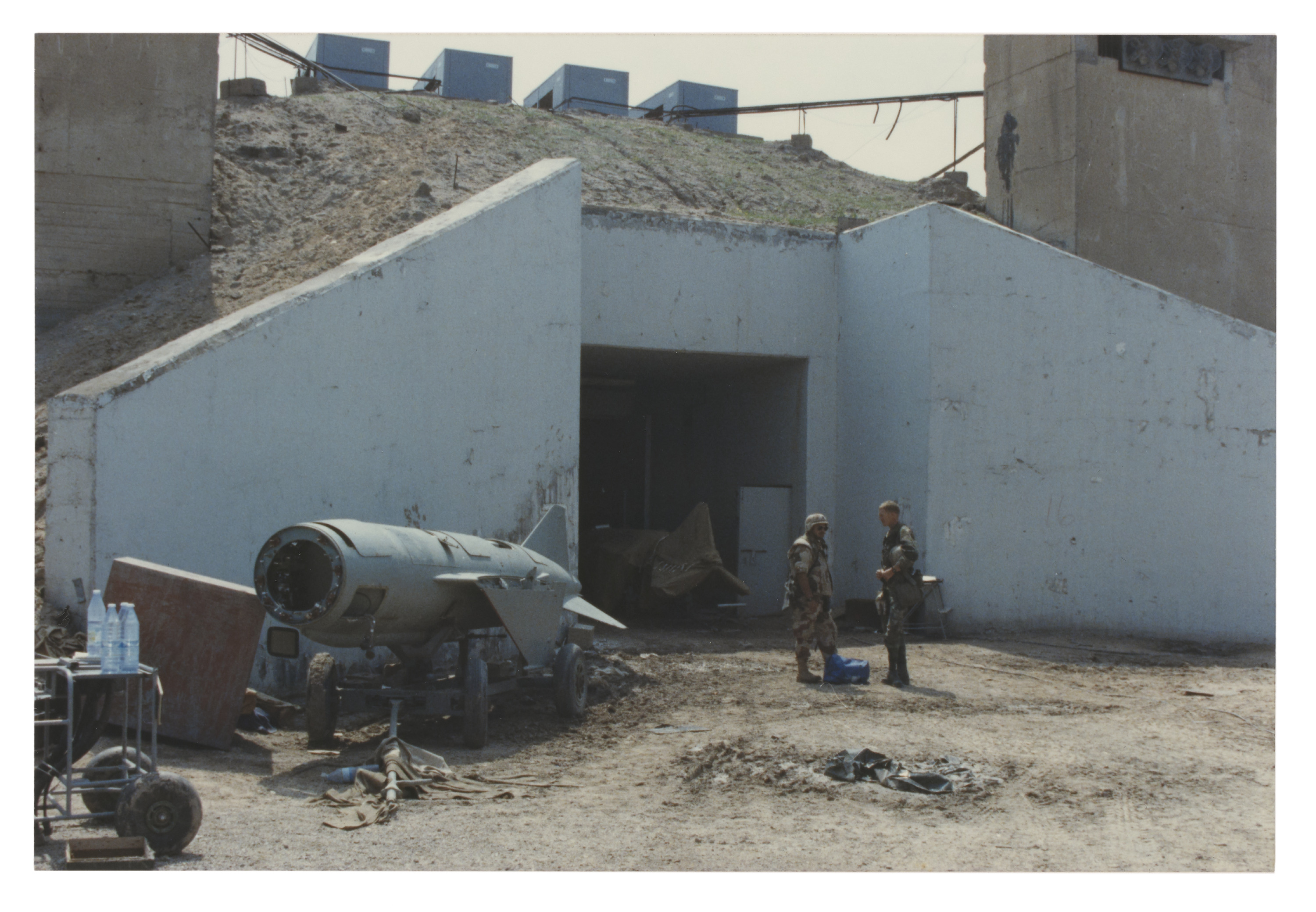
The Iraqi storage bunker inside Iraq. Courtesy of Ian Parker.
“I said, ‘There’s a truck across the road, I reckon we can get up there, recover this thing, bring it back, and make it safe to take home,’” Parker recalled.
“We only had a general idea of where the bunker was, but we managed to get there after only a few detours.
“The Yanks were getting all set to blow this thing up, but they had a crane, and so we managed to get it on to the back of the truck.
“The US forces guarding the bunker were very helpful, but they certainly didn’t think much of our idea of heading back into a partially secured area with an unstable missile strapped to the back of our truck.
“I said, ‘Mate, we’ll be right.’
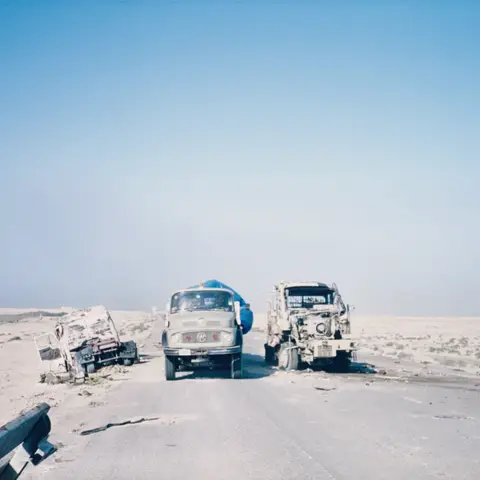
Making their way back to Kuwait City. Courtesy of Ian Parker
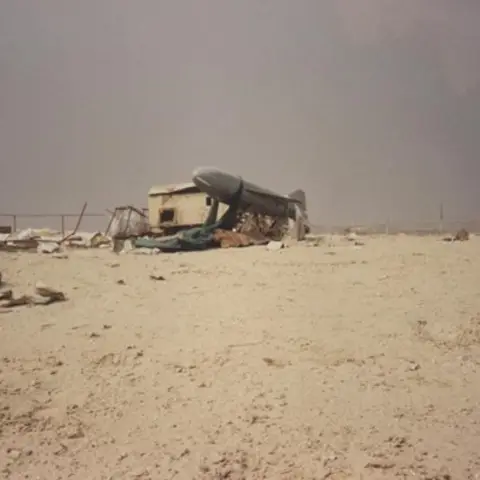
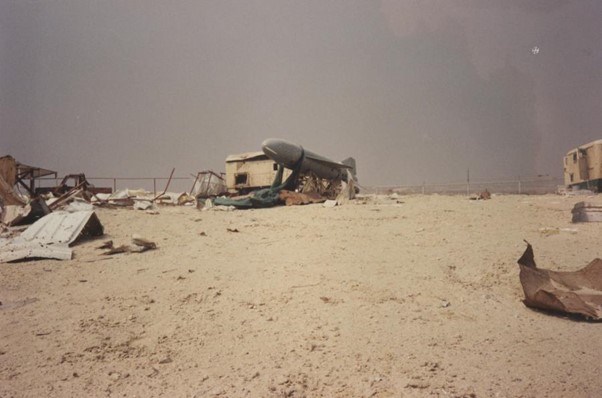
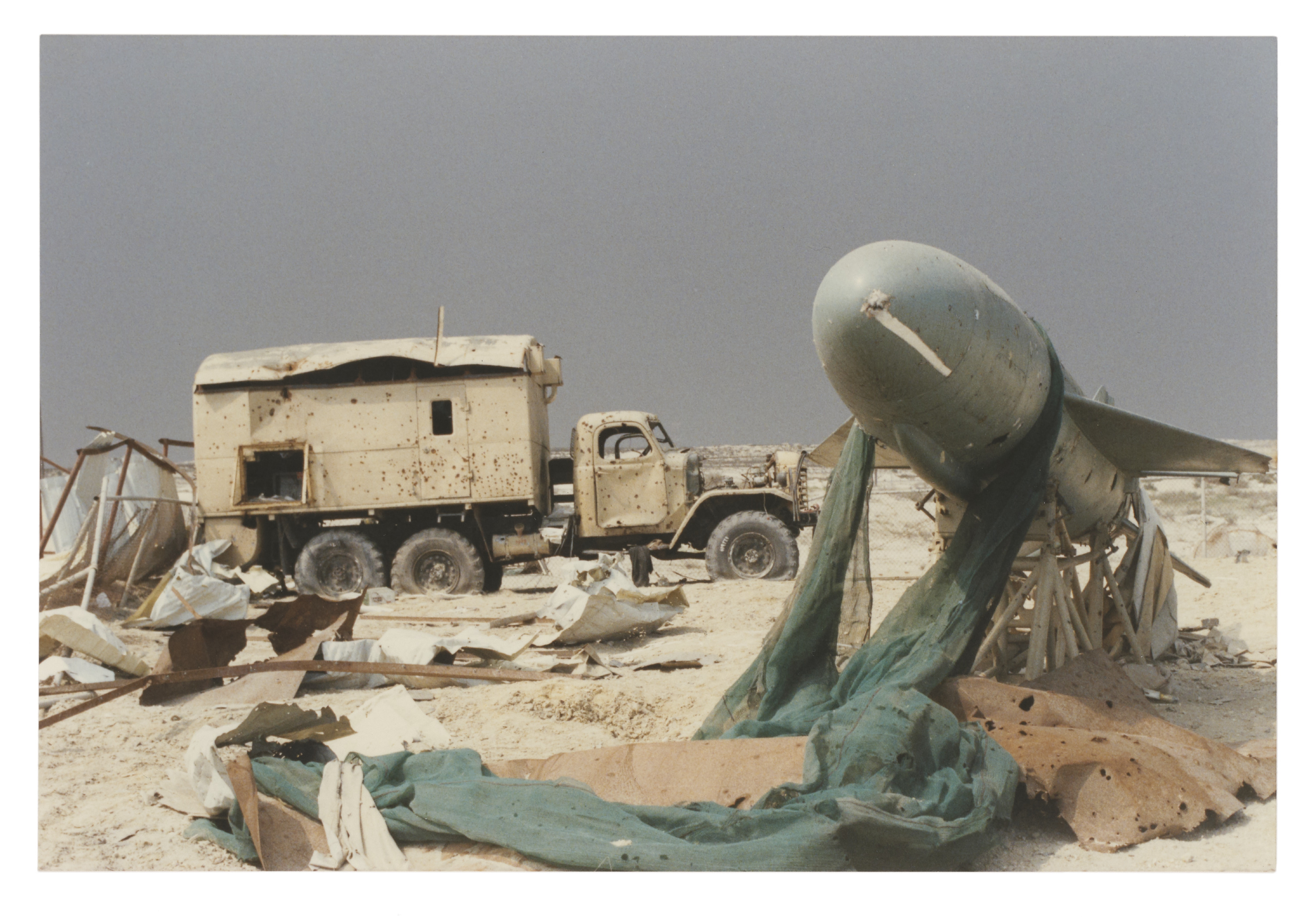
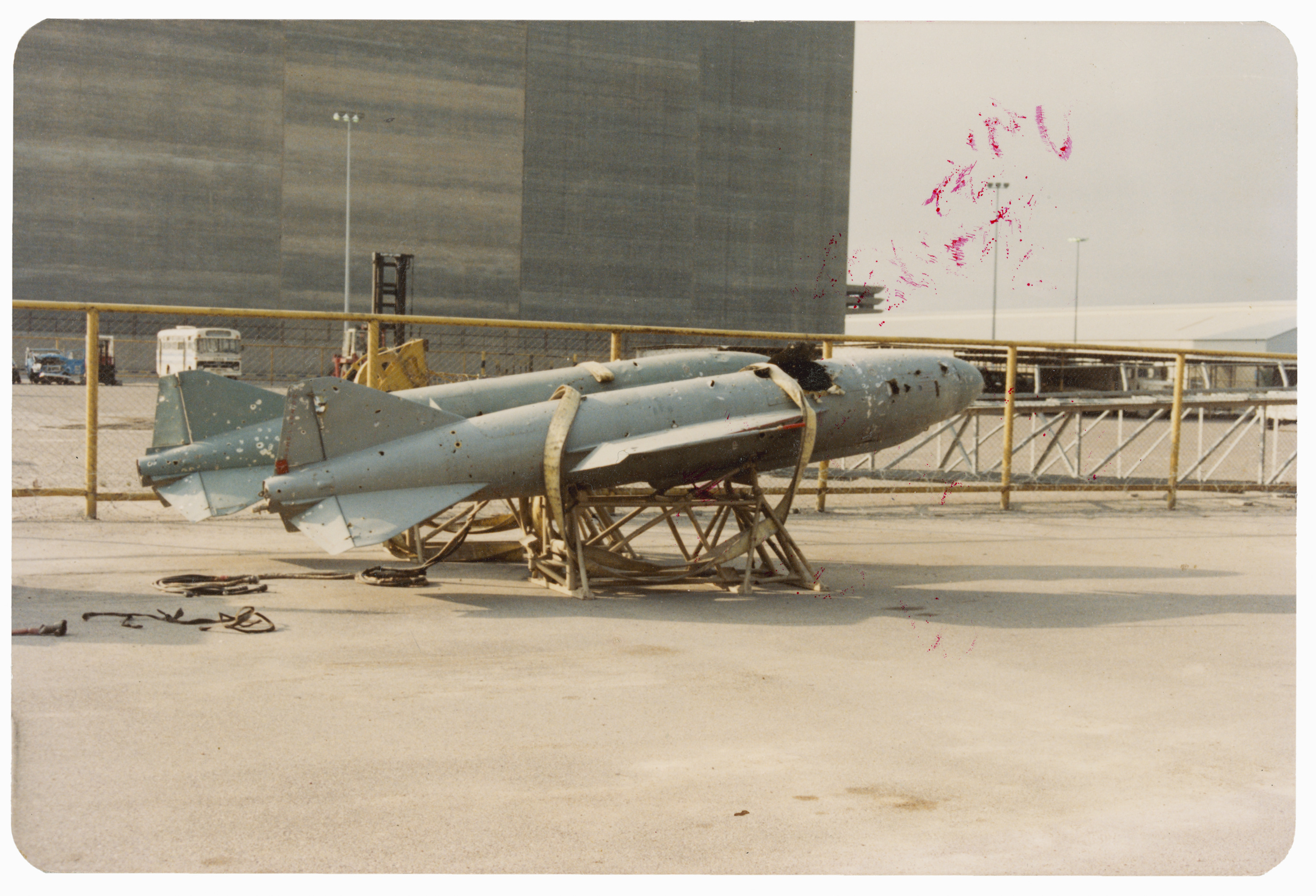
A decoy Silkworm site, Kuwait, 1991. Photo: Courtesy of Ian Parker
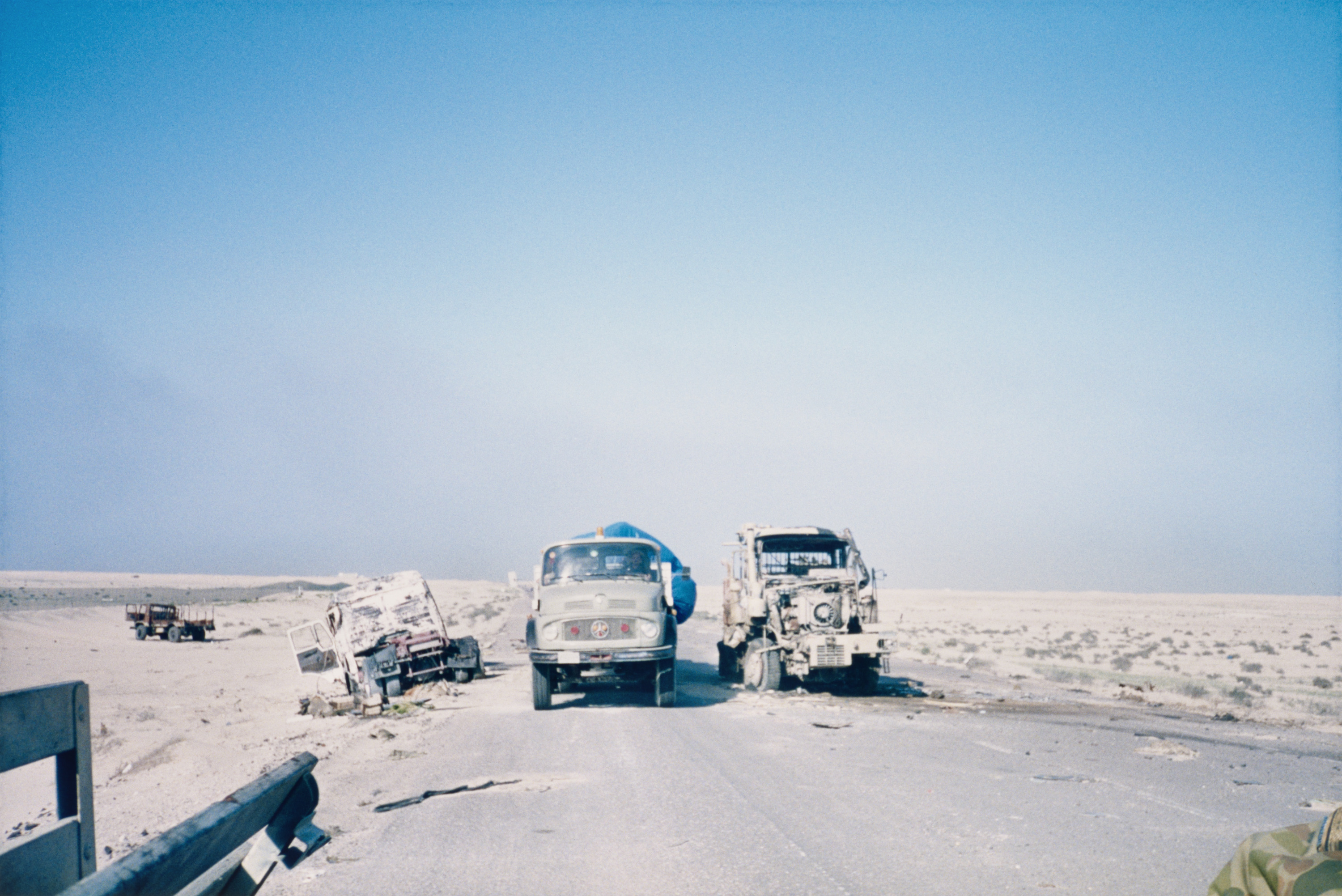
“We knew there were some risks, but we figured they weren’t stupid risks, so in good naval fashion we secured our prize, lashed it down ... covered it with a blue tarp so no one could see what was going on, strapped it with a bit of twine, and off we went ... headed back to our base in Kuwait City.
“You couldn’t go very fast because the road was still a bit dodgy and there was a lot of wreckage. There was blown up stuff everywhere and you were constantly going around craters in the road. You had to kind of pick your way through it ... but you couldn’t go off into the sand or anything like that because of the risk of mines.
“They’d used cluster ammunition in the area as well, so you stayed on the road because you knew that was relatively safe. You just had to be careful where you went. The Yanks up at the bunker said we had control over the area, but there could still be some bad guys with guns ... and who knew what was going on.
“You would be shot at in the air, not infrequently, as you were travelling around. Were they shooting at you? Or were they just trying to scare you? I don’t know.
“It took a few hours for us to get back, but we had [the missile strapped] down pretty tight, and I was pretty comfortable ... if we kept the truck upright, we could get it back safely. But it was definitely an uncertain environment; everywhere you went, there were the signs that this was a very, very, recent war zone.”
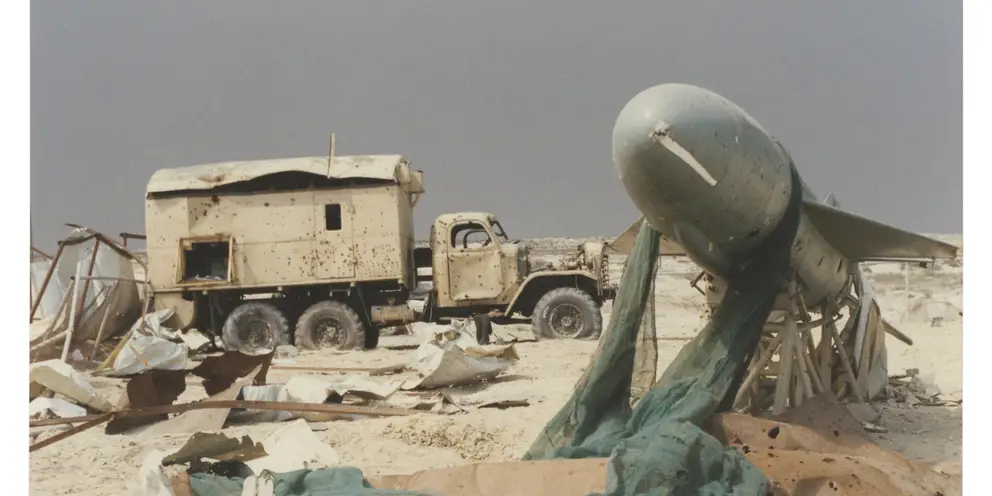
Dummy Silkworm, Kuwait, 1991. Courtesy of Ian Parker.
Central coast to Kuwait
Royal Australian Navy clearance divers were part of 1,800 Australian Defence Force personnel who served during the 1991 Gulf War. Parker had grown up at Avoca Beach on the Central Coast of NSW.
“I was not the most academically motivated student, but from the school I went to, I could see this fantastic view of Sydney Harbour. I used to see the Navy ships coming in and out of the harbour and I’d think to myself, ‘I’d rather be on one of those than stuck here at school.’ So from the time I was a young fellow, I just always thought, ‘Wouldn’t it be cool to sail around and drive a Navy ship?’”
Parker joined in August 1980 and began training as a naval clearance diver in 1984.
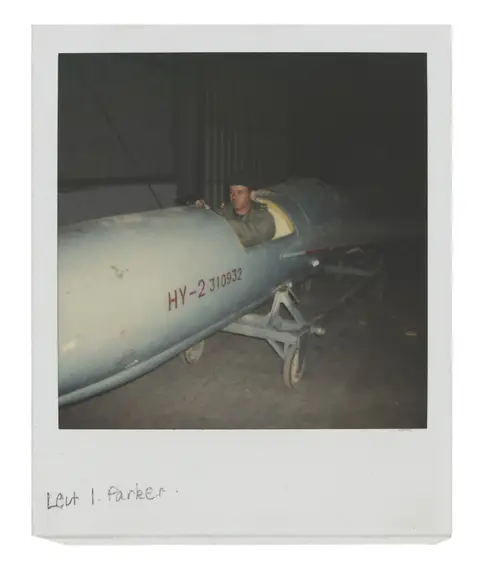
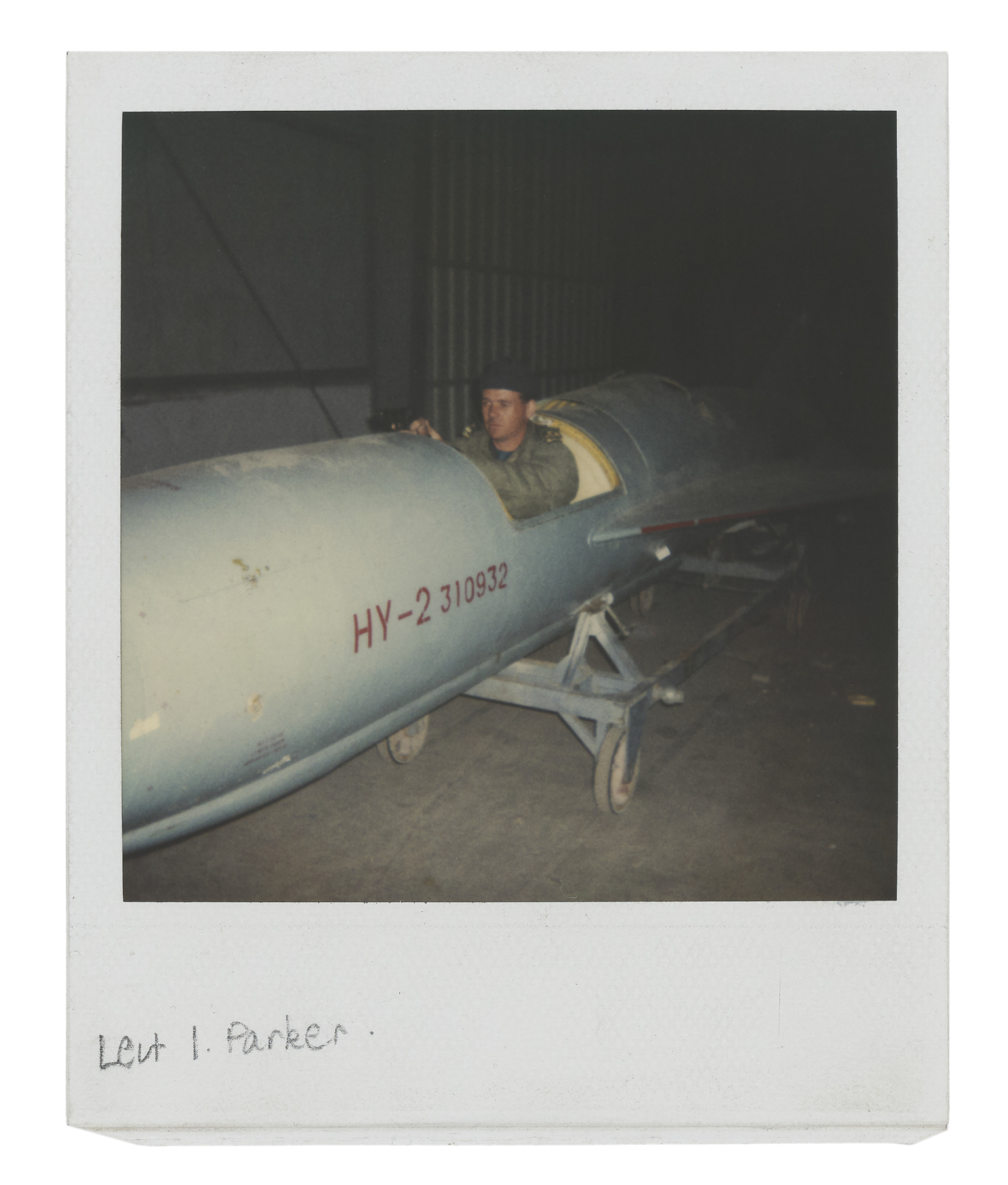
Parker had about a week to render the Silkworm missile safe. Courtesy Ian Parker
"We were swimming up to 10 kilometres a day at all hours of the day and night, and at one stage I literally fell asleep while I was standing up talking to somebody,” Parker said.
“They deliberately put you under stress to see how you handle it, and it’s bloody hard work. But it’s not about being first or being better than everybody else. It’s about finishing the job, no matter what, because being a clearance diver is all about teamwork. And whether you’re the boss of the team, or the most junior sailor, you know you can trust each other with your lives. And there’s not many jobs like that.”
He was at HMAS Penguin in Sydney when Iraq invaded its oil-rich neighbour Kuwait in August 1990. The attack was widely condemned, and the UN Security Council unanimously approved a trade embargo against the Iraqi dictator, Saddam Hussein, and his regime. Over the following months, a US-led coalition of 40,000 troops from across 30 different nations gathered in Saudi Arabia and the Persian Gulf to enforce UN sanctions against Iraq during Operation Desert Shield.
The UN Security Council set 15 January 1991 as the deadline for an Iraqi withdrawal from Kuwait. When Saddam ignored the deadline, coalition forces launched Operation Desert Storm with a series of devastating air strikes against Iraqi military targets in Kuwait and the Iraqi capital, Baghdad, lasting 43 days.
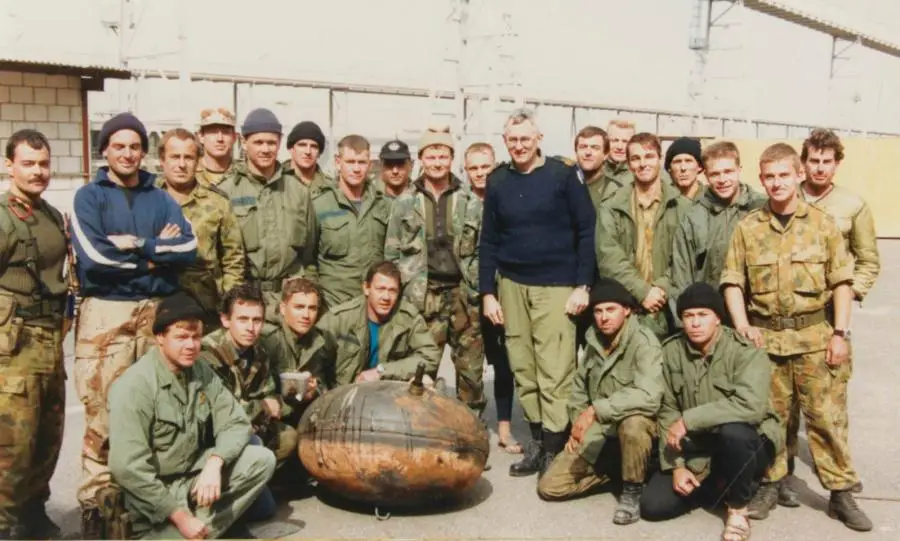
Clearance Diving Team 3 (AUSCDT-3), Kuwait, 1991. Courtesy of Ian Parker
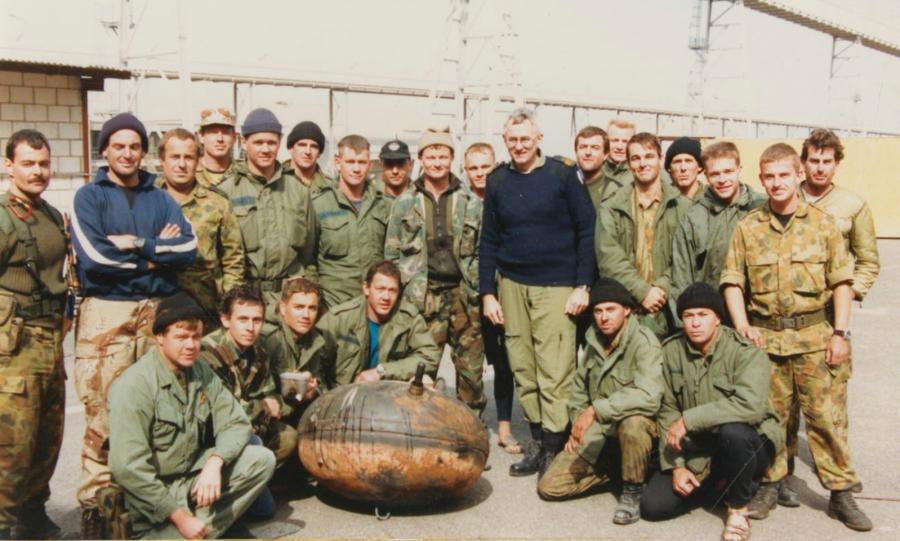
Clearance Diving Team 3
Parker was one of the Australian Navy clearance divers who deployed as part of Clearance Diving Team 3 (AUSCDT-3).
The clearance divers initially joined HMAS Westralia, the second of two Australian replenishment tankers. They were immediately redeployed to Bahrain, where they laid a degaussing range for the British Royal Navy to reduce the threat from magnetic mines. A detachment also served with US amphibious forces, where it was available for beach clearance and underwater demolitions.
“We landed at the airport in Bahrain and there was military everywhere,” Parker said.
“They were evacuating people out as we arrived and there were big long queues of civilians waiting to get on to the aircraft to leave. I thought to myself, ‘Oh, this looks pretty serious, this isn’t Australia anymore.’”
On 24 February 1991, the coalition moved ground forces against Iraqi positions in Kuwait, destroying what was left of Iraq’s ability to resist. Iraqi forces began to withdraw across the border, setting fire to more than 600 Kuwaiti oil wells and dumping millions of barrels of crude oil into the Persian Gulf. Iraqi forces were expelled from Kuwait within 100 hours of the ground assault, and a ceasefire was declared on 28 February 1991.
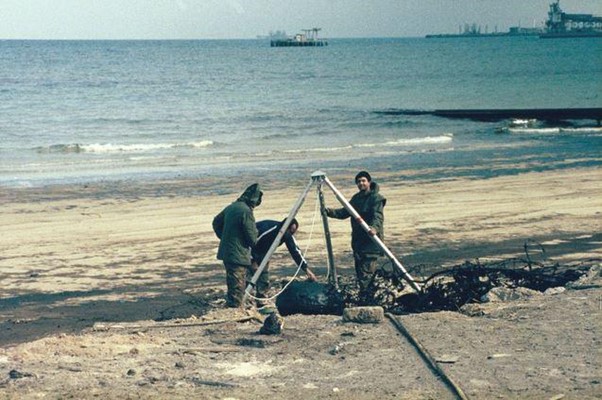
Five days later, the clearance divers moved forward into Kuwait, clearing port and harbour facilities of mines, explosive devices and ordnance left over from the Iraqi occupation.
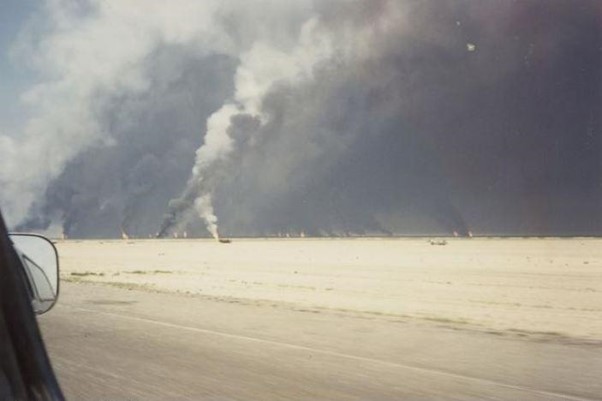
“The Iraqi forces had blown up the oil wells as they were leaving Kuwait and all the oil wells were still on fire,” Parker said.
“The oil smoke just went straight up and formed a massive cloud over everything.
“Some days it was literally like night — you might see a thin glow of light on the horizon where the edge of the cloud was — but it was like something you’d see in those old post-apocalyptic movies. There were little droplets of oil coming down on you all the time ... and it was a very unreal sort of environment.”
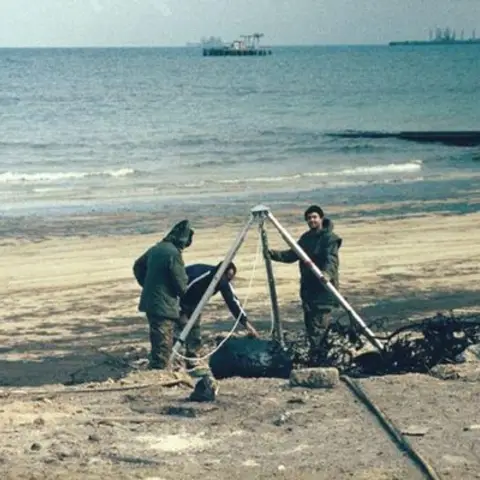
Mine clearance work. Courtesy of Ian Parker
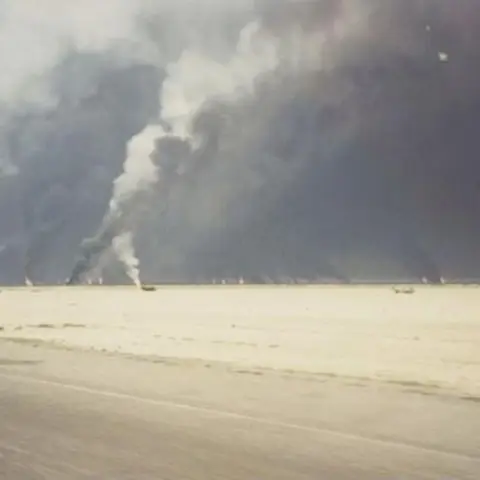
Smoke billowing out from burning oil wells. Iraqi military forces set fire to more than 600 oil wells in Kuwait. Courtesy of Ian Parker
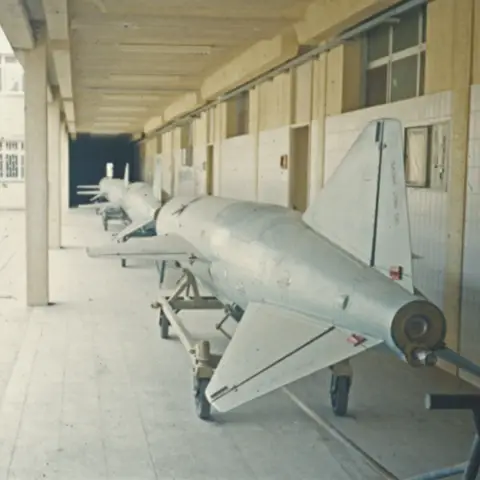
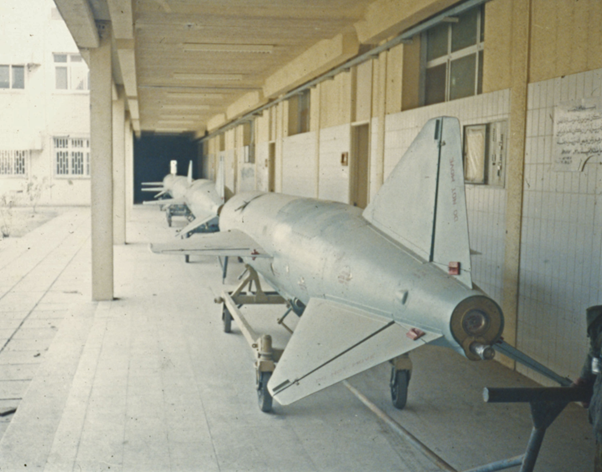
Silkworm missiles at the Kuwait Girls School. Courtesy of Ian Parker
The hunt for missiles
On 10 March, US forces advised the clearance divers that they had found six fully-armed Silkworm missiles hidden inside Kuwaiti Girls High School.
The missiles were based on the Russian Styx missile and had been bought by the Iraqi military in the 1980s, but not much was known about them.
“They stuck them in our shed on the wharf where we were, and so we had a look at them, and we had a bit of a poke around,” Parker said. “But then one day, we went out, and when we came back, they were all gone.
“The Americans had destroyed all six missiles. They said these things were too dangerous and so they’d taken them away and had blown them all up.
“My boss let them know in no uncertain terms that he was very disappointed. We’d hoped to render one safe and take it home so that our boffins could have a look at it, so we were rather annoyed and very, very disappointed.”
At one of the ports we were at, there was the Kuwaiti girls' high school near us, you know, and they were bombed out, and there were six silkworm missiles.
Some soldiers found these things, and so - i didn't - some of my guys went out and helped the yanks to bring them back, and they put them in our little shed. And so, this is new and exciting, so we all went and had a look. Bu the Yanks said don't worry about them, we'll sort them out. Now, we went off diving and doing our job, and we came back from that, and they were all gone. And we thought 'Where the bloody silkworms?" and they said "Oh, we've decided they're all too dangerous, we've taken them away to blow them up."
Iy was like, oh, because we actually wanted, to be able to pull one apart ourselves. I think about two or three weeks later, don't quote me on the time, but they came up and said, there's an Iraqi bunker, we're going to blow the whole thing up, because it's, you know, all the stuff there, but if you can get up there tomorrow, you can, you can, you can grab your missile, grab a missile and bring it down and do what you want with it.
So next morning, we had our own vehicle, and they took their, this really old truck thing, but it was a flatbed truck, semi thing, and off we drove up.
We didn't know, we didn't know 100% sure where we were going, but we drove up and we got to this bunker, you know, over in Kuwait, and, you know.
It was still quite a tense area, there was still a lot of, you know, they said, oh, you don't, you shouldn't be driving up there, you know, it's a bit dangerous.
I said, oh, she'll be right, you know.
So we got to this bunker area, and so the Yanks said "what are you doing here?" I said, oh, we'll be told we can, you know, have a missile. "Yeah, Ok sir." I said, well, give me a week, boss, we'll put it in a separate shed, give me a week, and we'll make it safe so that we can take it home. You know, there's these books that the Yanks have, and there's this information on it, and this is a render safe procedure for them.
We didn't have one of those for the silkworm, because it was a Chinese variant of a Russian missile, but we had some stuff on the Russian missile.
So I had a look at that, well, okay, now I made this bloody big thing in the shed, so let's have a look at it.
And so, you know, got the screwdriver, pull the thing off, and I said, okay, that's what that does, take this off, and slowly, you know, you work out how to pull it apart.
Well, I get to, I got to, you know, look at a, pull apart a missile, who gets to do that?
[detail of Oral History recording with Commander Ian Parker CSM (Rtd.) AWM2022.15.10]
On 24 March, US forces contacted the clearance divers again. They had discovered some more Silkworm missiles in an ammunition bunker, just over the border, at Umm Qasr in Iraq.
When Parker and Leading Seaman Clearance Diver Scott McCallum were tasked with recovering one of the Silkworms, the pair borrowed an old semi-trailer, along with two American service drivers, to assist in the recovery.
“We’d never seen one before, and we didn’t know much about them, so there were genuine intelligence purposes to getting this thing home so our boffins could get all over it,” Parker said.
“Scotty and I had a week in the shed to pull it apart, work out how it worked, and make it safe …
“In the end, I quite enjoyed it ..., understanding how it worked, and applying that knowledge to what was in front of me, and thinking about how to take the bad bits out, and make it safe.”
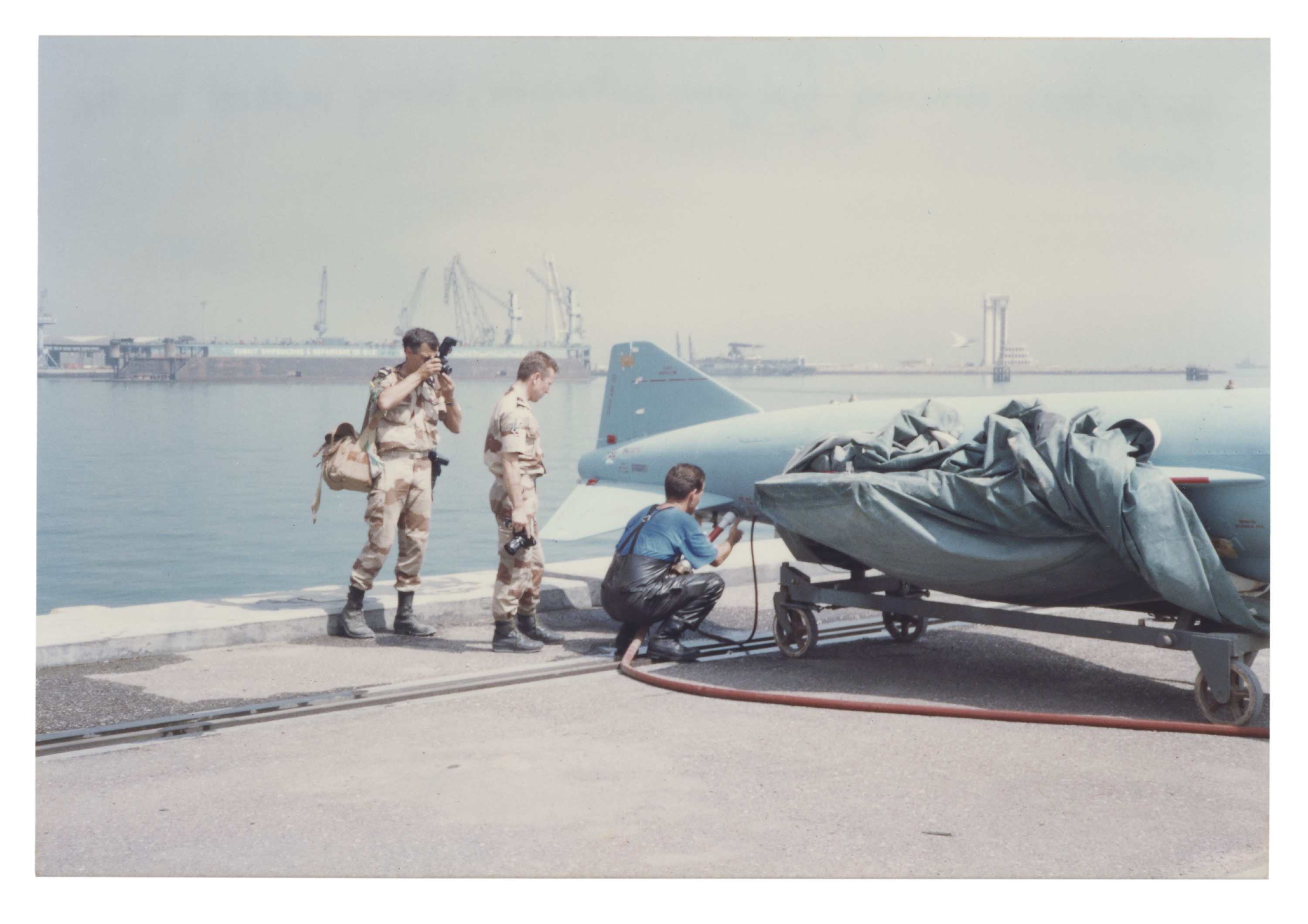
Parker also showed French and British forces how to the render their Silkworm missiles safe. The French unofficially renamed the Australian clearance divers ‘the rocket scientists’, and Parker was awarded a Conspicuous Service Medal for his work.
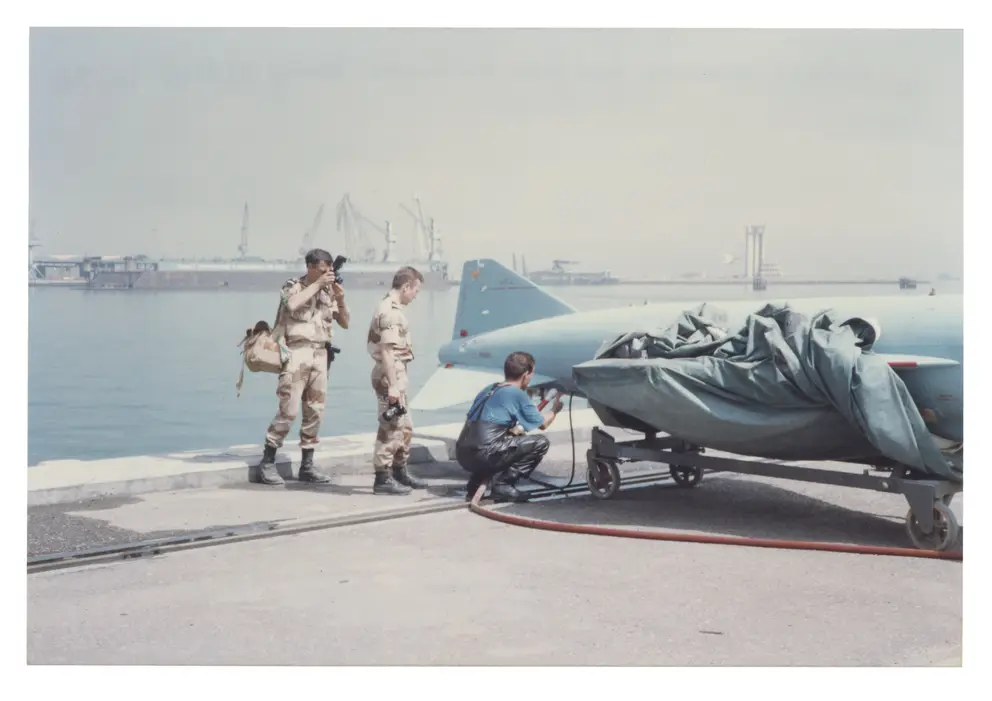
Parker showing French Navy divers how to flush through the Silkworm missile's fuel tanks. Most of the fuel had already been flushed out, hence why Parker is only wearing half his protective suit and the French are as close as they are watching. Courtesy of Ian Parker
Recognition and legacy
The Silkworm was shipped to Australia on board HMAS Westralia before being put on display at the Navy Clearance Diving School at HMAS Penguin. Today, it is part of the National Collection at the Australian War Memorial.
“For me personally, it’s nice to have something that I contributed to at the Memorial,” Parker said. “But more importantly, it will help to tell the story about what navy divers did in the first Gulf War ...
“When I joined up back in 1980, I joined up because I wanted to learn to drive a ship. I thought, I’ll learn how to drive the ship, stay a couple of years, then I’ll get out and get a real job. It was never going to be a long-term career. And then all of a sudden, 29 years had gone by. Why? Because it was great. I got to be involved in some really amazing things that most people only read about in books ...
“But what I really liked was the team – the guys and girls that I worked with – and being a part of that and doing something good.
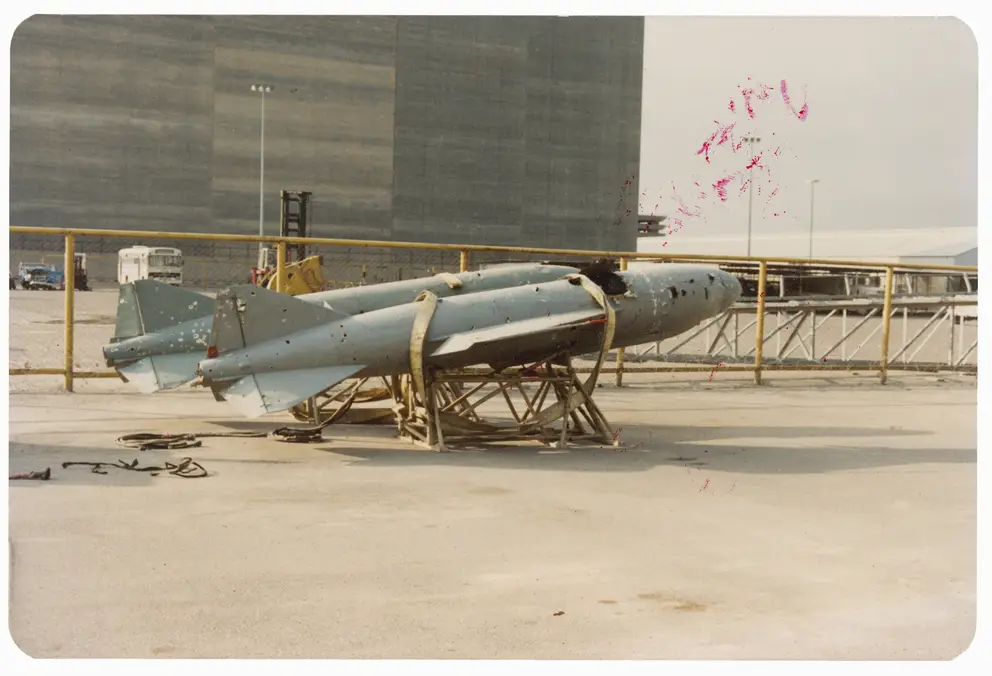
Two silkworm missiles in Kuwait, 1991
“Looking back, I’m very happy with where we’re at. I still can’t believe that any one is interested in what we did, but it’s nice that people are ...
“If I look back over my military career now, I had a pretty full career, and I’m happy.
“I loved it.”