The struggle for the recognition of diverse sexualities and genders in the ADF took many years.
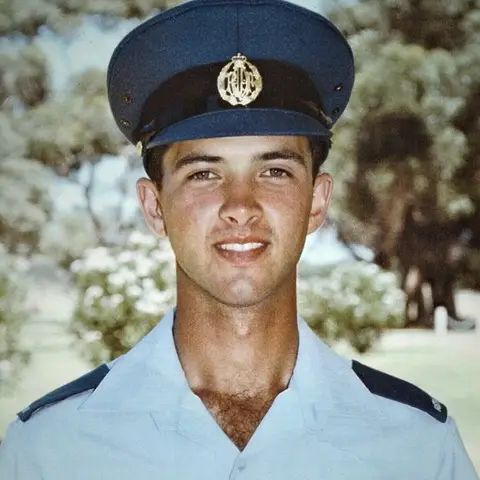
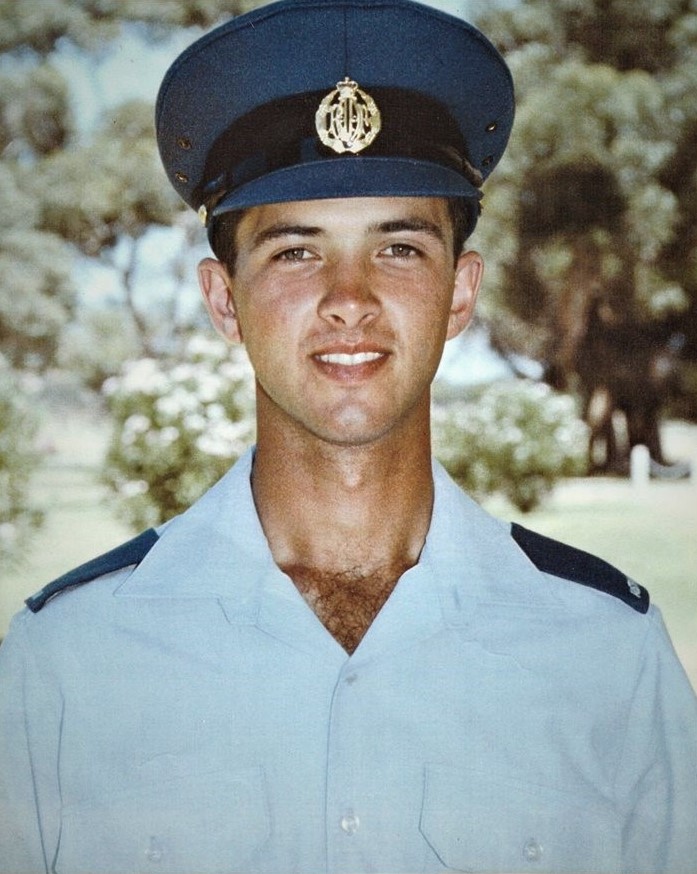
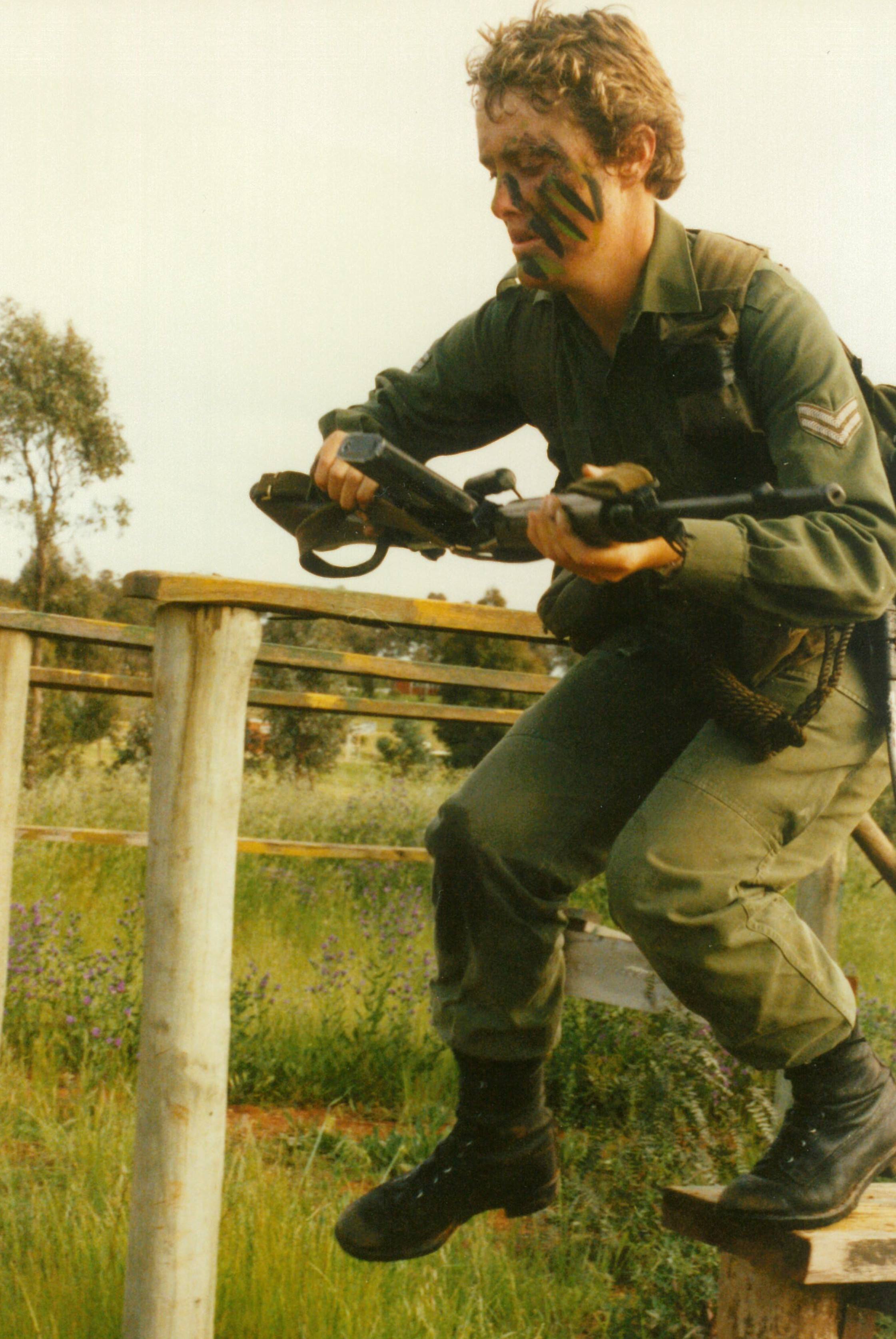
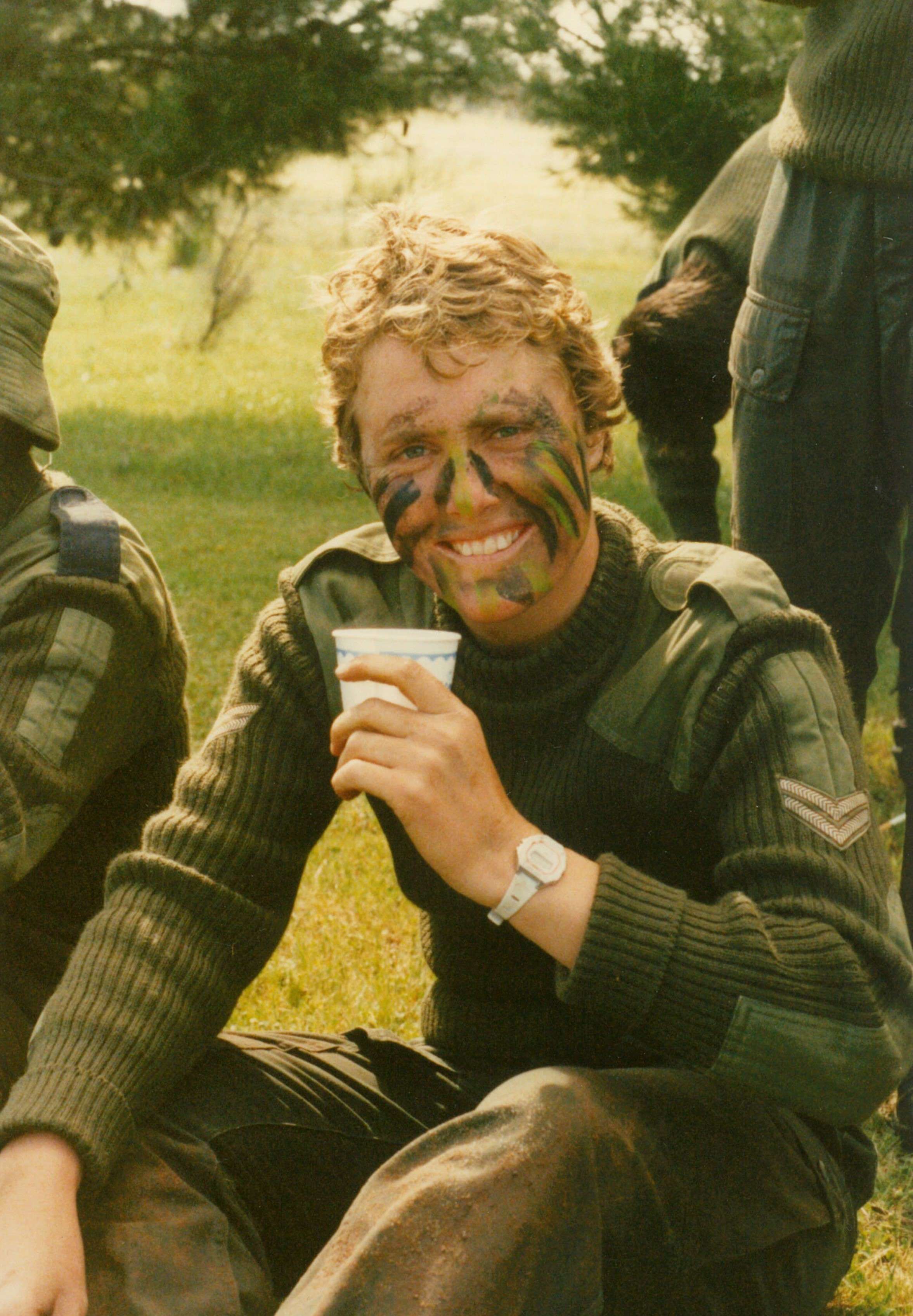
Danny Liversidge had wanted a long career in the RAAF but was forced to leave in 1991 due to policies around his sexuality. Photograph courtesy of Danny Liversidge.
In February 2022, Yvonne Sillett and Danny Liversidge gave evidence to the Royal Commission into Defence and Veteran Suicide. Yvonne and Danny had served in the Australian Army and Royal Australian Air Force respectively in the 1980s. Yvonne had been one of the first woman instructors at Kapooka in 1985, while Danny had the nickname 20 Year Man because his mates all saw him as someone who would be in the RAAF for life. Both Yvonne and Danny’s careers came to an abrupt halt when service police discovered that they were gay.
At the Royal Commission, Yvonne described the interrogation that the Special Investigation Branch put her through before her security clearance was downgraded, leaving her with no choice but to discharge. She remarked, “I believe it was an absolute disgrace the way I was treated, from that initial ‘interrogation’ right through until my discharge in February [1989] and for many months after my discharge.”
“I clearly remember they asked how many times I’d had sex with men, and I was getting increasingly … to be honest, I just wanted to crawl under a rock and die. That’s how I felt at the time. I just didn’t want to be there. This was humiliating and shaming. It was shaming and humiliating questioning.”
Danny on his interrogation in 1991
After discharging from the ADF, Yvonne and Danny went through years of hiding what had happened to them. Both of them – like so many other lesbian, gay, bisexual, transgender, intersex and queer (LGBTIQ+) people – felt a sense of being targeted personally by the ADF.
It was not until decades later, as my colleague Shirleene Robinson and I were researching the history of LGBTIQ+ military service, that Yvonne and Danny came forward and told their stories publicly. Not only did they find it a therapeutic experience, but they both learned that what happened to them also occurred to hundreds of other LGBTIQ+ service members.
The process of investigating, surveilling, interrogating, intimidating and discharging LGB members was systemic until 23 November 1992, and trans people continued to be barred from transitioning in the ADF until September 2010.
Early policing of homosexuality
The evolution of policies and practices towards LGBTIQ+ people in the ADF has broadly gone through five phases which, in many ways, mirror the treatment and discourse around homosexuality and trans people in civilian Australia:
| 1914-1943 | silent but illegal |
| 1944-1973 | illegal but with a blind eye for discreet men |
| 1974-1992 | heightened ban |
| 1993-2005 | tolerance |
| From 2006 | inclusion |
Of course, there were varying experiences across services, ranks and genders in all of these periods. These phases need to be understood as broad brushstrokes which reflect the dominant trends of the periods, while acknowledging diverse experiences that ranged from full acceptance to harsh persecution in all eras.
Before the Second World War, male homosexual acts were illegal in all states and territories; so, too, acts of sodomy, indecent assault and disgraceful conduct of an indecent kind were illegal under military law. There were no formal policies in place for dealing with cases of homosexuality.
Records about homosexuality in the First World War and the interwar period are sparse, and primarily consist of courts martial and occasional newspaper reports in tabloids like Truth which mentioned homosexual servicemen roaming city streets. Usually there was something extraordinary about the cases that went to court martial. In many, it was sexual assault; in others it was a public display of homosexuality, such as in a mess. The dearth of records is a marker of a broader theme that would continue in the next phase of LGBTIQ+ military service: so long as men were discreet, commanders often turned a blind eye.
In 1943 American authorities complained that Australian soldiers in Papua were enticing their men – and even worse, were taking the passive role. Authorities investigated and discovered a thriving kamp (to use the term of the time) subculture of men who would gather at the canteen and meet for sex. Such practices were not limited to Papua, as there were reports of servicemen arrested in Australian cities for homosexual acts, as well as oral histories describing gay and bisexual servicemen’s participation in the underground kamp scenes.
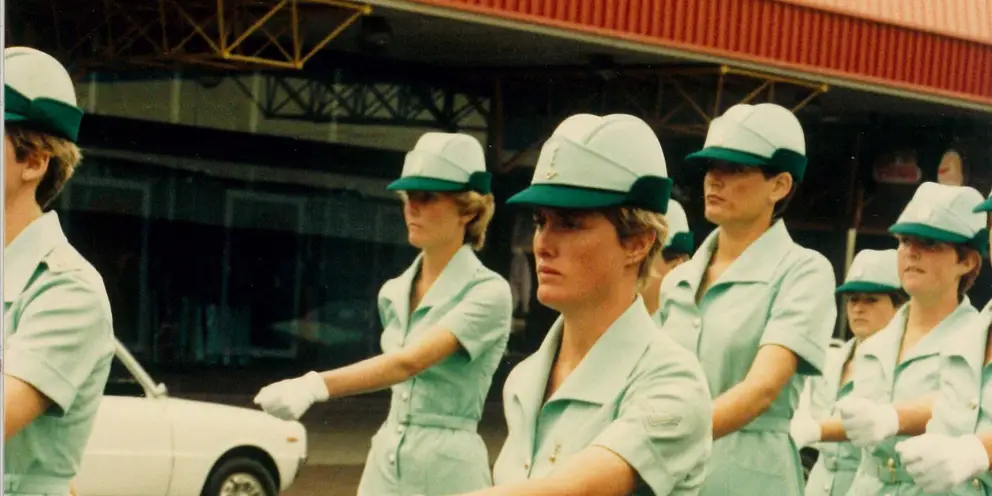
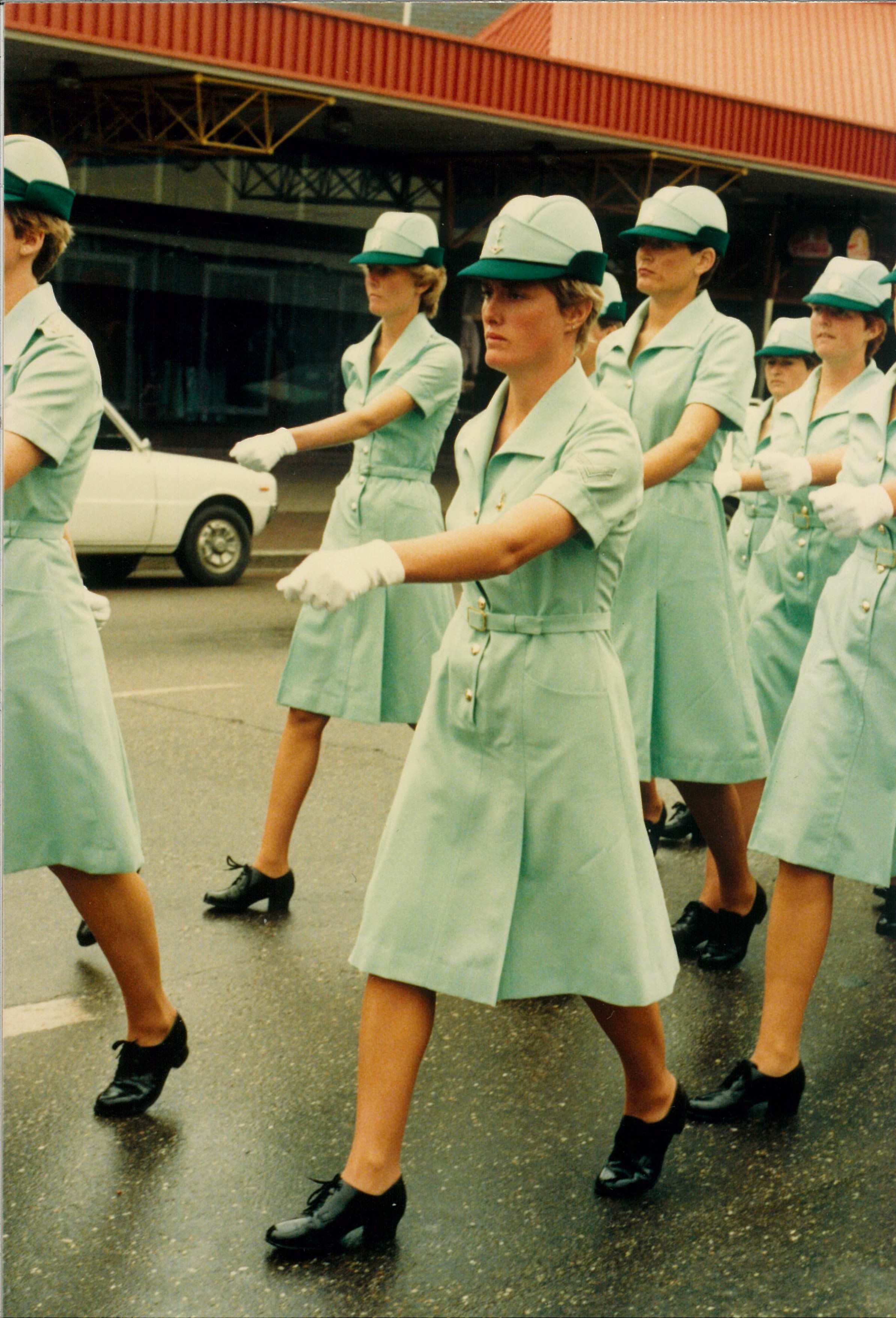
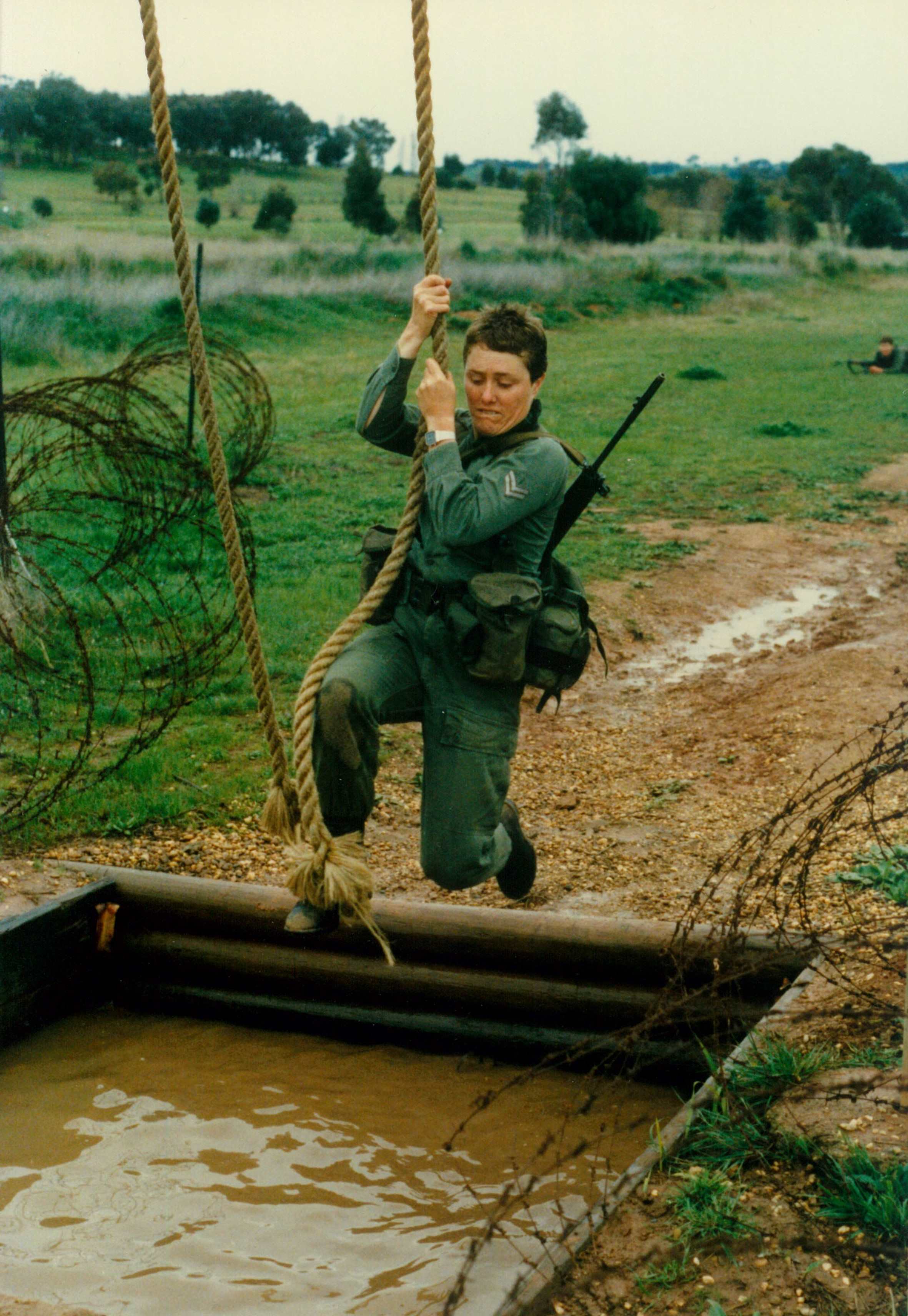
Cpl. Yvonne Sillett in Wagga Wagga, Anzac Day 1985 Photograph courtesy of Yvonne Sillett
The evolution of policies and practices … has broadly gone through five phases.
In 1944 the Australian Army adopted its first formal policy on homosexuality, which became a blueprint – at least on paper – for the post-war era. Homosexuality would be treated as something between a medical and a disciplinary issue. Those service members who were found to be confirmed homosexuals could obtain a discharge at their own request, while those who were found to have engaged in homosexual acts but were not, according to psychiatrists, gay or bisexual could retain their positions with a warning.
After the war, the Royal Australian Navy adopted similar policies adapted from the British Navy, and they were even more detailed. Those policies relied heavily on the importance of medical evidence, and authorised invasive anal and penile exams to find physical evidence of homosexual acts. That said, across all services, in practice commanders still mostly turned a blind eye to men’s homosexuality – so long as they were discreet.
Women’s sexuality was always a different case. The creation of the women’s services during and after the Second World War generated anxieties about the masculinisation of women. Given restrictions prohibiting women who were married or who were pregnant from serving, what sort of woman might then be attracted to joining the service? Lesbians. But authorities did not want lesbians either, so the anxieties over women’s sexuality played out through hyper-vigilance and surveillance.
During the Second World War and the post-war period, service police were always on the lookout for lesbians and bisexual women. The police practices included surveillance, interrogations and, when a suspect did admit to being a lesbian, intimidating her into naming others before making her discharge. This process led to the witch-hunt trope to describe how service police would pursue gays and lesbians. The practices deployed predominantly against women during the post-war period would become the template that expanded during the next historical phase.
Heightened ban
In 1973, a member of the Women’s Royal Australian Air Force (WRAAF) who was dismissed for being a lesbian shared her story in the gay and lesbian newsletter Camp Ink. She talked about the interrogation that went on for hours, including questions about her sex life and with whom she socialised. Exhausted, she signed a statement that the service police prepared. They then proceeded to search her room and confiscated letters from her girlfriend. A few weeks later, they gave her the option to request her own administrative discharge, which she did to avoid the dishonourable “services no longer required”.
Another dismissed lesbian WRAAF subsequently wrote a letter to the Minister for Defence, Lance Barnard, and the story hit the mainstream media. Barnard tasked the three services to come up with a policy on homosexuality which would cause the least amount of embarrassment to gay and lesbian service members.
In 1974, the first consistent, tri-service policy on how to investigate and discharge gay and lesbian service members came into effect. This policy went through some updates over the years, but the basic framework and justifications would remain in place until 23 November 1992.
First, any allegations or suspicions of homosexuality were to be referred to the respective service police to investigate and, if there were sufficient evidence, to summon the suspect for an interview. The guidelines said that suspected homosexuals were to be treated with “sympathy and discretion” – a phrase regularly touted throughout the ban years. If there was enough evidence that a person was a confirmed homosexual, they would be given the option of requesting administrative discharge or they would be dishonourably discharged as “services no longer required”.
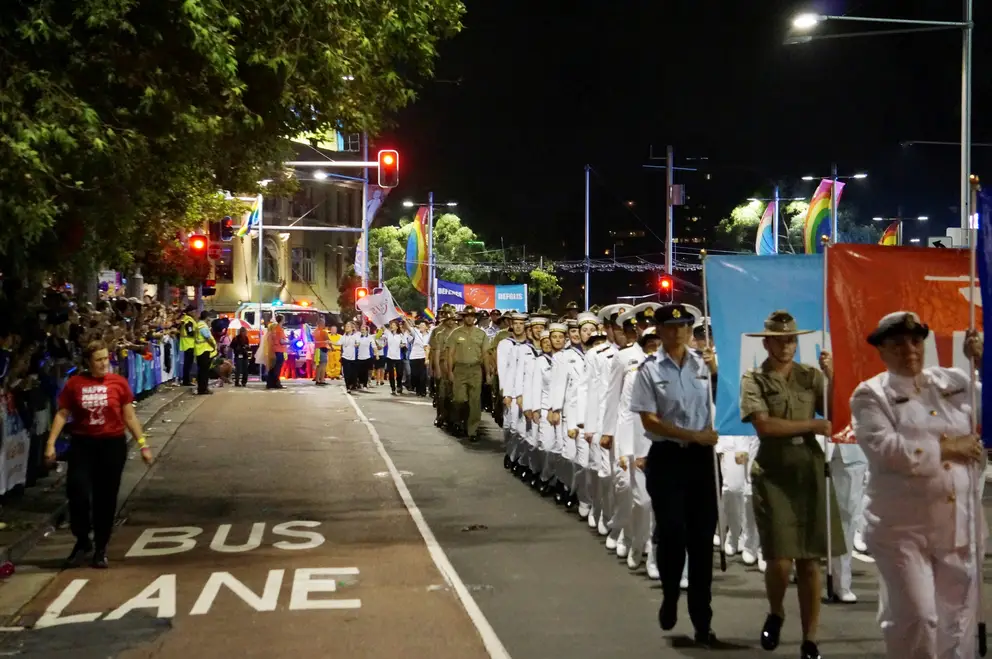
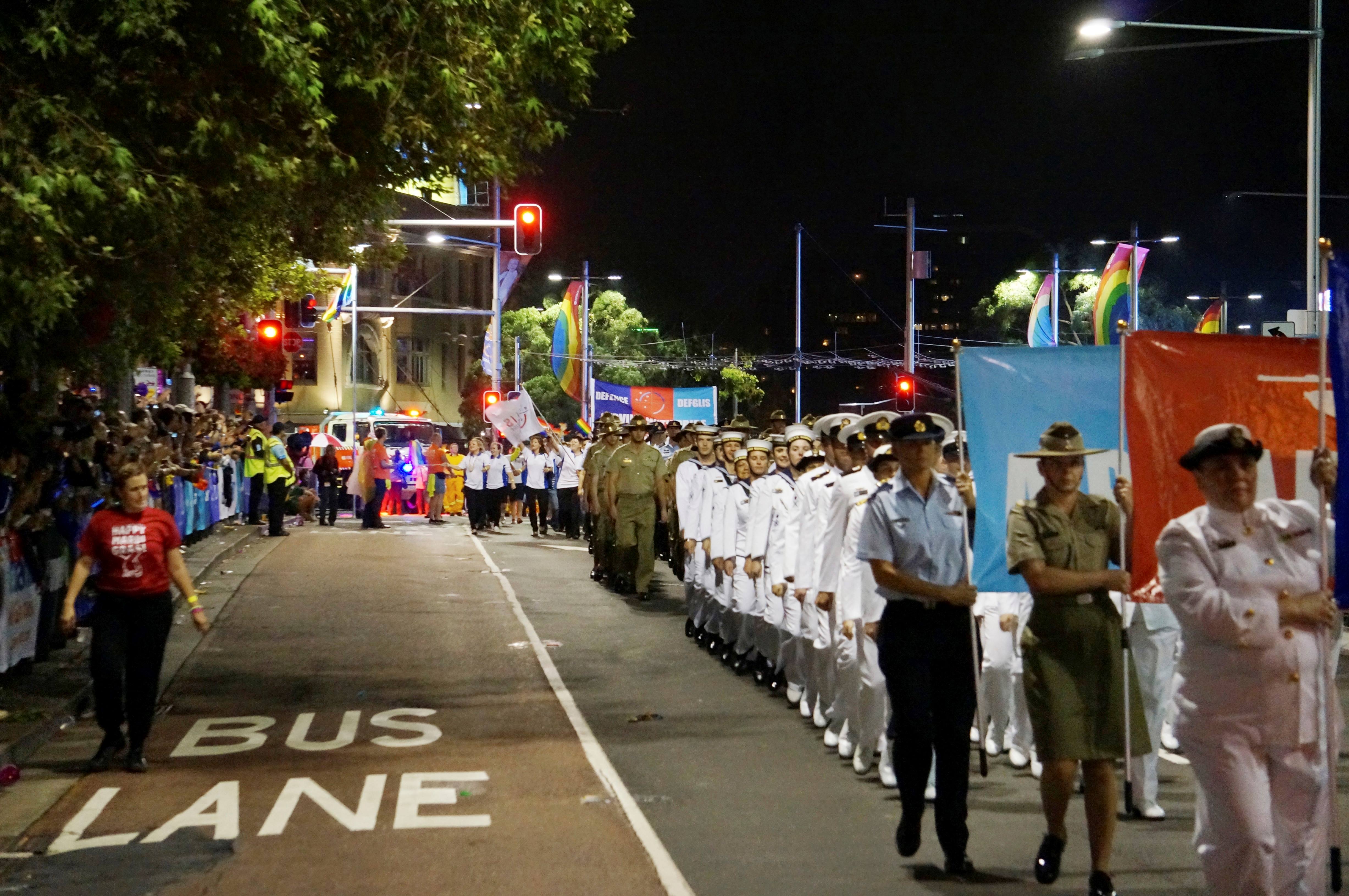
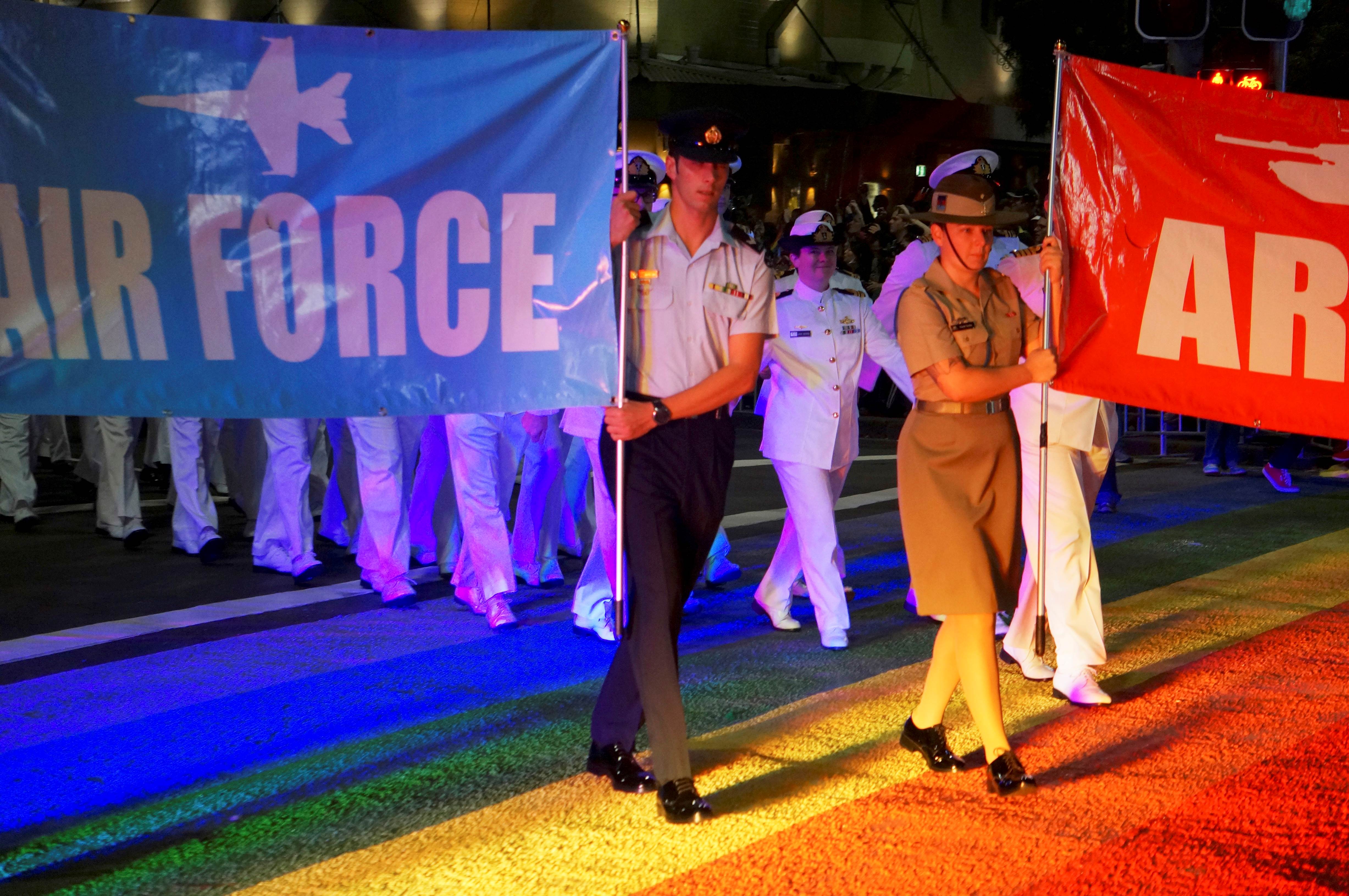
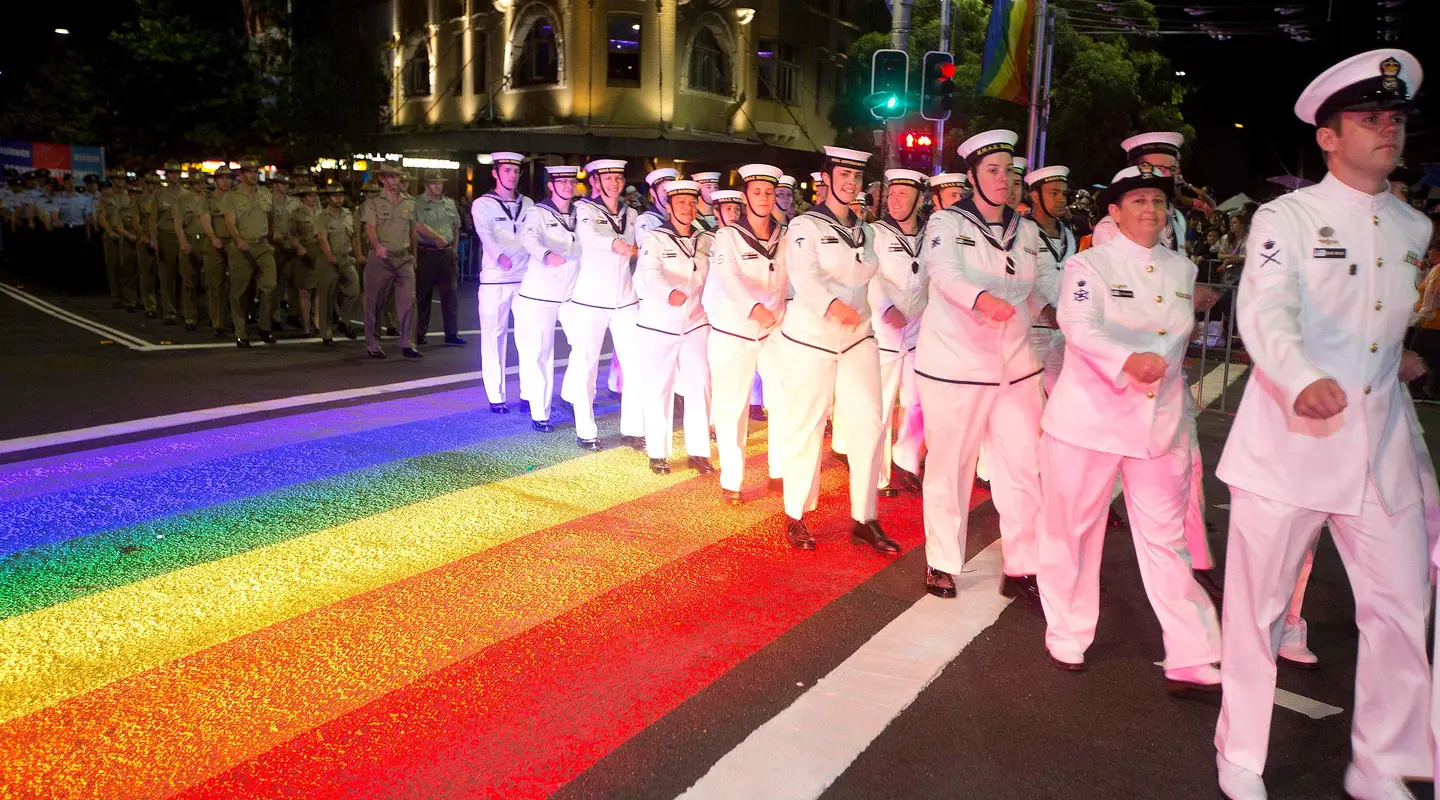
Standard bearers and uniformed personnel of the Australian Defence Force marched in the Sydney Mardi
Gras parade for the first time in 2013. Photograph: Vick Gwyn.
Service members' experiences ranged from full acceptance through to bullying and harassment.
The living experiences of people who faced investigations show that there was rarely a sense of sympathy and discretion. Interviews were more like interrogations and could go on for hours or even days on end. Service police consistently asked questions about sexual practices, showed photographs from surveillance, confiscated private items, and always pressured people to name other gays and lesbians. Not surprisingly, the majority of people who cracked in the interviews elected for the administrative discharge option. They then would have to explain to their family and friends why they unexpectedly were leaving the ADF, either being honest about what happened or hiding their shame with other excuses.
Amid these rules, witch hunts and discharges, LGBTIQ+ people were, of course, still serving in secret. During the Second World War, drag shows were a popular form of entertainment and were a site where gay men and trans people could experiment with different forms of gender expression. Throughout all renditions of the ban, gay, lesbian and bisexual service members forged relationships with each other or with civilians. They were cautious when visiting beats, saunas or gay and lesbian establishments, wary of undercover service police. Officers tended to have a bit more leeway – service police were more prone to target other ranks – and there were even some subcultures of gay or lesbian officers who would get together for social functions. All of this could come to an abrupt end, though, if service police embarked on a witch hunt at a particular base or through some other social network.
By the early 1990s, the ban on gay and lesbian service came under increased pressure from service members, the Human Rights and Equal Opportunity Commission and politicians. ADF leadership consistently presented four justifications for the ban:
- security, meaning to prevent threats of blackmail;
- to protect minors;
- health (an allusion to HIV and AIDS);
- to protect troop morale.
Critics consistently pointed to the illogic and false stereotypes about gay men in particular which underpinned these arguments. In 1992, Attorney-General Michael Duffy challenged the ban and put it on the Cabinet agenda. On 23 November 1992, a majority of Cabinet agreed to repeal the ban on the service of lesbian, gay and bisexual people.
After the ban
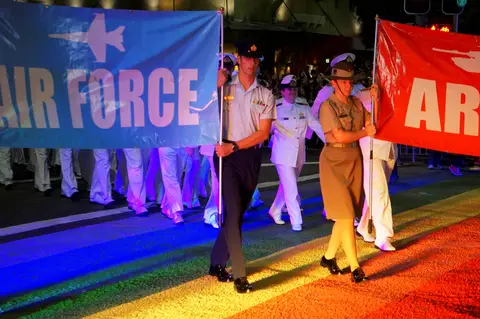
Members of the ADF’s inaugural Mardi Gras parade march over the ‘Rainbow Crossing’ in March
2013. Photograph: Vick Gwyn.
The lifting of the ban meant that LGB people could not be discharged, but it did not suddenly mean they were welcomed within the ADF. Service members’ experiences ranged from full acceptance through to bullying and harassment; one interview participant even recorded being the subject of an attempted murder.
Broadly speaking, there tended to be more acceptance for several categories: officers, women, those in roles further away from combat, people within the RAAF, and for members who had been serving for a long time. But the ADF continued to discriminate in several ways.
For instance, with the exception of base privileges and access to Defence Health, there was no recognition of same-sex relationships. The ADF refused to implement bullying and harassment training that affirmed gay, lesbian and bisexual people. Most significantly, the ban on service by transgender people continued and even became formalised in policy in 2000.
Recognising the need for more visibility and support for serving LGB members, in 1994 RAAF Sergeant David Mitchell founded G-Force: the first social and support group for LGB Defence members. G-Force published a newsletter, fronted the mainstream and Defence media and held social events. The membership was always small, about 35, but it was an important step towards making LGB Defence members feel safe to come out in their workplace. G-Force’s biggest claim to fame was organising a contingent in the 1996 Sydney Gay and Lesbian Mardi Gras (against the initial wishes of the ADF top brass).
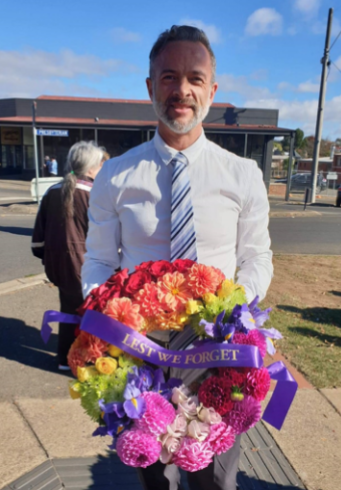
The organisation folded sometime around 1998, but in 2002 a successor organisation emerged: DEFGLIS (which remains the acronym for Defence LGBTI Information Service). Then Chief Petty Officer Stuart O’Brien founded DEFGLIS as a social and advocacy group to lobby for the recognition of same-sex couples. DEFGLIS continues to operate today and runs a range of social events and private Facebook groups. It offers peer support, organises rainbow wreathlayings on Anzac Day and the annual Military Pride Ball, and is the main representative group for currently serving LGBTIQ+Defence members.
Transgender service
Before 2000 there were no explicit policies or instructions relating to transgender service. As early as 1988, research from the US found that pre-transition trans women (that is, people assigned male at birth) were disproportionately attracted to armed forces as a flight to hyper-masculinity – essentially hoping that being in such a masculine environment could repress their authentic selves. On the flipside, pre-transition trans men (people assigned female at birth) were often attracted to the military because it was a site where people presenting as women could exhibit stereotypically masculine attributes.
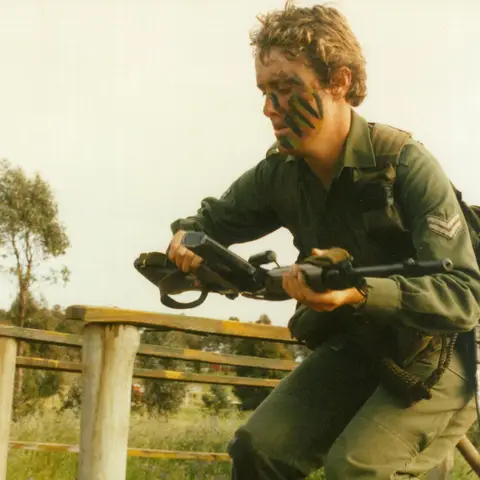
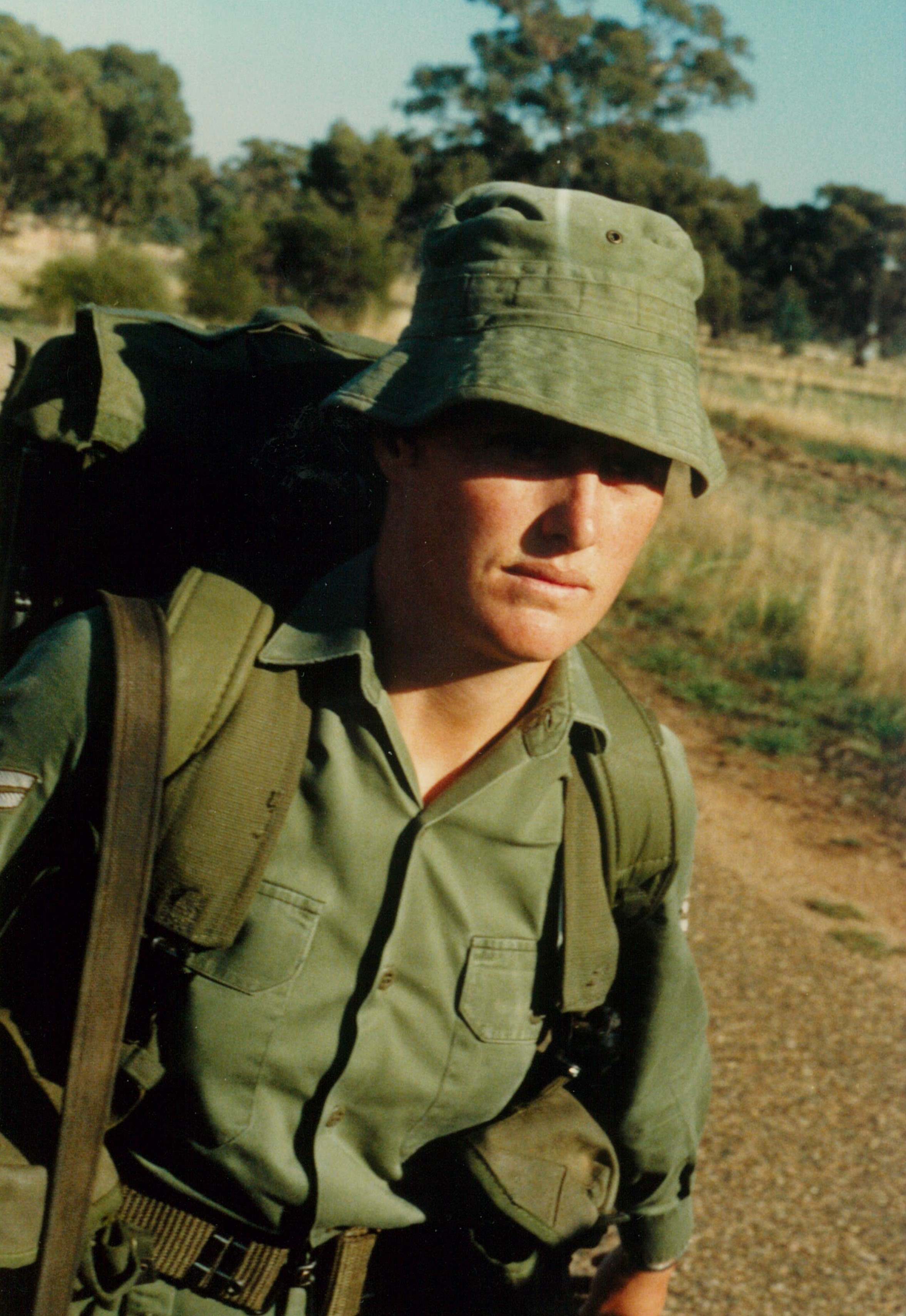
In 1985 Corporal Yvonne Sillett became one of the first female instructors at the 1st Recruit Training Battalion, Kapooka. Photograph courtesy of Yvonne Sillett.
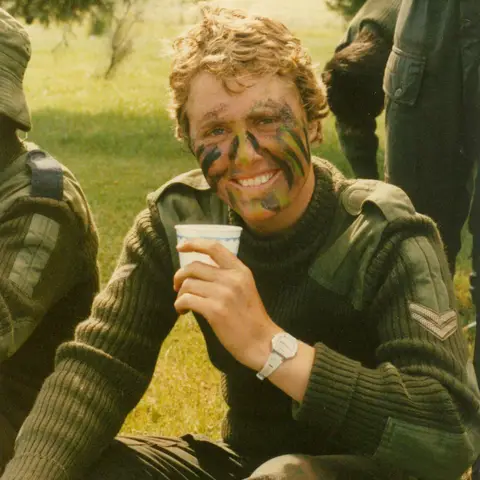
In 1985 Corporal Yvonne Sillett became one of the first female instructors at the 1st Recruit Training Battalion, Kapooka.
There are examples of trans people serving as far back as the Second World War. When a person was outed as trans, how authorities dealt with them varied. Sometimes they were dealt with under the policies about homosexuality. In other instances, being trans was treated as a medical condition and they were discharged medically. There are also cases where trans people – usually officers – were tolerated quietly so long as they kept behaviour like crossdressing private. In 2000, a new policy explicitly stated that trans people who wished to transition must discharge, and this became the official trans ban. Pressure from discharged trans service members who complained to the Australian Human Rights Commission eventually compelled the ADF to lift the trans ban in September 2010.
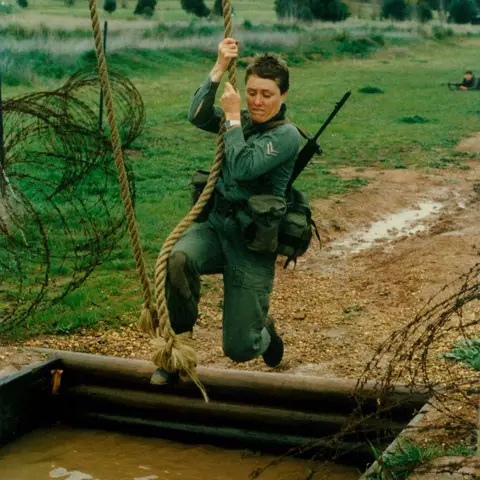
In 1985 Corporal Yvonne Sillett became one of the first female instructors at the 1st Recruit Training Battalion, Kapooka.
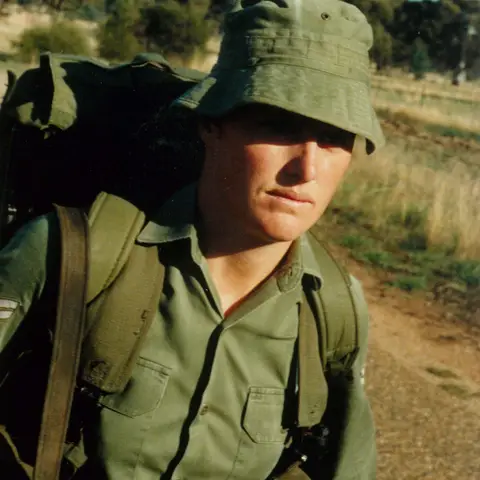
In 1985 Corporal Yvonne Sillett became one of the first female instructors at the 1st Recruit Training Battalion, Kapooka.
The lifting of the trans ban was part of a broader suite of changes in ADF leadership’s attitudes towards LGBTIQ+service. The big turning point from tolerance to inclusion came in late 2005 when the Chief of the Defence Force, Angus Houston, approved the recognition of same-sex couples. In the years that followed, ADF top brass supported a number of initiatives around LGBTIQ+ inclusion. In 2010 came the lifting of the trans ban. In 2013 the Chief of Army, David Morrison, approved the creation of rainbow pride cufflinks and a badge, which members can wear in the week before Sydney Gay and Lesbian Mardi Gras. Also in 2013, ADF members were permitted to march in uniform in the Sydney Gay and Lesbian Mardi Gras. In 2016, the first non-binary members enlisted in the ADF, and in 2018 the ADF updated its rules to widen opportunities for Defence members living with HIV.
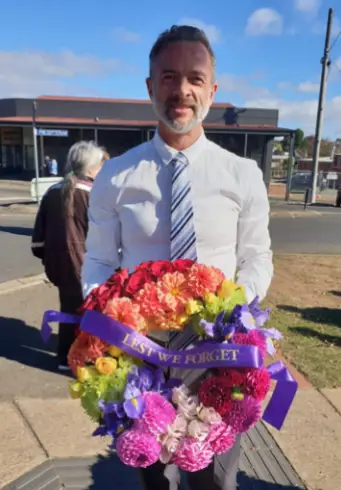
Danny Liversidge hid what had happened to him from family and friends for many years after being
discharged from the RAAF. Photograph courtesy of Danny Liversidge.
When the ADF came under attack in Parliament and conservative media for its inclusion agenda, the top brass consistently spoke out in defence of LGBTIQ+ inclusion policies. The five chiefs jointly authored a letter to The Australian in 2016 which stated: “Diversity is not about identity politics, it is about … gaining a wider range of perspectives to make better decisions and, in the military context, enhancing our capability.”
The ADF has gone on a long journey towards acceptance of LGBTIQ+service members. This journey is not over, though, as LGBTIQ+ Defence members – especially trans members –still report examples of discrimination, harassment and challenges to access-affirming services. Moreover, the gains cannot be taken for granted, as exemplified in 2021 when the Defence Minister ordered that the CDF ban morning teas and other celebrations of diversity such as the International Day Against Homophobia, Biphobia and Transphobia (IDAHOBIT) – a ban which the new Labor Defence Minister rescinded in August 2022.
As the Royal Commission into Defence and Veteran Suicide has highlighted, both the ADF and the Australian government have unfinished business in making restitution to those LGBTIQ+ people who were targeted, persecuted, and discharged under previous policies and practices. Until the federal government and ADF issue a formal apology, veterans like Yvonne and Danny will continue to advocate for justice. It is fitting to end on Danny’s reflections about the significance of an apology:
It would be huge. It would be recognition, after 32 years now, that they get [that] what they were doing was wrong. And I think [what] is still missing from the narrative of these stories that we are telling here today, is any sense that they thought they were doing anything wrong because they … were following policies. Even though those policies now are well and truly debunked as being flawed policies and hence the reason they are no longer there: that’s why they are not there, because they have been debunked. But it doesn’t mean they weren’t wrong at that time. We’ve given apologies over historical things many times for injustices that were committed on people – because they were wrong.