The remarkable effort behind mobile cinemas, from rushed film deliveries to makeshift jungle screens.
Just thirty hours after the winner crossed the finishing line at the 1944 Melbourne Cup race meet in Flemington, Victoria, Australian soldiers stationed in the South Pacific sat down at mobile cinemas to watch the race.
The Army Amenities Services, who were responsible for coordinating Mobile Cinema Units, had gone to great lengths to ensure that film of the race reached the troops as quickly as possible. Film negatives had been immediately accompanied by an Army motorcycle escort from the racecourse to a nearby airstrip, where an RAAF aircraft waited to fly the film to Sydney. There, it was rapidly processed and duplicated, and 30 copies were flown out to soldiers in forward areas.
AWM film Melbourne Cup (F07160) captures the screening of one of these reels to an eager audience in Lae, New Guinea.
Melbourne Cup. Film by Frederick Sydney Wood.
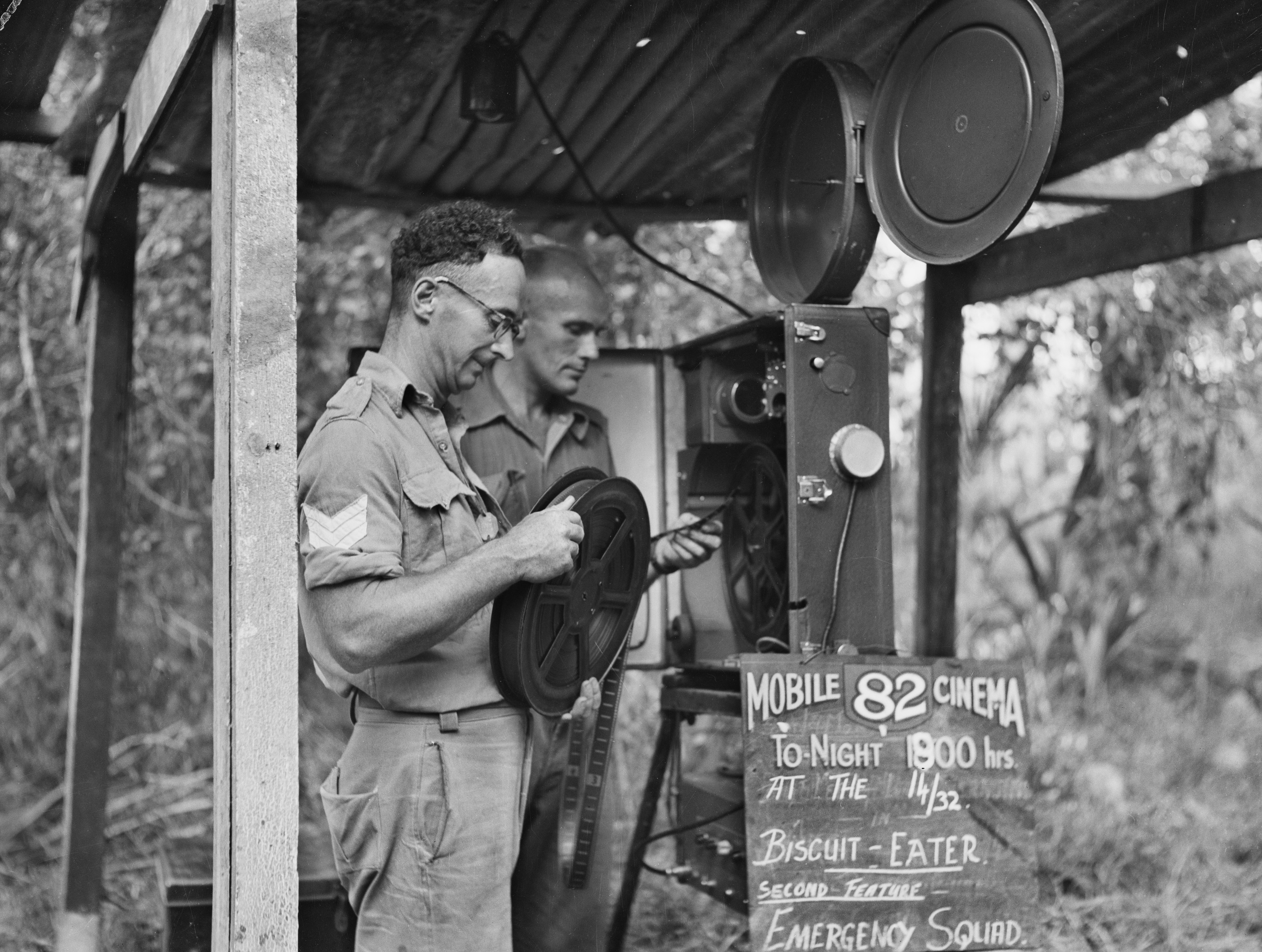
Each Mobile Cinema Unit was typically transported in a custom jeep or van and operated by two projectionists who put on screenings at different locations each night. Packed schedules meant that in the first two months of 1945 alone, one Cinema Unit (no. 82) stationed on the island of New Britain had shown 65 miles of film, amounting to almost 60 hours of footage.
During this time the unit’s projection and sound equipment was transported via jeep, plane, canoe, barge, lackatoi (traditional sailing vessel), hand sled – on one occasion, even by a captured Japanese motorcycle – to reach forward areas. Based on these exploits, Sergeant Henry Winston of Cinema Unit 82 claimed his was “the most-travelled cinema in the islands”.

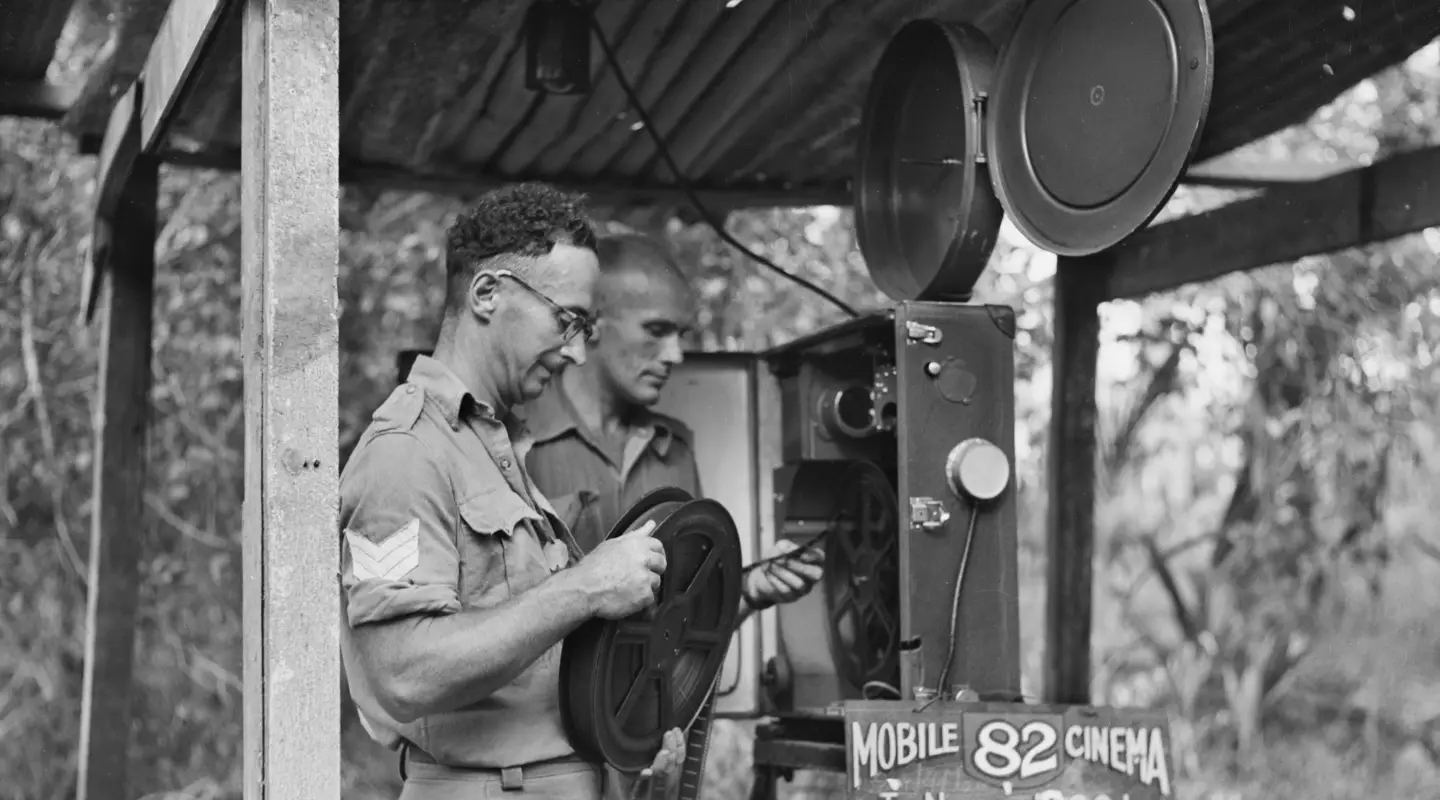
NX173054 Sergeant Ronald George (left) and NX55910 Sergeant Henry Winston of Mobile Cinema Unit 82 prepare their projector before an evening show, New Britain, 19 February 1945. Photograph by Lindsay Stuart Morgan.
While some locations boasted permanent cinema set-ups and seating, other sites required more resourcefulness. AWM film Mobile cinema and 14 Brigade sports (F07071) shows operators suspending a bleached tent-fly from a crude timber frame to serve as the evening’s screen. If power wasn’t available, a jeep engine could be kept running during the show so its alternator could power the projector. Troops often arrived with barrels and crates to use as makeshift seating.
Film showing general coverage of the setting up of a jeep mobile cinema. Film by Darrell Kinna.
Despite the welcome distraction they provided to troops, the job of cinema operators wasn’t without difficulties or dangers. Travelling between remote screenings, projectionists moved along dry creek beds that were prone to flash flooding, or risked strafing from enemy aircraft when travelling by boat. On at least one occasion, they operated alongside an active volcano, according to an account by Lance Sergeant Leonard “Len” Ransome of Cinema Unit 83.
Fondly referred to as “The Picture Show Man” by troops, Ransome recalled tremors from the volcano shaking his projection equipment. “It put on some spectacular displays at night, throwing up showers of hot ash hundreds of feet into the sky. Screening at night in the forward camp areas was always a bit nerve racking, especially when during the show the ‘Very lights’ [search lights] would light a distant ridge, and artillery, mortars, and machine-guns would open up.”
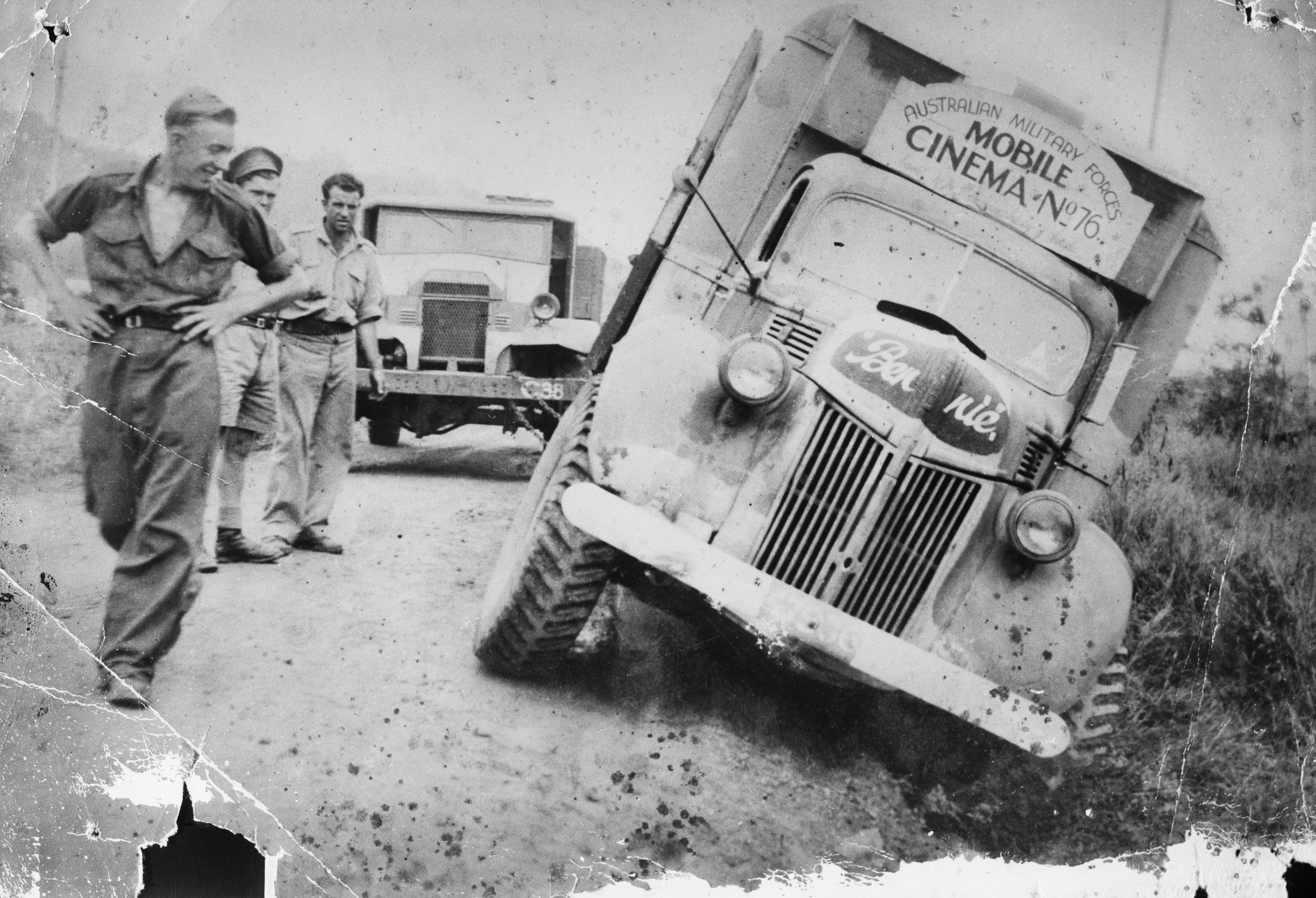
Ford truck “Bennie” of Mobile Cinema Unit 76 bogged near Port Moresby, New Guinea, 1942. Left to right: Sergeant Geoff Masters, unknown, N272977 Sergeant Wal Field. Photographer unknown.

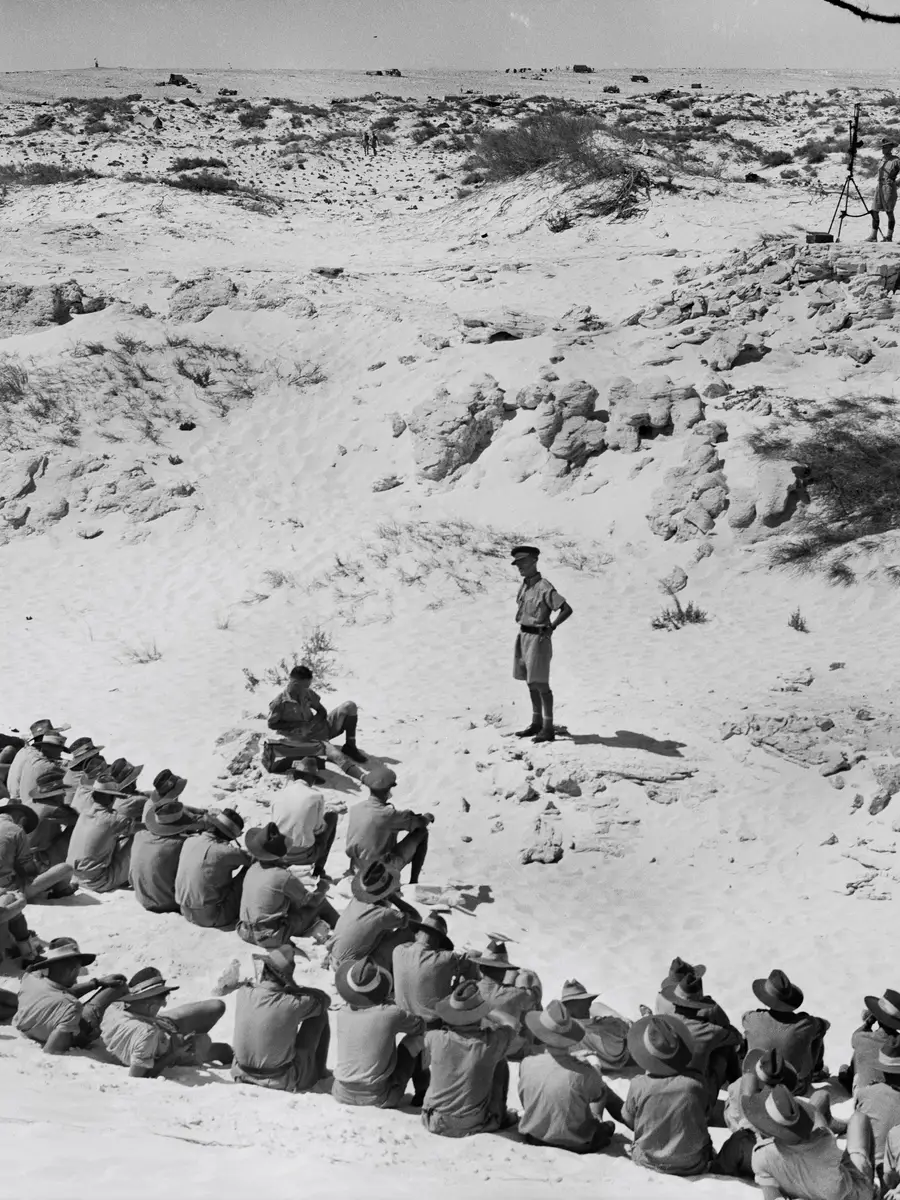
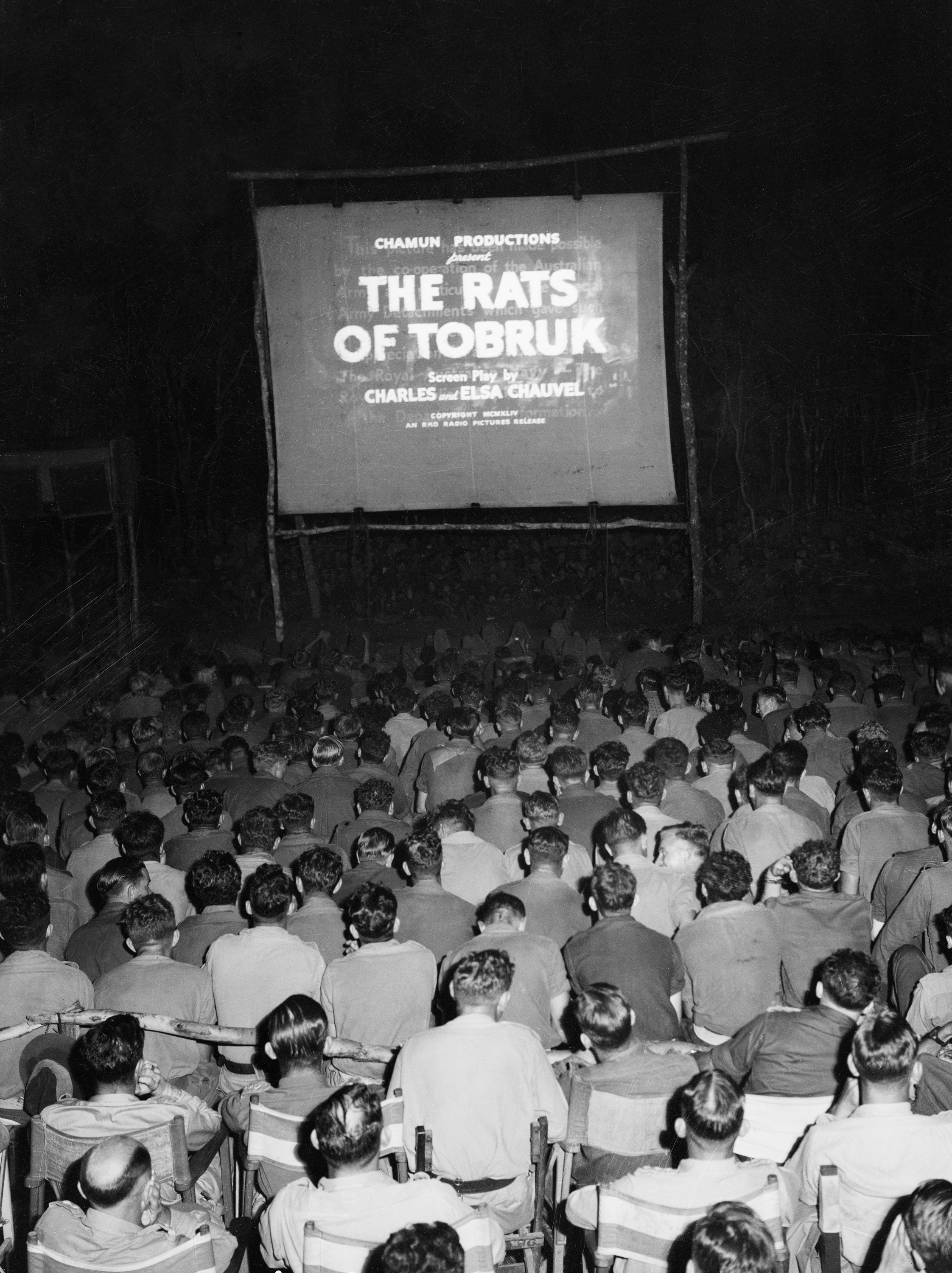
6, 7 and 9 Division troops at Kairi, North Queensland, 19 December 1944. Photographer unknown.
Despite less than ideal screening conditions, films were both highly anticipated and well-attended. In mid-1945, the 1 Australian Corps Amenities Service recorded that 10 different cinema units were operating in Borneo and surrounding islands, with audiences averaging between 1,000 and 2,500 men per show. The films themselves were often flown directly from America, and included new releases that troops watched well before the Australian public. Reels from Australia also included new releases such as the 1944 film The Rats of Tobruk, but were more often newsreels about current events.
Reporting in Australia in 1944 on the troops watching the Melbourne Cup so far from home, a Movietone News reporter concluded: “Let’s hope they’ll be able to watch the next one in civvies.”