For two decades, Australians served in Afghanistan, where progress and loss often existed side by side. Through those who served and lived through the war, discover what those years meant, what was lost, and what remains today.
This episode was brought to you by Leidos Australia.
An Australian War Memorial Official Podcast.
Voice Over:
Through Their Eyes shares real life experiences of war, some of which may involve sensitive or distressing subject matter. This episode includes descriptions of violence, death, trauma, PTSD, and loss. It also includes mentions of suicide. We aim to share these stories with care and respect, but please take your wellbeing into account while listening. If you need support at any time, visit our show notes for resources.
The Australian War Memorial acknowledges the traditional custodians of country throughout Australia. We recognise their continuing connection to land, sea, and waters. We pay our respect to Elders past and present. We also acknowledge the veterans who have served, those that are still serving, and the families that love and support them. This episode is brought to you by the support of Leidos Australia.
Archival Voice 1:
1-0 Alpha 1-1, over. 1-1, this call signer received harassing fire from where we believe he's at.
Archival Voice 2:
49 seconds for impact.
Giancarlos “Carlos” Taraborrelli:
We knew we couldn't rely on the Afghan soldiers. It was very lonely.
David "Coxy" Cox:
Someone's been seriously shot, then there's a time imperative to try and save that individual.
John Barrington:
On October 11, 2001, Australian forces were preparing to join a war on the other side of the world. Few could have imagined that it would be the first day of Australia's longest conflict, a war that would span generations of service, cost Australian lives, and leave questions that are still being debated today. The catalyst for that war came just one month earlier. The images are now etched into global memory: passenger aircraft hijacked and turned into weapons, the collapse of New York's World Trade Centre Towers, and a world watching in disbelief as the attacks unfolded. What followed would reshape international politics and draw Australia into a conflict that would last two decades.
I'm John Barrington. In this episode, we look at the legacy of the war in Afghanistan through the eyes of soldiers, diplomats, advocates, families, and Afghans whose lives were shaped by the conflict. Welcome to Through Their Eyes.
For the United States and its allies, the attacks were a profound shock. If terrorists could strike New York and Washington, many wondered where they might strike next.
Governments feared further attacks, the rise of new extremist networks, and a prolonged campaign of violence reaching far beyond America's borders. Australia was not immune to those concerns. To many, September 11 became a stark warning that terrorism was a global threat and one that demanded a response. In the months that followed, Australia committed forces to the United States and its allies with a clear goal in mind: Dismantle Al-Qaeda and remove the Taliban regime that had sheltered it.
But as the years passed, the Australian mission in Afghanistan became broader and more complicated. By 2008, Australian deployments in Afghanistan were focused on reconstruction projects. After seven years of warfare, it was becoming clear that to meet the country's long-term needs, Afghan Security Forces would need to eventually take responsibility for their own country's future. As focus shifted towards building Afghan capacity, Australia established the Mentoring and Reconstruction Task Force. In this new approach, Australian and Afghan soldiers began working side by side, sharing patrols, planning operations together, and building personal relationships in the field. But the closer the partnership became, the more Australian troops faced the realities of working across cultural divides and, in some cases, the danger posed by the very forces they were training.
In candid interviews recorded for the Australian War Memorial's documentary film, Patrolling the Valley, which is now on display in the new War in Afghanistan Gallery, members of the first Mentoring and Reconstruction Task Force, Operational Mentoring and Liaison Teams, or OMLT 3, described the realities of their operational mentoring role and recall a day in March 2009 that they have never forgotten. You're about to hear the voices of Dave McCammon, David Cox, Shane Gabriel, Jacob Kleinman, Carlos Taraborrelli, Scott Tampalini, James Hardy-Smith, and Josh Murphy.
David McCammon:
OMLT stands for the Operational Mentor Liaison Team. They were set up to achieve growth in the Afghan National Army and to train the National Army and prepare it to take over the fight against the Taliban.
David "Coxy" Cox:
It consisted of small teams of Australian forces that were placed out in Afghan patrol bases.
Shane Gabriel:
Everything from instructing, teaching.
Jacob Kleinman:
We were advising them on tactics, techniques, and procedures.
Giancarlos “Carlos” Taraborrelli:
Patrols, searches.
Scott Tampalini:
We'd rehearse their mission, and then we'd go out and conduct that mission with them.
Jacob Kleinman:
We're doing on the job training with some trainees, but it has a different context of failure.
Shane Gabriel:
It was organisation of about 80 officers and soldiers divided into a number of teams paired to Afghan National Army companies.
Scott Tampalini:
We lived with them in remote and combat outposts, in the middle of nowhere, some of them the size of a football field or even half a football field.
David "Coxy" Cox:
I think when people are considering daily life on a base in Afghanistan, they think it's all warfare all the time. In a lot of ways, it was quite mundane.
Giancarlos “Carlos” Taraborrelli:
Making sure weapons and ammunition are checked.
James "Smithy" Smith:
You know, chatting away.
Josh Murphy:
Checking on the towers around the base, just checking on the ANA, make sure they're awake.
Scott Tampalini:
We'd have to burn our own faeces, and then you'd have to pour diesel on it and stir it up.
Josh Murphy:
Try and get a bit of sleep and do it all again.
David McCammon:
It's all foreign to Australians. We're such a nation of taking things at face value and being pretty honest with each other. You go there and it's complex, and the people were even more complex.
James "Smithy" Smith:
We're there from almost out of space. We've got all this fancy equipment, and we roll in from a country that they've never heard of.
Jacob Kleinman:
When you turn up there on your tour, you think you're going to change the world. What you've got to realise is that these guys have just been living in this lifestyle for the last 10, 20 years, and you're just another face coming in to try and tell them how they're going to win their war.
David McCammon:
We were across five bases. There were varying standards of Afghan leadership across those bases. It really started to get serious in and around November, and we had multiple contacts with the enemy.
Giancarlos “Carlos” Taraborrelli:
The morning of 16th of March was a normal morning. We had Corporal Mathew Hopkins attached to our patrol. His wife had just given birth a few weeks earlier.
Jacob Kleinman:
The day started off no differently to how we started off any other day you'd go on patrol. You'd have some breakfast, you'd get your weapons ready, you'd do confirmatory orders.
James "Smithy" Smith:
The morning itself, it was beautiful. I mean, the weather was 20-odd degrees. The sun was shining. We were in an area where there was a lot of vegetation, a lot of greenery. We set off from the patrol base, which was just outside of that green zone.
Jacob Kleinman:
I had Mathew Hopkins, Josh Murphy, Carlos Taraborrelli, David Cox is in the rear call sign because he's the medic, James Smith, Scott Tampalini, Dave McCammon.
John Barrington:
The voice you just heard was from patrol commander, Jacob Kleinman.
Jacob Kleinman:
I'm in there talking to the Afghan company commander. I'm like, "Hey, I need at least 20-something guys to come with us because we're going down to Kakarak."
David "Coxy" Cox:
We were doing regular, almost daily patrols of the area. It's an established principle that if you create a pattern, an adversary will look to take advantage of that. But in saying that, we couldn't know that anything was different.
Scott Tampalini:
I was somewhere up the front. The atmosphere started to change when we started to enter into the engagement area or to the ambush area, unbeknownst to us, that we were walking into.
James "Smithy" Smith:
There were ANA that were holding their position and saying, "Look, I'm not going to walk any further." That was the first time that we really thought, "Okay, something could be on here."
Jacob Kleinman:
I remember we got to this one compound and we got through it, and then there was an open field that had recently been harvested with a couple of houses in the middle. You can feel there's just a change in the air.
Scott Tampalini:
People hurrying their livestock indoors.
Giancarlos “Carlos” Taraborrelli:
Women and children fleeing compounds.
Jacob Kleinman:
Your spider senses start tingling a little bit. I don't know how to explain it.
David McCammon:
Matt Hopkins identified a spotter, and he engaged with two to three rounds.
Jacob Kleinman:
We shook out an effectively in the extended line and then pushed out across this field. I remember distinctly seeing this mother and her kids run off, and then the machine guns kick in like that.
David McCammon:
Jake and I were engaged from our forward left, then very quickly, almost directly in front of us and also off to our right flank. The intensity of that fire meant we had to lay down and couldn't move.
Josh Murphy:
Look, they were ready for us. They were really obviously ready for us.
Jacob Kleinman:
Lots of automatic fire, like being chased by automatic rounds. I'm surprised they didn't hit me.
James "Smithy" Smith:
I clearly remember just the foliage that was next to me just erupted. The training kicked in. Whenever there's contact, first thing you do, you hit the deck, and that's exactly what I did.
David McCammon:
We were stuck there in that moment. I didn't think I was going to get out of that paddock, to be honest. Hoppy moved forward, engaged the enemy directly to our front, killed them, and that lessened the fire enough for us to get up and move.
Jacob Kleinman:
The Afghans have poured into this house, and then I see Taraborrelli and Matty Hopkins peel out.
Giancarlos “Carlos” Taraborrelli:
So we pushed around and set up on the wall. Our Afghan soldiers we were working with didn't want to fight. We had hit a larger force. I realised then that we were extremely outnumbered.
Jacob Kleinman:
I remember grabbing one of our machine gunners, walking him out, placing him on the ground and be like, "You need to shoot over there." Then I turn around and he runs back inside the building again.
Giancarlos “Carlos” Taraborrelli:
The fire had stopped to my flank, and I sat there screaming, going, "Why the fuck is firing stopped? What's going on?" That's when I turned and I saw Hoppy face down. I looked over to Dave McCammon, and he signalled that Hoppy was down.
Jacob Kleinman:
So I go forward. I go to see Carlos because I just want to see what he's up to, and there he is. He stopped fighting, and he's putting a bandage on Matt.
Giancarlos “Carlos” Taraborrelli:
Took off his helmet. I had him in between my legs, and we went into doing first aid. Then from there we got on the radio to have Coxy come over. He was our combat medic.
Jacob Kleinman:
I've got this problem. If I've got a casualty, I need the stretcher sent forward. Then next thing you know, Murph comes running out.
Josh Murphy:
I went over with the stretcher. You could sort of hear rounds and all that buzzing around you and stuff, so you knew they were having a shot at you.
Jacob Kleinman:
We're shooting, I'm providing some covering fire, and then I turn around and he's getting shot at.
Giancarlos “Carlos” Taraborrelli:
We knew we couldn't rely on the Afghan soldiers. It was very lonely.
David "Coxy" Cox:
If someone's been seriously shot, then there's a time imperative to try and save that individual.
David McCammon:
There was a US Special Forces Black Hawk. They came up on the radio and just said, "If you throw smoke," as in throw a smoke grenade, "we'll put the bird on the ground."
James "Smithy" Smith:
We heard the familiar thumping sound of a close helicopter, which was just choof, choof, choof, choof.
Giancarlos “Carlos” Taraborrelli:
When we saw the chopper, the firing went silent. It was like a hand from God just coming down, landing.
Scott Tampalini:
It sort of hit the ground so hard, skidded, dust and shit everywhere.
David "Coxy" Cox:
Unlike anything I've seen or anything I believed a helicopter was capable of doing.
David McCammon:
The load masters got out with rifles. I made it quite clear that I only wanted Australians to put him on the helicopter. I didn't feel the Afghans deserved to get to do that.
Giancarlos “Carlos” Taraborrelli:
You do anything for your mates, and we just put Mathew Hopkins in.
James "Smithy" Smith:
Within a moment's notice he's out of there, and now we've got to get ourselves out of this situation.
David McCammon:
It's probably about 4K to head back to the patrol base, and we need to stay focused.
Scott Tampalini:
We're one man down. We're all fatigued, and we're all running very low on ammunition.
Jacob Kleinman:
You can't fall apart. You got to keep the train moving forward, and that's what we did.
John Barrington:
Despite the efforts of his team evacuating him, Mathew Hopkins was declared dead soon after arrival at the multinational base Tarin Kowt. In the days that followed, his body was sent home to his family, which included his wife, Victoria, who he had married only weeks earlier, and his son, Alexander, who had been born on the same trip home. His mates described him as a very professional soldier, but always a bit of a larrikin with a positive attitude when the chips were down. As Hoppy was flown out of Afghanistan, the remaining members of OMLT 3 let flares go as a sign of respect that one of their own was going home.
As the war in Afghanistan continued, stories like Mathew Hopkins became part of a much larger and increasingly complex conflict. For Australian soldiers on the ground, success depended on building trust with the Afghan communities and soldiers they worked alongside every day. Yet that trust would become increasingly difficult to sustain.
Scott Tampalini:
As the operations evolved from the Mentoring Reconstruction Task Force through to the Advisory Task Force, both the Afghan Army, and us, we were just probably simply just more aware of each other and aware of what could happen and what could go down and that there may be bad eggs amongst us. On the first OMLT trip where we'd eat with them and play cricket with them and laugh with them, that wasn't really happening anymore.
Shane Gabriel:
We started to see a shift in the relationship between the mentors and the Afghan National Army. There had been frictions, of course, for a range of cultural and other issues. It wasn't until after our deployment, however, we started to see the green on blue attacks occur, deliberately designed to break that relationship between the coalition forces fighting alongside the Afghan National Army and the Afghan National Army itself.
James "Smithy" Smith:
What we were fighting against was an idea, it was a religion, it was a cult. It was soldiers and enemy that truly believed in a cause. Not only that, it was their home. We at some point had to leave, and the local population knew that, the Afghan soldiers knew that, we knew that.
Scott Tampalini:
But we didn't really think about big picture stuff when we're on the ground. When we're in those combat outposts, it was just about just looking after yourself and your mates and just getting home, and that was it.
Josh Murphy:
We had some good times. We had some very, very funny times. We had some very, very bad times. I think back now and think that I wasn't over there fighting for this country. I wasn't over there fighting for Afghanistan. I think we were just fighting for each other, I really do, yeah.
John Barrington:
The changing relationship between coalition forces and the Afghan National Army highlighted just how challenging the war in Afghanistan had become in the years that Australians had served there. Few people had a better view of these complexities than diplomat Fred Smith. Working to build relationships between coalition forces and local tribal leaders, Fred occupied a unique position between cultures, communities, and competing narratives. His role gave him a unique insight into the human stories that existed behind the headlines and the politics.
Fred Smith OAM:
Well, I flew to Afghanistan via Al Minhad Air Base in the UAE where we had the Australian headquarters in the Middle East. The first thing that happened when I arrived there was I went to a rap service, a funeral for a young soldier named Ben Ranaudo, whose casket was being brought through on Al Minhad on the way back to Australia. I'd worked in Bougainville and other deployments that had been quite benign, and the locals had loved us. But the first thing that struck me was, "Gee, there are people out there who are trying to kill us."
Then I landed in TK, and the ramp went down at the back of the C-130, and then the next thing I saw these extraordinarily beautiful mountains. The next thing that struck me was the rugged beauty of the place. Then, of course, I got off the plane into the truck, and the next thing that hit me was the bloody dust, this fine, talcum powder dust that just gets everywhere.
We were living and working, most of us, on the multinational base in Tarin Kowt, which was a military base built around an old Russian dirt airstrip. Most of the buildings were either temporary prefab constructions or sheds or hardened steel shipping containers, which the Dutch brought in called Drehtainers. They needed to be hardened steel because the Taliban were firing rockets at us all the time. We lived and worked in these shipping containers in the headquarters there in quite an intense environment. I was sharing one of these shipping containers as a sleeping accommodation with seven or eight soldiers. It was tight and the work intense.
This base was on the outskirts of a dusty little town called Tarin Kowt, Tarin Kowt, depending on who you asked. So, there we were in this tribal environment in a province that was entirely agricultural in its economic output, that was very conservative as to say that women were not involved in public life, that was dominated in different areas by different armoured landlords, warlords really, who had militias and looked at each other with fear and loathing based on some longstanding competition over land, water, and political power. So, it was a highly competitive and very ancient-looking feudal society in many ways with an overlay of Toyota Corollas and Nokia phones.
Relationships were crucial. We were in a business of building relationships as diplomats. I mean, the overarching role of the mission was really to win the support of the local population for the coalition forces and the Afghan government from the point of view of the local people. Each of them out in the provinces and out in the districts had a choice to make. Did they support the government and the coalition forces or the Taliban?
Now, none of them really liked the Taliban. The Taliban had done an awful job of government. They were essentially armed bullies with a very extreme view of their religion. But they were around, and they were hard to get rid of, and they were persistent. The government that we supported was not perfect either by any means. There was corruption, and sometimes they were even predatory, but they did provide services, roads, hospitals, schools and things like that. So, relationships were critical as a way of building rapport really and trust for the local people. If they could see us, if they could talk to us, if they knew what we thought, it was far easier for them to trust us and the government.
Now, from our point of view, our safety and effectiveness depended on our situational awareness because you understand what was going on around us. So the only way to understand what was going around you was to talk to people, and not to talk to one person, but to talk to three or four people because everyone would tell you a different story, a different perspective, and your way of understanding a three-dimensional picture was to see it from different perspectives to triangulate.
Everyone had a different experience of Afghanistan depending on what your job was, depending on what unit you were in, depending what country you represented. Everyone found a different piece of the elephant and described it differently. So we all took a very deliberate approach to managing the politics of the province, and that's a complex thing. Because the thing about Afghanistan is whenever you make a friend, you make an enemy in a contested environment. We'd tend to arrive in these places and think, "Well, we're here to save democracy and protect the population and our values." But, in fact, through localised, they see us as a source of power and resources in their competition with one another. If you don't understand that, you'll be instrumentalized, as they say.
We'd spend days meeting with tribal leaders. I remember one occasion, it was around the 11th of September, 2010, and an American pastor in Gainesville, Florida, had launched International Burn the Quran Day, and news of this got up to the Baluchi Valley. All of a sudden one morning, we found 600 Afghans storming towards us in a procession, waving flags and barriers, and they stopped at the gate and started raving at us through loud speakers. Then they started throwing rocks, 600 people throwing rocks. I went into my shipping container because that's what the captain told me to do. He said, "Get your head down here." It just felt like hailstone raining on top of the shipping container. Then I heard some gunfire from outside. Someone had raised a rifle to shoot at us, and the boys had opened fire. A couple of the protestors had been killed, and the crowd dispersed.
Anyway, we though we'd better do something about this because I was in the business of building relationships with the local community. I called the district chief and say, "Hey, let's talk to the mullahs." He got 20 of the local mullahs around. Probably some of them were Taliban. We got into the district compound, sat down, 20 very angry-looking mullahs. We spoke through an interpreter, said, "Look, this is not the way the people in the West think. This is not us. We're sorry about this." They said, "We would give it up our farms, we would give up our wives, we would give up our children to fight for our religion. It's all we've got."
I had my guitar when I arrived in Tarin Kowt, but I hid it under my bed for the first two months because I didn't want to look like a flaky musician. I wanted to be taken seriously. But eventually, I got it out and it became very useful. I started playing a lot of concerts and in poppies on a Saturday night. There's not much else going on in Tarin Kowt on a Saturday night, so everyone would show up. I was singing songs about the environment we were in, and just started working with Afghan musicians from the town. A lot of the time, people from different national sides kept to themselves within the base, but it was one of those few times when everyone just got together. By the end of the evening, everyone was reeling around the room dancing to me and this Afghan band. It just brought everyone together. It was great fun.
Working there in Tarin Kowt was intense. We were 10, 11 hours a day, and then meetings with Afghan leaders and then more meetings. Then on some nights, a rocket would land on your roof or on someone nearby and wake you up. Then every few months, a soldier would be killed. All of which is to say, it was really emotionally intense, intellectually intense, and not much time to process it. So, I found often when I was heading out on leave, as soon as I got on that plane, I would start writing. I would just start scribbling into a military field book, or whatever I had, notes. I found myself writing three or four songs every time I had a month off. It became a way to process the experience, yeah, for sure, to organise it in your mind apart from anything else. I think processing is a matter of organising things emotionally and intellectually, giving it some structure so you can sleep.
MUSIC:
So go call your mother, call your old man on that welfare line.
Tell 'em you love 'em while you still can 'cause all good things must die.
Soldiers sing me a sapper's lullaby.
You give it your all knowing if you should fall.
That all good things must die.
All good things must die.
Fred Smith OAM:
I guess the song The Dust of Uruzgan is the best-known song from the songs I wrote about in Afghanistan. It's a song that came to me in stages. To start with, I grew up listening to Bogle's and the Band Played Waltzing Matilda and put a kind of template in my head for how a song about a soldier's experience might be written as to say from the first person through the eyes of a soldier centering around maybe what might have been a bad day in the office.
Then I arrived and there was the dust that was bloody everywhere. Then the dust came to strike me as a metaphor for the province. Everything was quite opaque. You couldn't quite understand what was going on. Every time you thought you'd grasp what was happening, it turned out there was something else going on, and everything was just a little bit dysfunctional. I thought, "Why don't I write a song called Dust of Uruzgan, but I didn't have a pair of eyes to see the situation through.
Then one night up in November, I'd been there four months, I was talking to the intelligence cell, the major in there, and she explained to me what had happened that morning that Ben Ranaudo had been killed. I shortly afterwards read the inquiry report into Ben's death, which mentioned a second soldier involved in the incident whose name had been redacted from that report to protect his identity, but I found it on the front page of the Townsville Bulletin, the soldier Paul Warren, who'd been a Muay Thai boxer in Townsville. Basically, I understood what had happened.
Ben and Paul had been in an overwatch position while their mates had been searching an IED factory compound. They'd been quite still, and there was no indications there was any problems. The locals were walking backwards and forwards. But at one point, Paul shifted in his spot and his foot triggered an anti-personnel mine which blew the bottom part of his leg off. But that mine happened to be linked by detonation cord to a second mine, which Ben happened to be sitting right on top of, and of course, Ben was killed. I thought, "Well, Jesus, this boy Paul's got a bit to think about. He's accidentally, through no fault of his own, triggered a mine that's killed his mate. He's lost his right foot. He can no longer participate in the sport he loves." I thought, "This is a guy in a difficult psychological predicament." Then I had the eyes through which to write the song.
As I said, I got on board that plane to go back home and leave and just wrote 13 verses into a military field book. One of the first times I played it was at a folk club down in the east of Melbourne, in Berwick. I got up on stage, my bass player was there with me, a woman named Liz, and I said, "Oh, this is a song about a soldier named Ben Ranaudo," and a voice came from the back of the room saying, "He's my son." Ben's mother was there. I nearly fell off the stage, and Liz started crying. Anyway, I played the song. At halftime, I went and talked to this lady. She said, "Thanks. I read the inquiry report. I couldn't make sense of it, but your song explained what happened."
MUSIC:
In the ring they called me "Warlord," My mother called me Paul.
You can call me Private Warren when you're filing your report.
As to how I came to be here, this is what I understand.
In this hospital in Germany from the Dust of Uruzgan.
Paul Warren:
Afghanistan was like something you couldn't imagine it unless you've really been there. I'd seen a little bit more of the world, and I was probably a little bit older than most guys at 1RAR. I mean, I was 30 in Afghanistan. My best mate turned 21 over there. That was about the average age of most other diggers. So I'd had a little bit more life experience.
John Barrington:
Private Paul Warren was an infantry soldier from Townsville when he deployed to Afghanistan as part of Mentoring and Reconstruction Task Force 2. A former Muay Thai kickboxing champion, he had joined the army looking for challenge and purpose. And like many soldiers on deployment, he was focused on the job ahead and the mates beside him. In an interview at the Australian War Memorial in 2013, he recounted the day that changed his life.
Paul Warren:
You're definitely very aware of IEDs when you head to Afghanistan. Initially on the ground, SOPs, your standard operating procedures and stuff before you get out of a vehicle, you need to be so aware of where you put your feet. I guess the first week or two, it almost takes over and you become paranoid. Until you get used to it, the landscape that you're working in and what's going on, the first week or two can really, really do your head in. You're very almost over-cautious about where you put your feet.
18th of July started at around 1:00 AM, so there wasn't much sleep before that because we knew we were heading out in the dark on a patrol down to harass or stop an insurgent unknown bomb making facility. We were told it was a 3K patrol, but it was probably double that length. Pretty unforgiving climate where you're slipping over all the time in the dark, very hard to get a gist of where your feet are and things like that.
We got to our destination, I think, roughly at about 6:00 AM in the morning. The engineers, everyone had been through before us. People had walked exactly where we were walking. They had swept with their mine sweepers and deemed clear. Even though that happens, you still have to be really diligent about where you put yourself. All of a sudden after around two hours, something went off. I honestly thought it was maybe a suicide bomber because we'd had some local population around, and the big tell sign with IEDs is the locals won't go anywhere near. They've normally got a fair idea where an IED is. So clearly even the locals didn't know this one was in the ground sitting just behind us.
I just remember the dust. I was lifted into the air. My right ear was just ringing. It blew out my right eardrum. The first thing you want to do is make sure the guy beside you is okay. I tried to crawl looking for Ben and realised that wasn't working too well. I looked down and my right leg was gone just below the knee. I didn't see what was left of it. I didn't know where the boot or anything below that was. It was just clean gone. From that point, I looked up and saw one of the other guys in my section, rolled onto my back and just said, "Mate, I need some help." That's when the guy started working on me.
I'm not at all trying to sound heroic or glorify this in any way. It's not a nice situation to be in. But I still had to find out where my mate was or the closest man to me was. I kept asking the guys, "Where's Ben? Where's Ben?" From the no response or from the fact that they were trying to lead me onto something else, I think I knew what had happened.
I had a chopper to me in around 16 minutes, I think I was told, which was just insane. Probably saved my life because I honestly thought I was going to bleed out. My mate, he stayed beside me the whole time, talked me through it, and I think really kept me going, because at one point I thought I couldn't keep my eyes open anymore. I just thought I'd bleed out. So I really need to thank him for keeping me going at that time as well. I remember getting off the chopper and talking to a captain, Doc Challen, just before I went into surgery. I remember that and then everything kind of a little bit foggy obviously as you go into surgery. I remember waking up and looking around this room hoping Ben was going to be in a bed beside me, but he wasn't.
John Barrington:
Paul Warren had been only weeks into his deployment in Afghanistan's Uruzgan Province when an IED took his leg and the life of his mate, Private Ben Ranaudo. Ben was 22 years old when he became the 11th Australian soldier to die in Afghanistan. Coming home, Paul faced the long-term challenge of rebuilding a life changed forever, navigating intense physical rehabilitation, including over 16 surgeries on his leg, the ongoing mental health impacts of trauma and survivor's guilt, and the weight of adjusting to a life he didn't choose where very few people could relate to the experiences he had endured.
Paul Warren:
My mate was killed, so that really puts things in perspective. You don't have time to stop and whinge or whine about your recovery. You get to see your loved ones again. I was up walking on a prosthetic 10 weeks after the blast. I don't really know how to describe it. It's a very unusual time. You need to trust this thing that's not part of your body. You're not used to it. You need to really get some trust, which takes a bit of time.
I'm still quite bitter about it. I do not think the ADF was prepared for what was going to come out of Afghanistan. They should have done risk assessments before we went over there. When I first got back to 2HSB, they looked through the phone book to find prosthetic places and just sent me to a few. The first one I went to, this guy says, "Well, you'll never run again," so I just left. That's not the kind of people I wanted dealing with me. A lot of different things have been put in place since to help out wounded guys and their families. But in 2009, clearly no thought had gone into it.
The general society in Australia, I don't think they understand our mindset, and I get that. Unless you've been to Afghanistan, I don't think you will understand what goes on there and what we're doing there. But you feel a real sense of our mates have given everything. We need that sacrifice not to be for nothing. That's the majority of the opinion of the people that want to be deployed and want to go over and do their job. You don't want your mates' lives to be for nothing. The fact that a mate was lost, that is what really, really hurts. My mates are everything to me. You will never have mates like you have in the army or on a deployment. You eat together. You sleep on the ground next to each other. Everything you do, you fight together, you work together. But they're so important in that recovery process.
I felt a real sense of disconnect because most of my mates were still on deployment. For a period, I don't think I left my house for around six months. When PTSD was at its worst, I was just shut off to the world a little bit. I lost direction. I'm lucky with my partner, she's an amazing person. She said to me, "You've always achieved things in your life. You've been an athlete. You went to Afghanistan. You've ticked all the boxes that you wanted to do. Why are you so happy to sit around and do nothing now because the army has nothing for you?" Honestly, after a little bit of an argument and I walked away and thought about it, she was exactly right.
I feel blessed now. I've got two young children. I've got a really good life. I don't have time to say, "Why did this happen to me?" I regret nothing. Even early on, I said to my partner, "I would go back tomorrow." Your mates are what makes being a soldier special. You trust the man next to you with your life, and you'd expect he would do the same. That's what makes you proud.
John Barrington:
Since that day in Afghanistan, Paul Warren has shown remarkable resilience in the face of loss and adversity. He has dedicated himself to helping others navigate challenges of their own, driven by a commitment to honour the memory of his mate, Private Ben Ranaudo.
MUSIC:
I was a Queensland champ Thai Boxer for the fist and foot and knee.
Now all I see is bed sheets where my right foot used to be.
Benny's dead and buried underneath Australian sand.
But his spirit's out their wandering through the dust, through the dust of Uruzgan.
John Barrington:
Paul went on to captain the Australian team at the Invictus Games and shared his experiences in his autobiography, The Fighter. In recent years, he has continued to mentor and support others through veteran advocacy, employment initiatives, and programmes that help current and former service personnel rebuild their lives. While the events of 18 July, 2009, changed the course of his life, they did not define his limits. Through service leadership and a commitment to his fellow veterans, Paul continues to ensure that the values of mateship, resilience, and sacrifice live on.
You can find Fred Smith’s album Dust of Uruzgan, as well as his two memoirs on Afghanistan, at fredsmith.com.au.
By the early 2010s, the war in Afghanistan had become very different from the conflict Australia joined after the September 11 attacks. Back home, perceptions of the war were changing, too. The original purpose of the mission had been clear to many Australians. But nearly a decade later as the conflict dragged on and casualties continued to mount, the goals of the war seemed less certain. Australia's combat mission in Uruzgan ended in 2013, but the broader effort continued through training and advisory roles. The hope was that years of investment, partnership, and sacrifice had created the foundations for a stable Afghan state capable of standing on its own. Yet, even as international forces withdrew, the war itself never truly ended. The Taliban remained a persistent force, violence continued across the country, and doubts lingered about whether Afghanistan's government and Security Forces could survive without coalition support.
Fred Smith OAM:
When it became apparent to me in early 2013 that our mission in Uruzgan was about to close, I went out of my way to get a job back in Tarin Kowt, by which point we'd managed to spread Afghan National Army bases out through the main three valleys of the province that had created a certain amount of security, enabled us to have the support of the population to build roads, 37 health posts and schools, including the Malilai Girls' School in Tarin Kowt, which had 700 female students. Afghans wanted to educate their kids. So my sense at the time was that we actually made some progress.
I conducted some interviews with Afghan tribal leaders who I had known from the valleys and said, "Have we made a difference?" and they said, "Yeah, look, things have gone a long way in a short time." It was the first thing they said, but the second thing they said was, "Don't leave. We're worried about what'll happen when you go." Definitely the case that Mr. Trump wanted to get America out of Afghanistan, and eventually he signed the Doha Peace Agreement, which had been negotiated between the American government and the Taliban without the Afghan government involvement. The Americans promised to leave on the 31st of August, 2021.
Now, you can imagine what that did. Afghans are essentially survivalists. It doesn't pay to be on the wrong side of history in Afghanistan. The population was probably thinking, "How is this going to end?" The Australian Embassy pulled out of Kabul in May of 2021, and in July of 2021, the Americans handed over Bagram Air Base. In August, the Taliban started taking over province after province after province with many Afghan national security bases just simply surrendering. Because without American air support, they couldn't resupply or defend themselves. Eventually, Kabul fell pretty much without a fight on the 15th of August, 2021.
I went back to Kabul in March, 2020, it seemed like a sensible thing to be doing in the middle of the pandemic, and worked in the embassy there. Throughout that year, things were getting worse and worse. Every day there would be bombings in Kabul, and three or four public servants would be killed on the way to work. My staff were being harassed with threatening notes from the Taliban. There was a growing sense of doom. Then it got worse and worse.
On the 15th, we saw the scenes that everyone saw on the TV. I was watching on a TV screen in Doha as the city fell and people stormed the airport to try and get on any plane they could get out of. There's amazing scenes on the tarmac where Afghan men were clinging to the tyres of rising C-17s and plummeting down on the city and all of that horror. Then on the afternoon of the 15th, I got a call from my boss and said, "Fred, we're going in." I thought, "I'd better not tell my wife." We flew to Al Minhad and got a briefing at the headquarters on the 16th of August. On the afternoon of the 17th, it was me, my boss, Richard Rogers, another fellow from DFAT, a guy from Home Affairs, and about a dozen very fit young men from Perth got into a back of a Hercules and arrived in Koolan National Airport as part of an advanced team of a mission to extract visa and passport holders from the city.
When we flew in that night, we thought there'd be a couple of hundred would-be evacuees with the right paperwork waiting to fly home, but in the event, there are only about 30 ready to meet us there, because this was the problem. The problem was that the Americans had driven everyone off the base so that they could turn the airstrip into something that would function. People surged at those gates. To control the flow inwards, soldiers were standing there physically blocking them and firing warning shots into the air. I saw a pack of American Marines leaning into a scrum in a gap between a razor-wire perimeter and a blast wall just to hold the crowd at bay. Whenever the crowd surged too much and was out of control, they'd let off capsaicin gas. The crowd would disperse, and the Marines would run through the back of the chute and lock the gate, and then they'd all start it all over again. So there was incredibly violent and horrendous scenes at the gates at the Kabul International Airport.
I went out there on the morning of the 19th and looked across that razor-wire perimeter. There were people pushing and shoving and 2,000 people baking in the August sun screaming, gunshots, an Afghan Security Forces guy yelling through a loud hailer, a Taliban ranting and the crowd beating people that were pickpockets. There were women and children and grandparents. At one point, I saw an old woman dangling an infant over the razor-wire barrier. I had my phone on me and one of my staff members, Asmatullah, was on the other side of the wire calling me. He was standing there in his sun with his wife and his children saying, "Fred, should we push through this?" I said, "No, man, it's too dangerous. Wait, we'll find an answer for you," but I didn't know if I had an answer at the time.
There was this pack of US Marines plugging the gap in the razor-wire perimeter that people were trying to get through, and people were sort of crawling out between their legs like a football coming out of a scrum. At one point, a little girl squeezed out and popped out between the legs of these Marines, and she reeled over in my direction. I grabbed her and sat her down. I gave her a glass of water. I said, "You speak Pashtun or Dari?" She said Pashtun, and she kept crying, "Mama, mama, madur, madur." Her mother was on the other side of the razor wire. She would've been 11 or 12, about the same age as my daughter. Then at some point, this capsaicin gas just popped and we all ran, and I lost sight of her and went around, tried to ... I found her, took her out the back. We found a translator, and she'd remembered her dad's number. Called her dad. One of the Afghan soldiers took her out and escorted her back to her father, and who knows where she is now.
MUSIC:
I've seen children your age, my love, pushed through the mire.
I've seen infants dangled above the razor wire.
Some pushed and made their way through and eased my mind.
Some friends and people we knew were left behind.
I'm so grateful for a warm home.
In here we're blessed where I can sink like a stone in my helplessness.
I've seen the remnants of the Roman fleet.
Sifted embers from the February fires.
I've read of Carthage and the fall of Crete.
Nothing surprised me until the gates of KIA.
John Barrington:
For Australians, the return of the Taliban marked the end of a 20-year war, but for millions of Afghans, it was the beginning of a new reality. The effects were felt immediately, especially for Afghan women and girls. Over the previous 20 years, a generation had grown up with greater access to education, employment, and public life. While progress had been uneven and often fragile, many Afghan women had become teachers, journalists, business owners, and political leaders. In the months that followed the Taliban's return, restrictions on education, employment, movement, and political participation increasingly excluded women and girls from public life.
An Afghan Australian researcher, human rights advocate, an expert on women, peace, and security, Farkhondeh Akbari has spent years documenting the experiences of Afghan women and minority communities. During the evacuation effort in 2021, she was also among those helping connect at-risk Afghans with pathways to safety while advocating for a stronger international response.
Dr Farkhondeh Akbari:
We gained so much from that 20 years. Afghanistan can never, can never achieve ... I'll put it on the record. The development that we had in the last 20 years of military intervention, despite its controversy and everything else, for development, for gender equality, for human right, that 20 years was essential for us to move up from a failed state to a development state. That was something that the communities across the board benefited from it. I know there's a lot of controversy and a lot of backlash. Even if it was a military failure, it took them 20 years to do something or make a change, but we had a constitution intact that protected gender equality, ethnic equality. We had spaces formally recognised that woman could fought to become a member of the Parliament or a judge or work in civil society. I mean, despite all the challenges, that consistency of 20 years is very, very important.
Before 2001, we had the Soviet invasion, we had civil war and so on, which my family and myself are victim of those political instability. There was a lot of struggle, and that struggle is meaningful. August 2021, the Taliban came back to power. We don't know how long it's going to last. That stagnation of woman and girls not being able to do anything is harmful, is alarming, not only to them, but to their families, to the community, and then to the country. Life is hard. We have a hundred edicts now by the Taliban that restricts every aspect of woman's right in Afghanistan. Girls, woman, they can't walk outside the home in a particular kilometre without having consent and a male member of their family to come. I had a recent interview with a woman who is a widow. She said to me that, "Right now, it's so difficult for me because I have to convince my son to come and walk with me to bazaar."
Afghanistan's gender restriction under the Taliban is the worst in the world. I mean, I can't emphasise more. The level of limitation is so severe woman are committing suicide because there is no hope for a future. The current restrictions are so severe that it's suffocating, and they also know that the international community have abandoned them. Imagine you are a 12, 14, 16-year-old girl in Afghanistan who knew pre-2021 that you were equal citizen, your rights were recognised. Imagine that happened to us in this country. Overnight, it changes. It's been five years. We cannot walk outside. We cannot earn. We cannot have a voice.
I'm tracking the data on Australia's involvement in Afghanistan after 2021. It is symbolic. We have great statements, which is good, much better than other countries, but it's very symbolic. I mean, I'm grateful that Australia is part of the movement with Netherlands and Canada and Germany to hold the Taliban accountable about recognition of gender apartheid and hold the Taliban accountable in the International Code of Justice. That's political. Any foreign ministry can write that. Good for them. But what are you actually doing for the woman and girls inside Afghanistan?
The people of Afghanistan are very resilient, as mentioned before, because we have been at war for such a long time in different episodes. I think the criticism we see, why they're not uprising like they are in Iran? They are tired. They are very tired. Every family have lost a son or a daughter in suicide bombing, a son in the army. For what? My hope as a kid, as a girl from diaspora was that I contribute back to my country and do something good. I needed to contribute somehow on the ground level.
That's when, in September 2021, we established our Organisation for Development Solution, an NGO, that we could work somehow with the woman on the ground. Since then, we are working to do our underground work. We provide employment, psychological support, English language class, a library, literacy courses for them. That's been going on for almost four years. We had over a thousand girls graduate from our programmes and so on. For me, the responsibility is a lot more because you have to take extra measure for their protection. It was like, is it worth it? These girls every day tells me that it's worth it. The pictures that they're sending me and the way in which they're stretching resources is incredible. They bought balloons, they made a cake, they wore the most beautiful dresses that they could afford in this, and they said that, "This is life. This is our resistance."
I'm publishing book article. I talked to different policymakers and give briefing at prestigious places such as United Nations, here and there. But nothing, nothing is equivalent to what I gain and the meaning that I'm getting from the girls on the ground. The little that we give to them is meaningful to them. Outside how we talk about it is so distanced from how things are on the ground. No matter what kind of hardship and whatever phase you go to Afghanistan, there's always somebody smiling at you, receiving you, feeding you, hugging you is the most human experience that I have ever had.
I think this is really important for us to talk about resilience. Resilience during war is beautiful, but it's also very misleading. I think we have to understand resilience politically. So I think our resilience should not be about spreading our bread across our community. Our resilience has to be understood by our political activism, which Afghan woman are doing. The post-2021 and the evacuation that happened, there are so many woman leaders who are dispersed across the globe, and they're hurt, they're betrayed, they have family, they have children left behind, but they're the number one advocate of woman rights for Afghanistan. The woman of Afghanistan in 2021 onward is not the woman of Afghanistan of 1990s. Something has changed about us, and that's 20 years of intervention and the gain that we have had. That's the brightest light that has not blown off. They are still existing, and also, they are the hope for the future of Afghanistan.
John Barrington:
Over 35,000 Australians served in Afghanistan. 41 lost their lives, and hundreds more returned home carrying physical injuries. But some of the deepest wounds were less visible. The Royal Commission into Defence and Veteran Suicide found that 1,677 serving and former ADF members took their own lives between 1997 and 2021. For many veterans, the psychological impacts of the war in Afghanistan and their service have continued long after the deployment ended. The findings of the Royal Commission have highlighted an important lesson for Australia, that supporting veterans cannot end when military service does. The responsibility to those who serve continues long after the fighting is over.
Few people understand that better than Garth Callender. A veteran of both Iraq and Afghanistan and now the CEO of Bravery Trust, Garth has spent much of his post-service career advocating for veterans and their families. Through Bravery Trust, he works to provide practical support to current and former service personnel facing financial hardship, helping ensure that those who have served their country are not left to face their challenges alone.
Garth Callender:
I'm a firm believer in people process trauma differently. So when we look at the trauma of being exposed to either events or even just human suffering, just the contrast to the way local Afghans in the Uruzgan province where we worked/lived, the hardships that come along with that, I think clashed with a lot of people, and they're understanding wanting to help people, but realising they were only limited in what they could do in that role.
I find it really interesting how that plays out. There's a whole range of the way people process all of those things. Some process it very quickly. Others take time and need help to do it. Then there are the few who really struggle to ever fully process it. I still do a bit of work in the military, and I'm really focused on how we can train and equip people for those awful-but-lawful type scenarios, the fact that military people are exposed to humanity at its worst at times and often have to make decisions which might be entirely legal and right by the laws of armed conflict but are terrible in nature, and look at how we not only equip people to work through that, but then give them the ability to reconcile those experiences, one from a military sense so they can continue to serve and not be impacted by debilitating mental health issues, but rather process, move and maybe even grow from those events.
I guess I'm a really open book with my experiences. I've been lucky because, yes, I've been exposed to trauma along the way, but there hasn't been anything which I've truly mentally grappled with. I haven't dealt with that cognitive dissonance, which many do. So I've been able to process what I've been through and grown from it. To be honest, having opportunities, even like today to tell my story, I think is extremely healthy.
I actually feel like ... There's 580,000 veterans across the country, 35,000 of those Afghanistan veterans. They're around. They're not unusual. They're not different to you or I. They're often really quite humble about their service that you may not even know that their service has been in Afghanistan. For me, this is a story which goes back to 2004, when I was first injured in Iraq, and the 25 or so Australian soldiers around me really saved my life. All that military stuff came together, so all the training, all the professionalism, everything, getting me to life-saving surgery within about 15 minutes, it's the one thing which I carry with me, which is I owe those people a lot.
We had our 20th anniversary of that event here at the War Memorial. Caught up with the boys, being able to reflect on where they all are 20 years on. It was a real interesting reminder for me. The vast majority of them were doing really well. Then we still have a handful who haven't properly processed that event, who haven't been able to move on from it. It's a reminder for me that the work we do at Bravery Trust is all about that: celebrating service, applauding those that have done well, understanding that most leave standing and smiling, but also acknowledging that our core business is about helping those that haven't fared well from their military service and doing our bit to get them back on their feet.
I guess what is not well known about the work that my team does in the veteran space is that small percentage of veterans actually equates to well over a thousand veterans that we support every year. It's not about throwing money at a problem. It's about building those skills which the military teaches so much, but what they don't teach is budgeting, managing personal financial risk, understanding rights and obligations around loans, debt, things like that. Take that pressure off, and then helping that veteran and their family build financial education, understanding budgeting.
The great part about what we're doing right now leading into October is the Bravery Trek event, which is all about showcasing what we do, getting the word out, and fundraising on top of that. This will be the second year in a row we're going to run a Dusk till Dawn event here at the War Memorial, which I know is quite an unusual event, but it's been fantastic. Last year, there were moments throughout the evening where you just have the hair stand up on the back of your neck, the silhouetted runners running across the front of the War Memorial through just the buzz and enthusiasm that you get from people that really want to provide that tangible, comprehensive support to veterans. To be able to do that on these hallowed grounds of the War Memorial, we think it's a really fitting piece for remembering those who have come before us, but also running events which are focused on either current serving and those recently transitioned veterans, many of which have been in Afghanistan.
John Barrington:
Afghanistan is Australia's longest war. But for veterans, families, and communities, the legacy of that conflict did not end when the last Australian troops departed Uruzgan or when Kabul fell. In many ways, it continues today. While deployments have an end date, their consequences often do not, and the responsibility to those who serve extends after the headlines have faded. While many people will remember Australia's involvement in Afghanistan for its impact on national and international politics, we should also remember the impact it had on people. We should remember their personal service, sacrifice, resilience, and the ongoing challenge for many building a life after war.
This year marks the 25th anniversary of Australian service in Afghanistan. On 11 October 2026, a national commemorative service will be held at the Australian War Memorial to recognise the commencement of Operation Slipper. The event offers an opportunity for all Australians to express their respect and gratitude to those who served in Afghanistan. To find out more or to register to attend, visit our show notes.
This episode was researched and produced at the Australian War Memorial and featured Fred Smith, Paul Warren, Farkhondeh Akbari, Garth Callender, and the voices of the members of the 1st Mentoring and Reconstruction Task Force, Operational Mentoring and Liaison Team 3 who are featured in the Memorial's galleries. These stories continue in the new War in Afghanistan 2001 to 2021 Gallery. If you'd like to learn more, you can find links in our show notes.
Voice Over:
This episode is brought to you through the support of Leidos Australia.
Twenty years of war. Thousands of Australians deployed. Lives changed forever.
For two decades, Australians served in Afghanistan as part of an international effort that became Australia’s longest war. It was a conflict marked by danger and loss, but also by relationships, hope and profound change.
Follow Australian soldiers on patrol in Uruzgan, hear veteran Paul Warren reflect on the explosion that took his leg and killed his mate Private Benjamin Ranaudo, and join diplomat and musician Fred Smith as he remembers the people and places that inspired Dust of Uruzgan.
Afghan-Australian researcher Dr Farkhondeh Akbari reflects on what those 20 years meant for Afghan women and girls, and what changed following the Taliban’s return to power in 2021. Veteran Garth Callender also considers the lasting impact of service and the importance of supporting those who carry its effects home.
Collection items and related stories

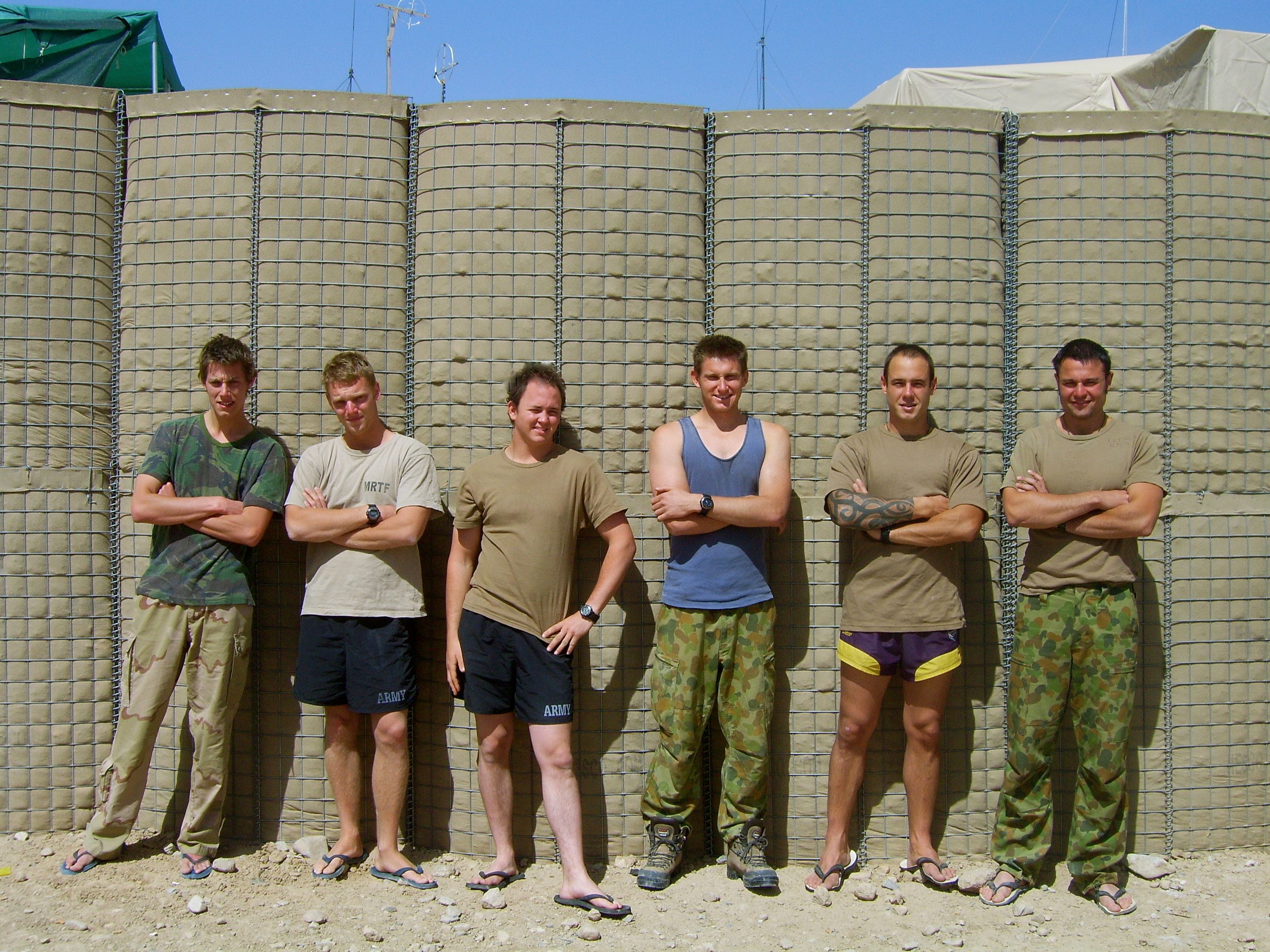
Informal group portrait of personnel from the Operational Mentoring and Liaison Team in a mix of their uniform and casual wear.
Explore more from the Operational Mentoring and Liaison Team 3
- See Corporal Matthew Hopkins' commemorative Royal Australian Regiment beret
- Discover the story of Corporal Matthew Hopkins through Places of Pride
- Read how Private David Cox and Corporal Giancarlos Taraborrelli were honoured for gallantry in ABC News
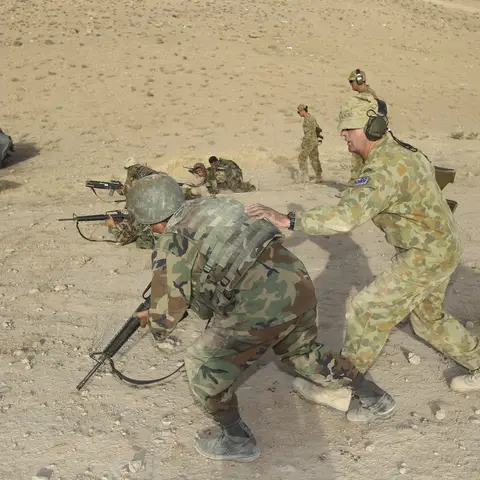
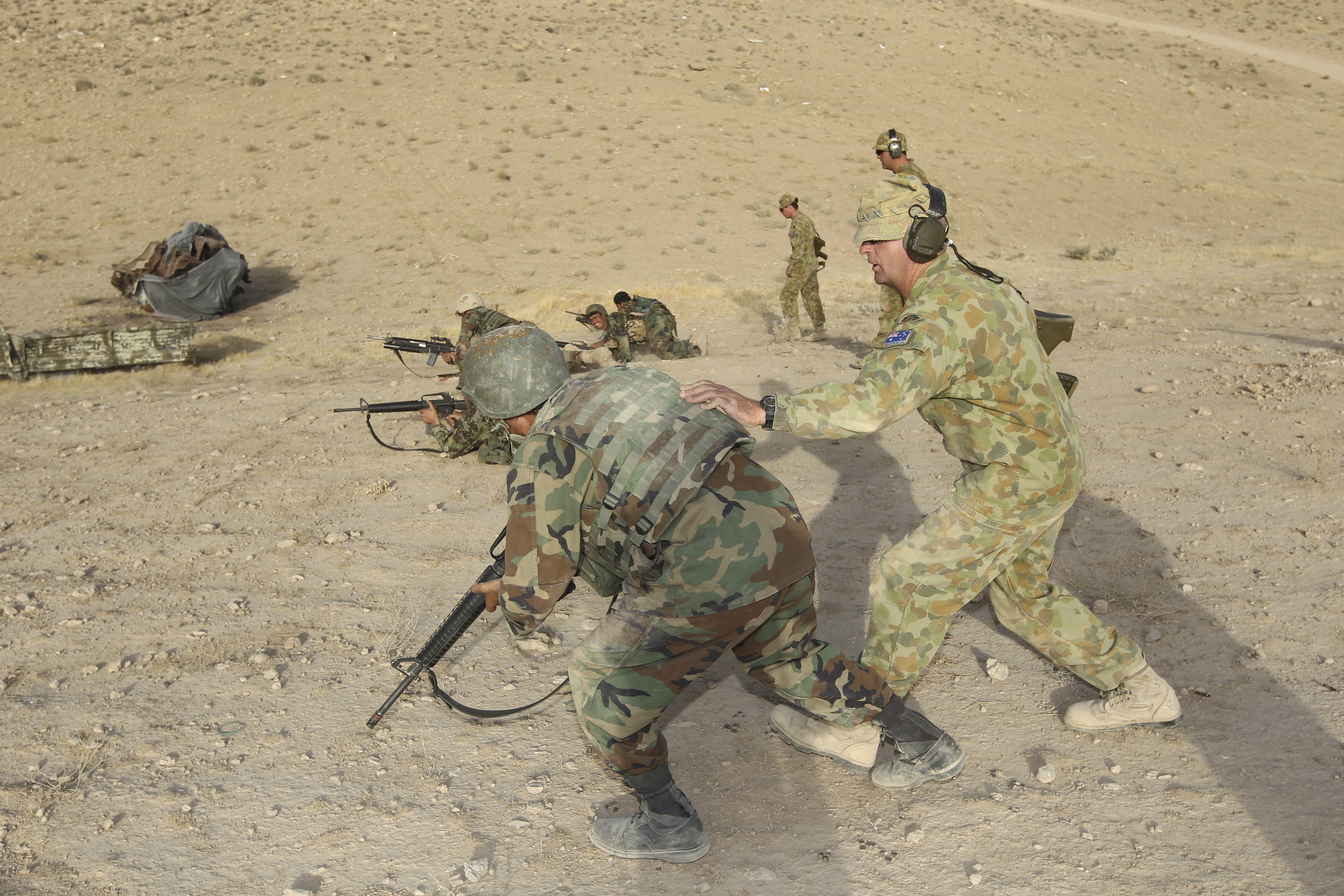
A member of Mentoring Task Force Three (MTF-3) teaching an Afghan National Army soldier during range practice at Forward Operating Base Tinsley.
Explore the history of the war in Afghanistan
- Explore the new War in Afghanistan 2001-2021 gallery at the AWM
- Discover more about Australia's involvement in the war in Afghanistan on our website
- Mark 25 years of Australian service in Afghanistan at the National Commemorative Service

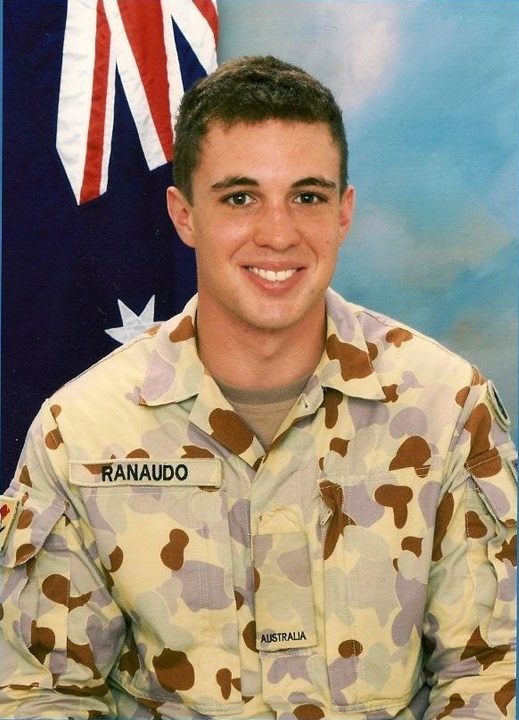
Portrait of Benjamin Ranaudo. Photo courtesy from Australian Army.
Explore more about Paul Warren and Benjamin Ranaudo
- Hear Private Warren tell his story in an AWM interview
- Read about Paul's friendship with Ben and the lasting impact of Afghanistan in the Memorial's Anzac Day readings
- Discover Private Ben Ranaudo's service and tributes from the Australian Army
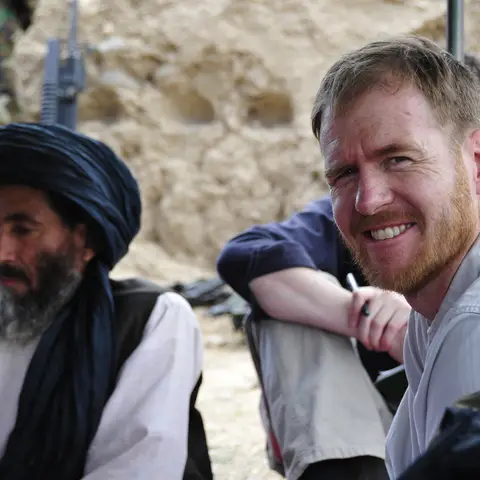
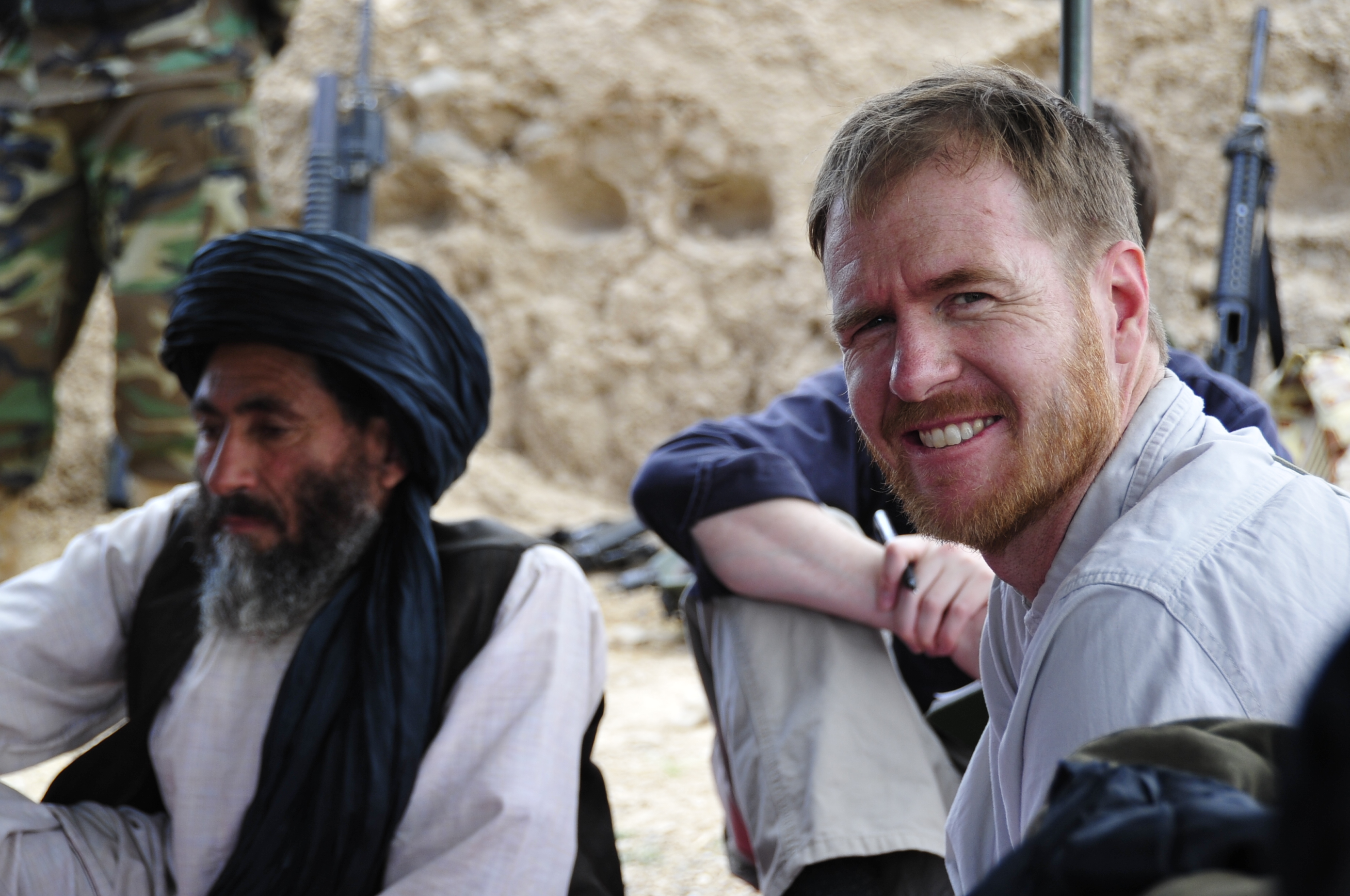
Fred working in Afghanistan with Baluchi tribal leader
Explore more from Fred Smith
- Learn more about Fred Smith and his work through his website
- Discover the experiences behind his song 'Dust of Uruzgan' on the AWM website
- Read Fred's memoir, The Dust of Uruzgan
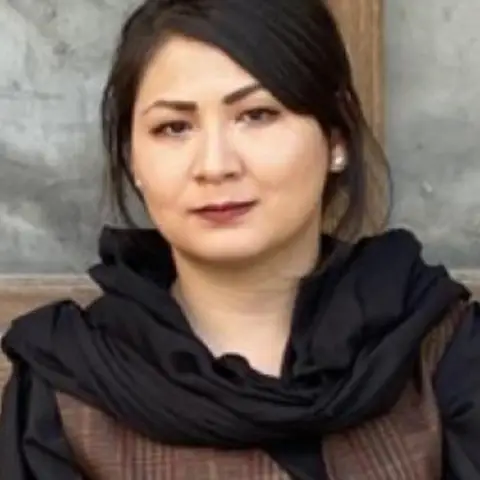
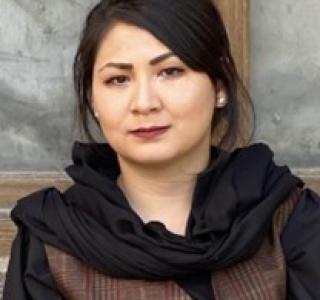
Dr Farkhondeh Akbari
Explore more from Dr Farkhondeh Akbari
- Explore Farkhondeh's research at Monash University
- Hear Farkhondeh Akbari reflect on the Taliban's return and the urgent need to help at risk Afghans in this ABC News interview
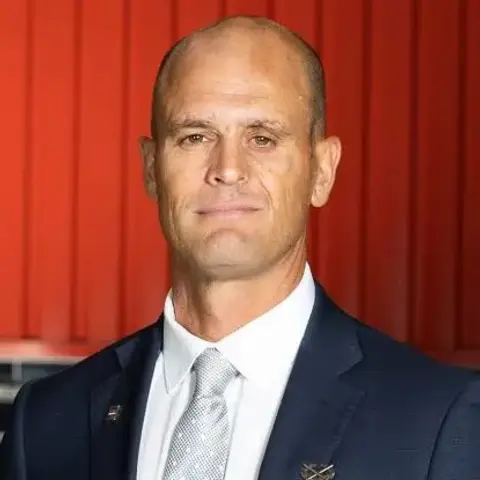
Garth Callender. Photo courtesy of Bravery Trust
Explore more from Bravery Trust and Garth Callender
- Discover how Bravery Trust supports serving and former ADF members at Bravery Trust and take on the Dusk till Dawn 12-hour challenge
- Read Garth's firsthand account of service, injury and returning to Afghanistan in After the Blast
- Explore the battle-damaged equipment Garth was wearing when he was wounded in Iraq in the AWM collection
Voices
- David McCammon, David Cox, Shane Gabriel, Jacob Kleinman, Giancarlos Taraborrelli, Scott Tampalini, James Hardy-Smith and Josh Murphy
Members of Operational Mentoring and Liaison Team 3 (OMLT-3) and those connected to the patrol - Fred Smith OAM
Australian diplomat, author and musician who was the first Australian diplomat posted to Uruzgan province. His experiences working alongside Australian troops inspired the album Dust of Uruzgan, and he later returned to Afghanistan to assist during the 2021 Kabul evacuation. - Paul Warren
Australian Army veteran who deployed to Afghanistan with Mentoring and Reconstruction Task Force Two. In July 2009, an IED explosion took his right leg and killed his friend, Private Benjamin Ranaudo. He has since become an advocate for veterans and their reintegration into civilian life. - Dr Farkhondeh Akbari
Afghan-Australian researcher and human rights advocate, and Research Fellow at Monash University’s Centre of Excellence for the Elimination of Violence Against Women. Her work focuses on diplomacy, peacebuilding, women, peace and security, and the rights of women and minority communities in Afghanistan. - Garth Callender
Australian Army veteran, author and CEO of Bravery Trust. Across a 25-year military career he served in Iraq and Afghanistan, including leading a weapons intelligence team in Afghanistan, and now works to support serving and former ADF members experiencing financial hardship.

About the host
John Barrington
John is the host of Through Their Eyes. Drawing on his experience presenting and reporting for 3RRR Melbourne, Good Shout Stories, triple j HACK, ABC Radio and The Project, he brings a fresh perspective to Australian War Memorial storytelling, connecting you with the people and experiences behind Australia’s military history, inspired by his father's Second World War service. As your guide through the podcast, John helps reveal the human stories and overlooked perspectives, making history accessible and relevant.