A pilot forced down. A soldier captured. A nurse taken prisoner. Across conflicts, thousands of Australians have lived behind barbed wire, cut off from the world and pushed to their limits. This episode brings their stories together.
This episode was brought to you by Leidos Australia.
An Australian War Memorial Official Podcast.
John Barrington:
Through their eyes shares real life experiences of war, some of which may involve sensitive or distressing subject matter. Themes may include violence, death, trauma, and loss. We aim to share these stories with care and respect, but please take your wellbeing into account while listening. If you need support at any time, visit our show notes for resources. The Australian War Memorial acknowledges the traditional custodians of country throughout Australia. We recognise their continuing connection to land, sea, and waters. We pay our respect to elders past and present. We also acknowledge the veterans who have served, those that are still serving and the families that love and support them.
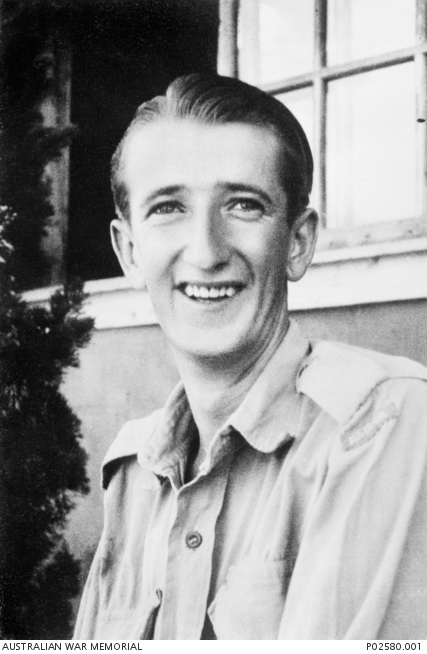
Deep in clammy insect-filled jungles from Thailand to Burma, thousands of allied prisoners of war were forced by the Japanese to hand build a stretch of railway that went on for 415 kilometres. They worked through sickness and exhaustion in the sweltering heat and sinking mud, sustained only by what little food they were given in their own determination to survive. When the monsoons came, the roughly constructed shacks they were housed in flooded and disease spread quickly. Fever, infected wounds, and fatigue became part of daily life. This gruelling experience took the lives of over 16,000 prisoners of war and 90,000 Asian civilian labourers in a year. It became known as the death railway. As conditions inside the camps worsened, the need for basic sanitation and medication became desperate. Australian medical officer, Sir Ernest Edward Dunlop, you might know him as Weary Dunlop, recorded the state of the camps.
Colonel Sir Ernest Edward "Weary" Dunlop, AC, CMG:
We had 160 cases of cholera over a fairly short period and conditions there were appalling in that when these fellows, they were down with cholera, which is a disease of dramatic onset with diarrhoea and vomiting and the horrible cramps of your muscles and your voice fading to a whisper and your body shrivelling up until you look like a bag of bones. At the height of this trouble with constant rain and wet and sick people, I used to dream about that cement that I slept on in Singapore.
John Barrington:
In such horrific conditions, it was a daily fight to keep his mates and himself alive.
I'm John Barrington and these are the stories of the Australians who went to war expecting to defend their country. Instead, they were captured and forced to fight a different kind of battle. Welcome to Through Their Eyes.
Growing up on Yuin Country in Batemans Bay, New South Wales in the '90s, I was a bit of an anomaly at school because my dad, Lindsay Edward Barrington, was a veteran of the Second World War. Dad would openly talk about his time in the Air Force and I remember interviewing him about it for a school project. I feel connected to my late father and his memory on behalf of my mom, brother, and sisters by helping share these stories with you.
A pilot in Turkey, a soldier in Germany, a nurse in Indonesia, a sailor in Japan. Across our nation's history, more than 34,000 Australian service personnel have endured captivity in wartime. They spent months or years behind barbed wire. At first, somewhat dazed, prisoners of war or POWs were subjected to the complete control of a combatant captor. For most, this period of captivity would be marked by hunger, boredom, and harsh conditions. For others, forced labour, brutality, torture, and death became a part of everyday survival. One of Australia's well-known POWs grew up in country Victoria and once set his sights on becoming a small town pharmacist. By the outbreak of the Second World War, his interest in medicine had developed into an unwavering commitment to healing others, a personal conviction which became the difference between life and death for countless people in the years to come. His name is Weary Dunlop and his story is just one of thousands of prisoners of war.
But to truly understand his courage, we need to understand the realities of life as a POW. Although burned into our national consciousness as heroes who triumphed over adversity, who amongst us really knows what these men and women went through and the impact it had on the rest of their lives. To help us understand, we'll hear from Dr. Karl James, head of military history at the Australian War Memorial.
Dr Karl James:
Yes, it's a great story for Weary Dunlop because he was born in country Victoria in 1907 and then when he was 20 years old because he was a very gifted and talented student, he went to Melbourne, Melbourne University where he studied pharmacy. Later on, he then went into medicine. And while he was at university, that's where he first met Albert Coates. Albert Coates was a first world war veteran, a surgeon himself, and he was become quite influential to Weary Dunlop. So, Dunlop is at university. He's studying medicine. While he's there, he also takes up boxing, and he also adopts rugby union and he becomes such a talented player that he's actually selected to represent Australia in the mid-1930s in Rugby Union. And in 1934, he became a member of the very first Wallabies squad to have won the Bledisloe Cup playing in New Zealand.
So, he's quite a distinguished scholar, very intelligent, but also quite the athlete as well. So in the mid-1930s, Dunlop has finished his first round of university study and when he graduates, he then takes on a role at the Royal Melbourne Hospital as a junior resident. So, he's already beginning his surgical career and it's also around about this time he joins the militia and he takes up a commission with the Australian Army Medical Corps. So he's already developing that surgical skills as well as continuing his military interests. And then later 30s, Dunlop also goes to the UK to do further postgraduate surgical work. And so when the Second World War begins, Dunlop is actually working at St. Bartholomew's hospital in London. So that track from going from Australia to the UK was actually quite a common experience, particularly for surgeons, lawyers, and the like. And so in many ways, Dunlop is just following the path of professionals going from Australia to the United Kingdom.
And that's where he is in 1939, in September 1939, when the Second World War begins. Now Dunlop really wants to get stuck into the action and as you see throughout his life, he's very much a can do brush at things. Let's have a go, let's have a crack. He wants to join the Australian forces.
Colonel Sir Ernest Edward "Weary" Dunlop, AC, CMG:
Well, there I was stuck in the emergency medical service, playing rugby football and the more people I saw in uniform, the more morbid I was getting about this. I just had to get into the army. Well now, Sir Charles Wilson, the Dean of St. Mary's and he was also known as Corkscrew Charlie. He was full of ideas about how I shouldn't go into the services at that time and I would be doing a better job for the country at St. Mary's operating on the sick and injured of London, you see. But really the old wretch, what he wanted was to keep me in the rugby.
I was aware of this, and I tried the Army, Navy, and Air Force in England and every time Sir Charles blocked my entry into the services and said that I was essential to the emergency medical service. So, then a brilliant idea, I saw Tom Dunhill who was going to be the consultant both to the British Army, Australian Army. We sent a cable and he broke all the laws of God and man that no Australians were being listed in England, but he just sent me a cable saying, "If available, proceed to Australian overseas base." So, I entered the army and embarked on the same day and was subsequently vaccinated at sea. I don't think they ever really got me straight, but I did get in the army, and I was the only one I think who made that sort of unorthodox entrance.
Dr Karl James:
In November of 1939, so just two months after the outbreak of war, Dunlop takes up commission in the Australian Imperial Force. It's also interesting too because unlike a lot of his contemporaries who were also studying and working in the UK, who then become surgeons and nurses and doctors in the British Army, Dunlop intentionally wanted to join the Australian forces. Shortly after joining the Australian military forces, Dunlop is actually sent to the Middle East where he connects with the rest of the Australian military forces. And during those first few months in 1941, he works as a medical liaison officer with headquarter units and that's when he's sent to Greece in April of 1941 and then later on following the evacuation of Greece, he's with the Australian and New Zealand forces who then retreat or withdraw to Crete. So he already has two campaigns under his belt by mid-1941, but then he gets, I would say worse or more exciting depending on your perspective.
He's actually promoted and sent to Tobruk. So Tobruk is then being besieged on the other side of the Mediterranean and he's looking after his medical unit in Tobruk during the siege for several weeks. His unit is there, I say only several weeks because there's incredibly harsh conditions. So he bombed, sheld, shot at and then in late July the second, second casualty clearing station is actually withdrawn to Palestine where it connects with other Australian forces. And so he spends the rest of 1941 with the Australian forces in the Middle East. But what happens at the end of 1941, Japan enters the war. We had the expansion of the conflict now becoming a global conflict. So it's no longer just in the Middle East or Europe. We're now fighting against the Japanese and the Pacific and there are some forces, some Australian force who are then recalled from the Middle East back to the Pacific.
And Dunlop is on one of those ships which are then diverted to Java. And so in early 1942, Dunlop is on the island of Java where they joined Black Force, which was the Australian force then to help Garrison to prop up the defence of Java while the Japanese are advancing through Southeast Asia. So he's gone from the frying pan from the sea to Tobruk into the fire landing in Java just before the Japanese were about to invade the island.
Colonel Sir Ernest Edward "Weary" Dunlop, AC, CMG:
So, the Japanese army entered in really a most orderly occupation of Bandung that they marched through the streets in a proper army sequence and got order with the streets absolutely clear and their military police sort of controlling the whole thing.
Dr Karl James:
Java is one of those overlooked campaigns. A lot of people think about the POW experience. We think of the fall of Singapore, Changi, but the prisoners on Java had a very different experience. They were concentrated together around Batavia, which is now Jakarta. And initially they were left to administer conditions for themself. So they were there for the bulk of 1942 and while they were cut off from the rest of the world, they didn't have a lot of interaction with the water Japanese forces, and they pretty much were left to fend for themself.
Colonel Sir Ernest Edward "Weary" Dunlop, AC, CMG:
We didn't do so badly until they really cracked down and oh dear, the ultimate disillusion was terrible. They just marched in with a staff officer and said that I was to disband my hospital in 10 minutes and that everyone must get out and march. And I said, "Look, this is impossible that you can't dissolve a hospital in 10 minutes." I said, "Look, let me show you some of these people." So, I started with the worst first. "Here was a blind boy named Griffis who I'd had to amputate his shattered hands and his eyes were blown out and he had a broken leg and next to him was another blind boy with his face shattered and then there was a poor unfortunate paraplegic in the next bed and there was a fellow shot through the chest and so on." And to my horror, he got his centuries to fix bayonets and march up to the bed and say, "Out or else" I had to intervene and say this, "You can't do this. You have to kill me first."
Dr Karl James:
Things changed though in early 1943 when the Japanese start to send prisoners from Java, they transit through Changi and then they're being sent on to the Thai-Burma Railway.
Colonel Sir Ernest Edward "Weary" Dunlop, AC, CMG:
I gained a respite. We didn't break up the hospital the following morning. We spent the whole night making arrangements for very sick people to be shifted. In the morning, I led the march with a major force and we went clink into another lowest jails in the country.
Dr Karl James:
When the Australians were sent from Java, the Japanese instructed them really not to bring any supplies with them. So that group of presidents who transited with Dunlop is Dunlop force, when they left Java, all they really had was their clothes on their back and they were told not to take any food, stores, or equipment. And so from the medical point of view, Dunlop had to distribute his medical equipment and as well as his rations amongst the force themself to carry them. So the men left Java carrying what medical supplies they had with them, but they didn't have a change of clothes. There was no other different boots and Dunlop only had one set of surgical instruments on his person, which he took with him through Changi and then later on into Thailand.
John Barrington:
For Weary Dunlop and the thousands of Australians like him, captivity was a constant threat that loomed on the horizon, but the realities proofed worse than they could have imagined. And it was by no means the first time Australians had been captured during wartime. The stories we tell don't begin in a recording studio. Many begin in the pages of the Australian War Memorial's official magazine WM, where historians, curators and researchers explore the stories and moments that have shaped Australia. If you'd like to go deeper into the research and personal accounts behind episodes like this one, visit wm.awm.gov.au.
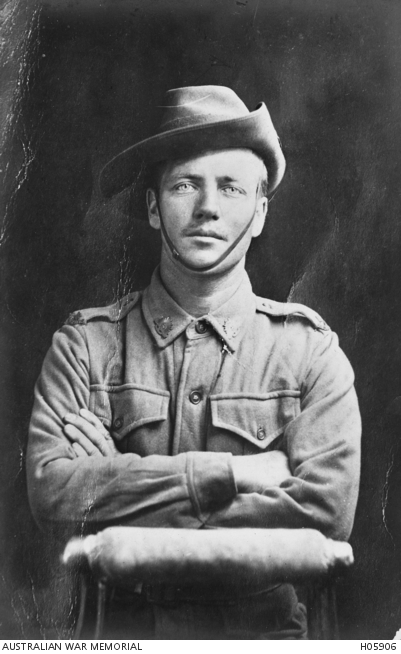
By the time Dunlop was taken prisoner, the action of imprisoning conquered enemies was already an accepted tactic in modern warfare. It had been shaped a generation earlier in the first World War where more than 4,000 Australians were captured by German and Turkish forces. One of them was Thomas Walter White. Just like Dunlop, Thomas was born in Victoria, but 19 years earlier in 1888. Despite being born over 130 years ago, Thomas was much like any young man you would be likely to meet today. He aspired to be a pilot and in 1914 was selected for the Australian Flying Corps first training course. In early 1915, he was sent overseas as part of an improvised Australian air unit attached to the British and Indian forces operating against the Ottoman Empire. It was late 1915 when an aeroplane was required to go behind enemy lines to cut the telegraph line running along the road from Baghdad to Constantinople.
Francis Yeats-Brown, his observer and friend, asked if they should volunteer. Thomas wrote in his diary.
Lenny Preston (as Thomas White):
In the evening, Yeats-Brown asked me if I thought that we could do the feat and as I could land in small spaces, we volunteered for the job. I thought that the day selected for the stunt was a rather ominous one as it was Friday the 13th, but let duty override superstition.
John Barrington:
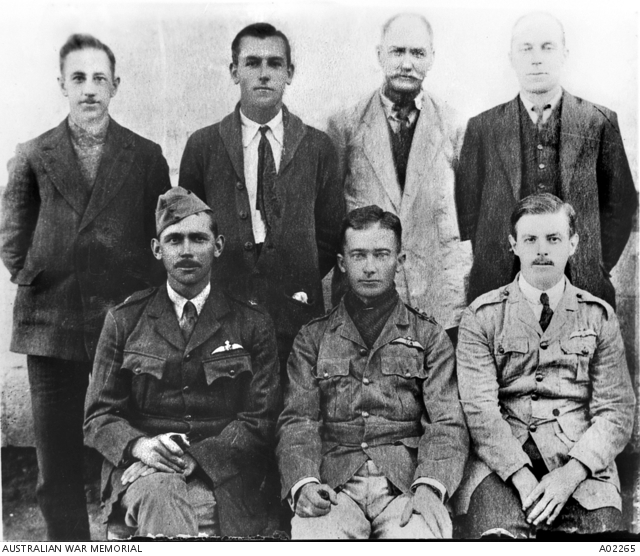
Little did Thomas know his superstitions would be right and this flight mission would be his last before over two years of captivity. Thomas and Yeats-Brown's aircraft became entangled in the broken telegraph wires where they were badly wounded and captured by the Turks. They were sent to Baghdad where they spent three weeks in hospital and then sent to Mosul. Thomas and Yeats-Brown were in Mosul for two and a half months before being sent to the principal prisoner of war camp in Turkey named Afion Kara Hissar. This is where they were imprisoned for over two years. At great personal risk, Thomas managed to keep a diary throughout his captivity, ingeniously concealing it inside the sole of his boot. The Australian War Memorial now holds his diaries and personal objects in the collection, allowing us to get a rare insight into what these years were like for POWs like Thomas.
Afion Kara Hissar wasn't a conventional prisoner of war camp. Officers were confined inside a town quartered in churches and houses watched but expected to organise their own survival. Stone houses with red tiled roofs lined narrow, dirty streets. Churches and mosques stood close together behind high walls with small gardens and courtyards hidden from view. The summer months were pleasantly cool, but the winters were severe. When Thomas arrived, he said he was marched through the town along with 116 British, Australian, Russian, and French offices.
Lenny Preston (as Thomas White):
To an Armenian church at the foot of a massive almost perpendicular rock, about 400 foot high on which is perched a large ruined castle.
John Barrington:
At Afion Kara Hissar, Thomas noted something unexpected. Despite exhaustion, illness and uncertainty, morale didn't collapse. It was actually built. On March 29th, 1916, Thomas wrote in his diary...
Lenny Preston (as Thomas White):
As darkness came on, the scene became a not to be forgotten one. The floor lumbered with the baggage and varied company. No one seemed depressed. The Russians who had fine voices and sung well in harmonised choruses sang their national anthem, God saved the King, in which we all joined and a regular sing song was kept up until the small hours.
John Barrington:
Music filled the church. For a moment, captivity loosened its grip. As the days went on, Thomas said...
Lenny Preston (as Thomas White):
All were cheery and one could throughout the day always hear the tinkering of a mandolin or the playing of a violin or banjo.
John Barrington:
What followed wasn't chaos. It was structure, routines were formed and time was organised, not surrendered. In late April, Thomas wrote...
Lenny Preston (as Thomas White):
Many books had been accumulated by the various officers and some sought to improve their knowledge of French by lessons and conversation with the French officers who in their turn were learning English. I had been studying French and found I was making progress.
John Barrington:
Learning became a way to push back against stagnation. The prisoners also turn to sport. In May 1916, Thomas wrote...
Lenny Preston (as Thomas White):
We had received a cricketing outfit from the American Embassy and after having a meeting and forming a sports committee, we commenced to practise in the yard with much consequent damage to windows. We had permission to play cricket in the field outside on two days of the week and a match was arranged England versus Australia.
John Barrington:
In early June, it was decided to form a debating society. Every Monday night debates were held. Half an hour was allowed for the opening and opposition speeches and 10 minutes for each of the seconders. And every Thursday a lecture was held on various topics and when movement was restricted, they turned to performance. Many plays were written, rehearsed and performed by those more creative. One such play was called The Escape, Thomas wrote...
Lenny Preston (as Thomas White):
The programme consisted of musical items and dances by the 12 pyjama retired Pierrots and the Russian and French instrumentalists on guitar, violin, and banjo, followed by a farce in three acts. The show was very well worked up, the gags extremely funny and appropriate and without scenery in a proper rehearsal was a credit to the joint stages and was appreciated by the mixed audience.
John Barrington:
Laughter, Thomas noted, mattered. These routines and activities didn't remove the captivity, but it pushed back against it. Each debate scheduled, each match played, each play performed, was a quiet refusal to let imprisonment define the whole day. But Afion Kara Hissar wasn't only sustained by music or cricket. Illness moved constantly through the camp and Thomas recorded its effects carefully on the community of prisoners around him. He paid close attention to them, who arrived, who weakened, and who disappeared. On April 9th, Thomas wrote...
Lenny Preston (as Thomas White):
We heard today that Subedar Hazara Singh, who had had charge of the Baghdad console guard, one of whose guard only one man was left, had died in hospital of fever. We regretted this very much, for he was a fine-looking man and good sample of the Indian officer. We wanted to go to his funeral but were told that he had already been buried.
John Barrington:
Death was frequent. Thomas said...
Lenny Preston (as Thomas White):
One of the Russians who was confined with us was taken to hospital and died a few days later of Typhus. Bykoff protested pretty vehemently about shutting so many of us into a church where this dread disease was rampant.
John Barrington:
Thomas noted that it was noticeable how slight cuts often became septic. He wrote...
Lenny Preston (as Thomas White):
The doctor said he marvelled that there was not more disease when we were confined in the church. For the only small space where we could walk or sit about was outside the church and was littered with human bones for this had been a burial place of the Armenians and some of them evidently had been barely covered with earth and had not been long deceased.
John Barrington:
Riding in April, Thomas described Sergeant Smith.
Lenny Preston (as Thomas White):
He was very thin and one would not have known him as the burly fellow who had left Mosul. And when he spoke to me, I did not recognise him at once.
John Barrington:
And still, prisoners kept arriving. On June 7th, Thomas penned...
Lenny Preston (as Thomas White):
About 6:30 AM this morning, about a hundred British and Indian and two Russian and two British officer prisoners arrived. They halted outside our quarters and looked in a very dirty and hungry condition. I was pleased to see Sergeant Shelley among them, for we had left him in hospital in Mosul seriously ill. I shouted to him from the window and he said that he was still very ill and desired admittance to hospital again.
John Barrington:
In September, Thomas said...
Lenny Preston (as Thomas White):
About 300 British’s of the KUT garrison arrived tonight and on the morning of the 20th, I saw six more of these unfortunates marching through the town from the station. They were very wasted and weak and when I shouted to them from our house, they seemed dazed and almost unable to speak. They had no blankets, very few clothes, and some of them had dirty rags about their feet in place of boots. One who seemed weaker than the others had a portion of a sack for an undergarment and a very old and dilapidated pair of cotton drawers about his legs. Within four days of their arrival, 12 had died and on September 22nd, when Yeats-Brown was returning from a visit to the doctor, he saw the corpses of four of them. They were wrapped in dirty bloodstain sheets and were being carried to the burial ground by men who were almost too weak to walk.
We learned the majority of the men were suffering from dysentery and fever and all were in a starved and exhausted condition after their long march of about 700 miles.
John Barrington:
Later that month, Thomas described meeting Private Scott...
Lenny Preston (as Thomas White):
He was so thin and emaciated that he looked on the point of death. During these past two weeks, two British’s have died of Typhus.
John Barrington:
Thomas recorded all of this, not with outrage but with care. These were people he lived alongside, ate with, talked with, and watched decline.
By mid-1916, the camp had settled into a strange rhythm, unverified and often unreliable information filtered into the camp. Rumours about battles, shifting fronts and the progress of allied forces. Illness and death were never far away, but Thomas kept recording, kept writing. He explained how the prisoners kept building something resembling a normal life. He noted how outside support made life more bearable.
Lenny Preston (as Thomas White):
Many parcels of clothing and such useful articles as soap, belts, brushes, toothpaste, et cetera, arrived from the American Embassy in Constantinople and were most welcome. I received a pair of pyjamas, the luxury of wearing I had not known since my capture.
John Barrington:
The small comforts mattered, routine followed. Exercise, hobbies, even pets. In late May, Thomas wrote...
Lenny Preston (as Thomas White):
Pets were beginning to accumulate. There was a goose, pigeons, several tortoises. Fulton had a black and white Persian greyhound, Pass and Stone had each bought large baby eagle-owls. Tebbs had a small brown poodle while the naval officer attached to the guard had sent a green parrot along to be taught English and rather choice samples of profanity by various teachers were being patiently imparted to the bird.
John Barrington:
When they could, they escaped reality in small ways. In a cemented pond where water was being stored before being allowed out to flood the fields, the prisoners were able to have a swim. Thomas said...
Lenny Preston (as Thomas White):
On such occasions and when at cricket, we could almost imagine ourselves free.
John Barrington:
Time passed. Friendships deepened. In September, Thomas wrote about one of the men he had shared captivity with since the very beginning.
Lenny Preston (as Thomas White):
Yeats-Brown left for Constantinople for medical attention. After much flying together and our travels from the day of our capture on November 13th, 1915, I seriously wondered if I would see him again before our release.
John Barrington:
By then, Thomas had been at Afion Kara Hissar for months. He had watched men arrive, weaken, recover and disappear. Through it all, he recorded not just illness and confinement, but the routines, friendships and small acts that made survival possible. I'm sure you'll be pleased to know that in 1918, Thomas managed to escape. He was the only one to evade recapture successfully of around 200 Australian servicemen who were taken prisoner by the Ottoman Empire. In July 1918, he was moved to a hospital in Constantinople, today known as Istanbul, where he hopped on a train. This is what Thomas wrote...
Lenny Preston (as Thomas White):
As is usual in these trains, there were enumerable lice, fleas, and bugs, and they kept me wide awake throughout the night. It was 4:15 AM before the train started and I felt as I leaned out the window and watched the town and the castellated rock of Afion disappearing in the blue haze of the dawn, almost happy in spite of the hour as if I knew that I was leaving for home. I had spent two years and four months there and I sincerely hoped that I should not have to return to spend any further days of captivity there.
John Barrington:
Once in Constantinople and taking advantage of the freedom to move around, Thomas and a fellow prisoner, Alan Bott, a Royal Air Force captain prepared for an escape. When one of their trains crashed, the men took advantage of the confusion, hiding for several days in the city. They then stowed away on a Ukrainian ship where they remained hidden for a month before departing port. The pair eventually made their way To Greece where they awaited transport back to London and on the 11th of November 1918, the armistice was signed and the fighting on the Western Front was ended.
Thomas recorded this all in his diary, pages and pages of his journey, his captivity, friendships, and escape. Today, the boot he used to conceal one of his diaries is on display in the first World War Galleries at the Australian War Memorial. His written works and some possessions are held in the Memorial's Research Centre preserved in history so we can continue to tell and remember his story.
In the same year Thomas White escaped, other prisoners were also refusing to accept captivity as the end of their story. At a German camp called Holzminden, British officers were quietly preparing one of the largest escapes of the First World War. To tell that story, here's Anthony Fitzgerald, admin collections assistant in the photos, film, and sound department at the Australian War Memorial.
Anthony Fitzgerald:
Holzminden was a purpose-built camp in Northern Germany, housed inside a mediaeval castle. It was used to hold British and Dominion officers who were considered habitual escape risks, men who had already tried and failed to break out of other camps. Security was tight and discipline was harsh. The German commandant who had a reputation for cruelty was confident the camp was escape proof. But as with so many prisoner of war camps, captivity did not mean obedience. Inside Holzminden, the officers organised themselves carefully. They established routines, assigned roles, and over time began planning something far more ambitious than an individual breakout. What they had in mind was a mass escape, one that would depend on patience, secrecy, and cooperation over many months. The plan centred on a tunnel. Working mostly at night, a small group of prisoners began digging from inside the castle. They used improvised tools made from sharpened cutlery and bowls and hid the excavated soil wherever they could under floorboards in garden beds, even in clothing.
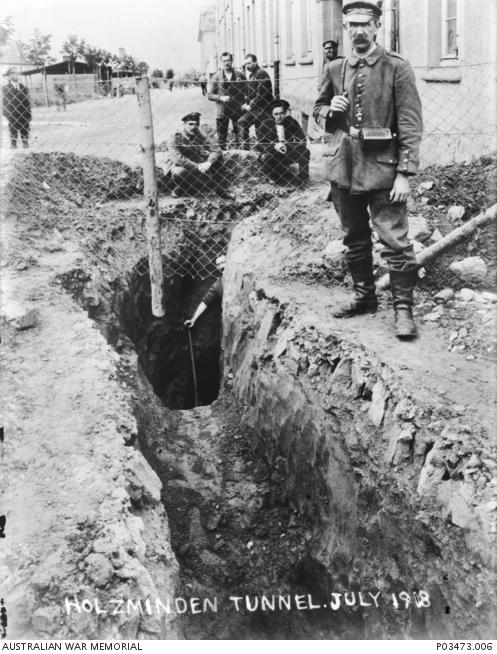
The entrance to the tunnel was concealed under a staircase located in the orderlies’ quarters. The men decided to use biscuit tins with the ends punched out to form an air shaft. The work was slow and physically demanding and any mistake could have exposed the entire operation. The tunnel eventually stretched more than 80 metres running beneath the camp and out toward a rye field beyond the perimeter. Dozens of men were involved in the effort, each trusting the others to keep the secret. In a camp designed to isolate and control them, cooperation became essential. By the summer of 1918, the tunnel was finally ready. In late July, under cover of darkness, the escape began. One by one, 86 officers crawled through the narrow passage emerging quietly into the field beyond the camp. 29 British officers made it out before part of the tunnel began to collapse when one of them got stuck, forcing the remaining men to turn back.
By the time the guards realised what had happened the next morning, it was too late. 29 prisoners had vanished. Not all of them made it to freedom. 19 were eventually recaptured and returned to German custody, but 10 succeeded in evading patrols, navigating unfamiliar countryside and crossing into neutral Holland. For them, the escape from Holzminden marked the end of captivity. The Holzminden escape stands as one of the most significant prisoners of war breakouts of the First World War.
John Barrington:
Like Thomas White's escape, it was not a spontaneous act but the result of months of routine discipline and collective effort. Of course, not all Australian POWs were young men who had enlisted to fight. In the Second World War, 71 women of the Australian Army Nursing Service were held as prisoners of war by the Japanese, in some cases enduring even more hostile conditions than their male counterparts. Sister Betty Jeffrey was one of these nurses who survived years of captivity during the Second World War to understand what her experience reveals about courage and survival. Dr. Karl James, head of military history, spoke with Robyn Van Dyk, head of the research centre, both at the memorial.
Dr Karl James:
During the Second World War, more than 30,000 Australians suffered, men and women, as prisoners of war during that conflict. One of those was Sister Betty Jeffry's. Are you able to tell us a little about who was Betty Jeffrey?
Robyn Van Dyk:
Betty Jeffrey, she was a professional nurse before she enlisted. She'd worked in clerical and other types of work, retrained as a nurse in her pre-war years when she was about 30 and then enlisted to join the Australian Army Nursing Service. She served in Malaya and towards the fall of Singapore was evacuated.
Dr Karl James:
So, Robyn, how did we end up with Betty's remarkable diaries in the Memorial's collection?
Robyn Van Dyk:
Yes, Betty Jeffrey herself donated those diaries to the memorial in 1953, so early days, not long after the Second World War. And to me, that says she wanted them kept for posterity. The collection is about two of the exercise books, one she purchased and the one that she pilfered. And then there's a whole lot of scraps of paper in there and bits of books that she's managed to scrounge and find. So it's a whole mishmash of paper. There's one that looks like a Dutch children's exercise book. So on one page there's all kid writing and her writing on the other side. So it's definitely a story of scrounging. Yes, so they've been in the collections since the 1950s.
Dr Karl James:
Take us back to the dark days, February 1942. What's going on in Singapore? Why are the nurses being evacuated and how did they get out of Singapore?
Robyn Van Dyk:
So they got onto the Vyner Brooke and they were headed back to Australia. The ship was trying to avoid being discovered by the Japanese. The Japanese were overhead, obviously blowing up ships trying to escape out of Singapore. And unfortunately the Vyner Brook was discovered some planes went over and saw it and the ship took a direct hit. It went into the funnel apparently, according to Betty, went into the funnel and blew and they probably didn't have very much time to get off. There were lots of civilians on this boat getting off Singapore as well. There was the 65 nurses and it was quite small. It only was supposed to take about 12 passengers and it had something like 180 and they were given direct orders if the ship got hit, that they were to make sure that they got the civilians off the ship and that they were to be the last to leave.
One of the interesting things that stand out from Betty's diaries is how the nurses looked after everyone and themselves. So they did things like "triage in the water to manage things better". That's a quote from Betty. And they organised people that couldn't swim and the children onto floating bits and pieces in the water. In that situation, they were in control and I think that's something to really admire. There's an interesting story of getting people off the Vyner Brook as it's starting to sink. Civilians froze and there were people in absolute fear of jumping into the water and so they had that task of getting people into the water. Betty Jeffrey describes her process of getting in the water. So the ship's going down and she found a bit of rope and she thought she'd tarzan style into the water. She kicked her shoes off and she said, absolutely regretted doing that because she never had shoes for the rest of her period as a prisoner of war and she also didn't realise she was going to get such massive rope burn going out.
So she had quite injured hands in the water. In Betty's diaries, you can see descriptions of that story. She does little drawings and things as well and they're trying to get ashore. They were carried out by tide as well and they had to sleep at some point. They were in the water of about 48 hours at least, could be longer. And they slept in mangroves up in the trees to avoid crocodiles and eventually found land and that's the point of becoming a prisoner of war.
Dr Karl James:
You know in her diaries, does she talk about fear, danger, risk? Does she capture that emotion at the time of that feeling and fear of 1942 and the unknown?
Robyn Van Dyk:
Their first place that they were prisoners at was in Muntok. It's in the capital of Banker Island in the jail there. And Betty Jeffrey describes that place as like looking backwards, it was a palace compared to what was to come, but at the time "It was cold slab floors I was sleeping on" and everything. But at the time she said there was one thing that was missing that was dire throughout their entire internment, which was water, water, water. And if you think about that, that can make you scared that that's your life, that's something you need. So that was scarce throughout her entire internment. The other things that she documented was the entry of Vivian Bullwinkel into Muntok Jail where they were all interned. And so Vivian turned up several days later. Vivian Bullwinkel had swung to Banka Island with about 21 other nurses and they were all debating at that point what to do and they decided they'd give themselves up to the Japanese.
Dr Karl James:
And Vivian and Betty became quite close and parallel experiences in many ways. You just touched on the danger though. What was the danger of writing for Betty to keep her personal diary, to reflect on her experiences and to write about captivity? Was she at risk doing this with the Japanese find out or the Korean guards?
Robyn Van Dyk:
First of all, it was okay. Nobody really said much about it. And she actually purchased her first diary. The nurses were shipwrecked with nothing. So the nurses did little jobs to earn money, haircutting, they had little businesses. They had all kinds of things. They'd baked bread, like they'd turn rice and things into bread and they sold bits and pieces. Betty drew little illustrations of all the little jobs that she did, like even carrying heavy things. They worked hard. They also nursed sick people as well, so they kept on with their profession. Looping back to your question, she spent some of that vital money. The first thing she bought in that early period when things were a bit lighter and the second diary she actually stole, which is dangerous in itself because she just saw it there and thought I'll take that. So the danger of writing came in probably around 1944 and the Japanese ordered all your documents to be burnt and you had to hand in every form of documentation you had, which in itself is kind of like alarming, right?
And she took a risk to keep her diaries. She found a broken beer bottle under the benches in the place that they were staying and put the diaries in there and kind of rolled it in with a whole lot of rubbish. So it looked like rubbish under there. And sometimes those diaries, she didn't touch them for six months. It was too much to actually write them.
Dr Karl James:
Do you get a sense of what motivated her to take those risks in recording the day-to-day experiences? You know from other prisons of all, sometimes it was a case of therapy processing what they were going through, the need to write it down. Other times as bearing witness, recording the deaths of comrades, particularly say guys who served or who were prisons war on the Thai-Burma Railway, for instance, it's like keeping a note, keeping a record of when someone was attacked or beaten or when someone died. Did you get a sense of what motivated Betty to take these risks? Was it purely for writing or record keeping or to bear witness?
Robyn Van Dyk:
Yes. I think mainly bear witness, but there's some therapy in there as well. A little bit anthropological, I'm going to say too. She's talking about, she's recording the things they did to survive. She's telling a story for us as well. She's a bit of a storyteller. She went on to become a bestselling writer of the book that she wrote from the diaries. I think she intended to do that process. It's part of your key to survival is sometimes to make a record of what happened, but their therapy side is sometimes just to record the good things. So she recorded the women's choir. That's what something we often know about the women that they made all the music with their voices and people wrote the music down from memory and it was something they practised and it was very beautiful. She wrote lots of recipes because everybody's starving.
So there's the classic thing that people are sharing recipes. There's even a line in one of the diaries that says, recipes I'm going to ask my mother to cook for me when I get home, a connection with home and things you're going to do when you get home as well.
Dr Karl James:
In those diaries, do you get a sense of camaraderie in terms of how Betty referred to the other Australian nurses such as Vivian, but there were many other people there?
Robyn Van Dyk:
The nurses definitely said their survival was dependent on them looking after each other. They came without anything but they came with a skill and I think having a skill in knowing about human health and how to manage illness and injuries and things like that gives you something and they gave their time selflessly to each other and to other people. They had a very holistic sense of wellbeing. So they celebrated birthdays. They did the choir and they definitely stuck together and looked after each other and most of the nurses that were ever interviewed and asked about it said that was their key to survival and survived all those years in that situation.
Dr Karl James:
That's remarkable. I was wondering, you've mentioned and really the menu is an idea of this, but is there something in Betty's diaries that would surprise a reader that they just wouldn't expect to see in a POW diary?
Robyn Van Dyk:
She was actually somebody that was artistic. So they got some nice sketches and a sense of humour to it as well, which you might not expect actually that they had ability to have a bit of a laugh at their situation and perhaps that's part of that camaraderie. I think it's her storytelling stands out, her ability to tell what happened and to remember the nurses that didn't make it. She came back from the war and she was determined to tell that story so she went on to write a book so she converted the manuscript into a story and she also travelled around Australia and raised funds for memorials and nurses. So she got that story out. It was well known that the prisoners were told not to talk about their experience. Put it aside, don't talk about it. And I think without people like Betty Jeffrey and others that went through that experience talking about it, writing about it, all the cohort of those people that went through that wouldn't have had a voice.
So I think she's important in that way too. I think she'll live on. I think, well, for one thing, her diary will be in the research centre collection for posterity. It is such an extraordinary period of time and an event to happen to people, particularly in Australia's history. In some ways, these stories of good humanity shining through are things I think will carry with us forever.
John Barrington:
If you enjoy the stories we explore here, you might also like WM, the official magazine of the Australian War Memorial, featuring personal accounts, expert insights, and behind the scenes stories from the Memorial's collection, WM is the home of well-researched and thought-provoking stories about Australia's military history.
The firsthand accounts of those who endured imprisonment reveal how the impact of these ordeals go far deeper than simply restriction of movement. They also show us what people hold onto when their freedom is taken away. For some, that resistance took the form of writing. For others, it was something far more physical. For Weary Dunlop, captivity on the Burma Thailand railway meant standing between life and death every single day with no equipment, no supplies, and no guarantee that the next man he tried to save would survive the night. Here's Dr. Karl James again to tell us about Dunlop's experience there.
Dr Karl James:
So when the Japanese invaded and were so successful across Southeast Asia, they hadn't expected to capture hundreds of thousands of allied POWs. When they do, like, "Oh, great. We can send these and use these guys to build infrastructure, railways, wharves, airstrips, and the like." So over those years of conditions of '42 and '43, especially, what is happening is the POWs are receiving less rations, there's more scrutiny, there's more demand and expectation to provide labour and it's all physical labour, but they're also getting sicker because they're not getting rations, they're not getting medical care, they're not getting the variety of food that you need to stay healthy. Guys are becoming more frustrated, aggressive, assertive. So then you have things such as coercive control, physical violence, sometimes torture, intimidation. So the conditions become increasingly worse as the war progresses and turns against the Japanese. And then from the POW experience, it becomes worse too because in addition to malnutrition, physical beatings, intimidation, after two or three years in captivity, they're sick, they're worn down, they're physically small like to reduce weight.
People are dying along the Thai-Burma Railway, for example. There's things such as malaria. Malaria was incredibly common, dengue fever, scrub typhus, as well as dysentery, cholera. So you have all these different diseases playing on men as well as them falling over, not having enough to eat, not receiving any medical care. And simple things such as a cut or a scratch can easily become infected and then they become tropical ulcers. And this is where we see those POW doctors such as Dunlop or Coates and many, many others, that's when they're really coming to the fore trying the best they can to save the lives of their men. And so sometimes that's with surgery, other times it's with diet, it's with rations trying to eke out what meagre existence of medical care they could get. Some of the camps, Dunlop was able to work with local Thai merchants who were also sort of resistance leaders and they smuggled in food and supplies to give to Dunlop to feed and distribute to men amongst the hospital.
One of the things that makes Dunlop unusual and memorable by the men who served with him or saw, who were in his hospital as patients and saw Dunlop going out there is that he had, even though he himself was also sick, malnourished and deprived like everyone else. And Dunlop was the subject of many beatings from the Japanese. He still maintained that moral authority, that physical presence and because he was so much taller than a lot of the Japanese, like Dunlop was six foot four, so that's 193 centimetres. He was a tall dude with a big bearing and big presence and he could physically intimidate some Japanese guard, i.e. Actually stand over them. So that made Dunlop quite memorable to those patients. As the war went on, as the demand for labour increased, because the Japanese had to provide a certain number of workers each day.
And so there's a conflict between, okay, you got 50 blokes, for example, 30 of them in a hospital. Japanese like, "We need 50." Dunlop's like, "No, no, you can have 30." And so they would say, "What about that guy? What about that guy?" And so Dunlop was there trying to stand up for his men and saying, "Look, they're too sick." Over time, as the conditions got worse, as the men got sicker and died, there was more and more of a pressure to provide workers each day. And so that's where Dunlop and the other doctors also had standing up for their patients, which did naturally to conflict with their Japanese guards and overseers. So yes, Dunlop was beaten on several occasions. Likewise, too, Dunlop would intervene and try to put himself when another Australian POW was being beaten or intimidated, physically intimidated by the Japanese. And Dunlop would try to insert himself into that position to really look after his patients, but it did lead to conflict with the Japanese.
And it was an incredibly risky thing for him to do because while it was brave, he could get a beating for it like a hitting a kick. People were beaten to death in these camps. Dunlop knew that. He saw it. He reported on it and secretly wrote notes in his diary, but he did it anyway. So that's a certain type of bravery and it wasn't once. It was on multiple occasions.
John Barrington:
Unfortunately, inhumane treatment was experienced by many POWs during the Second World War. In the wake of these atrocities, international communities called for more oversight, better conditions and humane treatment for captured armed forces. These new rules of engagement were swiftly put to the test when just five years after the end of the Second World War, another war would draw Australians back into service. During the Korean War, 30 Australians became prisoners of war despite the new sanctions one man did not return. His name was Private Horace William Madden, known to his mates as Slim. Michael Kelly, historian with the military history section at the Australian War Memorial tells us Slim's story.
Michael Kelly:
Slim was captured in April 1951 during the Battle of Kapyong. From that moment on, his war changed completely. Instead of front lines and relative freedom, his life narrowed into captivity, marked by hunger, attempted coercion, resistance, and from his captives, brutal punishment. Chinese and North Korean prisoner of war camps were harsh and unforgiving. Food were scarce. Medical care was minimal. Prisoners were marched long distances, interrogated, and subjected to political pressure designed to break their loyalty and reshape their beliefs. For many prisoners, survival depended on holding onto a sense of self in conditions designed to remove it. Slim refused to cooperate with his captors. He decided he would not make statements condemning his country. He decided he would not assist with propaganda. He would not comply even when his refusal meant punishment. Official records show that Slim was beaten repeatedly for his resistance. Despite this, he remained committed to the men around him.
Fellow prisoners later recalled that even as he weakened, Slim shared his meagre food rations with others who were sicker than he was. In captivity, food was survival. To give it away was an act of choice. Slim's bravery wasn't restrained. It was loud, assertive, and impossible to ignore. It showed itself in persistence, in his outspoken defiance, in enduring punishment without abandoning his principles and in continuing to care for others when his own strength was failing. In a system built to isolate, these individual acts of resolve helped sustain the group. When one person refused to break, it made it easier for others to endure hardships. Courage became shared because it was witnessed.
As the months passed, Slim's health deteriorated. Malnutrition and illness took their toll. His body weakened under the effects of starvation and ill-treatment. On 6 November, 1951, Slim died during a 300 kilometre forced march to a camp near the Chinese border. He was only 27 years old. He remains the only Australian prisoner of war to die during the Korean War. After the war, Slim was posthumously awarded the George Cross, one of the highest awards for bravery. The citation recognised not a single moment, but sustained courage. His refusal to cooperate, his endurance under punishment, and his concern for others in the most extreme conditions. But Slim's story isn't only about death. It's about the question captivity forces on those who endure it. What does survival really mean? For some, survival meant lasting long enough to find their way home. For others, it meant holding onto their identity, loyalty, and dignity when everything else, possessions, rank, control were stripped away.
In the prison camps of North Korea, hope was rarely a promise. It lived in the smallest gestures, a shared crust of bread, quiet encouragement, the choice of decency over fear, even when surrender might have made their days easier. Slim did not survive the camps, but he never surrendered who he was. His courage lived on in the men who witnessed it and his name is immortalised on the Australian War Memorial's roll of honour.
John Barrington:
Captivity isn't just something endured by individuals. Madden left behind family, friends, and a community who would forever miss him. Even when POWs did eventually come home, the impacts of their wartime imprisonment rippled outward, touching families, siblings, and lives that had been left waiting for their return. Before the digital age of instant communication, that uncertainty could stretch on for years. During the first World War, Brothers Fred and Edgar Adams enlisted just months apart. They landed together at Gallipoli on the very first day and within hours their lives were torn in different directions. Dr. Lachlan Grant, senior historian in military history at the Memorial, shares their story.
Dr Lachlan Grant:
This is a story of a message in a bottle and an enduring mystery from the landing at Gallipoli. It involves two brothers, Frederick and Edgar Adams. They came from the small settlement of Koorlong just outside Mildura in the Mallee region of Victoria. Frederick Adams, who was 25 years old, worked as a fruit grower and his younger brother, Edgar, age 18, was an apprentice survey and engineer. They enlisted in the AIF shortly after the outbreak of the First World War and served in the eighth battalion. They landed at Gallipoli on the first day of the landing at Anzac on 25th of April, 1915. Both became casualties on that fateful day. Frederick was killed when he was hit by enemy fire. His best mate, Tom, who was by his side, wept as Frederick's body was buried on a hillside overlooking the Aegean sea. What became of younger brother Edgar that day remains something of a mystery.
At some point in the scrub, Edgar had become separated from the rest of his company after a Turkish counter-attack. Reported missing, he was never seen again. This was not an uncommon fate, but there was a curious twist to Edgar's story. Six months later in November 1915, several hundred kilometres across the Mediterranean Sea, a bottle washed ashore near Alexandria in Egypt. Inside was a scrap of paper with a handwritten message. It read "I'm prisoner about two miles from where we landed" and was signed E. Adams, 8th Battalion, AIF.
Back home in Mildura, Edgar's father identified the handwriting as belonging to his son. The family held out hopes that the youngest boy, Edgar, was still alive. However, nothing more was heard and no confirmation came from the Red Cross or Turkish authorities of Edgar Adams being held as a prisoner of war. The hopes of the family were dashed when a Red Cross report stated, "We fear he is dead, one of the many mysteries of that fateful landing Gallipoli when so many were killed and have never been found." In 1918, three years after his disappearance, an AIF Court of Inquiry concluded that Edgar had died on or about 25th of April, 1915 while he was a prisoner of war.
More than 110 years after the landing a Gallipoli, the exact fate of Edgar Adams and the circumstances of his captured by the enemy remain unknown.
John Barrington:
Prisoner of war stories are often told around survival. Who came home and who didn't, but captivity casts a longer shadow than that. For those that endured it, imprisonment tested more than the body. It tested identity, courage, and belief. Freedom of these men and women were taken, but not choice. Not entirely. Some resisted through leadership, some through writing, some through refusal, others through care, shared food, shared work, shared hope. What survives captivity isn't always victory. Often, it's memory, it's responsibility. It's the quiet determination to live with dignity even when everything else is stripped away. For many former prisoners, the war didn't end at liberation. It continued in scars, physical, and unseen and in the lifelong obligation to remember those who didn't return. Dr. Karl James returns to reflect on Dunlop's legacy and what he shared in the years following the war.
Dr Karl James:
We think about the Thai-Burma Railway as the experience from the Second World War from Australian POWs in the Pacific. But really the railway finished in about '44, 1944. Many men were then returned, Dunlop included, while some of them went to other parts, hospitals in Thailand. A lot of the survivors who worked on the Thai-Burma Railway, they were then returned to Changi and then later on they were sent to different parts of the Japanese empires. And so eventually when the war does end in August 1945, first of all, the POWs are concentrated into one or two certain areas and then they're repatriated home from late '45. People are returning from the Pacific back home to Australia, medical care discharge.
And there's this real apprehension amongst many 8th division POWs, so men who were captured with the fall of Singapore as to they were really worried, how would the Australian public receive them on their way back because they were concerned, well, we'd surrendered. We appeared prisons of war. People back home didn't really know very much about that POW experience. When someone was captured in Java or in Singapore, they almost disappeared off the face of the earth for three and a half years. If you were a prisoner of the Japanese, your family back home in Australia had no real idea where you were, what their conditions were like and whether or not you're even alive or dead until after the end of the war. So that news didn't start to come back to the Australian people back home until September of 1945. Many of them too are in such poor physical condition that sometimes are almost unrecognisable. And then of course, as we now know, the mental scales of captivity, very hard to quantify or to measure.
And that's really where Dunlop, the Dunlop story is quite interesting because then it moves into the second phase, this post-war phase. And he, like many of his other contemporaries or other veterans, when they return from the war in mid 1945, all they want to do is just get back home, discharge, reconnect, rebuild their professional careers, have a family, just get on with their life. And so Dunlop does all that sort of normal stuff. But post-war, he also becomes very engaged with, in addition to his medical professional career, he becomes very engaged as an advocate for POWs, really speaking on behalf of other prisoners of Japanese, trying to push their stories out there to the community, giving veterans entitlements and benefits, which at that time they didn't necessarily have or receive. And he's also interesting too because he really changes. After about 20 years, he recognises he kind of moves from a period of hate, hatred towards Japan through to a period of reconciliation within himself over a 20-year period.
Colonel Sir Ernest Edward "Weary" Dunlop, AC, CMG,:
Yes, I couldn't have hated anything on this earth more than I did the Japanese. Total hate was there, a curtain of hate that you see so many people die in such misery. The hate is intensive, but towards the end of the war I began to see something of their point of view and seeing the rich and miserable remnant of the Japanese army coming out of Burma across this railway line and rough tracks, they were in terrible condition and looked very much like our own. There came the occasion in which I confronted with a Japanese who'd hopped, God knows how many hundreds of dreadful miles with one leg chopped off through the middle of the thigh, the bone sticking out and still sort of hopping with these ghastly shrunken sort of eyes and in terrible shape. When the train started, he tried to get up and people walked on him and I tried to help him, fell myself, with a dead man and the thing was moving.
The hate drained out. I enjoy going to Japan these days and I admire many things in Japan.
Dr Karl James:
Dunlop for about 30 years is the president of the Australia Asia Association, trying to build ties, build connections with Asia, partly reconciliation, but also recognising if we're friends of our neighbours, then that's a way to create lasting peace. So he really becomes a very prominent advocate for Australia's engagement with Asia as well as being an advocate for veterans entitlements and the like. Dunlop as a person I think is probably a little bit of an enigma because one knows about the public persona, the great sportsman, the surgeon, the advocate, the well-known grandfatherly figure from the 1980s and the 1990s. I think even though you can know the name and he was a great Australian figure, you don't necessarily know what goes on inside someone's head. So what were the scars of being not just a prison of the Japanese, but he also saw combat wounds from Greece and Crete and Tobruk.
It's such a big story. And as we now know from veterans as they move through different phases of their life, what goes on inside their head? How do they bring those scars of war home with them? In many ways, he was very positive and able to turn that wartime experience into post-war advocacy and his story has been retold many times from the 1980s onwards.
John Barrington:
Today, what remains are their voices, diaries kept in secret, oral histories recorded years later, fragments that resist forgetting. These events are not just chapters of war history. They are human experiences that left an enduring mark on the men and women who have shaped our nation, moments that ask difficult questions about courage, endurance, and what it means to stay human under inhuman conditions and they leave us with a final truth. Even when freedom is taken, meaning can endure. This episode was researched and produced at the Australian War Memorial by Eliza Baker and featured Dr. Karl James, Robyn Van Dyk, Dr. Lachlan Grant, Anthony Fitzgerald, Lenny Preston, and Michael Kelly. This podcast is made through the support of Leidos Australia. If you'd like to explore any of these stories further, you can find links in our show notes.
Collection items and related stories
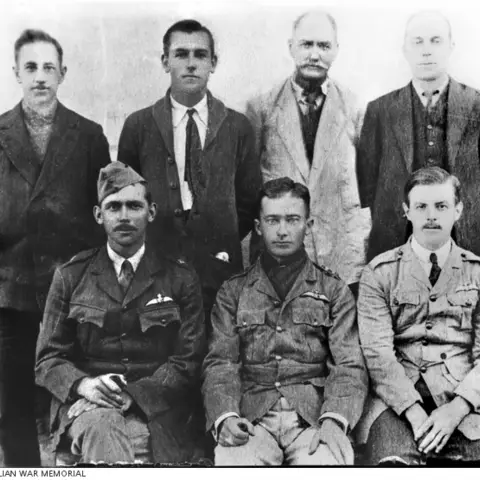
Group portrait of Australian prisoners at Afion Kara Hissar
Explore diaries, collection items, and photographs of Group Captain Thomas Walter White, a prisoner of war held by the Turks.
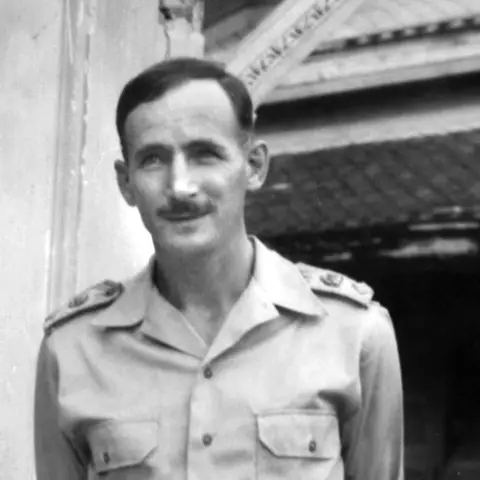
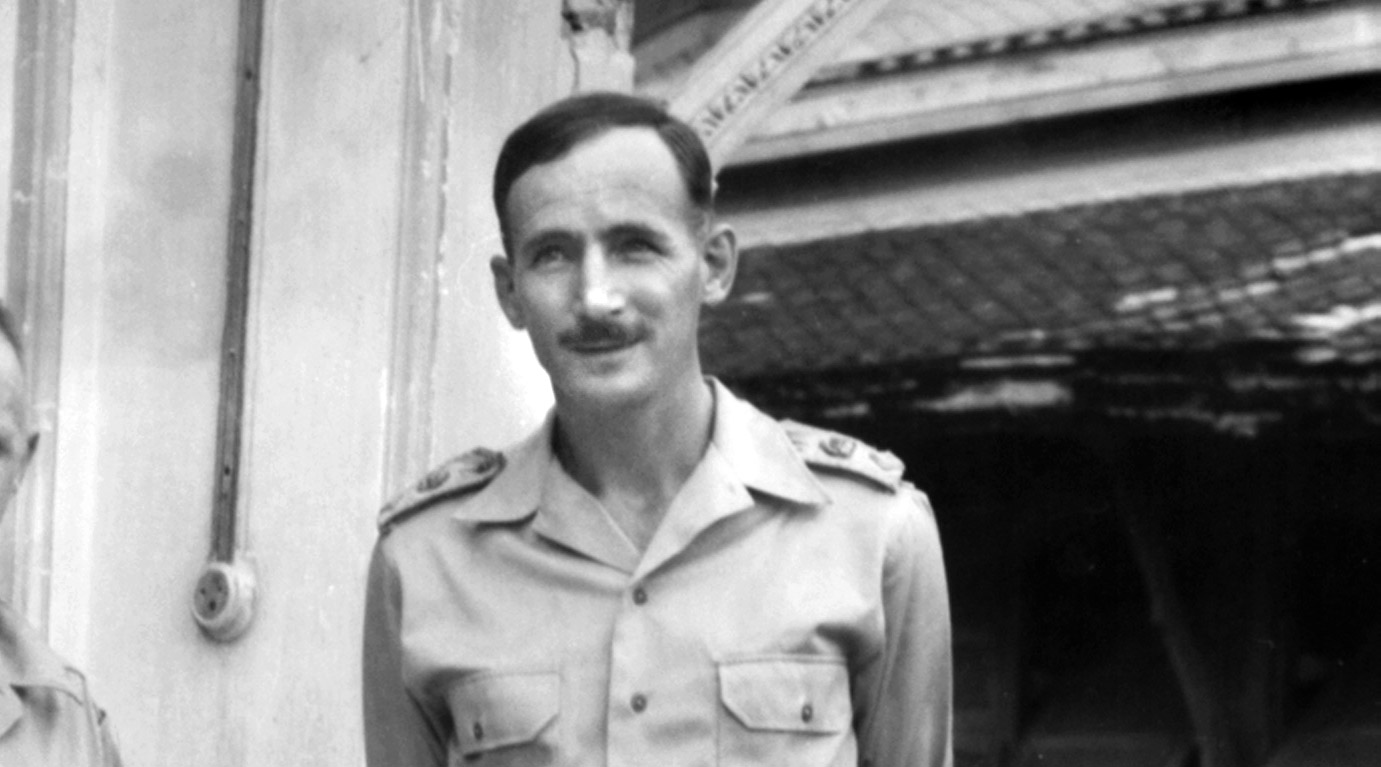
Lieutenant Colonel E. E. Dunlop
Dive into the remarkable story of Sir Ernest Edward "Weary" Dunlop. Explore his oral history recording, personal collection items, service history, and compelling biography.
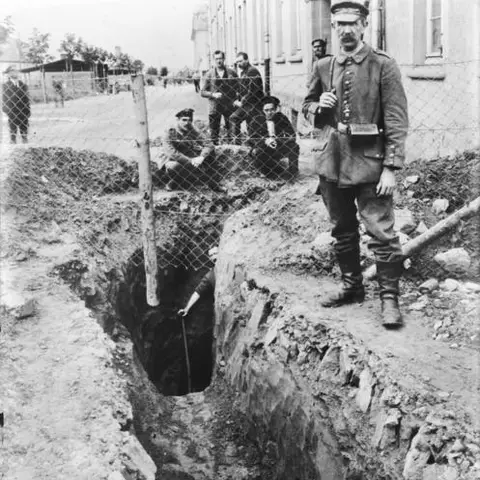
German guards inspect an exposed section of an escape tunnel leading from the Holzminden Prisoner of War (POW) Camp
Discover the full story of the 1918 “Great Escape,” when 29 British officers broke out of Holzminden POW camp in Germany.
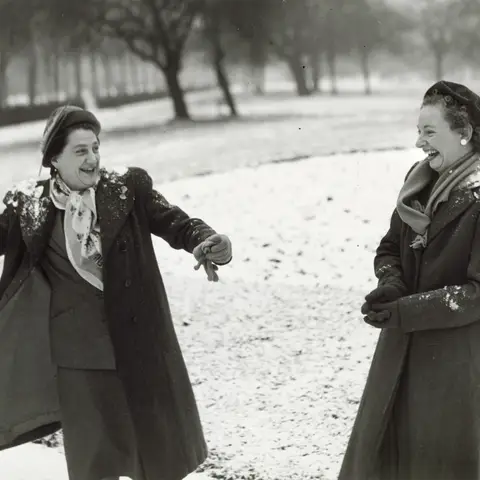
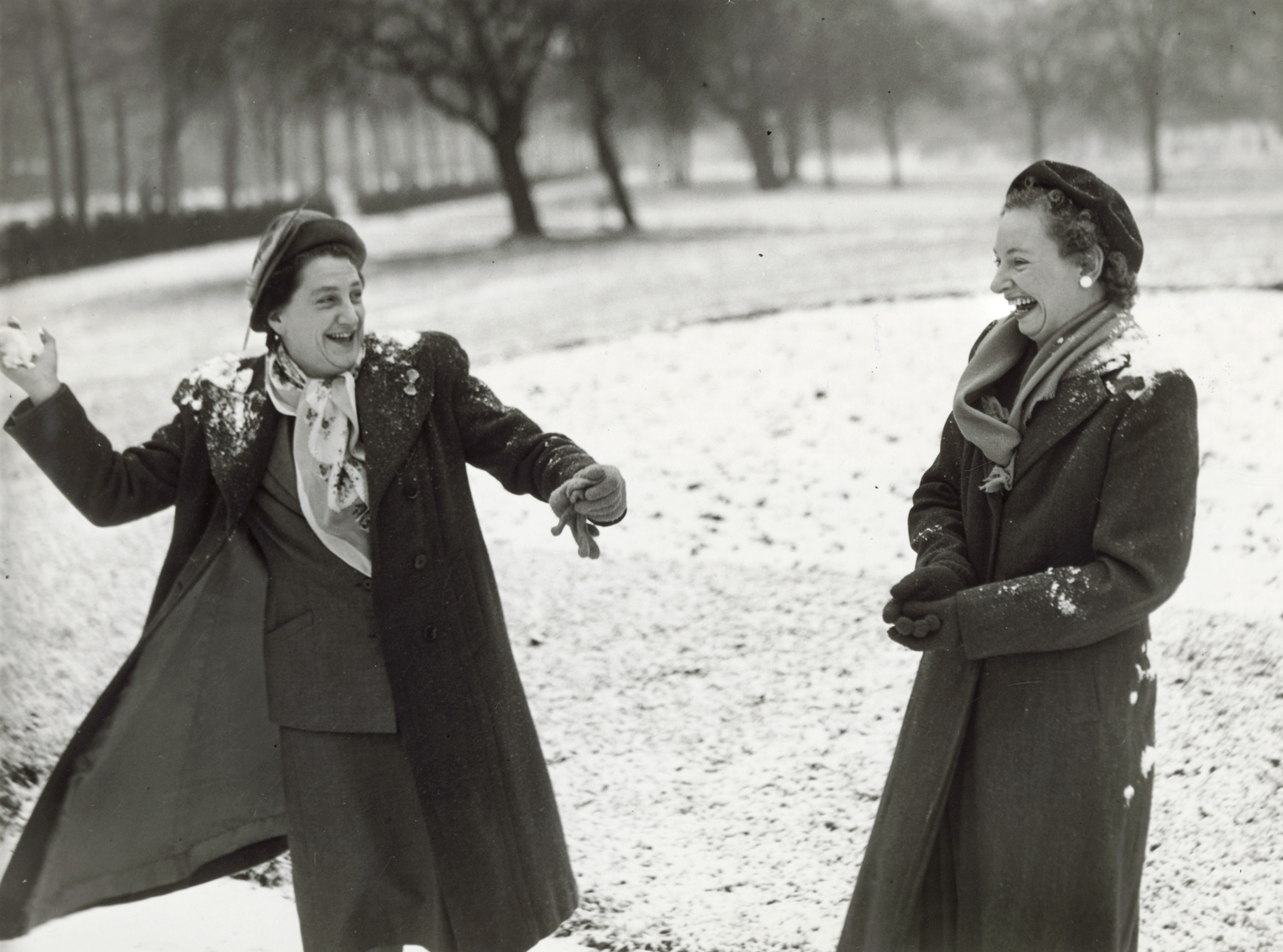
Betty and Vivian Bullwinkel during their London visit.
Read the story of Sister Betty Jeffrey—nurse, POW, and author—and explore her forbidden diaries of survival, courage, and resilience.
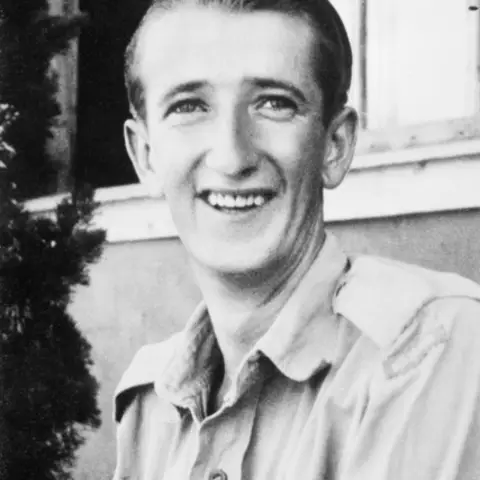
Portrait of 2/400186 Private (Pte) Horace William (Slim) Madden GC
Explore the story of Cronulla boy, Private Horace “Slim” Madden GC and uncover the experiences of prisoners of war in Korea.
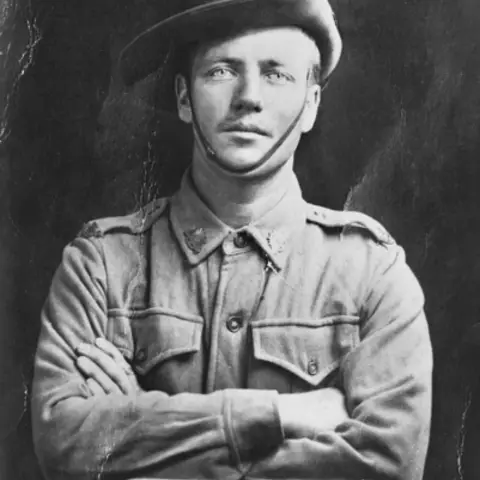
Voices
- Dr Karl James
Head, Military History, Australian War Memorial - Robyn Van Dyk
Head, Research Centre, Australian War Memorial - Anthony Fitzgerald
Admin Collections Assistant, Photo, Film and Sound, Australian War Memorial - Michael Kelly
Historian, Military History, Australian War Memorial - Sir Ernest Edward 'Weary' Dunlop
Army Surgeon, POW and Medical Officer - Lenny Preston
Sound and Production Operator, Photo, Film and Sound, Australian War Memorial - Dr Lachlan Grant
Historian, Military History, Australian War Memorial

About the host
John Barrington
John is the host of Through Their Eyes. Drawing on his experience presenting and reporting for 3RRR Melbourne, Good Shout Stories, triple j HACK, ABC Radio and The Project, he brings a fresh perspective to Australian War Memorial storytelling, connecting you with the people and experiences behind Australia’s military history, inspired by his father's Second World War service. As your guide through the podcast, John helps reveal the human stories and overlooked perspectives, making history accessible and relevant.