They fought for a country that didn’t always fight for them. Meet the Indigenous Australians who served, broke barriers and helped change what service would mean for those who followed.
The Australian War Memorial acknowledges the traditional custodians of Country throughout Australia. We recognise their continuing connection to land, sea and waters. We pay our respect to Elders past and present.
We also acknowledge the veterans who have served, those that are still serving; and the families that love and support them.
This episode is brought to you by Leidos Australia.
John Burns:
There was no difference in race or religion over there. We all wore the green skin. We were all there to help each other, you know. If you get in trouble, they're always going to have someone to help you.
Aunty Glenda Humes:
And he often said that he really didn't join because of the King or anything like that. It was because of Country. It was about Australia and his Country.
Reginald Saunders:
It was a sense of duty to the country. Australia is my country. I was merely following in the footsteps of hundreds of other Aboriginals in World War 1.
Aunty Julie Waters:
My dad was quite honoured to earn his wings, as he always wanted to fly.
Leonard Waters:
Oh, I don’t know. I just thought well this is something I’ve always wanted to do with my life. It was unreal, it’s something that you just can’t describe. You’ve got to do it, you’ve got to experience that feeling.
Aunty Lorraine Hatton OAM:
There's so much Indigenous military history that's rarely told within the fabric of our history. And I had so much available to me that they never had. And that's what I'm truly grateful for when I think of them, because they blazed that path for me.
John Barrington:
Aboriginal and Torres Strait Islander people have served in every major conflict in Australia's history. Each generation has its own story. And together, they reveal a legacy of courage, resilience and service, and unearth what military service meant for those who returned to a country that did not recognise them as equals.
I'm John Barrington, and this is the story of just some of the Aboriginal and Torres Strait Islander Australians who answered the call to serve, and what their service meant in the face of identity, belonging and equality. Welcome to ‘Through Their Eyes’.
To help us understand the stories you're about to hear, we’re joined by Michael Bell, the AWM’s Indigenous Liaison Officer. Michael’s work focuses on researching, recognising, and sharing the contributions of Aboriginal and Torres Strait Islander servicemen and women. We asked him to set the scene for us.
Michael Bell:
I'm Michael Bell, I'm the Indigenous Liaison Officer at the Australian War Memorial. I'm a Ngunnawal/Gomeroi man, and I've been in the indigenous liaison officer role now for ten years.
And in my experience, and during my work commitments, we've continued to expand the knowledge and service and sacrifice and contributions of Aboriginal and Torres Strait Islander people in their commitment to Australia in uniform as an ongoing project.
So, what we first started with is we inherited the Centenary of Anzac, and we concentrated on the First World War. And since I've arrived here, we've increased the number from 700 up to now just over 1,300 known enlistments or attempts to enlist.
Part of that research, we've also added the service and sacrifice and contributions of Aboriginal men in the Boer War and all the conflicts that followed: the First World War, Second World War, Korea, BCOF, Malaya, the Emergency, and then also Vietnam.
And we've also got a list of current serving and peacekeeping veterans as well that we developed during the development of the new galleries, to further expand that ongoing military history of Australia.
So, the goal here is to continue to put the Indigenous face on the Anzac legend. And through my work and through the work of the Australian War Memorial, we continue to do that, share those stories and put the place of Aboriginal people in the place where it was previously excluded because of past policies and the past non-recognition of our service.
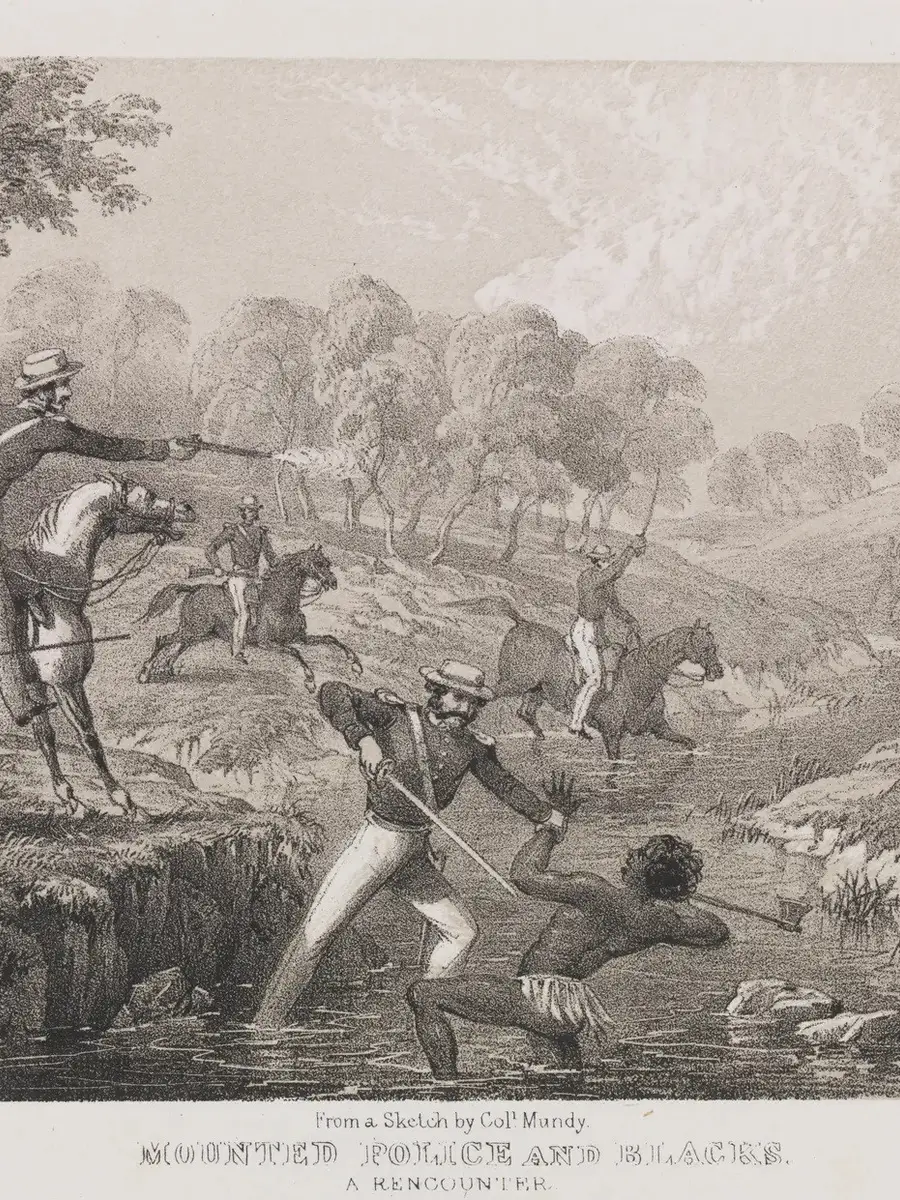
The reason that the Australian War Memorial Indigenous Recognition Project is needed was that, during the period of service, especially for the Australian military, you know, the Australian Army, Air Force and Navy, the 1903 Defence Act, amended in 1909, Section 61, Clause H, specifically exempted people of non-substantially European heritage or origin from enlisting.
It was deemed under the newly formed Federal Government of Australia that it was a white man's war for white men, and so therefore excluded people of colour. And that restriction applied to our Asian brothers and sisters that had been in Australia, and also anybody from the Pacific Island nations or Afro-American, African heritage.
So, people of colour were excluded from the defence of Australia under that Act. Those acts, who then were under the treatment of the Federal Government in consideration of the White Australia Policy Act, the non-recognition of Aboriginal people in the Constitution, where it was deemed necessary for special legislation to be made.
It delegated the power of making laws on behalf of Aboriginal people of Australia to the states, and therefore the various Protectors of Aborigines throughout the states, starting in Victoria in approximately 1883 and then rolled out across the nation, prior to and after Federation.
So, the restrictions that those laws imposed on us, were segregation, unequal rights, inability to be recognised as citizens, also control of our children, to have and own property, and to maintain ourselves as a separate people within the eyes of the government.
So those restrictions that were placed by the larger political perspective of Australia also reflected in trying to fight and defend the country. It is often said, and I quote, our men were fighting for rights that they weren't entitled to in their home country.
And so that's why it's significant that we now rectify those errors from the past, quantify where we can the ability and willingness of our Aboriginal people to serve and defend Australia at the time of its greatest needs, so that we can get a true image of the defence of Australia and defending Country, with the view of using that unity and service as a step towards reconciliation in Australia.
What we found in talking to families and some of the veterans themselves is that Aboriginal men wanted to serve and defend their country for the same reasons as their non-Indigenous brothers and sisters in the main.
But for Aboriginal men, there were a couple of additional factors where it was seen as a chance to get out from under the Protector and, of course, from the harsh conditions that were imposed on our people from the Protector.
Also, the military were paying equally. They got an equal wage and an equal representation, and the rights advocacy groups of the day were viewing service to the country as a path to citizenship.
So, it was advertised that if you join, you may get a better chance of becoming a citizen and therefore being equal in the eyes of the law and having those rights as a citizen of Australia.
At the time of the First World War, in the period at the end of the Boer War, we weren't equal under the law. So, it's that usual adventure, loyalty, doing the right thing, defence of Country. But then for Aboriginal men, it's a chance to reclaim your spot in society, have a chance at equal pay. Also, the possibility of a chance of citizenship, and also to be seen as part of a country where we were excluded, ignored, sent to the fringes and moved out and away from what would be the traditional male role in an Aboriginal community, is defending your people, defending your Country.
John Barrington:
Towards the end of the Second World War, a young man climbed into the cockpit of a Kittyhawk fighter aircraft. He had left school before he turned fourteen, worked as a ring barker and shearer, and had spent years dreaming about flying. Now, he was about to become the first known Aboriginal Australian to earn his wings as a military fighter pilot.
Len Waters:
Well, it's something that I'd dreamed about. It was something that I never ever thought was possible considering where I'd come from and the background that I had. And I just didn't think it was possible to become a pilot.
John Barrington:
Leonard Waters, or Len as he was known, was just 18 years old when he volunteered for service. One of eleven children, he grew up on Euraba Aboriginal Reserve near Boomi in northern New South Wales. From an early age, he was fascinated by aviation and inspired by the pioneering aviators of the day.
Len Waters:
I grew up in the era when the skies were being explored. When I was probably about 8 or 9 years of age, when other kids were playing with ordinary toys, I'd be making model planes and flying kites. I always had my head in the clouds. It took a world war for me to realise my ambition, but fortunately for me I did do that.
John Barrington:
Len enlisted in the Royal Australian Air Force on 24 August 1942. Fifty-one years later, he passed away on the very same date. Today, his story lives on through his daughter, Aunty Julia Waters. Since losing both of her parents, Julie has made it her mission to preserve her father's legacy and ensure his story continues to be shared.
Aunty Julia Waters:
Mum's health was deteriorating from about 2009, and she asked if I could be available to step in to attend events, especially when travel was entailed. My mum kept my father's story alive for over 29 years. She knew the importance of those items, and she wanted to make sure that they were cared for, and they were until after Dad's passing in 1993. Because of her beliefs, my mum ensured that Dad’s story was to be shared with the wider community, as he didn't get the recognition due to him during his lifetime.
John Barrington:
Len didn’t set out to become a pioneer or a trailblazer. All he wanted to do was fly.
Len Waters:
I didn't join up for the glamour or the glory. I just wanted to do it. It was a lifelong ambition. I wanted to get up there.
John Barrington:
You're hearing Len's own voice from an oral history recorded by the AWM in June 1993, just over two months before his passing. It's a remarkable part of the Memorial's collection, preserving his memories and helping us understand the man behind the legacy.
Len initially enlisted in the Air Force as ground crew, training as an aircraft mechanic working on kitty hawks. The Kittyhawk was a single-seater fighter plane used to fight enemy aircraft, as well as attack targets on the ground. A Kittyhawk was not only rugged and reliable, but they were heavily armed, making them well suited to the conditions in the Pacific.
By the time Len was maintaining these aircraft, hundreds of Australian pilots were already flying the kittyhawks in places like New Guinea and other parts of the Southwest Pacific.
Len’s application to remuster as aircrew was accepted in 1943, and he undertook his training before earning his pilot’s wings in 1944.
Aunty Julia Waters:
From several sources, I've heard that my dad was quite honoured to earn his wings, as he always wanted to fly.
Len Waters:
That was a very proud moment because I thought I'd have to battle all the time.
John Barrington:
Before long, Len found himself climbing into the cockpit of the very aircraft he'd once repaired. Posted to No. 78 Squadron in New Guinea, the young man who'd never imagined becoming a pilot was now flying Kittyhawk’s on missions to support Allied operations.
Len Waters:
Oh, I don’t know. I just thought well this is something that I've wanted to do all my life. And I just took to it like a duck to water. It was unreal. It's something that you just can't describe, you've got to do it, you've got to experience that feeling.
Aunty Julia Waters:
One of the things that is noted about my dad's service was the plane assigned to him was called Black Magic, and the plane was named by the previous pilot, and Dad thought it was an omen to be given that plane due to his Aboriginality. And he always thought it was a good sign for him to be able to fly in that plane.
John Barrington:
On one mission, his Kittyhawk was struck by a Japanese 37-millimetre cannon shell, wedging itself in the cockpit beside him. By sheer luck it failed to explode, and Len continued flying for another two hours before landing safely with the shell still intact.
Len Waters:
The most hairy one that stands out more than any other, we were over the Celebes one day and we were dive bombing. I was leading A Flight at the time and as I pulled out of the dive and dropped the bombs at about 3,000 feet, I felt a 'clunk' underneath and I thought, I've got a hit there somewhere.
As I pulled out of it, I flew back around and I felt this thing, whatever it was, lodged between my armour-plating behind the nape of my neck and the seventy-five-gallon fuel tank in the fuselage. I thought, it's over two hours from the Celebes back to Morotai. I could almost hear the thing ticking behind my skull because one in five is a high explosive shell. And when we got back to base, I just told the others to land and get off the strip. And I told them to clear the strip, and the armourers came over and I just said to them, 'There's something underneath – went up underneath'.
They looked up inside and ripped it open and the shell was there - it was a live shell. Incidentally, it was a high explosive shell. If it had landed six or eight inches one way or the other, I wouldn't be here talking about it today.
Aunty Julia Waters:
My dad only told one story about his time during the war. And it wasn't about his service. Dad had a wound on his leg, and everyone saw it when he wore his stubbies for shearing.
Dad’s recollection of that wound was that he was shot by the Japanese, and he bore the evidence, and the wound was from a boil. And the family joked about this story on many occasions. I've learned since Dad passed that Dad did have very many near misses.
There's a photograph shown at the Australian War Memorial, where Dad is sitting in the cockpit of his Kittyhawk. The photo was taken after Dad had been flying for several hours around the Air Force base to use up his fuel supply, as there was a live Japanese bomb lodged between his seat and the fuel tank.
The story was told that the Air Force base took the photograph of Dad as he was coming into land so that could identify the pilot just in case the plane exploded.
This story was told to me by different pilots who flew with Dad, but on the one occasion that I remember the story being told was at the opening of the Land Borders Park in New South Wales, where the Mayor for Fairfield told the story. The mayor knew my dad’s story, and he kept on going back to this story about the near-miss with the live bomb. So, dad may not have told us the stories, but that story has been lived by many other people.
John Barrington:
By the time the war ended, Len had flown more than 90 missions across the Pacific. And he returned home with a remarkable service record.
Aunty Julia Waters:
I'm proud of my dad's service during the Second World War, as he enlisted to serve when Australia didn't recognise him as a citizen. If you look at Dad's enlistment form, it actually says he's a British subject. It doesn't say he's Australian, and they referred to his skin being dark. Dad went off willingly to enlist as a mechanic, but he always wanted to fly. So, when he was given the opportunity to study at nighttime to advance to be a pilot, he actually took that opportunity to do those study. He achieved his dream of flying and he was quite successful in that quest.
He left home as a 19-year-old Aboriginal country boy who didn't feel like he could achieve anything, but when he returned in 1946, he was a RAAF fighter pilot who survived 95 missions.
John Barrington:
Like so many Australians who served during the Second World War, Len now faced a different challenge: returning home and building a life beyond military service.
Len Waters:
When I got discharged in '46 I wasn't even twenty-two, so I was more or less only a kid.
Aunty Julia Waters:
When Dad returned to Saint George in 1946, he didn't receive the welcome home that he thought he deserved in the Air Force. I’ve learnt the following from my mum after dad passed. His military service wasn’t acknowledged by the wider community and his family advised him just to accept his role in society as a labourer and not to have high aspirations and that was not the way that Dad wanted to move on in his life.
John Barrington:
With a young family to support, Len married Gladys and together they raised six children. Providing for them became his next mission.
Len Waters:
When I got married, we were both still working. My wife was a housemaid, and she was actually earning almost as much money as I was. I thought, if I'm going to be the breadwinner, I'm going to have to get into something a bit more productive, because she said she wanted to have a family. and that something would bring in a little bit more money, because she said she wanted to have a family.
I said I can do all sorts of hard work - bush work - but the best money job, naturally, was shearing which most of my family had tried and all, at that time, just about the lot of them were doing. So, I went back to shearing.
John Barrington:
Despite everything Len had achieved in the skies over the Pacific, where he served alongside his fellow airmen as an equal, there were few opportunities waiting for him back home.
Aunty Julia Waters:
Dad worked as a car mechanic at the local garage until the qualified mechanic returned from the war. Dad was told that he couldn't get the job because he wasn't a qualified mechanic, and he then had to go back to being a manual labourer, doing odd jobs around Saint George before he returned to the shearing sheds.
Dad's ambition after the war was to set up a air courier service between Saint George and Brisbane, and one of the local businessmen in Saint George was willing to provide the capital funding for the enterprise. However, the enterprise didn't get off the ground as the Commonwealth Government didn't respond to Dad's letters seeking the necessary permits and licences for the service.
So, Dad never got to fly again legally.
During the wartime, there was a curfew for Aboriginals, and they had to be off the street by 6pm. The night Dad arrived in Moree, the bus didn't arrive till 6:30. Dad and Uncle Georgie were arrested by the police for breaking their curfew.
Apparently, Dad’s comment to the police was that he was a serving pilot, and the police response was, ‘You probably stole the uniform as well.’ I've heard from the other pilots who flew with Dad, three of the 78. Squadron pilots and the comments were, ‘He was a brilliant pilot, and they were honoured to fly with him.’ These three men told me that Dad's skin colour was never evident during the time they flew. They were more interested in his flying experience and his abilities, and they were honoured to have him with them in the air.
John Barrington:
Reflecting on his life, Len hoped his story would encourage future generations of Aboriginal Australians to pursue opportunities, even when the odds seemed against them.
Len Waters:
I've always said that even though a job doesn't seem to be available, if you show that you're willing to try something, as I did, you can always get something to do. You mightn't get full wages at first but once you start to prove yourself you can do that because I've done that on several occasions with different building firms and things like that.
Aunty Julia Waters:
I hope the Australian public acknowledges the achievement of a young Aboriginal country lad who had the ambition to fly. And he managed to do so during one of the most trying times in Australia. Dad’s service for three and a half years enabled him to live in a different world where there weren't any barriers, discrimination or segregation. He quickly learned that that world didn't exist when he returned home in 1946.
A lot of this, and my understanding of Dad’s situation, only came to me because of my mum keeping that story. My mum was the recorder of all that information. So, she was the right person for him to tell the story and for her to keep that story and all that information. My mum kept my father's story alive for over 29 years. I am honoured to recognise both my parents for establishing and continuing the Waters legacy, so my siblings, their children, their grandchildren, and great-grandchildren know all of their sacrifices during the war, as well as the struggles they both had to cope with because they were Aboriginals.
John Barrington:
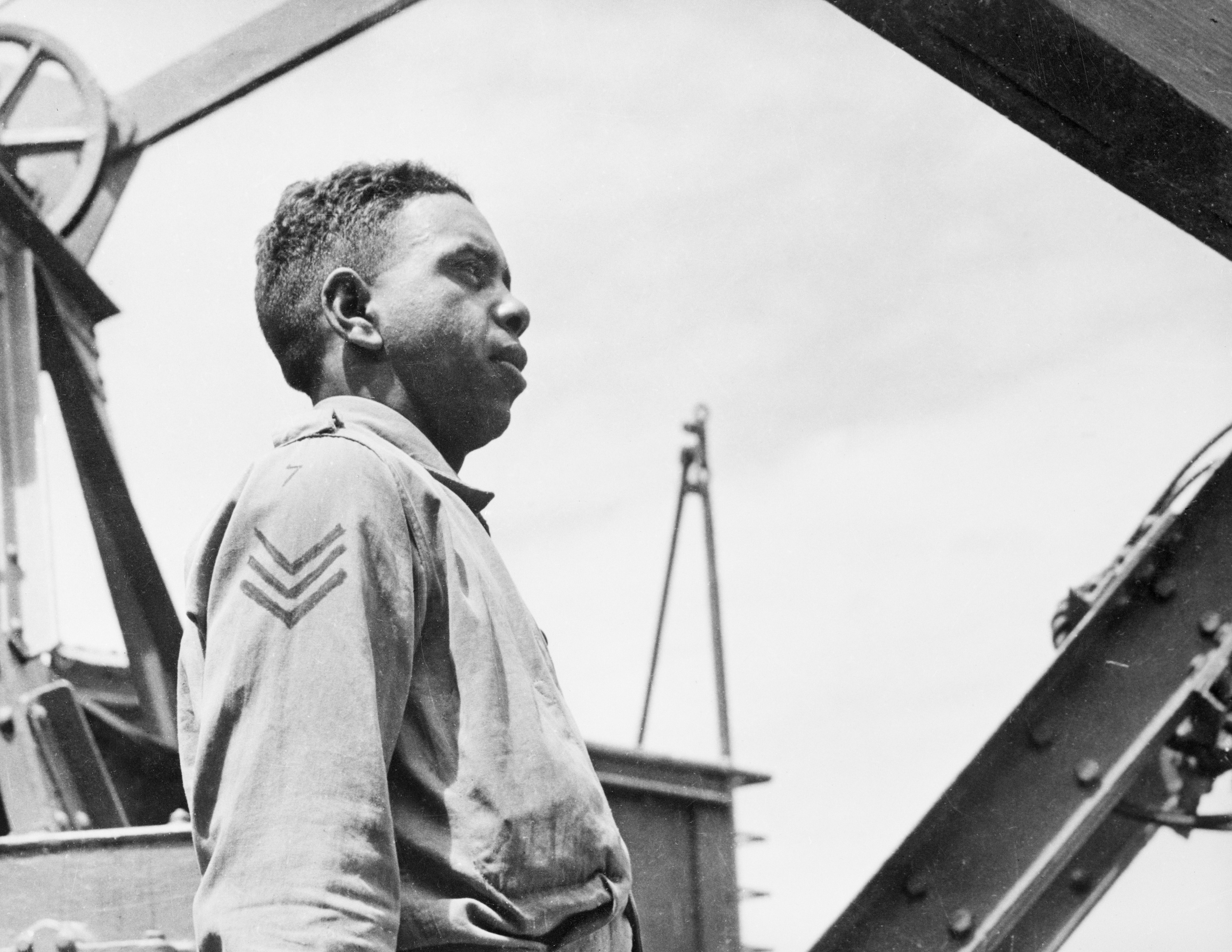
Reginald Saunders, known as Reg, was 19 years old when the Second World War began. He had grown up in western Victoria with his father and younger brother, Harry. His mother died when he was only four, and much of his childhood was spent with his maternal grandmother near Lake Condah.
The following is Reg’s voice, recorded in 1989.
Reg Saunders:
It was a sense of duty to the country. Australia is my country and I was merely following in the footsteps of hundreds of other Aboriginals in World War One. I love my country very much and I like the people in Australia, so my loyalty was purely Australian.
John Barrington:
Those words were recorded almost fifty years after the Second World War. By then, Reg had become one of Australia’s most respected soldiers. Before the medals and the ranks, he was simply a man who had chosen to go to war.
Helping us to understand who Reg was, is his daughter, Aunty Glenda Humes.
Aunty Glenda Humes:
My father, Reg Saunders, came from a military background, but he also came from a group of people, the Gunditjmara people, who were known as the Fighting Gunditjmara because of the colonial wars that happened around the district, that they were very much involved in, and always fighting for Country.
And so, his father went off to join the First World War, as a gunner. And Dad was also named after Reginald Rawlings, who was a Military Medal winner during World War One. So, he had the military background.
He was also, it was a time when other young people he was playing cricket with or footy with in the community were joining up, and so he felt that obligation to join as well.
And he often said that he really didn't join because of the King or anything like that. It was because of Country. It was about Australia and his Country.
John Barrington:
Reg’s loyalty to Australia was deeply felt, but at times was complicated. He was proud of his Aboriginal identity, and proud to serve his Country. At the same time, he understood what colonisation had done to his family, his community and his people.
Reg Saunders:
We've been fighting a war ever since the first whites came, particularly my people that were in the Gunditjmara people, were very proud people. We had quite a legion of Aboriginal servicemen in World War I. The man I was named after, Reginald, William Reginald Rawlings, he won a Military Medal and was killed in France. Many of the fellows, Dad's friends, were Aboriginal soldiers.
Aunty Glenda Humes:
Dad had a great history of serving Country through his father. And also, his other grandfather was also in the Army as well. So, he had people around him who were warriors, really. And that's what he saw himself as.
He also thought it's a great honour to be able to do that. And his brother, Harry, who also joined up after he did, also felt that honour as well, that they were very proud Gunditjmara men, but also very proud Australian man as well.
John Barrington:
For Reg, military service was part of the world he grew up in. But then he started training, the reality of what he’d chosen suddenly became much clearer.
Reg Saunders:
It did sort of emphasise what I was about to undertake. It wasn't just killing, it was killing people. Not dogs or cats or rabbits. It was people same as myself.
John Barrington:
Not long after completing his training, Reg left Australia for the Middle East. He would serve in North Africa before fighting in the jungles of New Guinea. The ideals that had led him to enlist would soon be confronted by the realities of war.
Reg Saunders:
Nothing exceptional happened except I got hell frightened out of me. Oh God did I get frightened.
Aunty Glenda Humes:
Look, he's very stoic. Dad had ten children, seven of those are girls. There's no way he really talked about any of that stuff with us.
John Barrington:
Throughout the Second World War, Reg became known as a calm and capable leader. Someone other soldiers trusted under immense pressure. But the greatest loss of the war wasn’t something he experienced on the battlefield.
Aunty Glenda Humes:
His mother died when he was quite young, so he was virtually raised by his maternal grandparents. But his father also played a very important role in his upbringing.
From my observation and from the letters that I have read that Harry wrote to my mother, they were brought up to be very respectful young men, and very gentle and very kind. And they got a lot of things from their father.
These two boys were very close, a couple of years apart, so they were very close. And I remember talking to one of my aunties about my father and Uncle Harry and she said, well, your father was always a leader. Harry was always a follower.
And I can also recall other people saying that when they were at school, that they always wanted to join the Saunders group, the gang, because they were always the leaders and always knew everything.
And so, this was a very close relationship that they had. So, when they joined up, they weren't in the same battalion. So, they're in different battalions, went to different parts of the world. But they had an opportunity to meet up in Jerusalem, of all places, in the Middle East.
And they just had an amazing time together, and that was the last time that they were together.
Reg Saunders:
I was angry because I was the only one that was supposed to go. See, the probability that with two of us there, one of us was going to get killed. And that's exactly what happened.
Aunty Glenda Humes:
I can recall him talking about it once, and it just shook him to the core when he found out, you know, that his only brother at that stage had gone. But he still held that time that they spent in Jerusalem together as a special time for him.
John Barrington:
Despite everything he'd experienced, Reg continued to lead. Those who served alongside him recognised his calmness, his fairness and the way he looked after the men under his command.
Aunty Glenda Humes:
He had a lot of common sense as well for a young man. And within his twenties, when he started to, well, he started to really lead as a lieutenant, but he was leading well before then as a sergeant and things like that.
He was calm. He knew about weapons. He was a born leader. But he was very calm all the time. Because of people like that, they're calm in their decision-making and they're good leaders. People flock to them because when you're with them, you feel safe. And in the time of war, you want to be with people who protect you, who look after you. And he was like that. So, he always had people around him because they always knew that he would take care of them in one way or another.
John Barrington:
By 1944, years of experience and proven leadership had earned Reg a commission, making him the first known Aboriginal Australian commissioned as an Army officer. But for Reg, the achievement wasn't about making history. It was simply recognition of the soldier he had become.
Reg Saunders:
It didn't worry me very greatly. And I knew I was proficient in those days. I was still there when a lot of them had gone. I knew I was either a very good soldier, or I was a very bloody lucky one. I realise that.
Going back to the early days, my dad said to me when I first, we talked about the Army when I joined it, he said, “Always remember son, it's another job.” He said, “The better you are, the better your pay and the better the conditions.” It never got to me until I became an officer, that what he was talking about was.
Then I saw quite a lot of action after that, towards the end of the war, and I was more involved, because I was then second-in-command of the company and all that sort of stuff. Platoon commander and a commander in my own right. I saw a lot of action. And I was a senior bloke, one of the three or four senior blokes in the battalion. I was a very experienced soldier, and I wasn't frightened anymore because I knew I could handle myself by then.
Aunty Glenda Humes:
I never really heard him, you know, pride himself at all. I mean, lots of other people did, of course. Very gentle and very kind, fun to be around. Had a great sense of humour, always laughing, loved to be around all his grandchildren and children at the time. Yeah. He was an amazing person.
John Barrington:
More than two decades after Reg Saunders and Len Waters served during the Second World War, another young Aboriginal Australian was beginning his military career.
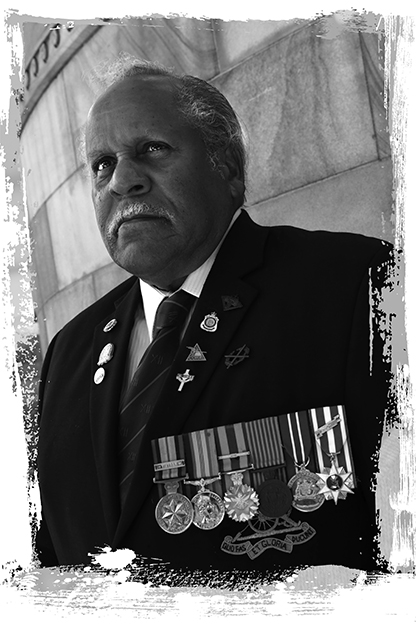
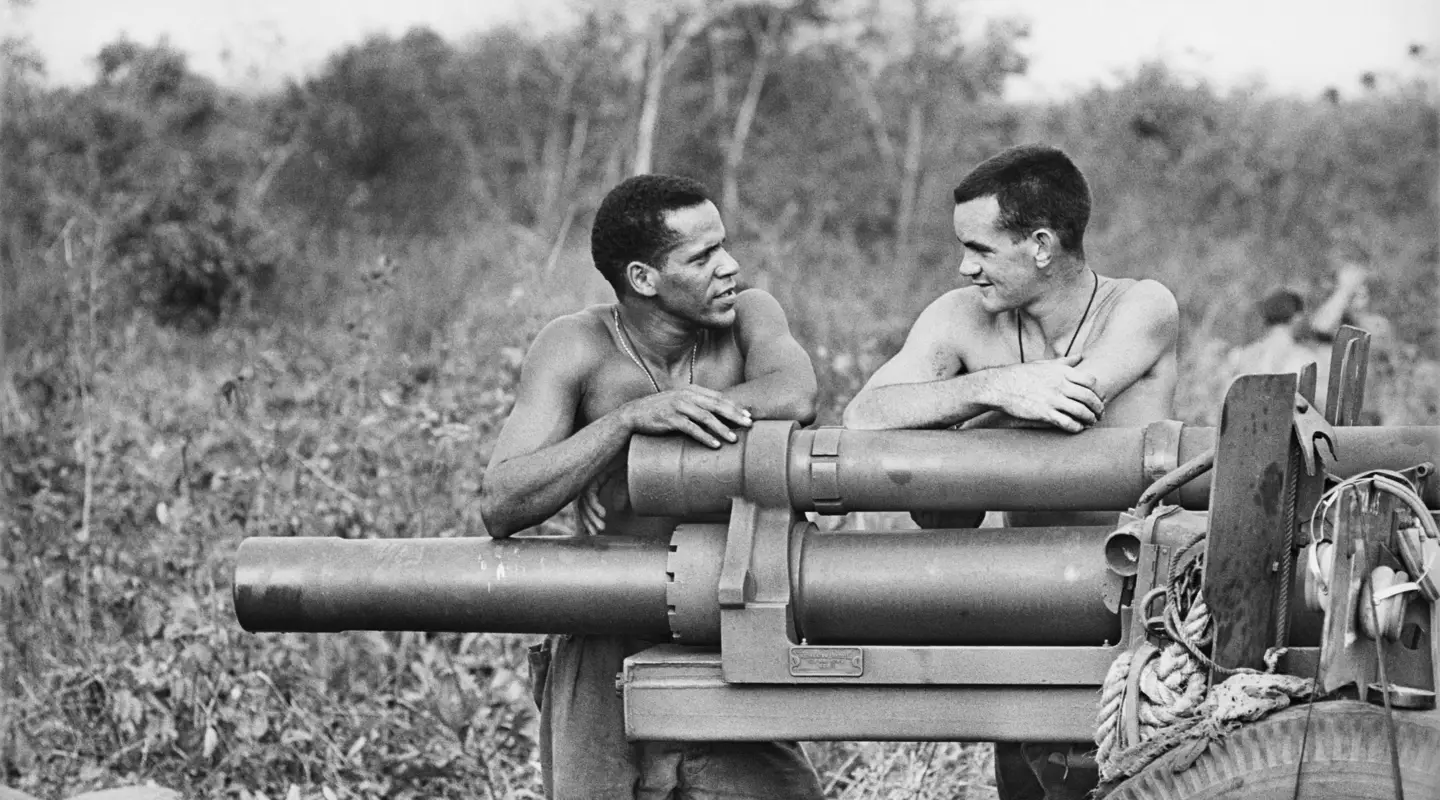
Like generations of Aboriginal and Torres Strait Islander people before him, John Burns volunteered to serve his country. During two tours of Vietnam, he took part in both the Battles of Long Tan and Coral, earning a reputation as a respected artilleryman. But John’s story isn’t just defined by the battles he fought in.
Garth O’Connell, proud Gomeroi man and Assistant Curator with the Military Heraldry and Technology section at the AWM, sits down with John to reflect on his service, looking back after 60 years.
Garth O’Connell:
What inspired you to join the Army?
John Burns:
Well, I was 16. I was working at the Brisbane abattoirs, and some of the young blokes on the floor I was working said, “Why don’t you come and join? Nah, you’ll love it”. And I said, “You’ve got to be 17.” And they said “Nah, they don’t check, come and join”.
So, I thought, oh yeah. I know you guys; you’ll fight to the last drop of my blood. But I thought, no, I wouldn't mind having a go, you know. So, filled out the forms, gave it to Mum and said, hope she doesn’t read it, she signed it, and I told her what I was doing. You know, she didn't notice the bit that said 17 plus.
So, I put it in, did the medical, and then they accepted me. And I thought it was great, you know. You do the bivouacs on the weekends and once a year you go to annual camp, two weeks. And I was the only one that got through, unfortunately. One was flat-footed and one had broken his leg at some stage and they knocked him back. So, they wanted me to pull out, but I said, “No, I'm going to go through with it. Just for three years.”
Yeah, 23 years later. But that's how I got into it.
Sort of talked me into becoming a real soldier rather than a weekend warrior. And a couple of years later, we were off to Vietnam. And I had a choice, Vietnam or Malaya. I think I'd rather go with my mates here to Vietnam, you know.
But that wasn't the only reason, because I believed what Menzies was telling us, that the South Vietnamese people did not want to wear the yoke of communism from the North. And also, if Hanoi, the communists, had come down through South Vietnam and into Malaya, next thing they'd be knocking on our door.
And I said, “Let's stop them here.” I thought, I'l go and and do my bit.
Garth O’Connell:
You served two tours in South Vietnam, including the very important battles of Long Tan and Fire Support Base Coral. When you look back on your years in the Army, what moments have stayed with you the most?
John Burns:
Oh, there's quite a few, but the one that sticks in my mind, and I'll never, ever forget it, was during the Battle of Long Tan.
The whole regiment was firing in support of D Company. And I was a bombardier, the two I/C on the gun, and my job was to prepare the ammunition for firing.
As we were going, and we were really pumping them out as fast as we could, loading and firing them, you know. The way we were pumping them out, I said, “Oh, we must be running short on ammunition.”
And I thought, how the hell am I going to take half the detachment to the ammo dump to get ammunition to bring back to the gun and keep the sustained rate of fire going? Because we knew there were men out there relying on us to keep the attacking NVA and Viet Cong at bay and overrunning them.
So, if the firing died, then they'd come in and overrun them. And I was really worried. How the hell are we going to do it?
When out of the rubber trees came all these soldiers, and they just ran straight to the ammo dump. The ammo bombardier was there. And he saw them coming; “What are you blokes doing?”
They said, “We’re going to take ammunition.”
He said, “Oh, good.”
And everyone was getting worried on the battery position, I found out later on but, not only me. But anyway, so he said, “righto, we’ll start with this stack of ammunition. And they were in boxes. So they started unboxing it and carrying the canisters to the guns, you know, all six guns.
And I will never forget seeing those people coming out of the- it was something you’d have to see and sort of be in that situation. I was really worried, and I suppose all the other gunners were really worried too, that if we stopped firing, then we’ve lost D company.
And when they came out, I just thought I was so proud to be part of it. As we used to say, there was no difference in race or religion either. We all wore the green skin.
We were all there to help each other. You know, if you get in trouble, there’s always going to be someone to help you.
Garth O’Connell:
Prior to you joining the Army and being like a civilian, did you suffer much discrimination being an Aboriginal fella in southeast Queensland, Brisbane?
John Burns:
Now and again, I’ve never told anybody this story. I remember it as if it was yesterday. I was on a trolleybus going home. And, same with buses. You know that mirror they have so they can see down the bus? And I was sitting up near the front.
He said “aye”, I sort of looked in the mirror and he’s looking straight at me, and he said, “If I had you, I’d make you work.”
And I thought, oh. You know, I didn’t know where to look. Just the look on his face, you know, his eyes, he was really hateful.
Because they had conductors in those days, he said, “Hey Bill, there’s a black snake on the bus. I think he’s frightening the kids.”
So yeah, because he’s looking straight at me when he’s saying it, you know. And of course everyone else on the bus, they knew who he was talking about.
So I just looked out the window, and I was glad when I got home and got off the bus. And I thought, I hope that never happens again. I hope I don’t run into this guy anyway because he might kidnap me and put me to work somewhere, you know.
Garth O’Connell:
You did say that you had some discrimination on city streets before being in the military. Was there much of a difference in the way you were treated once you got into the green skin, as we say?
John Burns:
Green skins. Yeah, I say that all the time. Not really. You know you get some smart alecs.
The soldiers serving in Vietnam, there was no sort of distinction what colour you were. You were there to do a job, and everybody relied on everybody else to watch each other’s back.
You know, you’re more ready to do your job when you knew somebody else is covering you and you’re covering them, sort of thing. If you’re in trouble, you know someone’s going to help you out for sure.
Garth O’Connell:
So, when you left the Army, what lessons from your service have you carried through life?
John Burns:
The Army taught a lot of things, you know. And one thing that I passed on to my kids: work ethic.
You do your job to the best of your ability. You’ll be respected in whatever job you want to do. And this is something that the Army expected of you: to do the job that you signed on for to the best of your ability.
Training is boring, really, a pain in the butt. But I proved it in Vietnam a couple of times, that if you do the training until it becomes second nature, you will save your life. And it did a couple of times in there, you know.
Training kicks in and you don’t think so much about getting shot or blown up or something like that. You just get in there and you do your job.
Because it was frightening, Coral. It was frightening when the rockets, or rocket-propelled grenades, and the mortars were coming down. You don’t know when, you know, your number’s coming up.
But if you get into, they said, number five for a Splintex, actually I was the only one still around the gun when the order came.
And I can still remember this as if it was the other day, leopard-crawling into the ammo bay to get the Splintex shells, or cannisters out, unbox ‘em, put it in.
And I remember saying a couple of prayers: “If it’s my turn to go, please let me get a couple of these shells away before somebody comes over the bun and throws a grenade at me,” or something like that, you know.
But as soon as I pulled that lanyard for that first round, training just kicked in. It was me and it was on, you know. My head cleared. I wasn’t scared anymore.
Garth O’Connell:
Now, you were a crewman on what is known as an M2A2 howitzer, which is a big American-built howitzer. How many crew would normally be operating that gun?
John Burns:
Normally it’s seven: a sergeant, the bombardier and five gunners.
Garth O’Connell:
There would normally be seven, and you were solo behind the gun, keeping it going. The enemy had broken through, and they had taken one of your sister guns just next to you.
John Burns:
Yeah, number six.
Garth O’Connell:
So the gun in front of you was already taken over. And we have that very weapon on display in our galleries. Did you train for that sort of unlikely scenario?
John Burns:
No, no, no, no, no, no. Well, it’s something that should never happen.
You know, artillery is usually three or four kilometres or more behind the infantry battalion. The enemy force should not come through and be able to get to the guns.
And we didn’t get to hand-to-hand combat, but, you know, it looked like it was pretty close at one stage.
Once the guns started firing, you know, yes, we’re gonna resist, and then training kicks in and everybody is standing to, ready to resist anyone that got through. Because I know as soon as I started firing, as soon as that gun went bang, my head just cleared.
There was no more tentative fear, whatever. That’s our job. That’s what we’ve got to do. Let’s do it.
John Burns:
It’s a big step when I got out of the Army, it took me quite a while to sort of get out, you know. I did it for the family. Particularly because quite a few of these were Vietnam veterans. It was a big family, one big family. And it was very hard for me later on when I got out to separate myself from my Army family and have my civilian family. They came first, but the transition from the Army, that had been my family for 23 years, was very hard to take. It took me a while to get over it.
But I just settled down, concentrated on making sure my family was all set up. I bought a house, kids in school and the wife was happy. That was the main thing. And everything worked out.
Garth O’Connell:
How were your family during that transition period? Were they supportive?
John Burns:
My wife, you know, she was the greatest. She had all the faith in me, you know, to be able to get things done, sort of thing. We used to talk about, “I don’t know what I’m going to do. There’s not much work out there for a gunnery instructor, someone working on the gun,” you know.
But then Metropolitan Security Service was looking for someone, and they rang me and said, “Do you want to come and do security work with us?”
And I said, “Well, you rang me. I’m looking for a job. You’ve got me.”
So I did security with a couple of different firms. And, you know, they’ve got the bus station underneath. We used to talk to the inspectors when they came through.
And this inspector said, “Do you want to become a bus driver?”
I said, “Oh, sounds good. I can handle that. I love driving.”
He said, “Yeah, yeah, yeah.”
So I filled out the application and put it in. I got the job and did it for seven years and eight months. And then, like I said, take a rest.
And in 2016, I got a call about this committee to have this Aboriginal and Torres Strait Islander memorial in Anzac Square.
They said, “Would you be interested in joining us?”
They said, “We don’t get paid, that’s all right. I’ll do it for nothing anyway. It’s something that should have been done years ago.”
The president of the Queensland RSL didn’t want it there. We’d already decided on the design, what it was going to be.
And we said, “Look, none of them are carrying weapons. We’re not here to glorify war or any particular part of the war.”
We want to show that Aboriginal men and women and Torres Strait Islanders, all of us, all served in all conflicts that Australia has been involved in, going back to the Boer War.
John Barrington:
Like so many Aboriginal and Torres Strait Islander veterans, John's service didn't end when he took off the uniform.
The friendships he built, the pride he carries, and the experiences that shaped him have become part of a much larger story. One that continues to be shared, remembered and carried forward by those who came after him.
More than a century after Aboriginal and Torres Strait Islander Australians first volunteered to serve, that legacy continues.
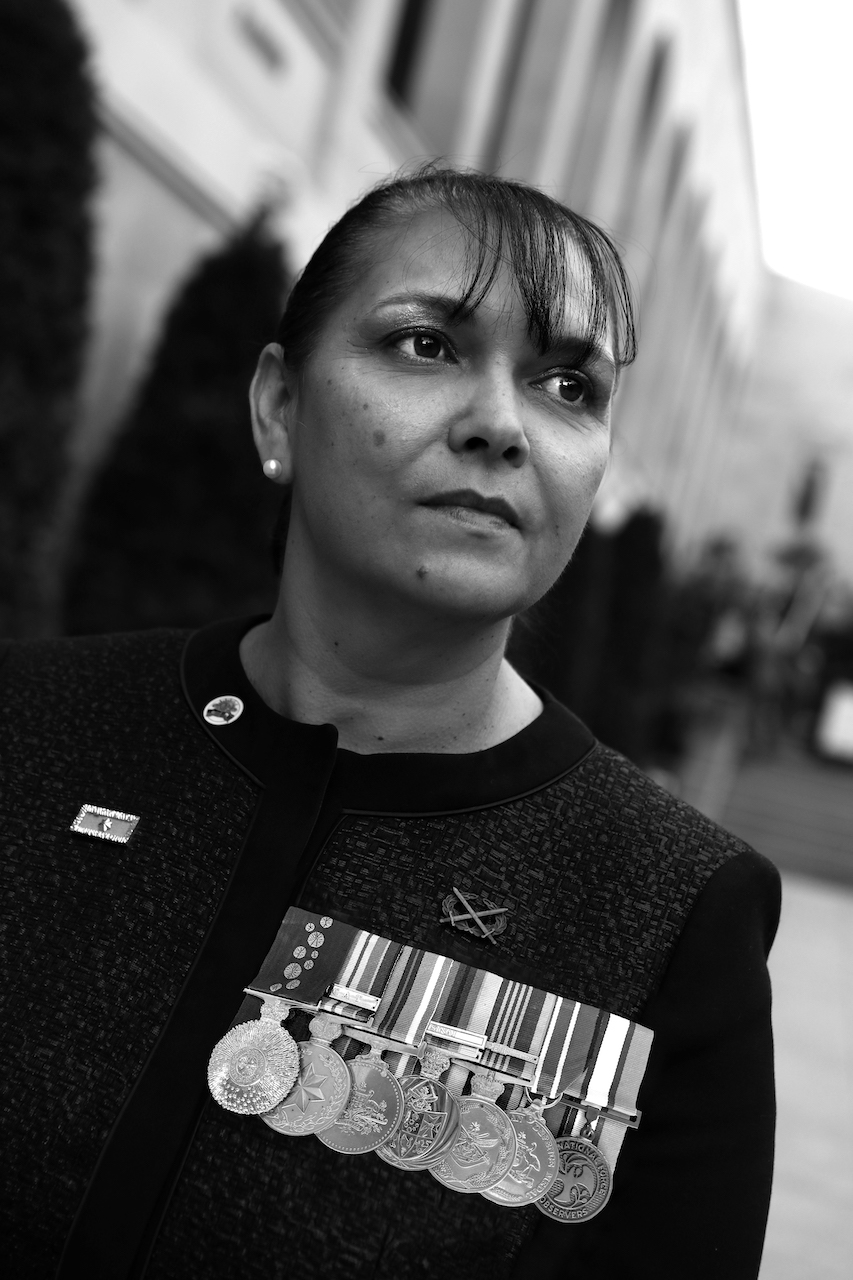
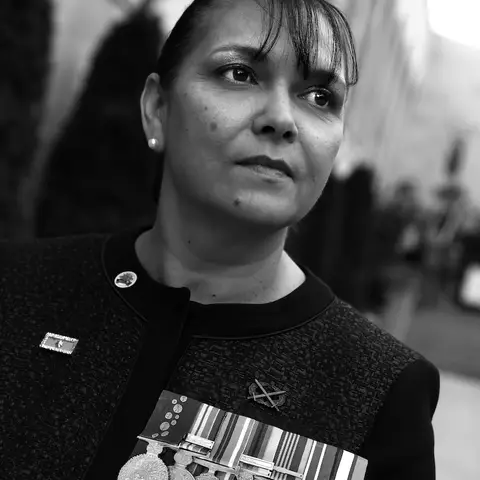
Aunty Lorraine Hatton is a proud Quandamooka woman who served more than 21 years in the Australian Army before dedicating herself to supporting veterans and championing the recognition of Aboriginal and Torres Strait Islander service.
Today, she reflects on what that legacy means, and why these stories continue to matter.
Aunty Lorraine Hatton OAM:
I'm the youngest of 11 children, and I'm the only one in my family that actually enlisted into the Australian Regular Army. My dad served in World War Two and unfortunately, by the time I elected to enlist, he had already passed away.
But growing up, I mean, Minjerribah, which is North Stradbroke Island in Queensland, my dad got a piece of land from serving in World War Two. It's like the soldier allotment. He built our house, which was like a three-bedroom wooden house, and we only had one cold water tap.
You know, I used to think that we grew up poor, with not having a lot in our family. So, as I was growing up, I wanted to make sure that I could get a good job.
And when I was 17 or 18, I thought I'd go and join the police force. But unfortunately, I wasn't successful. And my education level back then was Year 10 only. I thought, well, maybe I'll try and join the Army. And unfortunately, I wasn't successful there either.
So, being as determined as I am, because I wanted to succeed and have job stability, I thought, I'll join the Army Reserves. And because their entry levels were a little bit less, I was accepted.
But when it came time to enlist into the Reserves, they asked me what particular role I wanted to do in the Army. And I basically said, and there was a method to my madness here, because I said I'd like to do recruiting in Army Reserves. And they thought, oh, that's really strange, you know, and it's not something that people would normally select.
But in my own mind, I knew that if I got to know all the Regular Army recruiting guys, I walked in and I said, “I'm thinking about joining.” And they said, “Yeah Lorraine, come on in.”
And that's how I got into the Army. It was one of the proudest days of my life, and I was disappointed that I couldn't share that with my dad. And it always makes me, you know, I get a lump in my throat about that.
People say, “Oh, what did you want to join the Army for?” And I used to be embarrassed about telling this story because some people joined for patriotism. Some people joined because other family members have served. I joined for money, because I didn't have any. And I wanted money. But then, once I had that stability, that financial security, then I could focus on my career.
When I enlisted on the 14th of January, 1986, you never forget that, it was the start of a new generation of women enlisting into the Australian Army. The women then would be going through the same recruit school as the men at Kapooka.
I just found that I liked the camaraderie, I liked the exercise, I liked the challenges and the experiences of learning everything that I did while I was at Kapooka.
So off I trot. Once I qualified, I could go through my initial employment training and study my Morse code, become a listener up at 7 Sig Regiment. I did that for about, I think, six years. And then I decided to jump the fence and become a radio operator. I learned both sides of communications. Where I was posted to a lot of various units. I suppose the most standout was posted to the First Signal Regiment in Brisbane, and that was a field force unit for Signals Corps.
I served in Signals Corps for 21 years. And I didn't know this, I became the first identified Aboriginal female to be promoted to Warrant Officer. That was told to me by Michael Bell at the War Memorial. It's not until you reach the end of when you leave Defence and somebody says that to you and you go, “Really?”
It's such a surprise, considering when you look back in history and you look at the Indigenous men who served, the challenges and hardships they went through.
I had so much available to me that they never had. And that's what I'm truly grateful for when I think of them, because they blazed that path for me. There's so much Indigenous military history that's rarely told within the fabric of our history.
And the hardships and challenges, I remember, you know, hearing the stories from Michael and him actually showing me the paperwork of “unfit for service, Aboriginal”, “unfit for service, half-caste”. These are the terminologies.
And, you know, when you look back at government policy of the day, when they couldn't enlist, and for females, there was, all throughout my career, different levels of change within Defence, of being integrated in with the men.
And now, what wasn't once the norm is now the norm. And we have women in infantry units, we have them in Cav units, we have them in command positions. And we only have to look at our new Chief of Army, Susan Coyle.
I always look back at my military career and think and always think of my ancestors that came before me because, like I said before, they did the hard yards. They did the challenges under some really harsh conditions. And I'm blessed that I could have done what I did in my time because of what they did in theirs.
I actually discharged from the Army on the 17th of August in 2007. I actually stepped away from Defence and Army for over ten years, and I thought I would try my hand at a lot of different jobs out in society. And as it turns out, in, I think, 2019, I applied to become the Indigenous Elder for the Australian Army. And I came on as Army's second Indigenous Elder, but first female Elder.
What surprised me the most about this role is, after being away from Army for so long, coming back to the Army family and just being embraced and welcomed as I had been. It's like a part of you had been lost and you've come back and been found again in that, Army family. And the people that I've met along the way in those six years, and the people that I've spoken to, will make for some absolutely wonderful memories when I move forward.
See, I was awarded the Medal of the Order of Australia in 2019, and a part of the citation was for my work for Indigenous communities, but in particular was for the last four years of the Aboriginal and Torres Strait Islander Veterans Committee in Queensland, was to put an Indigenous memorial into Anzac Square in Brisbane. And I'm really biased because I think it's the most beautiful memorial that's out there, compared to the other states. Not only am I biased about my memorial, I'm also biased about the state.
That memorial took nine years, and a lot of it was to try and garner support to get it into Anzac Square. And there were a lot of challenges in that process because it was like campaigning to get people on board to support us. And I must admit, when we actually unveiled it in Anzac Square on the 27th of May 2022, I think I slept for about a week because I'd been going that long, and that hard to get that into Anzac Square because a lot of people didn't think we could achieve it. And I don't know if it was just my determination or, you know, my stubbornness, because I would tell people, “This is going to happen. We're going to make it happen.” And true to my word, it happened.
I've had the opportunity to travel up in some of the most remote parts of Australia, and I'm encouraged and so proud that Defence has, you know, not only created pathways for the next generation of Indigenous soldiers to have that ability to enlist into the Army, but also to embrace the culture that they work in. I don't know, I'm just so proud of my Army family that they've embraced the generations of Indigenous soldiers to come. And that gives me a lot of faith in our Defence Force.
We talk about being storytellers, you know, and that's what I think the War Memorial excels at, by being inclusive and telling all of those different stories. Because I know some of the challenges I've had in relation to Indigenous military history, and people would always say, “Oh, why do we have to do that? And why do we have to do this?”
And the way I explain it is, if you look at our military history, we have a lot of stories within that military history. The Indigenous story is just one part of that military history. We're not taking anything away. We're not deleting anything. We're adding to that military history that can be inclusive overall. But this is why it's really important to tell that story. Because it's a story that's rarely told within the fabric of our history, and not a lot of people know about it. But it is gathering steam, and a lot more people are attending these services, and there is recognition. And I think that's important for Australia because when we talk about reconciliation, we want to move forward together, reconciled.
John Barrington:
The stories you've heard today span more than a century of Australian history. Across conflicts and generations, each person with individual experiences.
History lives on through the people who share their experiences, and through those who ensure these stories are remembered for generations to come.
That legacy continues today through the Aboriginal and Torres Strait Islander men and women who wear the uniform, honouring those who came before them while inspiring those who will follow.
This episode was researched and produced at the Australian War Memorial by Michael Bell, it featured the voices of Len Waters and his daughter Jules Waters, Reg Saunders and his daughter Glenda Humes, John Burns, Garth O’Connell and Aunty Lorraine Hatton.
If you’d like to explore any of these stories further, to listen to the full oral histories, or view objects from the Memorial’s collection, you can find links in our show notes.
Voice Over:
Through Their Eyes is made through the support of Leidos Australia.
Across generations and conflicts, Aboriginal and Torres Strait Islander Australians have served with courage, determination and a deep connection to Country, forging a remarkable military legacy.
In this episode, hear from Reg Saunders, the first Aboriginal Australian commissioned as an officer in the Australian Army, and Len Waters, the first known Aboriginal Australian military fighter pilot. Vietnam veteran John Burns reflects on finding equality and belonging in uniform, while Aunty Lorraine Hatton OAM shares how earlier generations paved the way for her own 21-year Army career.
These are stories of service, belonging and breaking barriers, and of the generations who paved the way for those who followed.
Learn more
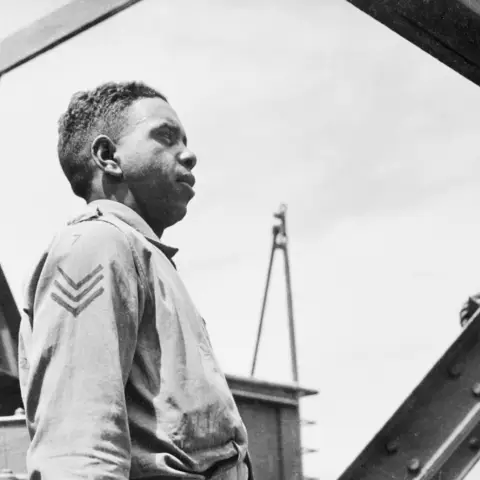
Explore Captain Reg Saunders’ service and experiences
- Explore Captain Reg Saunders’ service history
- Read more about Reginald Saunders' life in the AWM blog, First Aboriginal commissioned officer – Reginald Saunders
- Listen to Captain Reg Saunders' 1989 oral history interview
- Read the AWM blog about the wartime letters of Harry and Reginald Saunders
 +
+
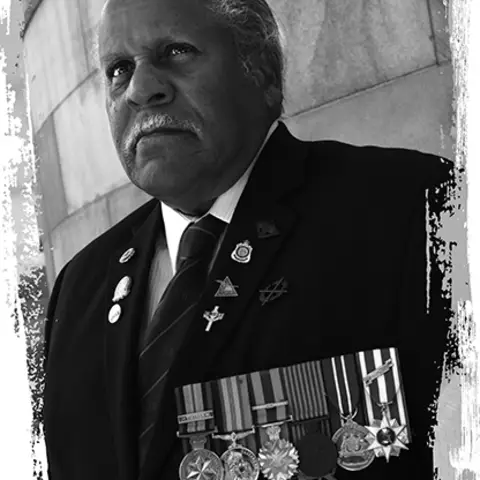
Explore Warrant Officer Class 2, John Burns’ story
- Learn about John Burns' service history on the Serving Country website
- Read John Burns' reflections on his experiences during the Vietnam War in the AWM blog “We were all there for each other”
- View Bombardier John Burns speaking with Gunner Bruce Morris in the famous photo taken by Bill Errington
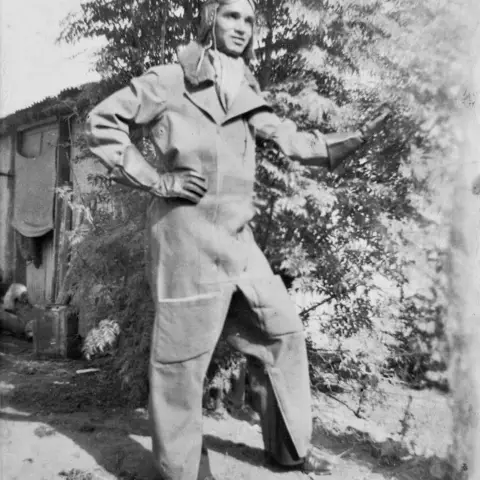
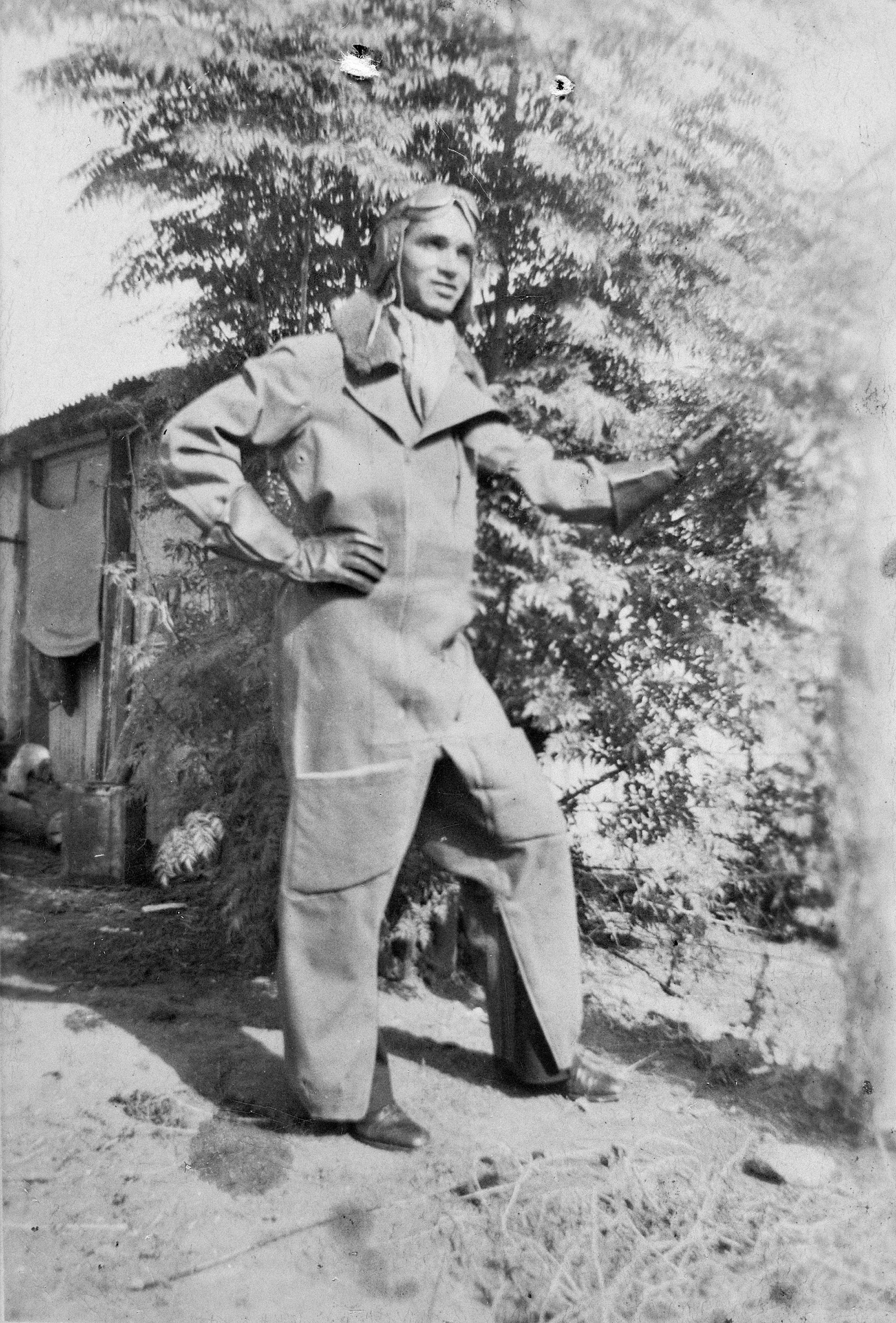
Portrait of 78144 Aircraftman Leonard Victor 'Len' Waters in full winter flying kit, while a student at No. 2 Initial Flying Training School. After completing his flying training Leonard Waters flew 95 operational sorties with No. 78 Squadron RAAF. He was one of a small number of Aboriginal pilots known to have served in the Second World War.
Explore the stories of Warrant Officer Leonard Waters
- Learn more about Len Waters' service and related collection items
- Hear Len Waters's experiences serving as a No. 78 (Fighter) Wing pilot in his 1993 oral history
- Explore Leon Waters' story through the AWM's online learning resources
- Learn more about Len Waters on the Australian National University's Indigenous Australia website
 +
+
Explore the experiences of Lorraine Hatton OAM
- Explore Aunty Lorraine Hatton’s story through the Australian Army’s profile of her service and leadership
- Read about Lorraine’s service and experiences on the Serving Country website
- Learn more about Lorraine’s role on the AWM’s council
Voices
- Michael Bell
Indigenous Liaison Officer, Military History, Australian War Memorial - Leonard Victor Waters
Warrant Officer, Royal Australian Air Force
Julia Waters
Daughter of Len Waters - Reginald Walter 'Reg' Saunders
Captain, Australian Army - Glenda Humes
Daughter of Reg Saunders - Garth O’Connell
Assistant Curator, Military Heraldry and Technology, Australian War Memorial - John Burns
Warrant Officer Class 2, Royal Australian Artillery, Australian Army - Ms Lorraine Hatton OAM
Warrant Officer, Royal Australian Corps of Signals, Australian Army
Former Indigenous Elder of the Australian Army
Member of the Council of the Australian War Memorial

About the host
John Barrington
John is the host of Through Their Eyes. Drawing on his experience presenting and reporting for 3RRR Melbourne, Good Shout Stories, triple j HACK, ABC Radio and The Project, he brings a fresh perspective to Australian War Memorial storytelling, connecting you with the people and experiences behind Australia’s military history, inspired by his father's Second World War service. As your guide through the podcast, John helps reveal the human stories and overlooked perspectives, making history accessible and relevant.