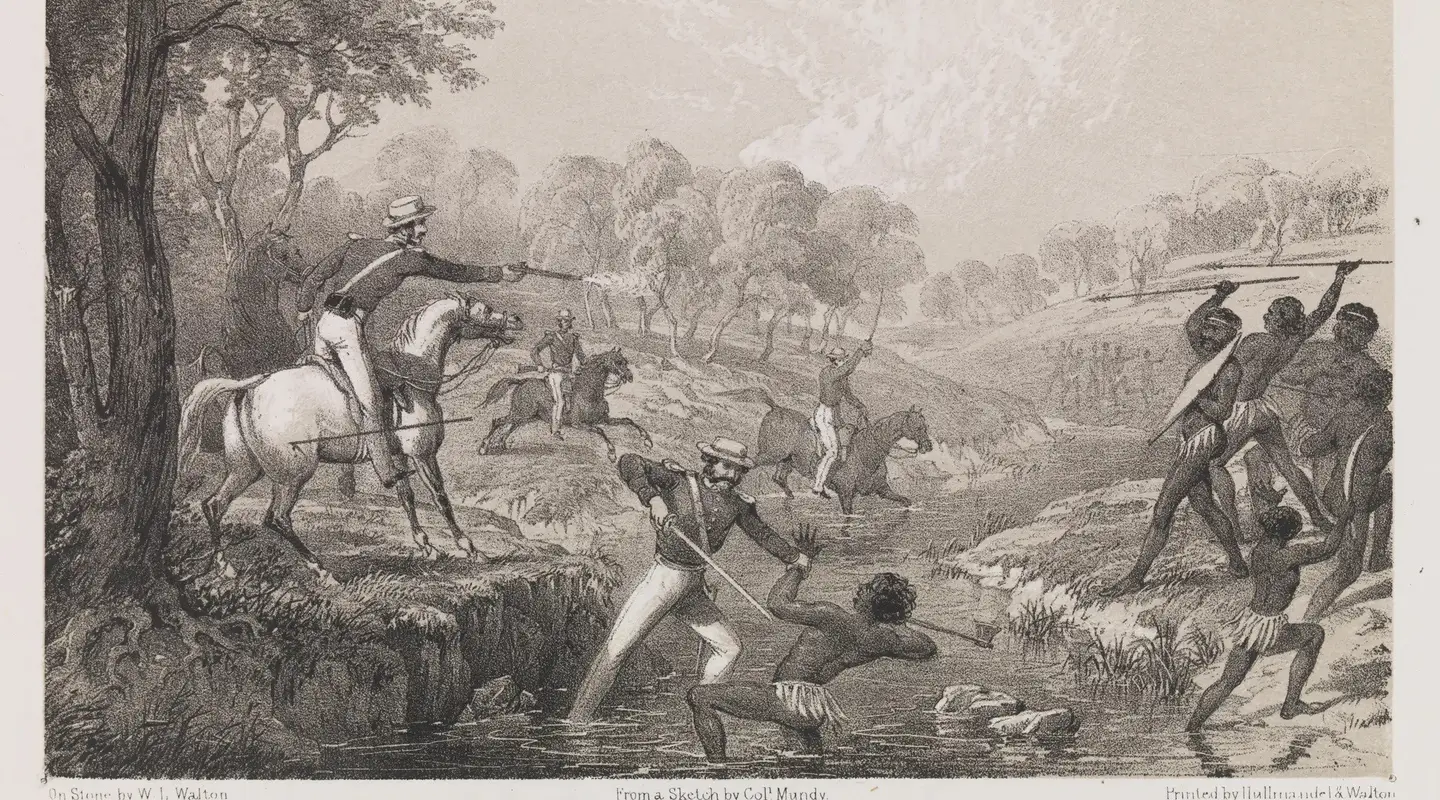
What happens when a nation looks back at its most difficult history? Tony Abbott, Henry Reynolds and Rachel Perkins come together to explore the Frontier Wars, their legacy, and what understanding the past might mean for Australia’s future.
This episode was brought to you by Leidos Australia.
An Australian War Memorial Official Podcast.
Voice Over:
Through Their Eyes shares real life experiences of war, some of which may involve sensitive or distressing subject matter. Themes may include violence, death, trauma, and loss. We aim to share these stories with care and respect, but please take your wellbeing into account while listening. If you need support at any time, visit our show notes for resources. The Australian War Memorial acknowledges the traditional custodians of country throughout Australia. We recognise their continuing connection to land, sea, and waters. We pay our respect to elders past and present. We also acknowledge the veterans who have served, those that are still serving, and the families that love and support them. This episode is brought to you by the support of Leidos Australia.
The Hon. Tony Abbott:
I think that we need to tell the full story of Australia, which is neither black nor white. It is the story of a country which has an Indigenous heritage, a British foundation, and an immigrant character.
Rachel Perkins:
It may not appear as war in the same way as it has been quantified at Vietnam and all those other theatres of war that you described, but it's the nature of the things that it was fought over, not the way it was fought. It was fought over our lives, our livelihood, our culture, and our land.
Professor Henry Reynolds:
George Arthur, in his official correspondence, mentioned war specifically about 20 times. For a soldier who had seen war, what was happening in Tasmania was war.
The Hon. Tony Abbott:
This was in a sense of tragedy.
Rachel Perkins:
Yes.
The Hon. Tony Abbott:
The question is, was it an atrocity? I don't think we can reasonably say it was.
John Barrington:
How nations remember their past is never simple. The stories we choose to tell, the stories we leave out, and the way those stories are presented, all shape our understanding of who we are.
One of the most significant and enduring conversations in Australian history concerns the frontier wars, the conflicts that accompanied the expansion of colonial settlement across the continent, and the resistance of First Nations peoples defending their country, communities, and ways of life. Across Australia, frontier conflict brought profound loss of life, the destruction of communities, and the dispossession of people from lands they had cared for over countless generations. Its legacy remains woven through the Australian story, influencing contemporary conversations about history, identity, and reconciliation.
For much of the 20th century, these histories received comparatively little attention in Australia's national story. In recent decades, however, historians, cultural institutions, and communities have worked to bring greater understanding to this chapter of our past.
The Australian War Memorial is now also taking part in that conversation as it tackles the question of how frontier violence should be represented within an institution dedicated to understanding the Australian experience of war and conflicts. These are conversations that can be challenging and ones that ask us to reconcile the pride we have in our nation and its achievements alongside a fuller understanding of the injustices that also shaped its foundations.
I'm John Barrington, and in this special episode of Through Their Eyes, we bring together voices with different perspectives and experiences to explore the history and legacy of the frontier wars and discuss how we can engage with difficult chapters of our history thoughtfully, respectfully, and honestly.
For Gomeroi man, veteran, soldier, and Australian War Memorial curator, Garth O'Connell, these are discussions that shouldn't belong to one group of Australians alone. For many families, including his own, the story of Australia contains threads that cross cultures, communities, and generations. Understanding that complexity is part of understanding Australia itself.
Garth O'Connell:
I've always wanted to work here since I was a little kid here at the War Memorial. So I've been here for about 31 years full-time, almost my entire adult life. This place is really meaningful for me. I've got my family, I've got friends on the role of honour, them in the galleries. And so when I came to Canberra by myself to go to uni, I had no physical family here, I thought, but a familiar name, faces, people and my pops photo here, and they've helped shape my identity, which I would describe — trying to be as succinct as possible: I'm a proud Aussie, but I'm also very proud of all of my ancestry and my families. I am descended from both Aboriginal family, from my father's mob and my mother's family who are non-Indigenous. And they've both had really strong influences on me and shaped my career, my attitudes, my morals, my education, the whole thing. They've really informed me. But my grandmother, who was the only one of my four grandparents I ever met, was my Aboriginal grandma. And I've got photos of her and I. And I'm so lucky to remember her caring for me, looking after me up in Moree, which is where my father's family's from.
And because they were what they call a coloured family, my father's father was a non-Aboriginal fellow and my grandmother was Aboriginal. They couldn't live in town. And my grandfather, he was ostracised by members of the community and his own family for marrying an Aboriginal woman. Grandfather, I was told by aunties and uncles was a very strict man because he didn't want his kids to be stolen. So the house was immaculate. The backyard was immaculate. Fingernails got checked regularly and just no excuses for anyone to take ‘em away. And he had a hard life as well, as they all did.
There was some disconnection there. My father left me. I was very conscious of that as a little kid, but that helped feed my deep interest in why, who, where I'm from. Growing up in both communities, having a foot in both Indigenous Australia and non-Indigenous Australia. Seeing perspectives from both sides.
I've got a combination of theoretical military knowledge, history books and being a nerd growing up and reading up all the facts and figures and stuff. And I've also, the work of being in the military and being an infantryman.
Also, the last 120 years or so, our male generations have come into military fighting age at the same time as major wars. I've got my grandfather, my great-grandfather, my uncle, and then me. So, we've got four generations continuously male who've served in the military, but I've been deployed twice overseas with the army. And I've been deployed twice overseas for the War Memorial to ongoing military operations in the Middle East.
Whether it's Gallipoli or whether it's recent operations or whether it's what people call the Australian Wars or Frontier Wars, that's all to me. It's all linked together. And I've never had a disconnection between fighting for my Aboriginal ancestors who resisted and survived and were killed and also my non-Aboriginal family because I've got ancestors that very, very, very likely were involved in operations, what the army would call kinetic operations or what they used to call clearing the land sort of thing like my first Anglo-Celtic ancestors to Australia. His name is John Hannon. And he was born in Ireland, and he is a dispossessed Irishman who had his land taken off him and his ancestors. And he joined the British Army. He was a horse-mounted soldier in the 13th Light Dragoons. And I've looked up the records and I was lucky to see the original nominal role, it says Private Hannon was present at Waterloo on day two and day three, along with most of his regiment.
And he takes up the offer from the British government to join the New South Wales Corps. And the New South Wales Corps were a bunch of, almost all veterans, who were offered the job of going to New South Wales, one of the furthest parts of the world from Europe, to escort the convicts and the free settlers. And part of the incentive that they offered him in England to all these men, was that you've got hectares of land so he could finally get something which was taken off him, some land, but on the other side of the world. After he left the army, he then joined the New South Wales Mounted Police. When it comes to my Aboriginal family, my father's family, I'm descended from Peter James Cutmore. He was a child in 1838 and he was with his family, his mum, his aunties, uncles, cousins.
And they were in a rest area hiding in a way, known as Slaughterhouse Creek and also Waterloo Creek. And on that day, a British Army officer, Major James Winniett Nunn, he joined the New South Wales Mounted Police, and they were out there looking for any Aboriginal people to punish them for transgressions, for sheep getting speared and people getting attacked, settlers being attacked. So they were looking for anyone. And they come across my ancestral clan and they then proceeded to then mount a horse mounted attack on them. And they massacred everyone except for him, Peter James Cutmore. And he escaped. He hid as a little kid. And he then walked a long way towards Terry Hie Hie, but he was a sole survivor from that massacre, which is on Australia Day, like January 26th. So that day for me, for last 30 years has always, at least it has been very emotional for me because I want to party, I want to hang out with my mates, but it's always one of the worst, sad days in my family's life.
So I'm from both sides of this bloody part of Australia's early history. Of course, I have come to terms with it many, many, many years ago because I understand that they had to do what they had to do in their own lives back then because I can't put my 21st century morals and understandings into the saddle of a young Irishman who's had everything taken off him and just joins the British army to make a life for himself. And he sees a chance to come to New South Wales and does his job. But it's just a shame that he had to use his military skills on the battlefield against the French army, one of the best armies in the world at the time, to then use those skills to open up the whole process of the British expansion into mainland Australia. And I'm part of that.
And same time, I'm also from the other side. So, it's a truth telling thing for myself and my family. It's something which needs to be spoken about more and accepted and learned more about. And the War Memorial's mission is to help Australians understand why and how and where Australians have been affected by war or been involved in a war. And this conflict happened across all parts of the country by a mixture of paramilitary units, police units up against traditional warriors whose technology was Stone Age against modern firearms. And as an infantry soldier that I am, one of the biggest differences is mobility. Because if you’re foot mounted, you are not as quick as someone on a horse. And when you've got people on horseback who've got the ability to move rapidly and to respond to information, they can inflict horrific things. And that's what's happened to people and the descendants of those survivors are still here today.
I am one of them, but I'm also a descendant of one of the men that was on the other side pulling triggers. It's something which Aussies, all generations, recent Australians that should understand and know because it helps them understand why Australia's the way we are today and our Aboriginal and Torres Islander community. And the memorial is, whether we like it or not, going to be on the very forefront of that happening in our country. It's a very important thing. One of the most important conflicts that we'll ever have in our galleries alongside Gallipoli, the Western Front, other pivotal campaigns and wars, Vietnam, Afghanistan, and so forth. This will be part of it. This could be — There's really good opportunities for our country to bond better and become more resilient and stronger and be a better country. Take ownership, understand it, understand the other party, talk about it, and how we're going to move forward from that.
John Barrington:
For many Australians, the legacy of the Frontier Wars is not an abstract historical debate, but part of a lived personal story. It's one that continues to shape how we understand identity, belonging, and nationhood. The questions raised by that history remain the subject of ongoing discussion. And to explore this more, we're joined by three Australians who have each made significant contributions to the national conversation from very different perspectives.
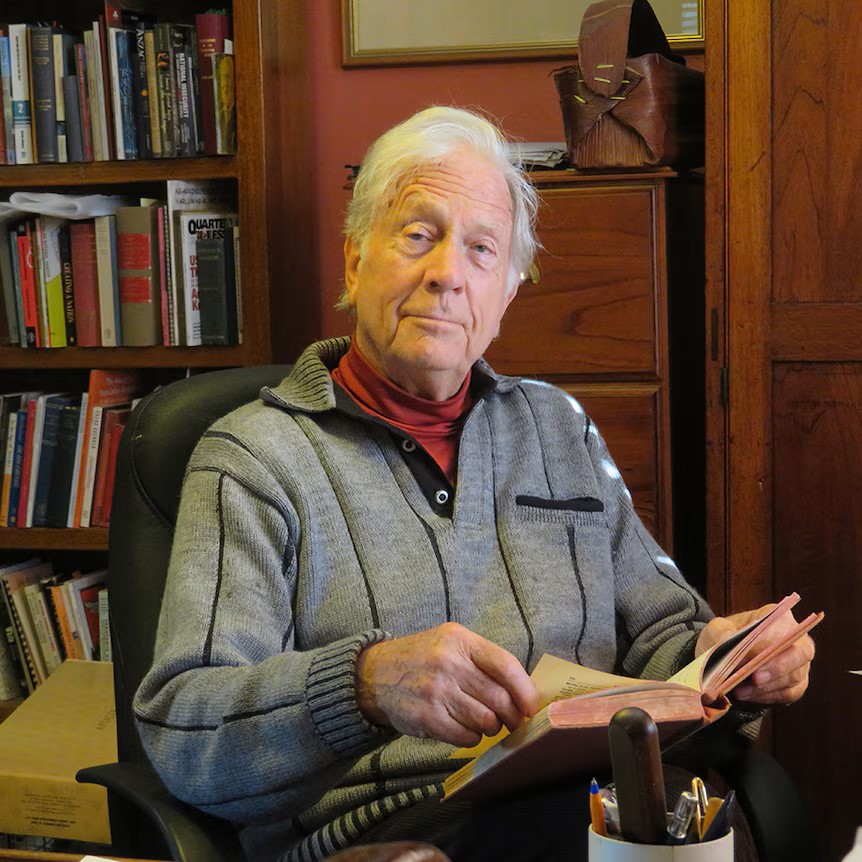
Professor Henry Reynolds is one of Australia's most influential historians. His book, The Other Side of the Frontier, transformed public understanding of frontier conflict and Aboriginal resistance, and has helped bring the history of the frontier wars into mainstream historical debate.
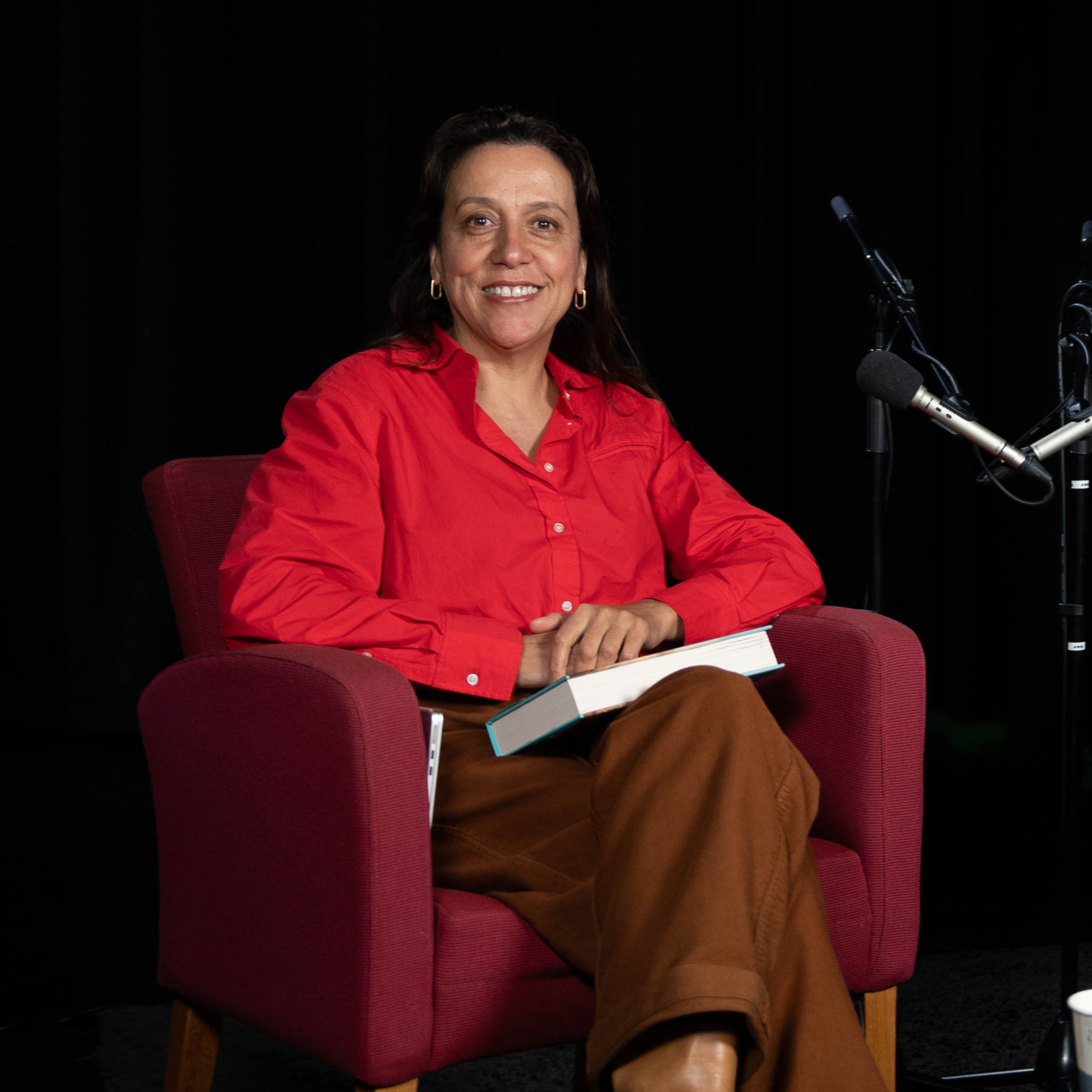
Rachel Perkins is an acclaimed filmmaker, broadcaster, an Arrernte and Kalkadoon woman whose work, including The Australian Wars, has challenged Australians to engage more deeply with First Nations histories, experiences, and perspectives.
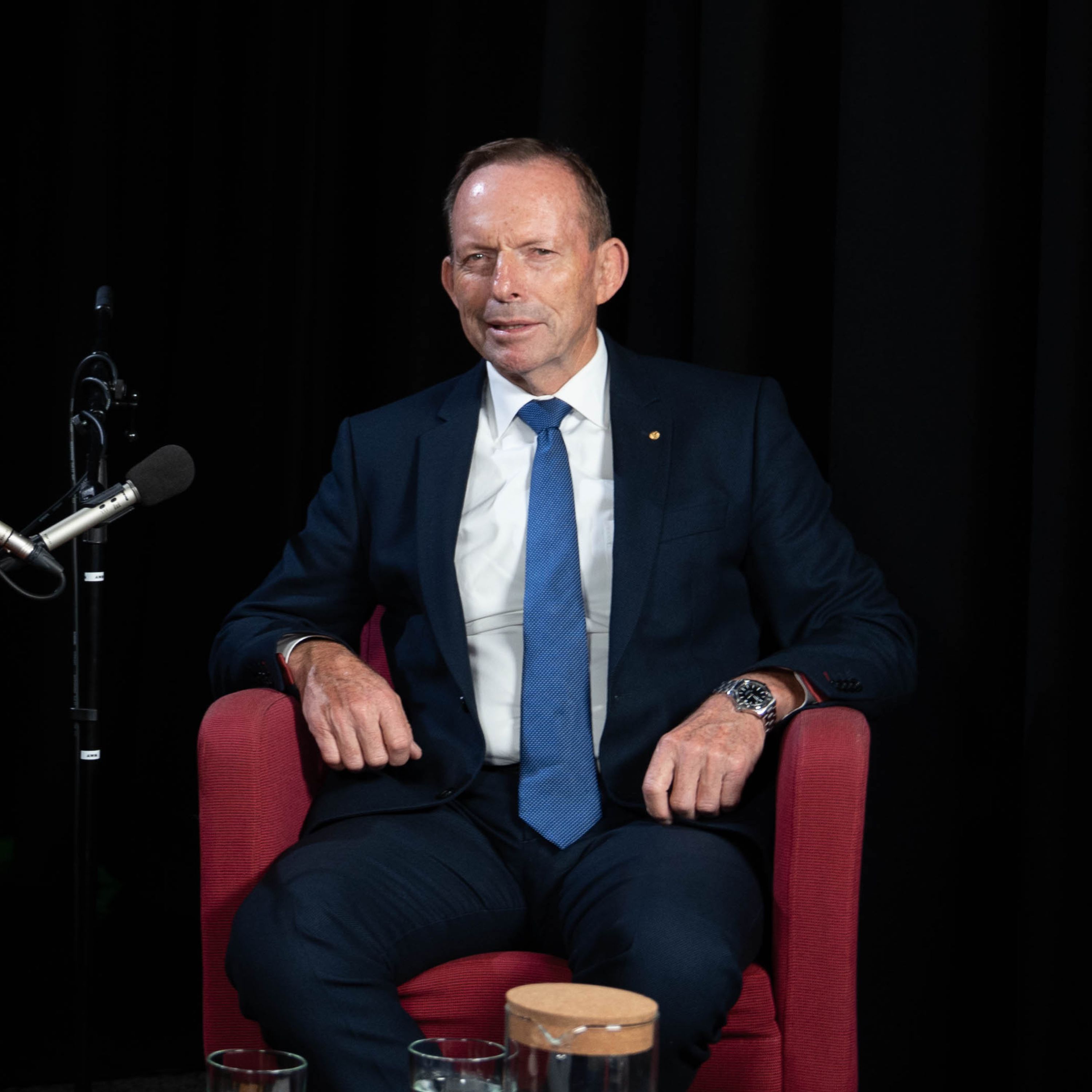
And the Honourable Tony Abbott, Australia's 28th prime minister and the author of Australia: A History, has long been an influential voice in national discussions about Australian identity and the way we reflect on our past.
Together, they bring different experiences, viewpoints, and interpretations to this important conversation.
Rachel Perkins:
So, thanks everyone for listening in. I just wanted to make some introductory comments. I'm sort of playing a little bit of a hosting role between these two very well-known gentlemen. And so I thought I might just kick off with some framing comments. We're going to be talking about that period of history that's sometimes called frontier warfare or colonial violence or The Australian Wars. And I just wanted to ensure that in discussing this history, I wanted to make a couple of points.
One is that we're here at the Australian War Memorial, and nothing that happens in this conversation is meant to unintentionally pay any disrespect to the important nature of this institution, what it means to Australians, including Indigenous Australians, and the importance of it to those who have served in the Australian Defence Force over many campaigns and in many countries. And we just want to pay our respects to those individuals and those families.
We'd also like to thank the War Memorial for hosting this conversation. We really admire and respect the fact that these conversations can happen between people who might have different views but happen in respectful ways. And I'd also just like to say that nothing in these conversations takes away from anyone's sort of love, admiration, or connection to this country that we share. We are all Australians. We all love our country. And I think it's terrific that we can have these sensitive conversations together and work through a process of discussing these complex ideas. So, I just wanted to lay that out. I don't know whether you wanted to respond to that in either of you.
The Hon. Tony Abbott:
Well, Rach, look, I think that was a lovely way to introduce the discussion.
Rachel Perkins:
Oh, good. And Henry, do you want to say anything about that before we kick off?
Professor Henry Reynolds:
No, no, not at all. I think you've both now and previously have been very supportive and an admirer of the War Memorial. And in so many ways, it's not that we want to diminish the War Memorial, we want to join the War Memorial.
Rachel Perkins:
Okay. So, we'll begin the discussion. For those of you who don't know, Tony's written this incredible book, which he manages to fit into, I don't know, a very large history into just under 500 pages, I think. And you touch on in this book, part of the colonial violence that occurred with the settlement or occupation of Australia. What's your broad view of that sort of violence and conflict? And why did it start, do you think?
The Hon. Tony Abbott:
Well, our story is a mixed story, Rachel. It's not all good. It's not all bad. I think on balance, it's a better story than just about any other country. But yes, there are chapters where none of us can be particularly proud, just as there are some things that we can be quite proud of. It's good that the British government said to Governor Phillip that you should live in amity with the natives. It's good that all of the early governors stressed to the settlers that the Aboriginal people of Australia had all the rights of British subjects and should not be molested, wantonly killed, et cetera. We know that what was the theory wasn't always the practice, but nevertheless, we also know that for every conflict, there were periods of cooperation and that the settlers and the Aboriginal people of our country worked together as often as they engaged in conflict.
And I think that we need to tell the full story of Australia, which is neither black nor white, but it is the story of a country which is constantly evolving, but which has, as I say time and time again in the book, an Indigenous heritage, a British foundation and an immigrant character.
Rachel Perkins:
And I think that three-part sort of description of Australia is really something that makes us unique in the world, isn't it? Our deep Indigenous past and the British foundations of course.
The Hon. Tony Abbott:
Well, someone said in reviewing my book that you could have said the same thing about the United States, but in fact, the United States self-consciously rejected elements of their British foundation, whereas we never had, we never did. And I think particularly over the last 50-odd years since the 1966, 1967 referendum, we have embraced the Indigenous elements of our heritage in a way which perhaps earlier Australians didn't.
Rachel Perkins:
And I think the emergence of this conversation that we are having now is part of that embracing of its Indigenous history because we are probably in recent times more open to the conversation that we have been in a while. Henry, how do you think that the sort of conversation has changed in the last 30 years in relation to the colonial violence that happened during the occupation of Australia?
Professor Henry Reynolds:
Well, it clearly changed a very great deal. I mean, when I began teaching 50 years ago in North Queensland and the book that I had as a textbook, which had been, because I was teaching a course based on one in Brisbane in UQ, the book was the most prominent book used at the time, Australia: A Social and Political History, published in 1956. And up to 1970, it was reprinted 12 times. It was an extremely successful, and in many ways, a good textbook. But I was teaching a long way away, a thousand miles away, if you like, in tropical Australia where Indigenous people, Aborigines, Torres Strait Islanders, descendants of the Pacific Islanders were an everyday presence. And if I was to teach my students about their Australia, I couldn't just depend on that book because there was nothing, I mean nothing about Aboriginal Australians. They weren't even in the index.
Now that was fairly typical of the generation of historians who were leading the profession when I was a young fellow. So, the actual absence was extraordinary. And it was the great anthropologist, Bill Stenner, who blew the whistle on these historians and legitimately and powerfully that they had engaged in a story of silence, of simply not talking about what was, if you lived where I was living, an everyday part of Australian life.
So, the first thing was to get books which actually talked about the Aborigines. Now, I looked at much the same time of the leading textbook of New Zealand history, Keith Sinclair's, History of New Zealand, both powerfully, widely used. Now, of course, it was an utterly different story. Something like a quarter of the book was about Maori, New Zealand, and there were about three pages in the index. So, the difference between Australia and New Zealand then was really very, very striking.
So, the most important thing was to begin to write history, which incorporated the Indigenous people. Now, if you started it as I did, almost no resources in North Queensland, very little library. All the records were either in Brisbane or even farther away. The one record, the one significant source of history that I could find was the original copies of the first newspaper in the whole of North Australia in Bowen called the Port Denison Times, which began in 1864. So, I could trot off down to Bowen and go into the council chambers and have these huge, huge volumes and read the newspaper. And newspapers are the best way to get to know a society. And to my amazement, the violence was there virtually, it wasn't a daily paper, perhaps twice a week, but every issue had something about the conflict that was going on just outside the town because this was the first European settlement in the whole of North Australia.
And the violence just amazed me and shocked me. I had no idea. And it wasn't that there was any debate about whether it was happening because the native police force rode through the town and their way out to fight the locals. I mean, no one doubted this was the case. The debate was over whether it was necessary to use violence to be successful colonists. There was a moral debate, but all this was completely new to me. And that's really where I began my own historical writing.
The Hon. Tony Abbott:
And this is something that I try, Rachel, to deal with in the book. The tension between the good intentions of the authorities 99% of the time and the actual practise on the frontier of settlement, which often left a lot to be desired. But again, I stress, really at all times, there was both conflict and cooperation starting with, if you like, Bennelong and Pemulwuy. And then you look at people like Bungaree and others, most of the explorers relied on Aboriginal guides. Most of the pastoralists relied on Aboriginal stockmen and Aboriginal domestic workers and so on. So it's a mixed story, but there is no doubt Henry is right.
Particularly at times in Tasmania, particularly at times around Bathurst, in Gippsland, in Northern and Central Queensland, there was very considerable trouble on the frontier. And I think, Henry, one of the early things that you published was a piece of research drawing upon those early Queensland newspaper reports, which indicated that something like 800 of the settlers had been killed in what we would, I suppose, call interracial violence or the conflict—
Rachel Perkins:
Yes.
The Hon. Tony Abbott:
That was probably inevitable when you had, if you like, a pastoral and a mining people moving into the territory of a nomadic people. It was probably inevitable and it wasn't always handled well.
Rachel Perkins:
No, and I think that's the problem when you try and talk about this subject. It becomes very binary. So, we talk about colonial violence, and you are correct within that space, of course, there is friendships, there's affection, there's trade, discovery, all of those things sit alongside the violence. And that is the feature of frontier conflict. When two peoples are coming together and engaging, there's always that complexity. So, it is important to remember that there is complexity. There's also important to remember, as you say, that there are good intentions often. But when you have the situation that we did in Australia, which is a colonial office sort of running the show literally on the other side of the world and not necessarily in charge of a vast frontier, which often was very lawless.
Henry, you point to, in your writing what you think is the sort of pivotal issue that is different from the experience in Canada where it was a, compared to Australia, a relatively peaceful occupation, settlement, engagement as compared to Australia. What was the difference? But before I ask you that, I should say I want to acknowledge that Tony's book is full of references to the areas that he just described, Tasmania, Western Victoria, Queensland, other places. And he describes in detail the conflict that occurred. So, I was very pleased to see that that had been included in your book and acknowledged by someone of your stature. And that is a really welcome development, I think, to the discussion in Australia. But Henry, so what was the difference between Canada and Australia in its settlement, in its sovereign arrangements that made this situation different?
Professor Henry Reynolds:
Yeah. Well, they're very, very different. I mean, I'll point the difference out and then I'll go back to try explaining why this was the case. Now, the settlement of Canada from the lakes to the Rockies, the whole of the Western Canada, was taking place at much the same time as the settlement of Queensland. Very similar societies, both by then self-governing with their own parliaments, the same common law.
The difference was striking. I mean, clearly there was a climatic difference, but the settlement of Western Canada all took place as a result of treaty making. And they're called the numbered treaties. And they were made from the 1870s right up to the 1920s. And almost everyone in that part of Canada is in an Indian group that has a treaty, a numbered treaty, and there was almost no one killed. The Royal Mounted Police carried this out, arranged the meetings, the treaty making, and these were treaties. So, it was a very, very different situation.
Now, why? British colonial societies at much the same time, no one gets killed. I mean, there was a rebellion of the Metis, but that's a different matter. But the actual Indians, the settlement took place without any killing. In fact, one of the great chiefs said that the police shielded them, and that is the case. Now, Queensland was profoundly different, and it's likely. I mean, now all the work that's been done on the native police and now very extraordinary, wonderful research in Queensland.
And there's a new book just about to come out. Certainly, there were hundreds killed. I mean, as Tony has said, we counted all the white fellas and a few Chinese and Pacific Islanders, and it probably was about 800 killed on the Queensland frontier. But there were tens of thousands killed in Queensland. Now, that difference if we go back to the beginnings, Canada grew out of a period when the British, while it was still British North America, and there was a Royal Proclamation in 1863, had all the authority of the crown, talking about the rights of the Indians.
They had a right to their land on which they were settled, and there could be no private person could in any way get access to their territory through their land. It all had to be done. If land was to be exchanged, it had to be done in a meeting, essentially the beginning of the treaty system.
Rachel Perkins:
So Henry, sorry to cut you off though. I'm just conscious of time.
Professor Henry Reynolds:
No, no, no.
Rachel Perkins:
So, are you saying that basically that because there was arrangements of land in Canada, there was places basically for the Aboriginal people of Canada to be and exist, and that that was the difference through these treaty arrangements in a nutshell?
Professor Henry Reynolds:
Well, the difference was that there was a recognition of native title that we didn't have, and there was the recognition that the Indians had a form of sovereignty, which they still do. I mean, both Canada and the US, they still talk about Indian sovereignty. And in the new treaties in Canada, they are treaties of the Indian, sovereign to sovereign of the Indian groups in the north with the federal government. So, it was a very, very different situation. Now, something went wrong between then, that is Canada and the US and Australia, that when Australia was settled, there was no recognition that the Aborigines actually were in occupation and owned their land and they had no sovereignty. Now that was an aberration.
The Hon. Tony Abbott:
Now, look, Henry, I defer to your greater knowledge when it comes to Canada, obviously. I think if you like, a more interesting comparison is between Australia and New Zealand. Now, again, I'm no expert on New Zealand, but my understanding is that there was very sharp conflict known as the Māori wars between the early settlers and the Māori population of New Zealand, which was ultimately resolved through the Treaty of Waitangi in 1840. And there was no equivalent of the Treaty of Waitangi here. The nearest thing that I think we've had was the, I think, rather spurious attempt by John Batman to conclude a treaty with some of the Aboriginal peoples in and around Melbourne, what's now Melbourne.
That was actually disowned by the government in Sydney because it was thought that Batman had procured this treaty by trickery. The then governor, I think it was either Burke, I think, the then governor decided that if treaties were allowed between unscrupulous settlers like Batman and the native peoples, well, that could result in exploitation.
So if I may say so, Henry, my thought, given your greater knowledge, which I accept, is that it was perhaps a function of what was thought to be the greater level of, if you like, civic sophistication in perhaps New Zealand and in Canada versus Australia. I suspect that might be the genesis of the difference between the two countries.
Rachel Perkins:
I think-
Professor Henry Reynolds:
The whole point about Treaty of Waitangi was a return by the British to the way they'd practiced Indigenous relations in North America. It was Australia that went away from that tradition, and it was bought back in 1840. Now to a large extent, because of the violence, particularly in Tasmania, George Arthur, governor of Tasmania throughout the period of the fighting and the wars and the black line was back in London. He had become convinced that the problem in Tasmania was there had been no treaty. And I am pretty certain that the reason why the British returned to the treaty making with the Treaty of Waitangi was what had gone wrong in Tasmania.
Rachel Perkins:
And I think actually the Māori wars, or as they're now known, the New Zealand wars, I think happened after the Treaty of Waitangi.
Professor Henry Reynolds:
Yeah, no, no, no. Indeed. Indeed.
Rachel Perkins:
Yeah. We are going off veering off on treaties, but there was the attempt in 1837, wasn't there, by the colonial secretary to try and institute treaty making in the establishment of the South Australian colony. I remember there was orders. So, there was this moment of, and it came off the back, we think, of Arthur and the experience in Tasmania that they knew that this conflict would unfold over land. And as you said in your book, you've said that warriors defended the frontier in Tasmania. So, there is an acknowledgement by the British that these Indigenous peoples are defending their territories and that if they're not given land, that they will respond in that way. And so yes, there's this attempt in 1837 to establish the South Australian colony with land set aside. But unfortunately, like so many good intentions on the ground, it doesn't happen that way.
The Hon. Tony Abbott:
I mean, one of the things, Henry, that I really enjoyed about your Tongerlongeter book was the way you very, I think, properly talked about the conflict and the cooperation. And I guess the obvious example was the widow Birch who rescued Black Tom or Kickerterpoller, as he's probably better known, rescued him on a couple of occasions from probable lynching or execution because of her friendship and affection for him. And I suppose, if the truth be known, her understanding in common with quite a few of the settlers of just why the Aboriginal people were objecting to the sudden pastoral expansion of the Hobart settlement into the Midlands and the north of Tasmania. Now that was a settlement which had existed reasonably peacefully, coexisted for the first couple of decades. And it was once the march into the hinterland began. And indeed much the same thing happened-
Rachel Perkins:
In Sydney.
The Hon. Tony Abbott:
... in Sydney once the Hawkesbury Valley was settled. And I mean, Macquarie had, by the standards of the day, a pretty benevolent view towards the Aboriginal people. And yet it was Macquarie's orders that produced the sweep of the red coats through the Cumberland plane and ultimately the first of the known massacres, the Appin massacres. So I mean, again, I guess, Henry, I'm not saying that things couldn't have been better and shouldn't have been different. I am saying that the story is not a uniformly bad one. And I just think that we need to look at the good as well as the bad in our past if we are to go forward successfully together into the future.
Rachel Perkins:
There's so many examples of people on the frontier who were trying to accommodate Aboriginal people, protecting Aboriginal people on their pastoral runs, writing letters saying, "This is not right. The native police shouldn't be doing this." objecting. And it's these records. I mean, that is one of the things that all of the records mostly that we draw from are records from European witnesses and participants to reconstruct this history. Although I should say that I have a oral history that's handed down in my family of my great-grandmother who survived an extremely large massacre of our families.
The Hon. Tony Abbott:
That's the Coniston massacre, I presume.
Rachel Perkins:
No, it was actually, it hasn't got a name, but it's less well-known, but it happened at a place that's still called Blackfellows Bones. And there's a number of oral histories that confirm it. So oral history, although it changes over time, we do find that there's always this, well, not always, but there's a level of truth and it's handed down in families as it was from my father to me, from his mother to him and her mother to my dad's mother. And so all these combinations of records and oral histories create this very complex, interesting story. And it does have all of those nuances about friendships and violence.
The Hon. Tony Abbott:
And Henry, my recollection of one of your books, Whispering in Our Hearts, which I was quite moved when I first read it quite a few years back, because again, you told the stories of the various settlers who were embarrassed about the fact that Aboriginal people were not ashamed, appalled, horrified at the mistreatment of Aboriginal people. That was all too common 150 years ago. And of course, I mean, the last major massacre, the Coniston massacre, which frankly was the greatest disgrace of all, because not only were upwards of 50 Aboriginal people killed, but the authorities who should have known better really whitewashed the whole thing.
Rachel Perkins:
Yes, it's often the case.
Professor Henry Reynolds:
Well, Whispering in Our Hearts. I mean, I wrote two books really, which fits very, very well to what you've been saying. One is having written The Other Side of the Frontier and Frontier, the third book that I had to write was with the white people. And it was a book about the engagement of Aboriginal people with the white people. So of course, that was very important from the very, very start. Every expedition that set off from Sydney and the explorers all, the successful ones knew that they needed to have, not only did they get help from people along the way, but they had a party of Aboriginal people with them who were so important. So there is that indeed that story.
The Hon. Tony Abbott:
The one survivor of Burke and Wills. King was rescued by the local Aboriginal people.
Rachel Perkins:
I know. Yeah. Yeah, it was tragic.
Professor Henry Reynolds:
Well, they came from Melbourne, you see, and they'd had no frontier experience. They thought you could just have a lot of money and a big expedition and it succeed.
Rachel Perkins:
Very Melbourne, isn't it? Very Melbourne. No, we won't say that.
The Hon. Tony Abbott:
There's a portrait of Robert O'Hara Burke that has pride of place in the Melbourne Club. It is thought that the expedition left from a roundabout the Melbourne Club. And the caption I think is something like, "This is the only member of the Melbourne Club ever known to have died of thirst."
Rachel Perkins:
Yes. Very sad situation that they could have perhaps saved themselves. So, we agree on much here, but we agree it was violent. We agree there was good and bad relationships. We agree that I think that perhaps had there been more accommodation perhaps of the status of Indigenous people and their rights to land at the beginning, there might not have been so much violence, if I can say that we sort of think that that's probably the case. So now I'm going to go to where we don't agree because otherwise it's just going to be a very boring conversation for everybody. They want some controversy.
And so, I'm not sure what you think, Tony, but I do know what Henry thinks. But I think that Henry defines this as a war or wars, small wars for certain reasons, and you perhaps don't. And so I think we should just briefly, if we can, because we've only got 10 more minutes, get to the heart of that and so that we can look at where our differences are and where the future dialogue might occur around these issues. Is that good thing to do with our last 10 minutes? So over to either of you.
Professor Henry Reynolds:
Several things quickly. Now, one of the reasons why it was possible to say it wasn't war was because the major issues about which wars are fought, that is control of land and government overland, sovereignty and property, appeared to be resolved at the very beginning. So, conflict had to be about smaller things like feuds and criminal trespass and theft.
Rachel Perkins:
Okay. Sorry, Henry, I'm going to interrupt you there. Sorry. So, when you say it was resolved at the beginning of things, what do you mean?
Professor Henry Reynolds:
Well, because the British said the Aborigines had no land and no sovereignty. And I mean, settlers coming in, obviously that was the law. The Aborigines didn't own their land. So that-
The Hon. Tony Abbott:
Henry, I would like to take issue. I accept that the early governors really believed that the crown had total sovereignty over the territory of Australia. But I don't think there was a view that the Aborigines had no rights. I mean, all of the governors, early governors stressed that the Aborigines had the rights to hunt, to fish, to go about their usual practises. The trouble was if Aboriginal people hunted sheep and cattle and Aboriginal people broke down the fences and burnt the houses, so to speak, well then that was a big problem. But I think it's wrong to say that Aboriginal people were regarded as having no rights. I think it's right to say that the British found it hard to recognise any form of Indigenous sovereignty given the lack of the kind of settled government or organised, as it were, Aboriginal society to the extent that it existed in New Zealand, for instance.
Rachel Perkins:
Well, I mean, Governor Phillip, who was a terrific individual by all accounts, and you write extensively about him, he really did try and negotiate a successful relationship with Indigenous people. But as you point out in his book, his job was to colonise. And it's not like he could get back in the boat and say, "Come on everybody, we're going back because I have realised actually that Aboriginal people have a claim to land," because they did very quickly. Bennelong told him Goat Island is my country and upstream, that is the Dharug, and we don't talk to them.
The Hon. Tony Abbott:
No, in fact, Bennelong tried to enlist Phillip in fighting against some of the others.
Rachel Perkins:
That's right. So, they did recognise, I think, in the same way that Māori have a connection to country. I think the governors, all of them recognised that in fact, Indigenous people did have certain tracks of country, and they were defending them because Aboriginal people told them. And in fact, you say that Phillip had that presentation from Mawuran, probably not the right pronunciation, who objected to him going and setting up-
The Hon. Tony Abbott:
The Hawkesbury.
Rachel Perkins:
... the Hawkesbury and Burramattagal country. But Phillip, as you say, despite all of his humanity, he was not deterred from his mission, which was to colonise. And in fact, that's the problem. Not the problem, but that was the clash that all the governors ultimately had to conquer Indigenous uprising against, didn't they?
The Hon. Tony Abbott:
And Rachel, there is no doubt that this was in a sense of tragedy.
Rachel Perkins:
Yes.
The Hon. Tony Abbott:
The question is, was it an atrocity? Now, there were obviously some atrocities that took place, but was it on balance an atrocity? Now, I don't think we can reasonably say it was.
Rachel Perkins:
Okay. That's a good question. Was it legal in the sense of international law to occupy others' countries without acknowledging any land rights? Henry, you've got a view on this, don't you?
Professor Henry Reynolds:
Well, yes. I mean, the majority of international law at the time didn't think you could simply go into a country and assume they don't have ownership of land. And that was the instructions that were given to Cook and Banks by the Royal Society. But you had to recognise these people are landowners. Now, if you read the Mabo judgement in 1992, the law still was. I mean, as they asked the Queensland solicitor-general on the very last day of one, I think Dean said to the solicitor-general, "Now, Solicitor, tell me this. Is it true that the Meriam people of Murray Island could be driven into the sea at any moment without compensation? Is that the law?" And the Solicitor General said, "Yes, that's about it." So, the law, as understood in the courts, remained that way until 1992. But above all, I mean, the question of war.
Now, the early governors, most of them had been in all the wars, the American War of Independence and Napoleonic War. They all knew about irregular warfare, either from the American rebels or by the, particularly in Spain, the guerrillas, guerrilla war, the small war. And so, George Arthur, in his official correspondence, mentioned war specifically about 20 times. For a soldier who had seen war, what was happening in Tasmania was war. And I think that is true of many of the early governors, that they were military men and they knew about irregular warfare, and that was what they were seeing.
The Hon. Tony Abbott:
And I think what Henry's driving at, Rachel, is that the War Memorial should not just remember the wars that the Commonwealth of Australia has fought, but the conflict from earlier colonial times. Now, and I think this is the nub of our difference. I certainly think that it is appropriate to acknowledge that in Macquarie's time, certainly, and perhaps to some extent beyond. British regular soldiers were involved in what can really only be described as punitive missions. But to describe that as warfare in the same way that the South African War, the First World War, the Second World War, the Vietnam War, et cetera, was warfare, and to think of the Australian involvement in the same terms, I just think is not quite right. By all means, let us learn as much as we can and continue to research the frontier conflict and let us, as it were, popularise it in all sorts of ways.
My own view is that this work would be better done at the Australian National Museum rather than at the Australian War Memorial.
Rachel Perkins:
Can I give you a different perspective on that?
The Hon. Tony Abbott:
Sure, sure.
Rachel Perkins:
But I hear you. I take your point. And I think that's why I open by saying that this conversation isn't intended to disrespect the War Memorial or servicemen and women or their families whatsoever by the suggestion that it might be included here. I think it's about perspective in some ways, the question that we are talking about here, because I have both European and Aboriginal heritage, proud of both of them, of course. But I want to talk about from an Aboriginal perspective for a moment here. And I think Henry has mentioned this in a lot of his writing. And it may not appear as war in the same way as it has been quantified at Vietnam and all those other theatres of war that you described. It is different. There is no question. It is different from those wars.
And it is similar to the wars that Henry was talking about, those, if you like, small wars that were fought all over where empire expanded all around the world during that four or 500 period of imperialism. But the point I would like to make is that from an Aboriginal point of view, at least from my point of view, I can't speak for all Aboriginal people, but it's the nature of the things that it was fought over, not the way it was fought, and I'm paraphrasing Henry, that make it for us warfare because it was fought over our lives, our livelihood, our culture, and our land. And indeed, as Henry has said, the sovereignty of a whole country. So those elements, whether you can live on your country, whether you can survive as a people, are what makes it warfare because it's about those very important issues, not the way it was fought.
So people didn't wear uniforms. Well, they wore ochre and spears, and we were certainly in battle with people in uniforms, but it was different. There's no question it was different, but it was about life itself.
The Hon. Tony Abbott:
Look, I hear what you're saying, Rachel. And obviously we want Aboriginal Australians to have just as much a sense of ownership over the War Memorial as anyone else. I guess the issue here is to the extent that it was a war, it was, if you like, a civil war, it was Australian against Australian. And I guess the fundamental purpose of this museum is to build pride and unity. So, I think that the story that you so rightly are concerned about does need to be told. It's a question of where it is best told. Now, I think there should be an acknowledgement of it here at the War Memorial, but I don't think this is the place to dwell on it.
Rachel Perkins:
Yes.
The Hon. Tony Abbott:
That's my position.
Rachel Perkins:
No, and I hear you. And I think that position is shared by a lot of people because they do want to be proud about the service of Australian men and women, and so they should be. And substantial recognition of Aboriginal and Torres Strait Islander people who served in the Australian Defence Forces in the War Memorial. So that's not the question. I think the thing about pride, I suppose, is important because I think Indigenous people who did defend themselves against the extremely effective and deadly forces of the native police and who stood with spears and defended their women and children and their country and their families, that is a point of pride. The Kalkadoon people who I'm related to, or I am Kalkadoon, who stood on Battle Mountain as it goes and defended themselves there, that is a thing of pride to us. And I think we're seeing in Australia more monuments in Australia to frontier conflict.
There's not many, there's a handful, but we are seeing this emergence of recognition where Aboriginal people did stand up and defend themselves and that that is a matter of pride. And I think that if we embrace these elements, as you say, and look at the bad, the good, we will find that we are more unified. We want this place to be a place of unity. And I think by embracing the whole story, we might, but we can agree to disagree as well. So, we've talked a lot about... Henry I'm sure has got something fantastic to say to wind this conversation up. Henry, and then over to you for your final words.
Professor Henry Reynolds:
I wouldn't be concerned if it was a separate institution, probably run by the Institute of Aboriginal Affairs, properly funded and establish a separate museum of frontier conflict. I think that would be a good idea.
Rachel Perkins:
Tony's liking that idea. I'm not so sure about that because I just like to be part everything together.
Professor Henry Reynolds:
It would be possible for... Now there are such so many organisations, land councils for instance, all over Australia, they could decide whether they wanted to commemorate the wars in their country with or without the European pioneers, part of it, in whatever way they wanted and be given some funding so that you would get war memorials separately in every mob's country, as well as a big national institution. I mean, in terms of cost, that would be very small for the Commonwealth. And I suspect it would become one of the great institutions of the ACT.
The Hon. Tony Abbott:
Well, look, Rachel, I quite liked Henry's suggestion. I think it is important that we familiarise ourselves with the true history of our country, and frontier conflict is certainly a significant part of that. And if it were to be done by the Institute of Aboriginal Studies, fair enough. Let's do it.
Rachel Perkins:
Okay. Well, over to you listeners. What do you think? We'll be interested to hear your views. I think we're getting together again in September. The Australian War Memorial is hosting a conversation around imperialism and resistance. We are really pleased to be part of that conversation. And I really just want to say appreciation to the Australian War Memorial for bringing us together, particularly you for being open to this conversation. Thank you, Tony. Thank you for the contribution that you've made in this book. I think a lot of people will regard you and they'll be more open to the conversation that you having written it. So thanks for your leadership. And thanks, Henry, for your scholarship over more than five decades. You should get one of those little gold things that Tony's got on his lapel, I think, for that. Thanks very much for listening everyone. And yeah, might see you in September at the conversation.
John Barrington:
The question of how the Australian War Memorial should represent the Frontier Wars has long been a topic of conversation. Now, these ideas are beginning to take shape in a very tangible way.
As part of the Memorial's redevelopment of its pre-1914 exhibitions, work is underway on two new permanent galleries: a Colonial Wars Gallery and an Australian Frontier Wars Gallery. Together, they aim to tell a more complete story of conflict in Australia's past, one that connects events on this continent with the broader history of the British Empire.
The Colonial Wars Gallery will explore how Australia’s colonial military history is intertwined with that of the British Empire. It will delve into how colonial Australians served overseas in support of British Imperial forces, while at home, the Australian colonies developed military and naval forces. Alongside it, the Frontier Wars Gallery is intended to deliver the Memorial's commitment to a broader and deeper representation of frontier conflict.
The focus is expected to be on organised campaigns of warfare and resistance between British colonists and Aboriginal peoples across Australia. Through the development of a national narrative encompassing conflicts from across the country, the gallery will position frontier conflict within broader histories of imperial expansion, dispossession, and Indigenous resistance.
As the galleries are developed, the AWM will continue to navigate the complexities of representing these contested histories. Whilst drawing on a range of perspectives and experiences, the gallery development team will work collaboratively with First Nations communities to creating a space for stories that have too often been absent from national accounts of war and conflict.
For the Australian War Memorial, these new galleries represent an opportunity to be part of an important and ongoing national conversation about conflicts that have shaped Australia.
Thank you to Professor Henry Reynolds, Rachel Perkins, The Honourable Tony Abbott, and Garth O'Connell for joining us on this special episode of Through Their Eyes. Each of the members of our discussion will explore these themes more deeply as part of their keynote presentations in the upcoming Imperialism and Resistance Conference held at the Australian War Memorial from 17 to 18 September 2026. Please see our show notes to learn more or to get tickets to the conference.
If you liked this episode, tune in next week for Serving Country. Across generations, Indigenous Australians have answered the call to serve, creating a legacy of courage on the battlefield despite the exclusion they experienced on the home front.
Captain Reginald Walter 'Reg' Saunders:
I was merely following in the footsteps of hundreds of other Aboriginals in World War One.
Aunty Glenda Humes:
And he often said that he really didn't join because of the king. It was because of country. And he had people around him who were warriors really. I mean, that's what he saw himself as.
Warrant Officer Leonard Victor Waters:
I didn't join up for the glamour or the glory of it. It's something that I dreamed about. I never ever thought was possible considering where I'd come from. I just didn't think that it was possible to become a pilot.
Aunty Jules Waters:
Dad's service for three and a half years enabled him to live in a different world where there weren't any barriers, discrimination or segregation. He quickly learned that world didn't exist when he returned home in 1946.
Bombardier John Burns:
The soldiers serving in Vietnam, there was no sort of distinction what colour you were there to do a job. Everybody relied on everybody else to watch each other's back.
Australia’s Frontier Wars are a complex and deeply personal part of our national story. Fought across the continent over land, sovereignty and survival, their legacy continues to raise difficult questions about how we understand Australia today.
In this special episode, former Prime Minister the Hon. Tony Abbott, historian Professor Henry Reynolds and filmmaker Rachel Perkins explore the history of the Frontier Wars from different perspectives. Were these conflicts a war? How should we reckon with the violence of Australia’s colonial past? And where should this history be remembered?
Opening with a personal reflection from Gomeroi man, veteran and Australian War Memorial curator Garth O’Connell, we explore a difficult chapter of Australia’s past and what understanding it might mean for our shared future.
Related information
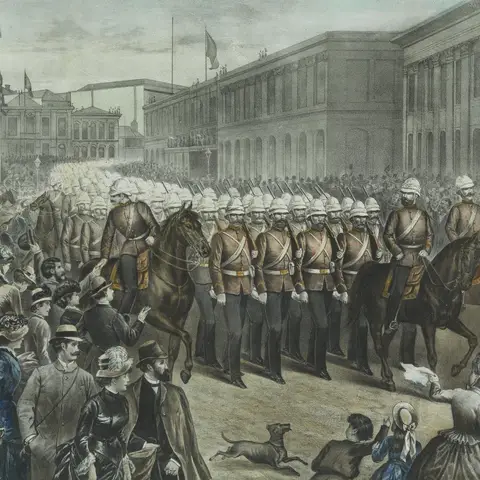
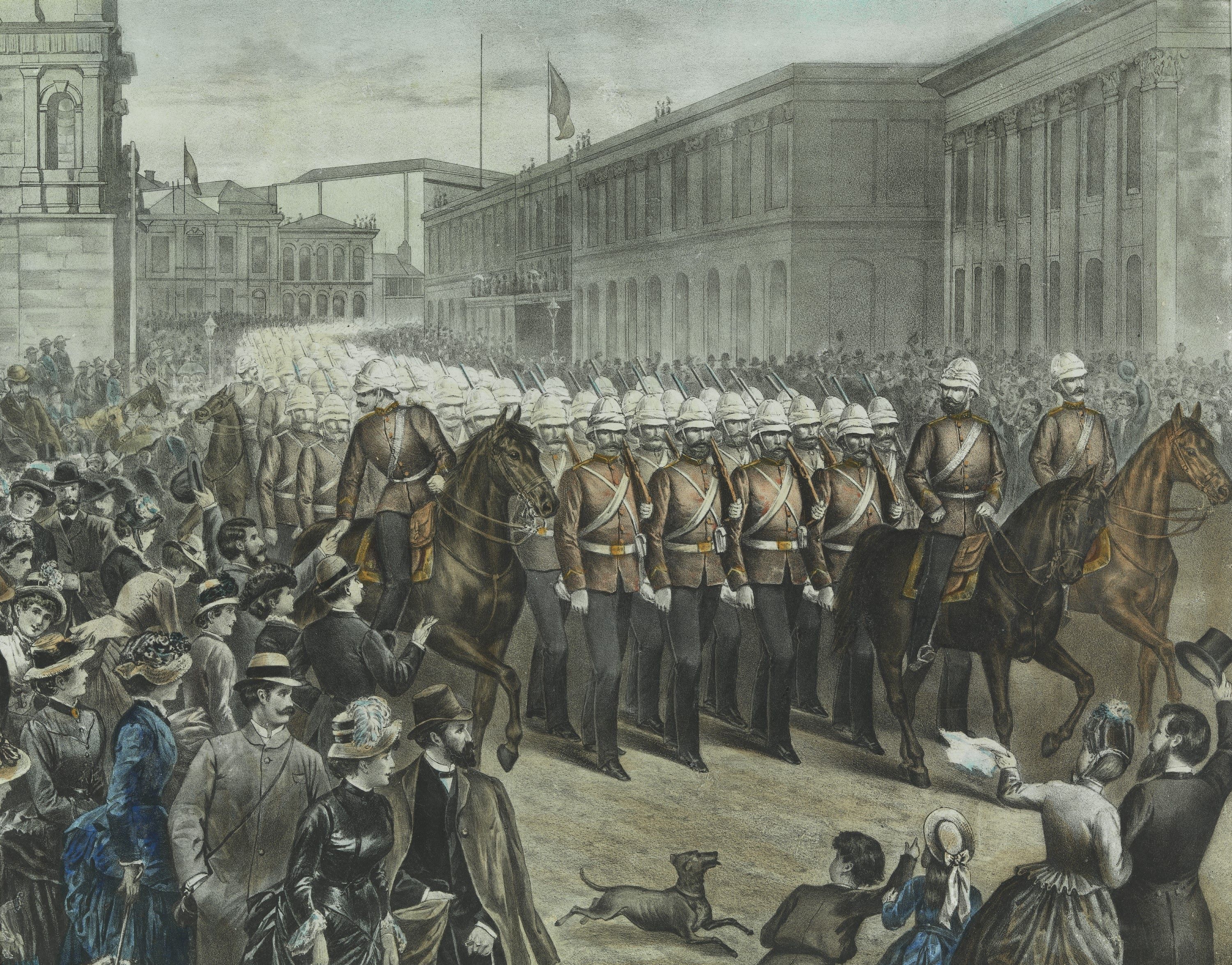
Departure of the NSW Contingent from Sydney for the Sudan, lithograph printed in black ink, hand-coloured in gouache on paper, c1885.
Attend the Imperialism and Resistance conference
- Join keynote speakers Rachel Perkins, The Hon Tony Abbott and Professor Henry Reynolds, together with leading authors, historians and curators, for a two-day history conference examining the military history of the Australian colonial era. Get your ticket.
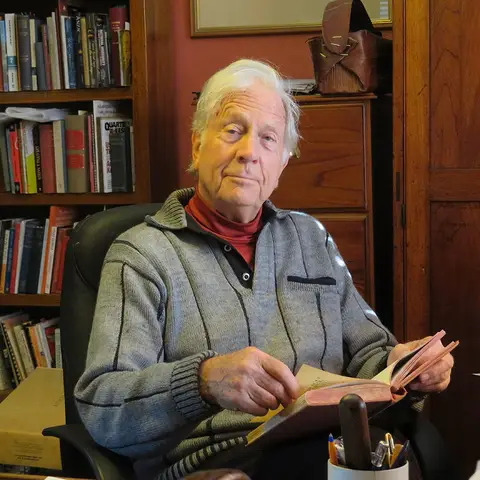
Professor Henry Reynolds
Explore Professor Henry Reynold's work
- Read Professor Henry Reynold's landmark book The Other Side of the Frontier
- Explore his book examining Europeans who spoke out against the treatment of Aboriginal people, Whispering in Our Hearts
- Read the book co-authored by Henry Reynolds and Nicholas Clements, Tongerlongeter: First Nations Leader and Tasmanian War Hero
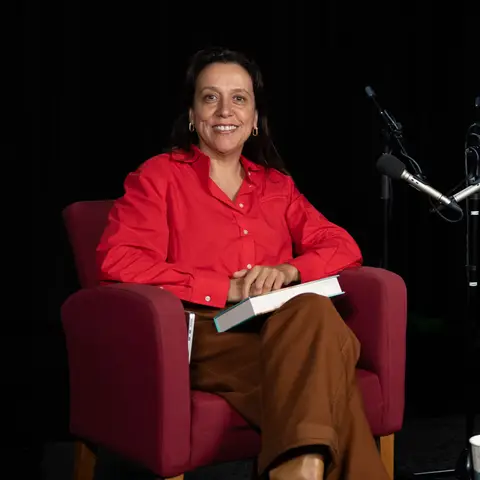
Rachel Perkins
Explore Rachel Perkins' work
- Watch Rachel Perkins' three-part documentary series The Australian Wars
- Explore the award-winning documentary series co-written, produced and directed by Rachel Perkins, tracing the history of contact between Aboriginal people and European settlers, First Australians
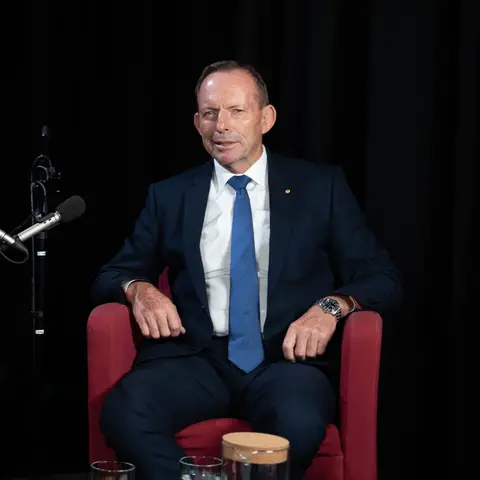
Tony Abbott
Explore Tony Abbott's work
- Read Tony Abbott's account of Australia's history, identity and development in Australia: A History
- Watch Tony Abbott discuss Australia: A History and the ideas behind the book in his conversation with The Sydney Institute
Voices
- Garth O'Connell
Gomeroi man, veteran, soldier and Curator at the Australian War Memorial - Rachel Perkins
Filmmaker, broadcaster, and Arrente and Kalkadoon woman - The Hon. Tony Abbott
Former Prime Minister of Australia and author of Australia: A History - Professor Henry Reynolds
Historian and author of The Other Side of the Frontier

About the host
John Barrington
John is the host of Through Their Eyes. Drawing on his experience presenting and reporting for 3RRR Melbourne, Good Shout Stories, triple j HACK, ABC Radio and The Project, he brings a fresh perspective to Australian War Memorial storytelling, connecting you with the people and experiences behind Australia’s military history, inspired by his father's Second World War service. As your guide through the podcast, John helps reveal the human stories and overlooked perspectives, making history accessible and relevant.