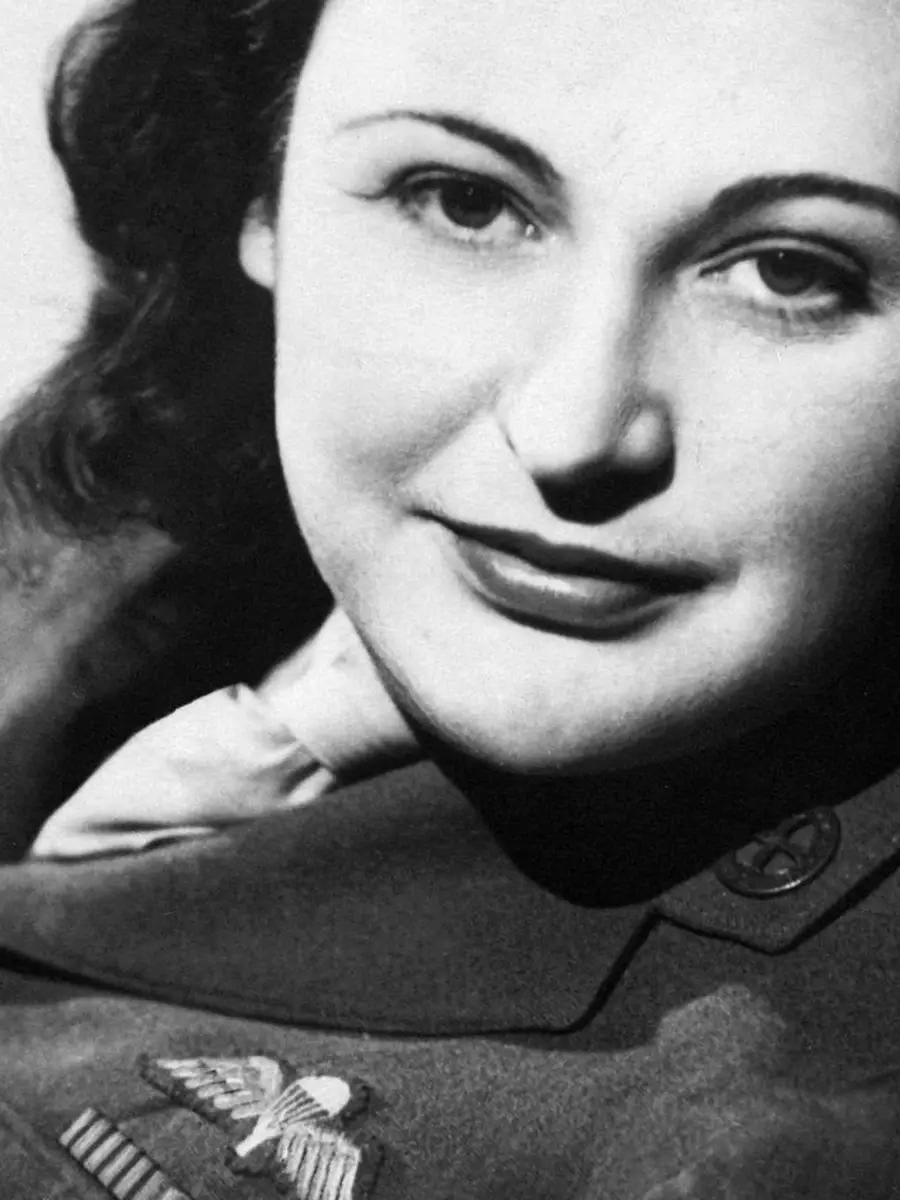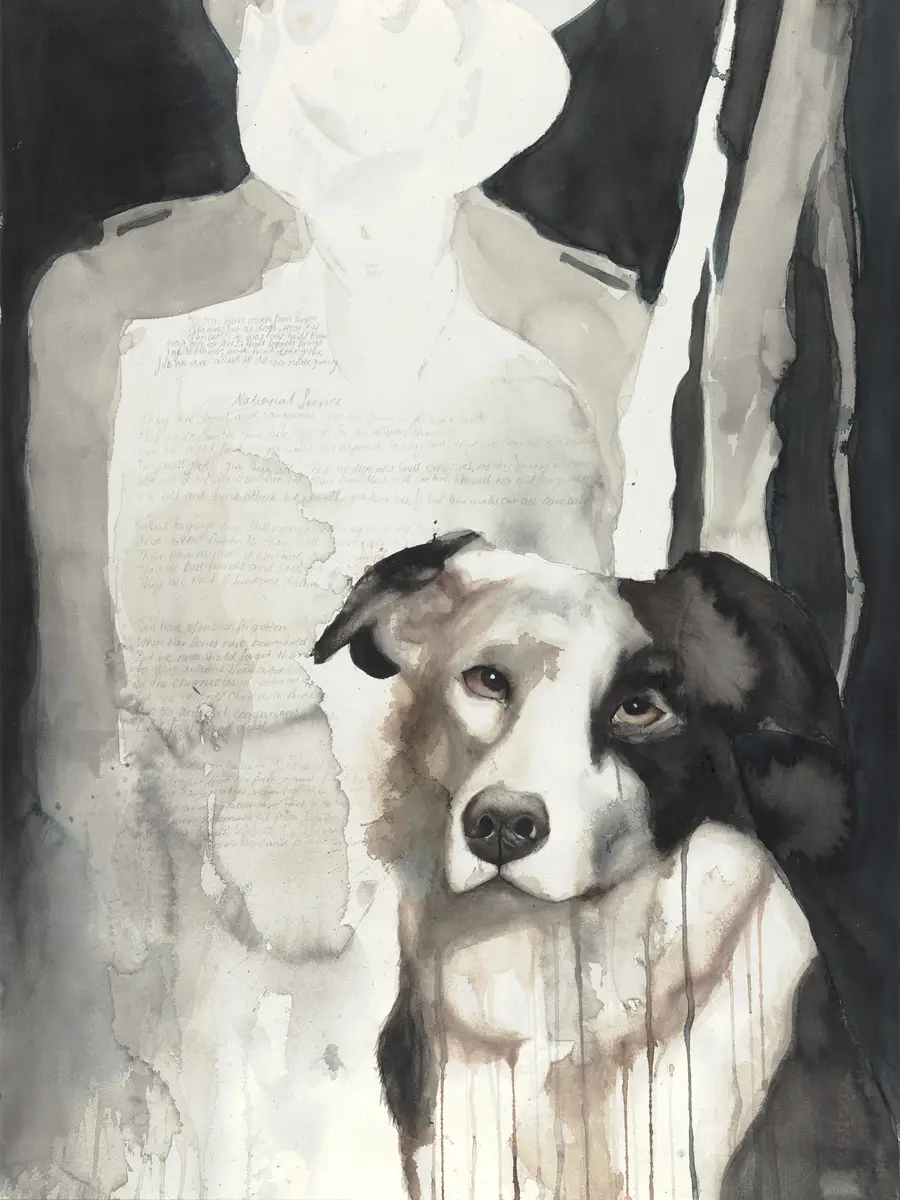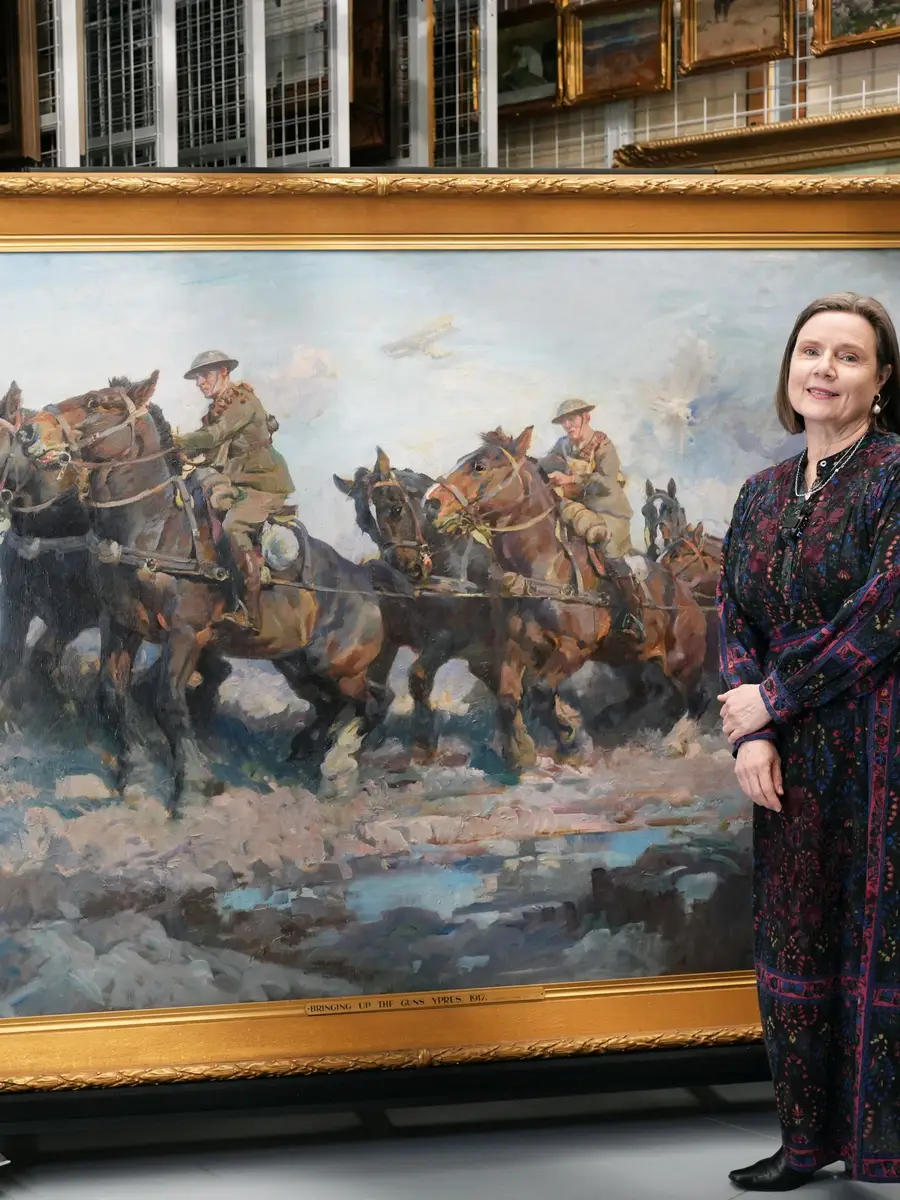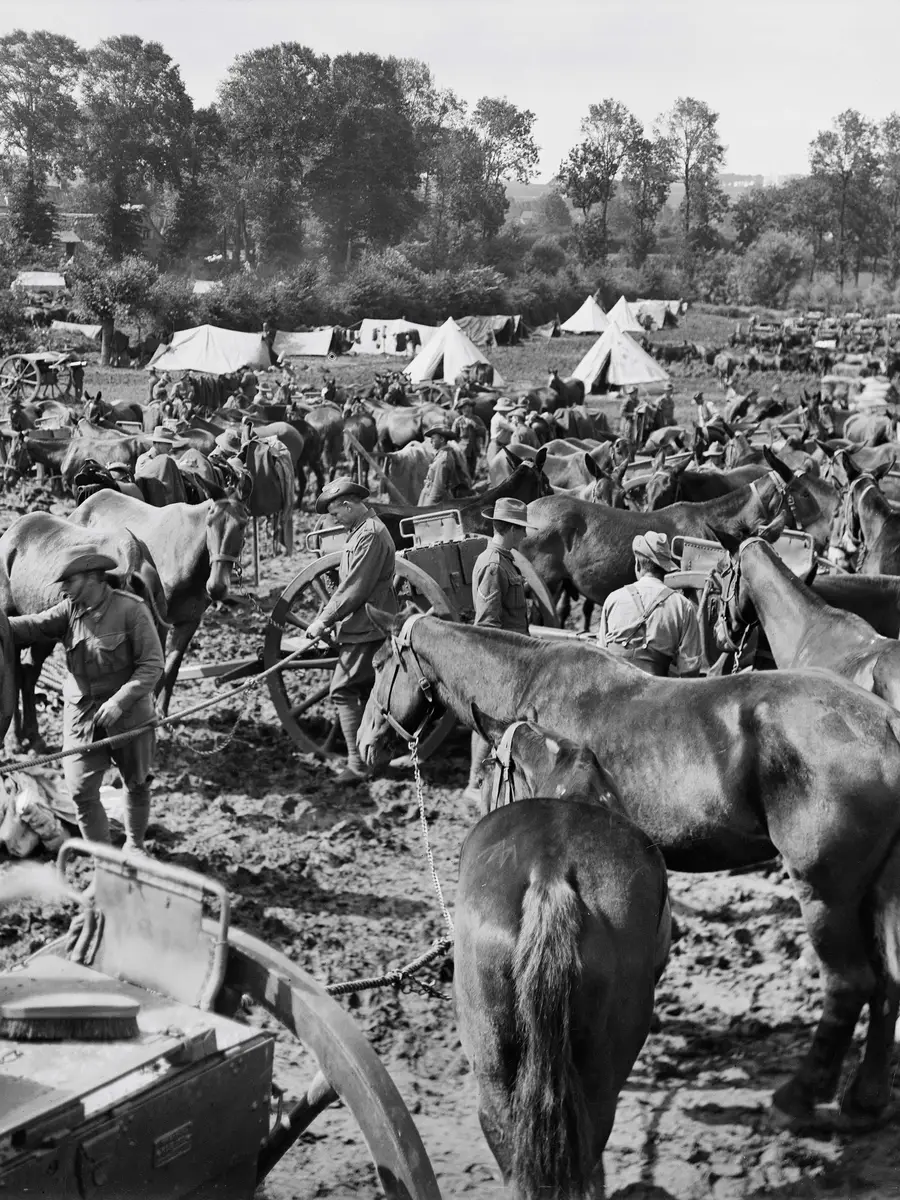
They carried soldiers, saved lives, and offered comfort in war's darkest moments. But what did animals mean to the people beside them, and what do we owe them today? Discover the remarkable bonds forged between humans and animals in war.
This episode was brought to you by Leidos Australia.
An Australian War Memorial Official Podcast.
John Barrington:
Through Their Eyes shares real-life experiences of war, some of which may involve sensitive or distressing subject matter. Themes may include violence, death, trauma, and loss. We aim to share these stories with care and respect, but please take your wellbeing into account while listening. If you need support at any time, visit our show notes for resources. The Australian War Memorial acknowledges the Traditional Custodians of Country throughout Australia. We recognise their continuing connection to land, sea, and waters. We pay our respect to Elders past and present. We also acknowledge the veterans who have served, those that are still serving, and the families that love and support them. This episode is brought to you by the support of Leidos Australia.
Christopher O'Neil (Archival):
The dogs loved the helicopters because it was the only time in their whole life they'd get up and get cool and to see a dog sitting up at 2,000 feet with his tongue hanging out. So they could hear a helicopter about four or five miles away and they'd start wagging their tails and getting excited.
John Barrington:
For generations, Australians who served have rarely done so alone. For more than a century, animals have carried soldiers through battle, searched for danger, saved lives, and offered comfort when no one else could.
Christopher O'Neil (Archival):
Well, each day after breakfast, dogs would be taken out. The handlers would groom, checking the dog, giving it a brush, checking that its paws were good. The nails were trimmed. They had no eyesight [problems]. The teeth had no infections.
John Barrington:
The voice you just heard belongs to Vietnam veteran Christopher O'Neil, who served with one of Australia's first dog tracking teams.
Christopher O'Neil (Archival):
We all had to carry at least an extra two or three litres of water because you couldn't put a dog on water rations. And if a dog wanted water, he'd just stop and want water and you just had to give it to him.
John Barrington:
During the Vietnam War, 11 Australian tracker dogs served with the soldiers of the 7th Battalion, Royal Australian Regiment. Their job was to follow enemy tracks hidden in dense jungle, relying on instincts no human could match. To the men who worked beside them, they became much more than military assets.
Christopher O'Neil (Archival):
The handlers just had a very strong bond and the team had a very strong bond with the dogs.
John Barrington:
The tracker dogs weren't just part of the patrol. The men relied on the dogs just as much as the dogs relied on them. Long before Vietnam and long after it, animals have travelled wherever Australians have served. Many of those stories are well known while others remain undiscovered. I'm John Barrington, and this is the story of the trust, companionship, and service shared between Australians and the animals beside them. Welcome to Through Their Eyes. To help us explore these stories, we're joined by Nigel Allsopp, a former military working dog handler and founder of AWAMO, the Australian War Animal Memorial Organisation. For over 40 years, Nigel has worked with animals, handling and training them, researching their stories, and advocating for the recognition of Australia's war animals. That lifelong connection with animals began long before Nigel's military service.
Nigel Allsopp:
It started with my dad. My dad was a wildlife cameraman initially for the BBC, and then he worked with people. I remember one of the young fellows of 17 years of age he worked with, and his name was David Attenborough. I always had animals at home. I had my own little sort of private zoo of various animals. And I've lived in three countries as a kid. So when we were living in England, I had hedgehogs and squirrels and badgers and everything that was injured. A barn owl was a particular favourite of mine. And even when we immigrated to Australia in the early '70s when I was quite young, I had an injured seagull on the ship. And in those days, the ships took six weeks to come. So I had a mouse that I'd found and a mirage of little skinks. And when I arrived in Australia, I discovered a whole new lot of native animals, which I had.
I joined the army and I always wanted to work with animals, but in this particular case, I was in a part of a parachute unit. And one day I was parachuting. The wind got a bit blowy and I moved over to these P-3 Orions, which were a restrictive aircraft. And a couple of military working dog handlers surrounded me. Well, after about half an hour conversation with them, I then transferred and became a dog handler in the military where I stayed there for about 15 and a half years. I guess my first full-time professional animal career. And then I was lucky enough to get a job that stage at the Auckland Zoo. They were after some people with some behavioural enrichment skills.
So I was fortunate enough to be assigned to two elephants, Cassian and Boomer. And I worked with them for about five years, training them in various ways. And training shouldn't be confused with performing acts. This elephant, for example... And don't forget their longevity, they live up to 80 years. Previously, this elephant couldn't use its trunk because previous keepers used to feed it. And so they have 300,000 individual muscles in their trunks, and this animal couldn't even sort of feed itself. So I had to teach it how to pick up things and strengthen it.
The one thing about zookeeping, unfortunately, they're not the biggest financial payers in the world. So I had a young family, so I thought, "Well, what can I do? How can I work with animals still?" So I was lucky enough to have some contacts. So I joined the Queensland Police Service and I got into the dog section very quickly. I was an explosive ordinance response dog handler for about 16 years in the bomb squad. And that led me, I guess, to my retirement time.
In 2003, I started the Australian War Animal Memorial Organisation to honour the deeds and sacrifices of animals in war. And we've been to Ukraine several times, either rescuing animals directly on the front, training police and civilians too in self-care, teaching them animal first aid courses up there. Our charity is still going strong and we try and make people aware of the deeds and sacrifices that animals make. And I believe most of them are sentient beings without sounding anthropomorphic. They basically have some form of soul. They recognise fear, danger, love, et cetera, using a human term. So unlike perhaps a hundred years ago where animals were tools, nowadays I think people are very accepting of animals. They understand their rights to exist. A lot of people refer to their pets as fur babies. So we've changed over the generation for the better.
John Barrington:
Nigel has seen those changing attitudes firsthand, but Australian's connection with animals stretches back much further than his own experiences.
Nigel Allsopp:
Our land is so vast. Just mere transportation getting from one village to another would've made it impossible without the horse. Post-European area at least for our agricultural community, our sheep, et cetera. Farming are really what built this country as we know it today. So animals have been sort of vital, the modern Australia anyway, because we relied so much on horses, naturally, our defence force used horses, the light horse.
John Barrington:
As the author of 17 books, Nigel has helped preserve countless stories that might otherwise have been lost to history. We know that animals have served alongside Australian servicemen and women in many ways. Horses, pigeons, dogs, cats, tortoises, bears, and even ferrets have all played a role. Nigel shares just a few of these stories.
Nigel Allsopp:
The mule, first of all, being sort of very unappreciated in history. There could be no war from any country where a packed mule, a logistics animal hasn't been necessary. Even in World War II, the alleged mechanised war, had more horses and mules in World War II than there was in World War I. Even today in the United States Marine Corps have a training school in California that train packed mules for logistic purposes. Unappreciated to many people was the pigeon, the messenger pigeon. In Australia, we used them in World War II extensively. In Kokoda, very briefly, the Japanese had sort of deciphered our radio codes. One of the first things we could do with a pigeon is take a message from point A to point B. A couple of pigeons actually that won the Dickens medal.
In one particular incidence, an allied force was heavily pinned down. They needed assistance. This pigeon flew roughly 40 miles in 49 minutes. So you can imagine how fast. They're almost getting to up to 80 kilometres an hour, these pigeons. Plus they were released by the allied forces. They flew back to the headquarters. They were able to send artillery fire into the enemy positions, enabling our allied force to safely escape. And a lot of people today, they see pigeons in playgrounds or Anzac Square. And there's even comments, "Oh look, they look like rats with wings." But so many soldiers probably owe their lives to the humble pigeon.
John Barrington:
Animals like mules and pigeons served in many practical roles, carrying supplies, transporting people, and delivering messages. But lesser known is the animals who went to war offering comfort, companionship, and a sense of normality. Dating back to the Boer war, mascots have accompanied Australians across conflicts, sharing their trenches, boarding their ships, and resting in their arms. One of Australia's military mascots was a tiny Yorkshire terrier from Brisbane named Smokey. Weighing less than two kilograms, she travelled through Papua New Guinea and the Philippines with American forces where her small size would prove invaluable.
Nigel Allsopp:
Soldiers were being pinned down by Japanese snipers. Many Marines had tried to get this radio wire across the road so they could attach it to a radio and call on enemy support fire. Little Smokey was put in a culvert, a little drain, which went for about 70 metres, managed to crawl underneath there. Imagine the sights and sounds and the noise going off. This little Yorkshire terrier got to the other side, they managed to hook up the wire and call in an airstrike. He's accredited to saving many lives. But his real claim to frame, what is now the Royal Brisbane's Women's Hospital, used to be the US Navy and Marine Corps Hospital in World War II. And there was a naval lieutenant doctor there, and he noticed how Smokey affected the welfare and made people happy and decided to allow it in every day. And in the Guinness Book of Records, Smokey the Australian dog, is stated as the world's first post-traumatic stress dog.
John Barrington:
Some wartime animals became heroes like Smokey, but one inspired a character recognised by millions of children around the world.
Nigel Allsopp:
A great story of a Canadian veterinary officer from Winnipeg being deployed to the UK. And as he was travelling on train across Canada, he came across a trapper that had a bear and he wanted 20 pounds for this bear. And he'd killed the bear's mother, this trapper, and he was just trying to obviously make some money from selling this little male black bear. So the veterinary officer purchased it and off he went to England. The Canadians were doing lots of pre-deployment training there. The male bear was slowly growing older, and he was then going to be deployed this officer to France. He thought, "Well, I don't want a bear in a war zone." So he donated it to the London Zoo where this male black bear lived the rest of his life. And over many years during the war, children would come and feed this male black bear. And one particular child called Christopher Robin Mill, whose father was a famous rider, used to feed this male bear honey sandwiches. And of course, we've probably figured it out that that male black bear now appears to be a bear we know as Winnie the Pooh.
John Barrington:
And if you thought that was surprising, it turns out Winnie the Pooh wasn't the only unexpected animal with a connection to wartime. Nigel shares a few more that you might not have heard before.
Nigel Allsopp:
The smallest mascot in D-Day was a mouse, a naval mouse, which was on a landing craft and did about 40 different trips. Ferrets in World War I were quite often used to catch rabbits to supplement meals. In fact, the Royal Yorkshire Regiment, even today in 2026, has a couple of ferrets as their mascots. So animals have always and probably will for quite some time, either symbolically or professionally working, be part of our armed forces.
John Barrington:
Of all the animals that have served alongside Australians, perhaps none are more closely associated with our military history than the horse. Before engines and armoured vehicles, they were the backbone of Australia's fighting force. Few images are more enduring and well-known than the Australian light horseman with his horse. For many of the men who rode them, the horses were far more than transport. They were partners, companions, and at times the difference between life and death. Joining Nigel is Lawrence Watts, founding director of the Australian Light Horse Society. For decades, Laurie has worked to preserve and share the history of Australia's light horse and the remarkable partnership between horses and the men who rode them.
Lawrence Watts:
The Australian light horse were mounted infantry back in the day. Well, it all started in the Boer war and then went through to the World War I. Method of movement was by horse, so they were mounted light horse. The term light horse is interesting to people because they don't understand the difference. But when I explain the difference between a heavy horse, which is the horses that are quite large and pull guns and carriages, and then the lighter horse is the ridden horse. So that was the method of mobility to get troops around.
Nigel Allsopp:
Was it simply transport or did it become something much more?
Lawrence Watts:
That is a very deep and profound question, Nigel, in as much that when the first lot of troopers joined, most of them brought their own horse from their farm. So they were familiar with that animal. They had a relationship with that horse. Anybody that's had a horse understands that relationship. And that would've been the same with the light horse troopers. As time went on and remounts were then brought in, those troopers would develop that relationship with that individual horse, which they needed to do because the horse and the rider had to trust each other. And it's that trust, which was the most important thing. And there would've been a very strong emotional attachment as well.
Nigel Allsopp:
The fact that the horse was being put into danger, sometimes they were injured. And in some cases, I believe they had to swap their horse that they might've brought over for another one from a remount section.
Lawrence Watts:
Absolutely. And total respect to the trooper and the horse to develop that relationship straight away. The horse as a herd animal is always looking to the stallion, if you like, to tell them what's going on around the place. They transfer that relationship to the rider, and therefore that trust comes into it. And when a horse is injured, they go back to the lines to get a remount, and then that's up to the rider then to develop that trust. And under very difficult circumstances too, I might add.
Nigel Allsopp:
So look, could you paint a picture for us of a typical day of a light horseman? How did the men care for their horses? In the infantry, for example, the first thing you learn to look after is your rifle. So what about a light horseman? What's his priorities?
Lawrence Watts:
Well, the priorities is to look after your horse, of course. The horses were on horse lines and they did have strappers doing the feeding and watering, but it was up to the individual trooper to make sure his horse was in good health. They did have very good veterinary care on the lines and food obviously, but it was up to the individual trooper to groom and make sure that that horse was in good health, particularly with their feet. A horse is no good without good feet. If you're talking about a day-to-day thing, in the morning, the first thing they would do is go to the horse lines and check on their horse.
Nigel Allsopp:
So how much time did they spend together?
Lawrence Watts:
It probably would've been 24/7 because when you're out on patrol, it would've been 24/7. The only time they wouldn't have spent time with their own horses or remounts if they were brought back off the lines and had some R&R time. But otherwise, they were with their horse all the time.
Nigel Allsopp:
They've obviously formed an amazing bond of trust and friendship, and some may even say love.
Lawrence Watts:
You use that term love, and I think it is a love. And in any relationship, you have to have that trust and develop that affection. A true horseman does develop that, and I can speak from my own experience with my own horses that they are very much part of your life and your family, and you make sure that they're well cared for. You rely on your mates, and your horse is your mate, and you rely on him a lot. And that's where that trust comes in. We keep talking about trust, but it is such a strong element of that relationship.
Nigel Allsopp:
Literally attached at the hip, without any pun intended. One can't function without the other. I think we've often mentioned the famous Charge of Beersheba, without the horse would've been a very brisk walk to Beersheba instead.
Lawrence Watts:
Well, having had the privilege of riding over that some years ago in a reenactment charge, it was a five-kilometre full gallop. And you're right, horses were used for mobility to get the trooper or the soldier to that point of engagement. The difference with the Charge of Beersheba is that they went against that basic movement principle and just kept riding through. The core of a light horse troop is a section of four riders. And you've got your section leader and your three other riders. When they are engaged in the enemy, they will pull up 400 metres away and number three rider will stay saddled, mounted. The other three would dismount, hand their horses to that number three rider. He would take those horses away from that point of engagement. The other three troopers would go in. And when they finished their engagement, they'd call the horses back. So they were purely from mobility. And that's why Beersheba was so successful because the Germans and the Turks at the time expected to do the Australian light horse to do that, and they didn't. They just rode straight through.
John Barrington:
For those who don't know the story of Beersheba, it took place in 1917 during the First World War. Faced with a heavily defended town and running desperately short of water, Australian light horsemen did the unexpected. Instead of dismounting to fight on foot, they charged on horseback, capturing the town and its wells in one of Australia's most famous military actions. And not every famous light horse story is about a battle. Some are about the horses themselves. Perhaps none is better known than Bill the Bastard, a towering 750-kilogram chestnut gelding whose size, strength, and stubborn streak would become legendary.
Lawrence Watts:
Look, he was a difficult horse to handle, and that's why he was called the Bastard in the most affectionate way. But in the Battle of Romani, he was being ridden by Major Shanahan who could ride him and develop the relationship with him. And believe there might've been some Kiwis dismounted out in the battlefield. And Shanahan and Bill went out and recovered them. So that horse brought back five riders off the battlefield, and that's what he's remembered for. And that was just a sheer courage and a fantastic feat. So yeah, he's remembered for that affectionately.
Nigel Allsopp:
There's many stories around him, including if he was intact or not. We obviously assume he wasn't about Bill as well. Shanahan actually got wounded as well. And Bill, basically, since the rider was injured and allegedly rode back to some three kilometres to the aid station.
Lawrence Watts:
Look, he did, and that is recorded. Shanahan was injured, and Bill took him back to the aid station.
John Barrington:
By the end of the First World War, around 136,000 Australian horses served overseas. But when the fighting was over, sadly, only one came home.
Nigel Allsopp:
Only the one, Sandy, returned.
Lawrence Watts:
And we know why that was because that was a promise made by the rider and owner of Sandy who was a senior officer. And he asked as a special favour for his horse to come back, which they were able to do.
John Barrington:
Today, Sandy's taxidermy is cared for in the AWM's collection, a lasting reminder of the horses that served alongside Australian soldiers. It raises an obvious question though. If one horse made it home, why didn't the others?
Lawrence Watts:
People today think that's just horrendous that you left all those horses behind. But we're talking a bit of different time and space. Australia just had its independence, a new country, didn't have a lot of funds. We had our systems in place for bringing animals back, as you know, and we weren't allowed to bring them back. So the instruction was down the lines was the horses were to stay behind. Now, that would've affected every one of those troopers who had that relationship with that horse. We acknowledged that. Those horses, the minute that they joined up, became assets of the Commonwealth. So those horses didn't belong to the individuals. As you well know with your background, the horses that had to be put down were humanely put down after extensive vet checking. The rest of those horses, which were deemed as sound, were sold on to the Egyptians or the Indians or the Brits.
John Barrington:
The horses may have been left behind, but their story wasn't. For Laurie, the legacy of the Australian light horse still shapes how we think about service today.
Lawrence Watts:
The light horse is that mateship, that strength, that courage, that resilience. And they're the words we use a lot and still should use because they are the essence of this country. I'm sure every one of those troopers who came home and left his best mate behind carried that guilt to the day he died.
John Barrington:
For the men of the Australian light horse, the bond with their horses was built on trust, dependence, and shared hardship. It was a relationship that shaped Australia's experience of the First World War, and one that would continue in different forms over the next 112 years. Across those 112 years and the last century of service, warfare has changed in immeasurable ways. Where horses once went, dogs were now preferred. Helicopters replaces saddles as the way someone rode into battle. And battlefields looked different as the nature of war changed. The trenches and mounted campaigns of the First World War had given way to thick jungles and hidden enemies. Yet for the men and women serving with animals, one thing remained remarkably familiar. Success still depended on trust. And before that trust could exist, the military first had to discover what dogs were capable of.
Christopher O'Neil (Archival):
An experiment type of thing because they'd had them in Malaya and they were going to see if we're any good. We didn't have trackers in Borneo. We had guard dogs and they were quite effective.
John Barrington:
As we heard earlier, just 11 dogs served in the Vietnam War as part of the first tracking dog team. Formed in 1967, Christopher O'Neil was part of establishing the unit.
Christopher O'Neil (Archival):
Basically, we started briefing on a tracking team. It's long. It's what it was doing. And we went out and we did about a week's visual tracking. And then we were introduced to the dogs and worked with the dogs who were already being trained there. And at the end of that, they told us two handlers would have the dogs. And we were the first tracking team formed 7th Battalion.
John Barrington:
Each dog was paired with trained handlers and taught to follow scents through the jungle. Their job was simple. Find what the soldiers couldn't.
Christopher O'Neil (Archival):
The visual handler would find a track, confirm it was a track. Then they put the dog on it and the dog handler would take away. And then you found out how unfit you were as to try to keep up with the dog and the handler because the dog just took off.
John Barrington:
For the first time, Australian soldiers had an animal that could detect the faint scent of someone who had passed hours before. The instincts of the dogs gave soldiers an entirely new way of moving through the landscape. But Christopher says the real challenge was teaching everyone else how to work with them.
Christopher O'Neil (Archival):
Basically, we didn't go out on operations so much. We were on standby. And the first couple we did, I think it was just for warmup, just to get the climatized and stuff like that. We'd go out with a support company or we'd be attached to rifle company and we'd just be behind company headquarters. We'd do just a normal routine and just tracking along. We tried to start an education system with the companies to use the tracking team. Some companies were very, very cooperative, A company. And the problem would be if they wanted to call the trackers in just to mark a spot where they last saw the enemy and we would come in. Our routine would be to come in, find out where that spot was, get the visual trackers to sweep across, find a track, blood trail or whatever. And then we'd put the dog on it and follow it. But what used to happen was they'd have a contact. They'd get the wounded and let out. And then they would do a sweep when they would do another sweep out and couldn't find anything. And then they would call my trackers in. They only called us in desperation, but then we had nowhere to work from.
John Barrington:
Earning the trust of the men around them took time. Christopher remembers one patrol that proved exactly what the dogs could do.
Christopher O'Neil (Archival):
Cassius had stopped and he pointed and we told the platoon commander who was in front. And he'd said, "Keep going." And we said, "Well, we don't want to keep going. It's your job. We found it." He said, "No, keep going." We said, "That's not our role." That happened a few times.
John Barrington:
Cassius was a Black Labrador and one of the first dogs deployed with Australian soldiers in Vietnam. He served with his handler, Lance Corporal Norman Leslie Cameron, known affectionately as Norm. In that moment, Cassius had done exactly what he'd been trained to do. Moments like these proved the dogs could change the way Australians operated in the field. It also taught the soldiers something very important. Sometimes you just had to trust the dog.
Christopher O'Neil (Archival):
The handlers became very attached to him. They wanted to bring the dogs home. They wouldn't let them because of the quarantine restrictions.
John Barrington:
For many of the handlers, saying goodbye was one of the hardest parts of their service. Unlike the soldiers, many of the dogs remained in Vietnam through multiple rotations.
Christopher O'Neil (Archival):
Out of the 11 dogs that went to Vietnam, I think most of them did at least three or four years. Now, if a soldier had done three or four years, he would've been like a hero, a dickhead or whatever.
John Barrington:
Christopher believes the dogs stayed too long.
Christopher O'Neil (Archival):
They just left the ones there and they went down with heat exhaust, and they went down with heartworm. They went down with just being combat fatigue, a lot of them. And that was a big problem.
John Barrington:
But the risks the dogs faced were evident from the very beginning. Just six weeks into his deployment, Cassius collapsed from heat exhaustion while out tracking with his handler Norm.
Christopher O'Neil (Archival):
We lost comms and Norm kept tracking. The dog can't sweat. They can only cool off with a tongue. And they're used to tracking the jungle and getting the cool damp stuff back. And but on the beach, it was so hot and we overextended them and he went down with heat exhaustion.
John Barrington:
Vietnam proved just how valuable tracker dogs could be. For the soldiers who worked beside them, they became trusted partners. But the experience also showed the army that employing military working dogs meant more than simply training them for the job. It required understanding of how best to deploy them, support them, and care for them throughout their service.
Christopher O'Neil (Archival):
Tracking team of Vietnam was good. The idea it wasn't going to win the war, but it was an extra tool they could have used. But the way they did it, there was a 12-months experiment between 7 and 2 battalion. And being typical of bureaucracy of the army, they just forgot about it, and they just kept rotating after that.
John Barrington:
By the time Australian forces deployed to Iraq and Afghanistan, military working dogs were no longer an experiment. The role had evolved, but the partnerships hadn't. Trust between handler and dog remained at the heart of every patrol. This episode is brought to you by Leidos Australia. As we explore the human experiences of conflict, we're reminded that people remain at the heart of every mission. Leidos Australia is proud to support those who help keep Australians safe through technology, innovation, and expertise.
For veteran Jason Price, the bond between handler and military working dog was deeply personal. Nigel joins him online to talk about Manic. He was a Belgian Malinois who served for six years as a combat assault dog with the Second Commando Regiment, Special Operations Command Australia. For Jason, Manic was never just a dog. He was a teammate, a protector, and a constant companion through some of the most challenging moments of his service. It all began in 2015 when Jason was first introduced to Manic.
Jason Price:
And there was two dogs that were left in the kennel that didn't have handlers at the time. One was Guge, who is now with Steve up in Queensland, and the other was Manic. When I first met him, I didn't know what to take of him because I hadn't seen much of him. I went into his kennel and straight away he came up to me with his trademark lean and lean against my leg. Pretty much from there on, we were inseparable for the 11 years after that. Bloody good-looking dog for $8 as well for a rescue. Solid dog and later on came to be one of the heaviest hitters in the kennels.
Nigel Allsopp:
Dogs find their handlers, not perhaps the other way around, don't they?
Jason Price:
He definitely found me and the bond we had, the relationship we had. Yeah, he made my last years in the military very worthwhile.
Nigel Allsopp:
What made Manic different to the other dogs you've experienced or had?
Jason Price:
All the dogs are very serious when they are working. Obviously, they're there for a reason, but then some of them can switch it off. Manic was just, we called him the Life Switch dog as well. He could turn it off and on. He'd go in for a job, do the job, come back out, and 30 seconds later, he's getting pats off guys. But then if it kicked back off again, he'd be straight back into that work mode and punch back through the door, a dog that you wouldn't want to mess with in there. But then happy to come in at lunchtime, run into the compounds, jump on the boys on the lounge, having lunch, and pretty much demand pats all afternoon.
Nigel Allsopp:
I remember my own explosive detection dog. The difference between putting a harness on it and not having on the harness, two different dogs, you'd almost say.
Jason Price:
When he retired, as much as people don't think it, the dogs do get anxiety and do miss the job. So like us, like I've done 26 years, his whole life was the military. And then when he retired and went home, my wife would tell me that he'd just sit on the lounge looking at the door during the day waiting for me to get back. And I could see the change in him when I'd drive through the gate at work. He'd be up in the box in the back of the ears up or in the back of the car. Just around the boys, a completely different dog. His environment was work and he absolutely loved it. Great at what he'd done. They had those traits. There's not many dogs that do have them. I don't know any animal in the world that will run towards gunfire and explosions, but these dogs do. They are the most loyal animal you will ever meet. Their only downfall is that they aren't here longer.
John Barrington:
Away from the pats and cuddles, Manic had a job to do. In 2015, Jason and Manic were deployed.
Jason Price:
He was picked up by a rough handler and trained him up. It took me three months to get him certified with one of the DLOs assisting me every day. From there, we deployed to Iraq approximately five months. In that time, it was more assisting in training the Iraqis. He didn't actually do the role that he was trained for over there. However, having him there was just a great morale boost for the boys. Everybody loved him. After Iraq, we came back. We were on readiness for a year, and then we went on to TAG, which is the counter-terrorism group, and we were teamed on that for three years together. Pretty much that's where he really shone because he just absolutely loved clearing a room and engaging anybody that was in there that he could. The type of dog you didn't want to be in front of, like I said, when he was working, but when he wasn't, no dramas to have him around.
John Barrington:
When Manic retired from the army at the end of 2020, he came home with Jason. Over the next five years, he traded military life for family life, becoming an inseparable part of the household as Jason and his wife welcomed two children.
Jason Price:
He was pretty much the king of the house then. He was our family dog for the past five years. Unfortunately, he passed away or we had to let him go on the 16th of May this year. But the life he had was truly amazing. What these dogs get to do in their day-to-day work, I can't go into it too much, but some people don't like that we use dogs because they're like, "Oh, the dogs don't get to choose." I can tell you right now, these dogs absolutely love the job that they are doing. Otherwise, they would not be able to do it. They live for it, and these dogs will keep going until they drop. There are a couple of scenarios where we were out on, and he was working for an hour straight. I got towards the end of it. I'm like, "Boys, we've got to stop because he's about to go down because they just keep going until they have absolutely nothing left in them."
Nigel Allsopp:
And let's face it, these guys, no matter what you think about their deployments or use, these guys save lives.
Jason Price:
That's the thing. People look at it like, "Oh my God, the dog might get shot." I'm like, "Yeah, don't get me wrong. I'd never want my dog getting shot, but I would have him shot every day of the week if it meant one of the boys got to come home." How could I go up to a wife, a mother, a son or a daughter and go, "Oh, your dad didn't come home because I didn't want to lose my dog." You can replace the dog for what it is. Obviously, it's going to suck because you don’t want to lose your best mate, but you can replace that dog, get a new dog, and he'll still do the job. Whereas you can't replace a human. You can't replace some of the boys. The amount of boys we lost overseas and the amount that these dogs saved overseas, you can't put a toll on it at all.
John Barrington:
Like many military working dogs, years of demanding work had taken a toll on his health. After retirement, the responsibility of his care and the cost of it fell largely to Jason and his family.
Jason Price:
This year alone, it would've been close to about $18,000 in vet bills for Manic. That falls on the handler. And unlike some families where, and I don't want to sound like evil here, but some families would choose to put their dog down due to money. And I can understand that. Whereas these dogs, like I said, when we were deployed, the bond we had, it's completely different to your normal pet. So as handlers, we will do anything to get these dogs the treatment they need. And even if that means us going without stuff through Cronulla RSL, obviously they sponsored Manic and they were amazing with everything they've done.
But that's the biggest thing in retirement. It is the healthcare that myself through DVA, all the injuries that I've had, the dogs, all the injuries they get are work-related, but then it falls on the handler. I'd hate to see how much Steve with Guge up north has put into Guge. Not that he cares, that dog is amazing and he will do anything for that dog. But the amount of money that he would've spent on Guge in retirement would be... I reckon it'd be close to $100,000 for that dog with the amount of stuff that he does.
John Barrington:
Jason knew that military working dogs don't stop needing care when their service ends. On Manic's first Anzac Day after his retirement, Jason reached out to Cronulla RSL to attend.
Jason Price:
That morning we got a ID for him. He became the first four-legged member. And from there, we just expanded on it with all the work that they'd done behind the scenes. The money they raised with their tour up went towards Manic and AWAMO itself.
John Barrington:
With Cronulla RSL support, Manic began attending community events, appeared on the news, and quietly became an ambassador for retired military working dogs, helping to raise awareness of the care these animals need long after they leave the army.
Jason Price:
The dogs don't get looked after in retirement and just trying to get the word out there that these dogs do need to be looked after. Cronulla's been the tip of the spear, so to say. With that leading the charge, Natalie Hawkins now, who's the guiding light behind Manic's mission and will continue with that along with myself, obviously now that Manic's gone, continue to push that agenda until we can get these animals recognised and looked after in retirement.
John Barrington:
Jason and Manic's efforts didn't go unnoticed. In recognition of Manic's service, both in uniform and in retirement, he was awarded the Distinguished Animal Service Medal by the AWAMO presented by Nigel. But when Jason was told Manic would receive the honour, his first reaction wasn't pride. It was hesitation.
Jason Price:
When it first came through and yourself and Natalie reached out to us, to be honest, I was a bit apprehensive about it. Yeah, he deployed, but he never done his role over there. Pretty much everything we'd done was training. Whereas the boys from WA who had lost dogs in Afghan and that, looking at those dogs and thinking maybe one of them potentially should have got the first one. But then the more I thought about it, the more I looked into it, I also looked at what we were trying to do in his retirement with him and get that message out there about the dogs. And that kind of put my mind at ease to be like, "Yeah, I will accept it for Manic because of the work I've done in the military, but also in retirement. And it's a good stepping stone to get all dogs recognised in retirement and help every dog in retirement."
Nigel Allsopp:
Yeah, absolutely. I think I used the word he's an amazing ambassador. Post-retirement free veterinary care and stuff like that that dogs like Manic help put into the limelight and let people know about their great service. And just because they're not two-legged diggers, they're four-legged diggers and we've got to look after them as well. When people hear about Manic's story in the years to come, what do you hope they remember about him?
Jason Price:
A lot of people would always say to me there's no way he was an attack dog when they met him. I always found that quite funny, but I think at the end of the day, just his nature is what I want people to remember, both in work for the boys that seen it, but also all those that met him at Cronulla on Anzac Days and other events. It'd take me about three hours to go to the bar on an Anzac Day because everybody would want to stop and talk about Manic. I want to say thank you to Sue, Neil and Natalie Hawkins from the RSL with all the work that they've done post-Manic service in looking after him, trying to get dogs recognised.
I'd like to say thank you to the guys at Rebrew Apparel. They've done a lot of work behind the scenes for me with regards to designs and stuff for Manic's mission. Also, they're trying to get the word out there about military working dogs. He's not here, but I want to thank Manic for choosing me because at the end of the day, if it wasn't for him, none of this would've happened. I don't think I would've stayed in the military as long as I did if it wasn't for him. He was my best mate. I think about him every day and thank you to yourself with AWAMO.
John Barrington:
Although Manic's legacy is one of service and advocacy, Jason says it's his personality that he'll always remember. One story in particular still makes him smile.
Jason Price:
One of my fondest memories of Manic, when we first got to Iraq, it was that hot he could barely stand still due to the heat and he's panting up, hardening it up. So he'd tap things when he had to stand still. So I'd try to keep moving with him. And due to the heat, I didn't want to run him outside. So every day we'd go to the gym and I'd empty him out, make sure he'd emptied out before he went in there. And I'd tie him to the treadmill next to me, set his treadmill at 14 miles an hour, and he'd be trotting along and I'd run next to him normally for about half an hour to 40 minutes. At least one day we'd go in there, put him on the treadmill, and within about 10 minutes of running along, I get a tap on the shoulder and look down just as Manic drops the biggest deuce on a treadmill at 14 miles an hour.
And the way it was set up over there, you had all the treadmills, then you had about a three-metre gap and all the rollers. And this poor Euro was directly behind Manic's treadmill going hammering on a rowing machine. And this turd went from a full-sized turd to nothing because it shot off the back of the treadmill at 14 miles an hour and smeared the full three metres till it got to the front of his rower. His poor Euro is trying to keep going dry reaching at the same time. Manic's just looking up at me without missing a beat, pretty much thinking that's what you get for time into this bloody treadmill every day and making me run. So there I was after that for about 45 minutes, went through three bottles of Ajax, four rolls of paper towel. It was the cleanest treadmill in the gym after that. We got a message that night in points that dogs were no longer allowed on the treadmills in the gym. Thanks to Manic. But hey, what can you do?
John Barrington:
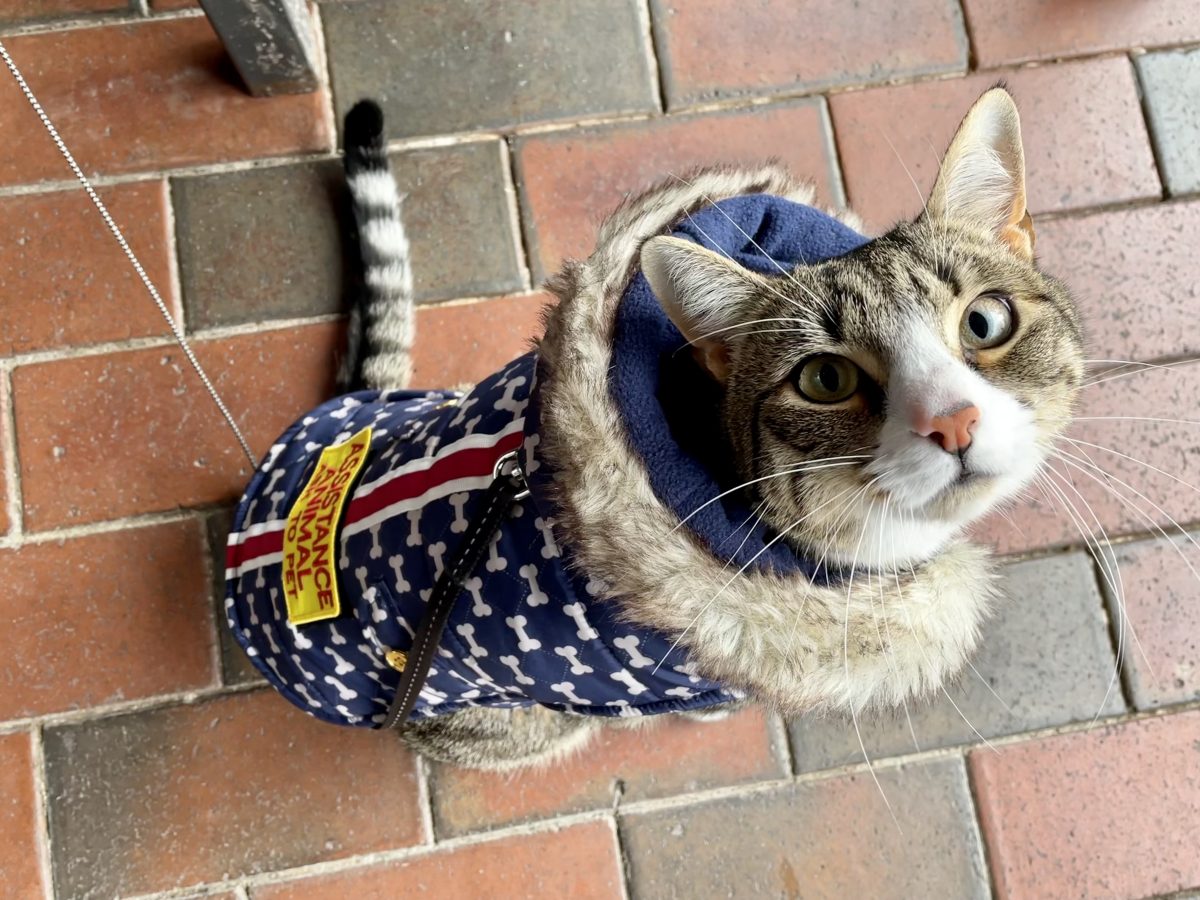
Like any best mate, Manic left Jason with plenty of stories, some more glamorous than others. Today, those partnerships continue in new and unexpected ways, not always on military bases or battlefields, but in helping people navigate life after service. Anthorr Nomchang has spent more than four decades serving Australia across the military, border force, and emergency services. Today, the animal by his side looks very different than the ones he worked with. Bandit is one of only a handful of accredited assistance cats in Australia, helping Anthorr navigate life after service. Anthorr recalls the moment Bandit entered his life.
Anthorr Nomchang:
Well, it's a very interesting sort of story there, Nigel, at any rate, because... Yes, Bandit. She wants to get in on the story, obviously. So Bandit's almost five years old, and I originally met her through a colleague because I was about six months away from retiring from the Australian Border Force. I was thinking to myself, I want to have an adventure cat like I've seen on YouTube and everything of that nature. And I'd always had cats before in my life. I mentioned it to a friend that I do motorcycling with, and he said, "You know one of your colleagues is actually fostering kittens and a big litter of kittens." And I went, "Really?" He said, "Yeah, you should reach out." So I did.
John Barrington:
His colleague invited Anthorr over to meet the litter. He jumped on his motorbike and headed out to the Yass Valley where the playful kittens were waiting for him. Among the litter was one tiny grey and orange tabby with bright green eyes and a curious streak. Anthorr decided to adopt.
Anthorr Nomchang:
I got a phone call a couple of weeks later after I had paid the adoption fee to be able to get Bandit. And I obtained Bandit via a delivery through a picnic basket right to my door. As soon as Bandit hopped out of the actual basket, it was like this cat had taken over the whole place and just owned everything. So she was this little bundle of attitude, curiosity, and was very aware of everything. So she sort of got into my life at that stage. So that was about six months before I retired from the Australian Border Force.
Nigel Allsopp:
Perfect timing for you.
Anthorr Nomchang:
It was perfect timing. And the interesting thing about it for me was that what happened was that I was undiagnosed at the time with chronic PTSD. I'd had it for a long time throughout my military career and also throughout my 30 years in law enforcement as well, as a lot of us do.
Nigel Allsopp:
Yeah, for sure.
Anthorr Nomchang:
One of those things. I was diagnosed, but I'd started to really teach Bandit all of the things to do with what was an adventure cat. I'd looked at YouTube. I'd seen all the bits and pieces, people putting their animals on leads and harnesses and all that sort of stuff. And I used to teach in our college investigators... Yes, Bandit.
Nigel Allsopp:
Turn it over to Bandit.
Anthorr Nomchang:
Yeah, that's right. I used to teach people. So, teaching animals, that's got to be easy. Well, I thought.
Nigel Allsopp:
Hence, the saying, it's hard to herd cats.
Anthorr Nomchang:
It's hard to herd cats. That's right.
John Barrington:
After months of training, Anthorr decided to have Bandit recognised as an assistance animal. There was just one problem. No one had ever registered an assistance cat before.
Anthorr Nomchang:
I didn't know what I was doing when I got into it. When I was talking to my psychologist and my psychiatrist at the time after I was diagnosed, they sort of said, "Well, we recommend that you actually have an assistance animal." And I sort of went, "Okay, what's my options?" And they of course said, "A dog." And I went, "Well, I have a cat already. Dogs don't exactly work for me", because of my domestic situation, and also I've had a couple of instances where I've actually had aggressive dogs go for me. So I have a little bit of a fear there. Because I took Bandit with me when I was doing this. And I said, "She's obviously having a positive effect." Being an ex-law enforcement person and then having a degree in law and a couple of other things of that nature, of course, I looked into it and discovered the Commonwealth Disability Discrimination Act and also the provisions in that for assistance animals and their requirements.
And I discovered that all animals are allowed to be assistance animals. The majority of them of course are dogs because they're the appropriate type of species and animals for the majority of complex disabilities. But you had to have a disability, of course, which PTSD is definitely one. And I went, "Well, that's it. I can have a cat." And as a result of that, I started to go through the process. It was very long and complex, and there was a lot of hurdles, but I just kept saying, not a case of why not. I just kept saying, "Well, how do we achieve this? Because it's required in legislation." And so I had a lot of administrative people in a lot of different areas and a lot of different places coming to grips with the idea of the fact that they weren't compliant with federal legislation at a state level, and then finding themselves trying to find ways forward to become compliant.
John Barrington:
It took persistence, patience, and plenty of determination. But Anthorr eventually succeeded in having Bandit officially registered. Bandit was the first cat recognised in Australia as an assistant cat under the Commonwealth Disability Discrimination Act guidelines.
Nigel Allsopp:
So certainly you and Bandit are somewhat of a trailblazer in that area. Bandit's one of only a handful of accredited assistance cats now in Australia. So what makes her so special? And how does she help you on a daily basis?
Anthorr Nomchang:
Look, she's been trained in all the therapeutic things that are required for psychiatric assistance animals. There's two types of major type categories of assistance animals. The psychiatric side, as well as the physical assistance, animals will do things to do with people that have high blood sugars and all sorts of things like that. I mean, the obvious ones, guide dogs.
Nigel Allsopp:
Guide dogs, yeah.
Anthorr Nomchang:
Hearing dogs, all those sorts of things. And they're very, very specifically and specially trained. Bandit is psychiatric assistance animal. And as such, because of that, she assists me greatly in the ability to be able to focus, get up every day, do things, make sure I'm in a routine. Abide to her requirements like she's doing-
Nigel Allsopp:
Like now.
Anthorr Nomchang:
... over the years has become very, very aware to me and when I'm having a PTSD attack. So what that usually means is that I have the flight or fight responses-
Nigel Allsopp:
Sure.
Anthorr Nomchang:
... or any of those other types of things. Or there are situations where there are people, and it’s usually people, it can be animals as well, that are coming to me or at me from a blind spot and she thinks they're a threat. So she'll be very aware of that. And what she'll do is she'll actually look at that area and growl until I take notice.
Nigel Allsopp:
Yeah, amazing.
Anthorr Nomchang:
And then once I've taken notice, she'll stop growling, but she'll keep watching them all the way to wherever they're going. And she'll do things like she'll lean against me, grab me to grab my attention, claw at me, want to sit with me, want to be close. And they're all techniques of being able to alleviate that, I suppose, the isolation elements and the things of that nature.
John Barrington:
Bandit isn't just helping Anthorr through his work. She's helping him through everyday life.
Nigel Allsopp:
As a handler, I used to jokingly say to my wife, I see my dog more than I do my family.
Anthorr Nomchang:
That's right.
Nigel Allsopp:
It comes home with me for eight hours. It sleeps in my house for eight hours. I go to work with her for eight hours. There's not many hours left on the day that I'm not with them.
Anthorr Nomchang:
Absolutely. And look, that's the same thing that's sort of happened with me. I've discovered that with Bandit. Of course, her being a medical device for me as well has added that other element into it. I actually do seek her company because of the fact that she has that non-judgmental-
Nigel Allsopp:
Yeah, absolutely.
Anthorr Nomchang:
... reflective in some respects back to you about whatever's happening. She may be a little bit standoffish on occasions, which is appropriate because she is a cat. And I never forget that. She's able to be there and be reflective as a living being that has sentience-
Nigel Allsopp:
Yeah, absolutely.
Anthorr Nomchang:
... that is reactive to you.
Nigel Allsopp:
Wish a lot of people could see her right now. Since we've been talking, she has not taken her eyes off you.
Anthorr Nomchang:
She monitors continuously, and she's very aware of what's going on for me emotionally.
John Barrington:
For many Australians, the words assistance animal immediately brings to mind a dog. But living alongside Bandit has taught Anthorr that there's no one size fits all approach to recovery.
Anthorr Nomchang:
Dogs are extremely good for all those really complex aspects of health-related assistance. Guide dogs, hearing aid dogs. The thing I've discovered though is with the psychiatric animals side of things and the animals that are assisting in that form, it depends on the person. It really does depend on the person. Sometimes people will actually get much more benefit out of having their animal that they've connected with. It was well known, I suppose, in the First World War, in the Second World War, there was lots of dogs and horses and all sorts of stuff. Farmyard animals as well that became the assistance of the troops.
Nigel Allsopp:
In those days, predominantly armed forces were full of men. And of course they were miles from home from the people they love. And an animal was something you could actually love without no one judging you. A bit of home, a bit of tactile touch. It's a marvellous to see.
Anthorr Nomchang:
Animals like Bandit and Bandit specifically, she taught me something else that was extremely important as a sufferer of PTSD from military and a law enforcement, all that emergency services aspect, which is that a big burly bloke like me that normally when crap's happening, you're running towards it, can have a cute little cat like Bandit as your assistance animal and as your support and there's no judgement.
Nigel Allsopp:
Love unconditionally, no judgement.
Anthorr Nomchang:
No judgement.
Nigel Allsopp:
Amazing.
Anthorr Nomchang:
Loves you and is there in true support.
Nigel Allsopp:
So your work with Bandit has helped change perceptions, I think, and even policies around assistance animals in Australia, which I think is amazing. So why has it been so important to make that path easier for others?
Anthorr Nomchang:
I realised very early on when we were forging our way through the administrative quagmire of the Australian government-
Nigel Allsopp:
And I can imagine.
Anthorr Nomchang:
... and all the different state and federal legislation and policies and downright politics of lobbyists, et cetera, with different agendas. And especially all of the major assistance animal organisations, which have an agenda. I mean, let's not kid ourselves. There's lots of money involved in it and lots of those things, but they can't quite service all this stuff. But what I did discover was that I could have an effect. And a lot of people reached out to me. Changing some of the policies were actually not as difficult as you thought they were going to be. But you did have to find that commonality where people would want to do that. So you had to have the stick and a carrot. The stick was, I'm not going away. I'm going to be your annoying person here forever. But the carrot is a case of once you look good, if you do change, because suddenly you're in compliance with all these federal laws. And not only that, you actually are servicing all of the disabled people in that sort of arena.
John Barrington:
Anthorr and Bandit continue to work with government and organisations advocating for more inclusive policies so others can access the assistance animal that's right for them regardless of species.
Nigel Allsopp:
I really appreciate what you've done because you are strong enough to be a trailblazer doing what you're doing, probably because of your law enforcement background as well. There's a lot of people out there that probably want to do this, but because of bureaucracy, they probably haven't come forward. So I think you're opening up doors for many people. I can see many Bandits in the future.
Anthorr Nomchang:
It's a case of I get approached by a lot of those people you talk about and they simply say to me things like, "I couldn't do that. It did destroy me." Because we come from that background. You get up there, we are those people, male and female, that do run into the thing that goes bang. And I mean, that's what the symbol of this war memorial is all about. This is the symbol of what that's about. And so I think it was a case of not only is it my duty to do it, you have to make it happen.
Nigel Allsopp:
And helping others is therapeutic anyway, isn't it?
Anthorr Nomchang:
Absolutely.
Nigel Allsopp:
Let's face it, so.
Anthorr Nomchang:
Absolutely. The big thing when I look at Bandit today and probably years to come, I mean, we still have quite a few challenges that are ahead of us. We still have a thing at the present time with the Australian Human Rights Commission to do with airlines. So while we still have these challenges still ahead, I look at it this way, people in the future will probably be able to get up there and go, "Well, I can do this and take this animal with me regardless of what the animal is because it is assisting me." So for me personally, I look at that, help make that happen. That's a positive. The legacy that you want to leave is one of a positive nature that means that you did make a mark. You did put that footprint in the sand, or in this case, paw print in the sand that made a difference.
John Barrington:
For Anthorr, Bandit is a constant companion, helping him connect better with people and advocate for future changes to how we view animals in service. Their story is quite different to the others we've heard. There are no battlefields or deployments, but the trust, companionship, and quiet understanding between them is the same. And Anthorr isn't the only person working to change the way we recognise the role of animals in service. For years, Nigel has been dedicated to ensuring their stories are remembered, not just in Australia, but around the world. Through AWAMO, he's helped establish Australia's first international war animal memorial in Pozières, France, and has travelled to Ukraine to support animals affected by conflict.
Nigel Allsopp:
No one wants to see their pets go to war, just like we don't want to see our children go to war. But at the moment, they are still necessary because we don't have any just yet modern technology. We're getting there, but to replace them. But if you can imagine a dog, for example, can detect somebody over a kilometre away and you can release that dog and it can run over ground, it can jump walls, it can swim across a river and detain that person. It's like a guided missile. And at any time you can stop that dog and call it back to you and stop injuring that person. There's not a machine in the world that exists that can do that. So in a way, sadly, I see them being used for quite a number of years, but hopefully will be replaced.
John Barrington:
More than 20 years after founding AWAMO, Nigel shares his hopes for the future.
Nigel Allsopp:
Our charity originally started to honour the deeds and sacrifices of animals that have worked for Australia and around the world. And what I hope is people will respect and understand and the next generation realises that animals have served because it's sort of a bit of history that not everyone knows about. I was privileged enough a couple of years ago to be asked to go to Geneva and Switzerland to put proposals in under the Geneva Act of Section 48 to try and get animals to be recognised in war zones. For example, a human, if he's taken POW, has to be fed and sheltered. An animal doesn't. It can be sort of shot out of hand. So trying to sort of push that through with our government being two years and we haven't heard anything yet, but I'm hoping to go back again in a year or so and try and push that to protect animals in war zones.
And I think the next generation will get it over the line if it's not mine. I do believe, particularly mammals ranging from dogs to dolphins as well in the ocean, whales, et cetera. We've seen cats being PTSD cats as well. These animals are sentient beings. In every dictionary you look at, they describe a sentient being. And I'd like to see them being approved in many governments and councils like that. And these animals have stayed faithful to us literally. And look, the bond with an animal, in many cases, we as a human take over that parental bond. Not many animals are solitary in many cases, most mammals in particular. And that bond we've replaced. And so that remains forever. The light horses, horse has an amazing bond, just not physically, but mentally as well. You have to be inseparable and have to be in sync.
John Barrington:
The stories we've heard today span more than a century of conflict, but they all point to the same thing. Whether they were horses, dogs, pigeons, or cats, these animals were far more than military assets. They became trusted companions. But when their service ends, what do we owe them in return?
Nigel Allsopp:
I've worked professionally with animals all my life, almost 35, 36 years professionally. And I've noticed even zoological or exotic animal native animals and a domestic animal, they all share the same thing, the very strong bond. Certainly, every animal that we've used in the armed forces has a great bond mentally, spiritually, whatever you'd like to say, touching an animal and cuddling it when hell is around you, artillery shells bursting to be able to cuddle a cat or a dog in the trenches. And can you imagine how frightened a horse would be? In World War I, in the cold, he's come all the way from Australia, he's freezing, it's winter, artillery shells are going around him. People are screaming. Other horses have died. Horses from an artillery unit used to lean in to their handlers, their heads for comfort. Riders would actually cuddle their horses when they were frightened.
So we owe them a lot. And when it comes to supporting them when they finished, when emergency service, police and military dogs retire, we should be looking after them financially. I mean, in Vietnam, for example, where my charity put a plaque on the 50th anniversary there to honour the 11 dogs that didn't come back. Sadly, we left them on our enemy's shores to somewhat unknown fates. We owe the animals to return them back to Australia. And when they've done their service, we should look after them just as much as we do our two-legged diggers.
John Barrington:
This episode was researched and produced at the Australian War Memorial with support from Nigel Allsopp from the Australian War Animal Memorial Organisation. It featured Nigel Allsopp, Jason Price, Anthorr Nomchang, Lawrence Watts, and the archival voice of Christopher O'Neil. Through Their Eyes is made through the support of Leidos Australia. To learn more about the stories featured in this episode, visit our show notes where you'll find links to oral histories, collection items, and Nigel's published works. And to learn more about the Australian War Animal Memorial Organisation and its work to recognise the service and sacrifice of animals, visit awamo.org.au.
Animals have served alongside Australians in every major conflict. They carried soldiers into battle, delivered life-saving messages, detected hidden dangers and offered comfort when it was needed most. But beyond their service lies an extraordinary story of trust, loyalty and companionship.
From the Australian Light Horse to military working dogs and an assistance cat helping veterans recover from trauma, discover the remarkable bonds between humans and the animals that served alongside them.
Featuring military working dog handler and founder of the Australian War Animal Memorial Organisation, Nigel Allsopp, this episode explores more than a century of conflict. And it uncovers the enduring relationships between people and the animals who served beside us.
Collection items and related stories
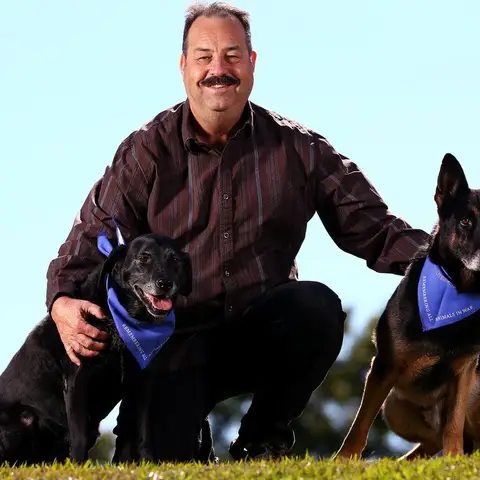
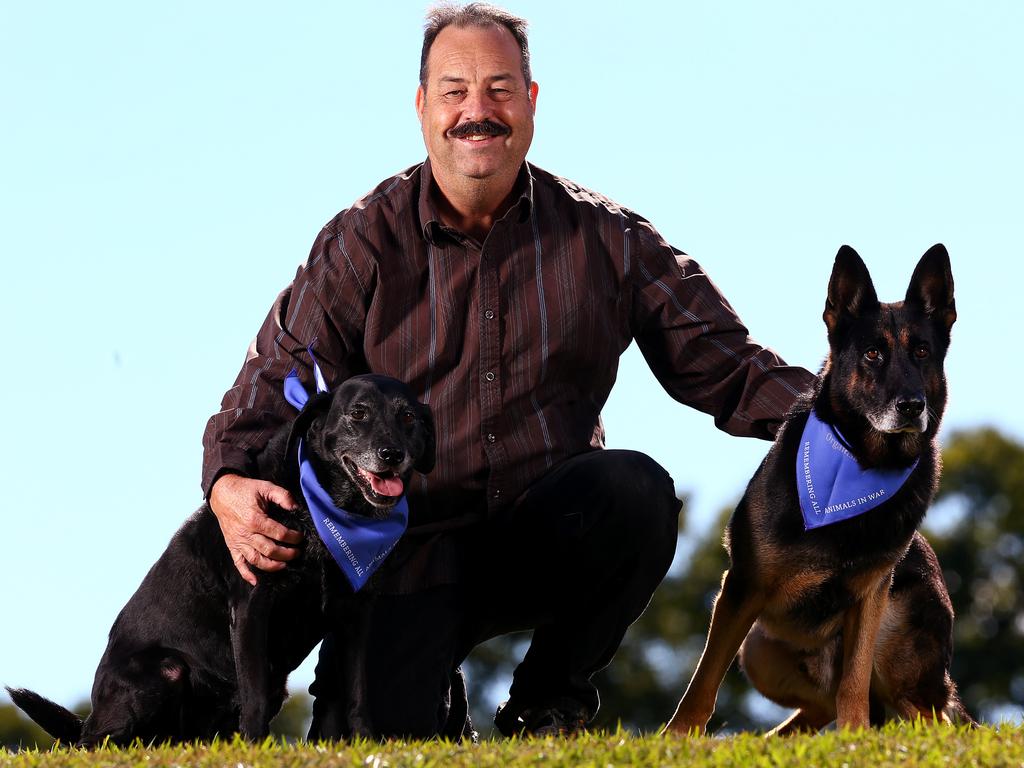
Nigel Allsopp. Photo courtesy Australian War Animal Memorial Organisation
Explore more from Nigel Allsopp and the Australian War Animal Memorial Organisation (AWAMO)
- Explore Nigel's published books on war animals
- Visit the Australian War Animal Memorial Organisation's website
- Learn more about Nigel's career, service and achievements
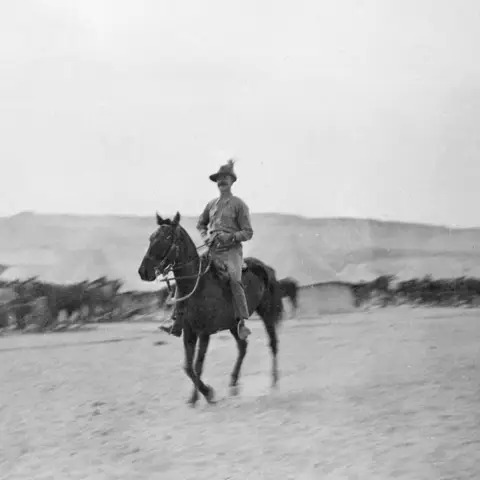
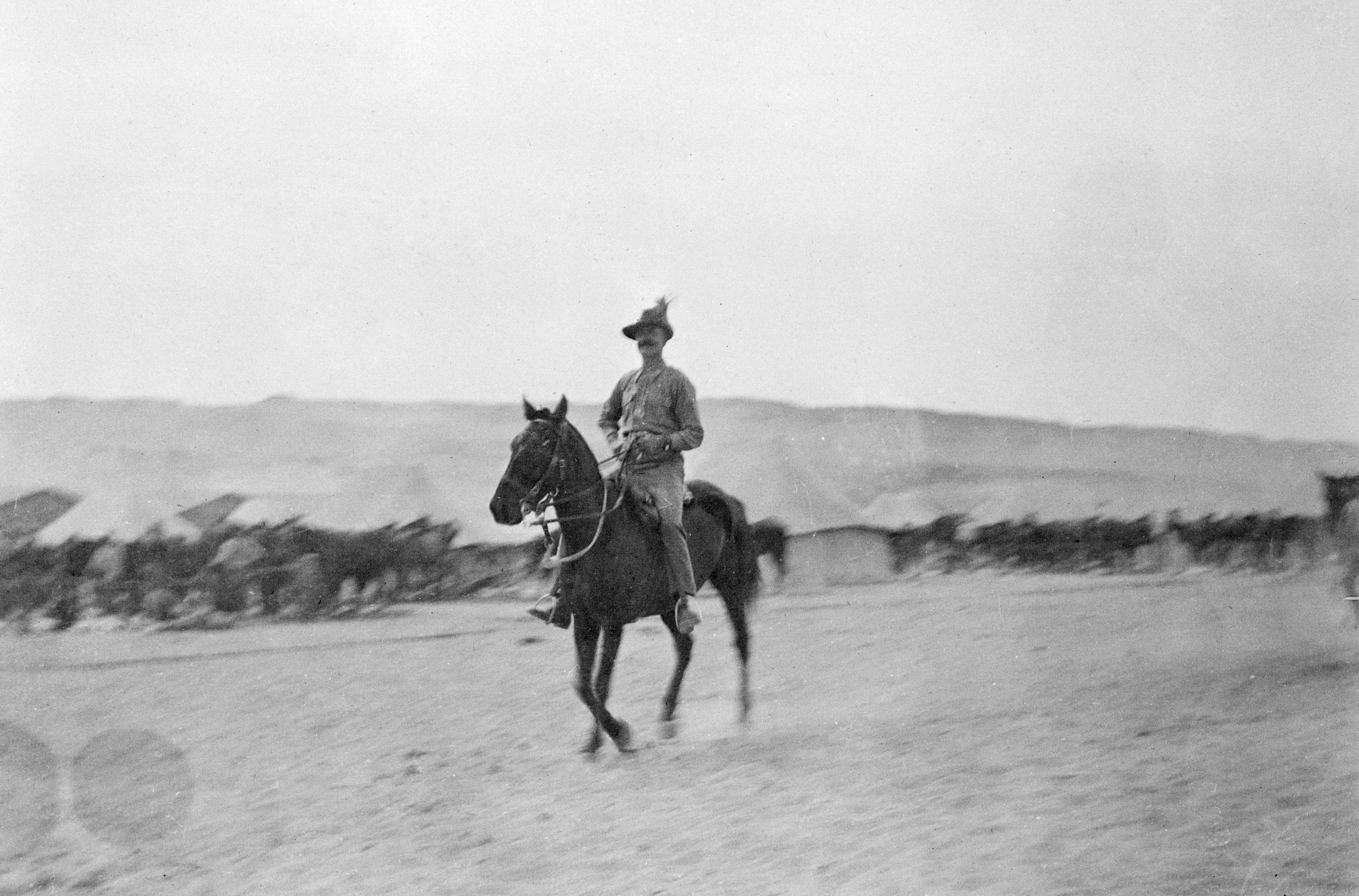
An Australian Light Horse Trooper riding by. Egypt 1915
Explore stories of the Australian Light Horse
- Learn more about the history and legacy of the Australian Light Horse though the Australian Light Horse Society
- View photographs of the Australian Light Horsemen from the AWM collection
- Read about the Australian Light Horse's role in the battles around Lone Pine
- Watch a film of the 3rd Light Horse Brigade in Melbourne, 1915
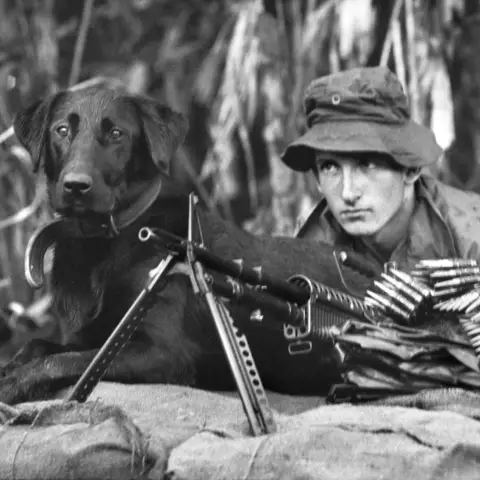
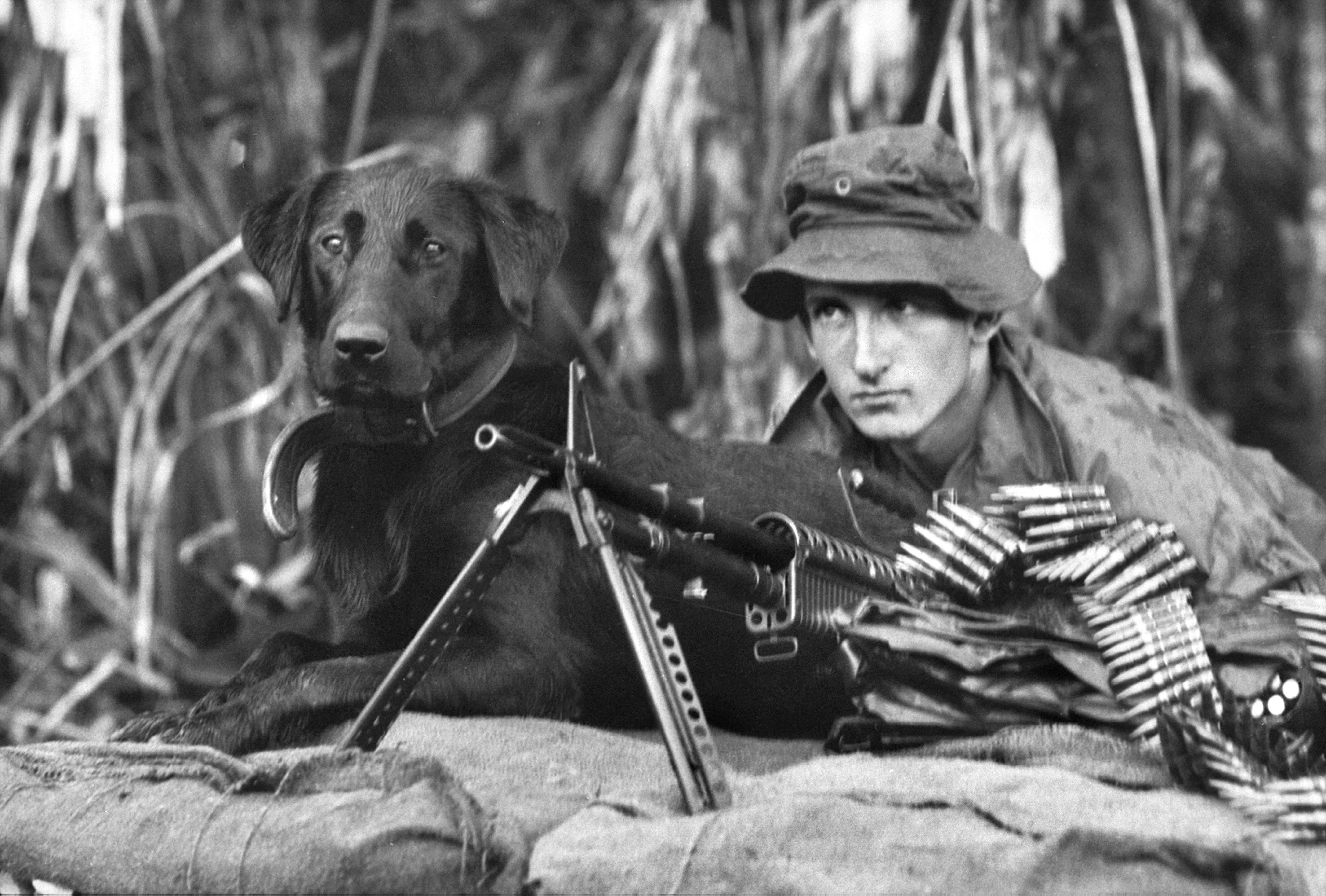
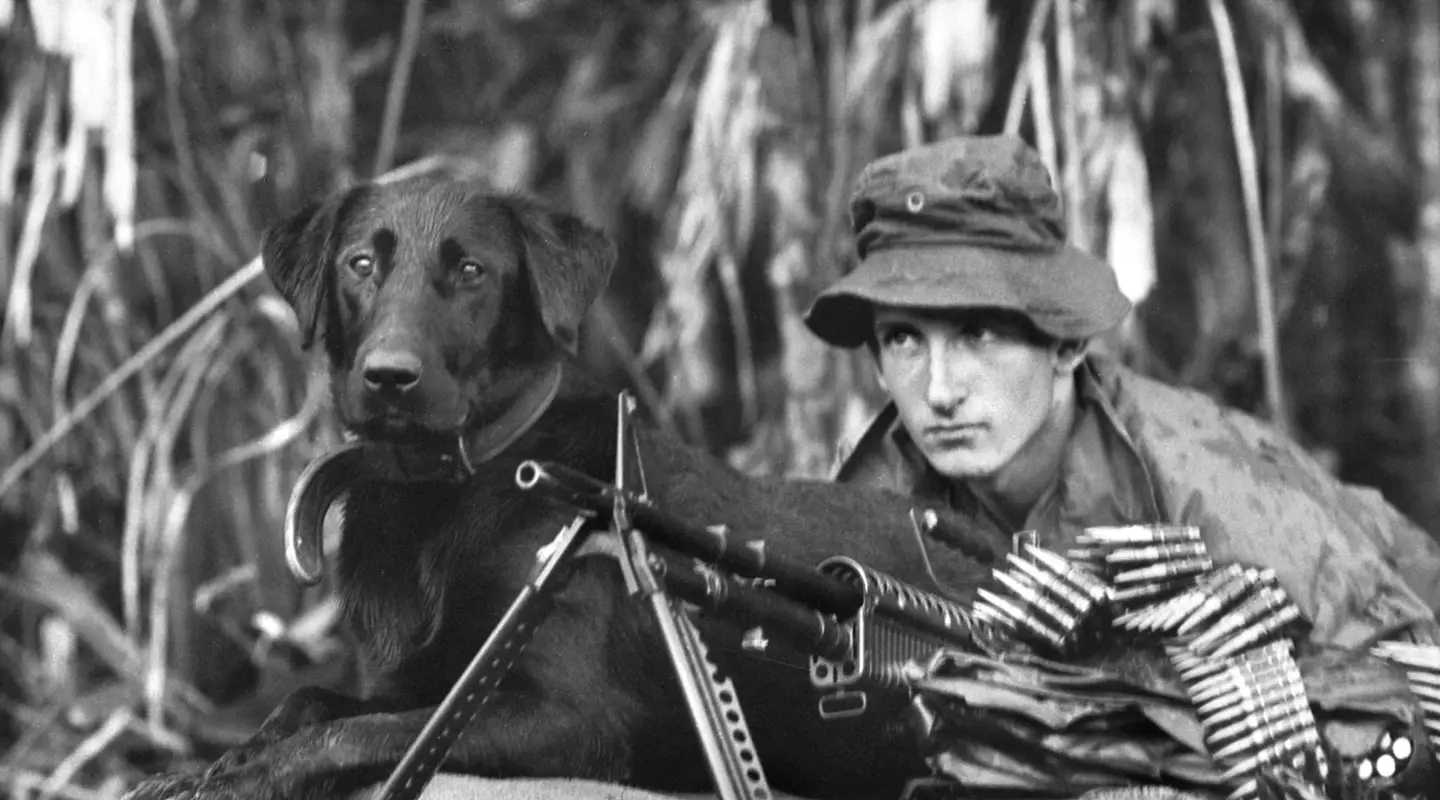
Tiber, a Labrador tracker dog with the 7RAR, is on piquet duty with his personal handler, 43921 Lance Corporal Norman Leslie Cameron
Explore stories of Australia's Vietnam tracker dogs
- View images of Cassius and Lance Corporal Norman Leslie Cameron
- Explore the AWAMO's tribute to the 11 tracker dogs left behind in Vietnam
- Listen to Christopher O'Neil's oral history on the establishment of the Dog Tracking Team, 7RAR
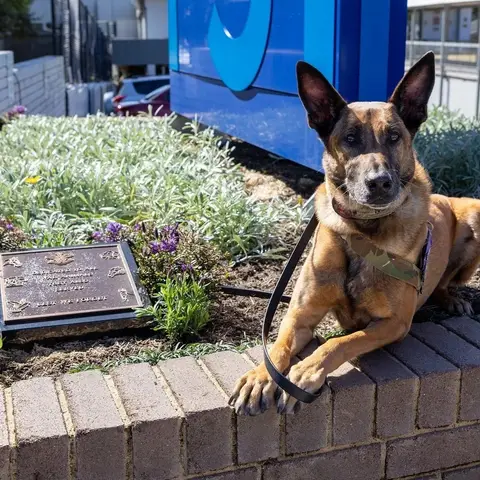
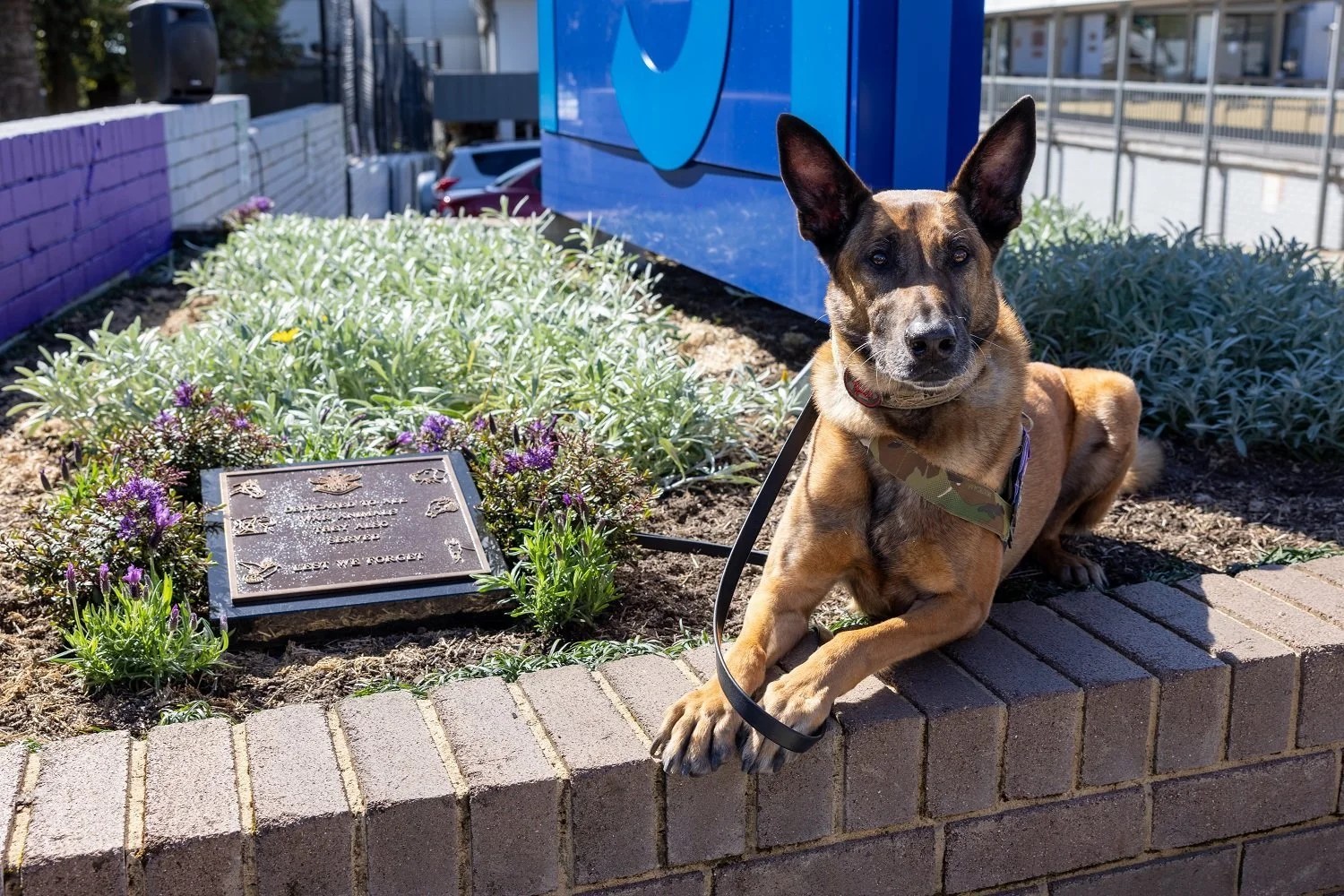
Manic, the combat assault dog
Explore the service of Manic, the Combat Assault Dog
- Read Manic's story on the AWAMO's website
- Discover the legacy of retired military working dog Manic through Cronulla RSL
- Read Nigel's book, Australian War Dogs: The Story of Four-Legged Diggers
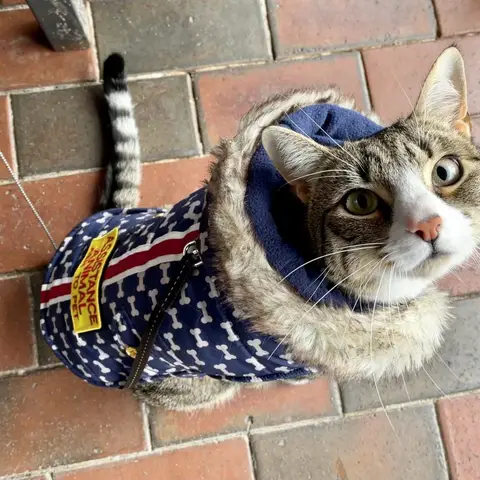
Bandit the cat
Explore remarkable stories of Bandit and Boat
- Discover more of Bandit and Boat's work
- Read the ABC article of assistance cat Bandit
- Explore more animal stories on WM
Voices
- Nigel Allsopp
Nigel Allsopp is the founder of the Australian War Animal Memorial Organisation (AWAMO) and a leading advocate for recognising the service and sacrifice of animals in war. He has dedicated decades to researching and preserving the stories of military animals and their handlers. - Lawrence Watts
Lawrence Watts is a founding Director of The Australian Light Horse Society Ltd, a founding Director and ambassador of the Australian War Animals Memorial Organisation (AWAMO), and a recipient of the Australian Defence Medal. He has spent more than three decades researching and preserving the history of the Australian Light Horse. - Jason Price
Jason Price is a former Australian Army military working dog handler and the handler of Manic, one of Australia's most highly decorated military working dogs. He is passionate about recognising the service of military working dogs and supporting them in retirement. - Anthorr Nomchong (Bandit & Boat)
Anthorr Nomchong is a former Australian serviceman, law enforcement officer and emergency services volunteer. Today, he is a mental health advocate who, alongside his accredited assistance cat Bandit, works to improve recognition and understanding of assistance animals.

About the host
John Barrington
John is the host of Through Their Eyes. Drawing on his experience presenting and reporting for 3RRR Melbourne, Good Shout Stories, triple j HACK, ABC Radio and The Project, he brings a fresh perspective to Australian War Memorial storytelling, connecting you with the people and experiences behind Australia’s military history, inspired by his father's Second World War service. As your guide through the podcast, John helps reveal the human stories and overlooked perspectives, making history accessible and relevant.