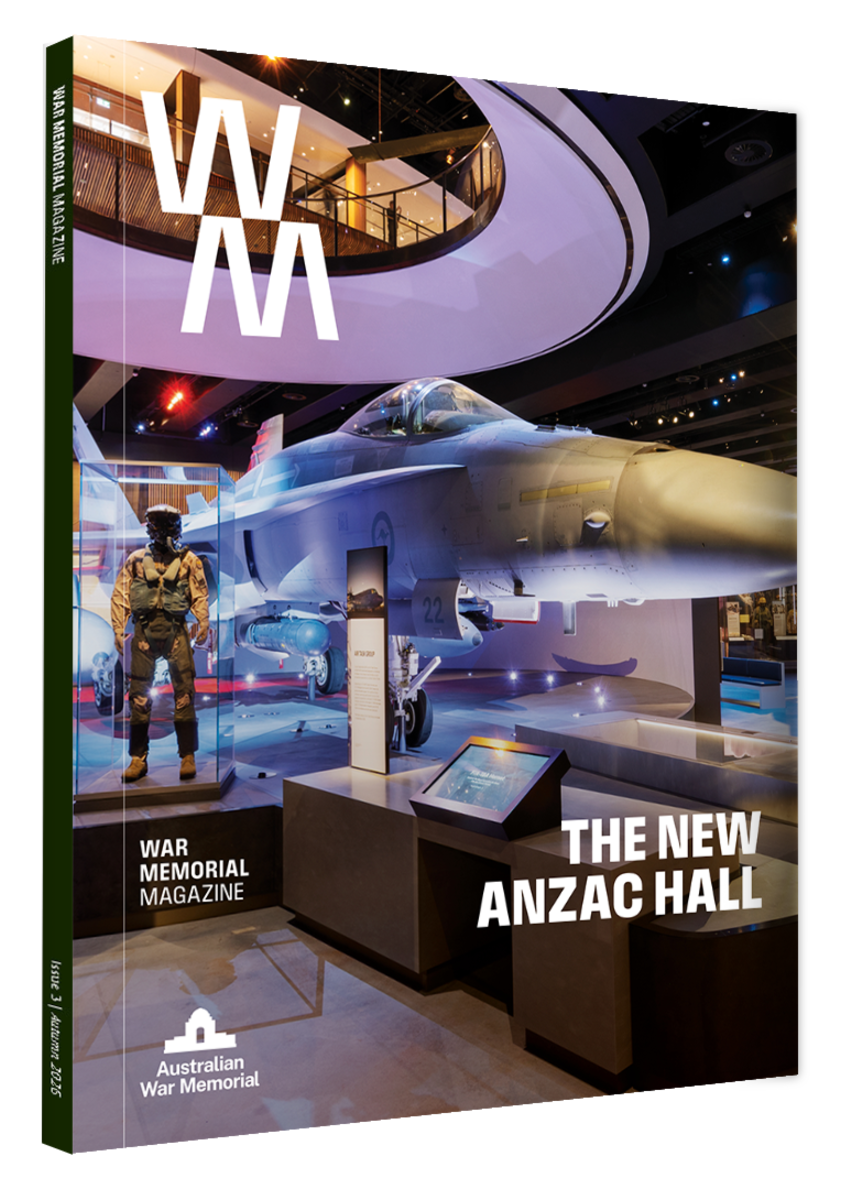
The story of Australian military aviation told through one of the Memorial’s most iconic artworks.
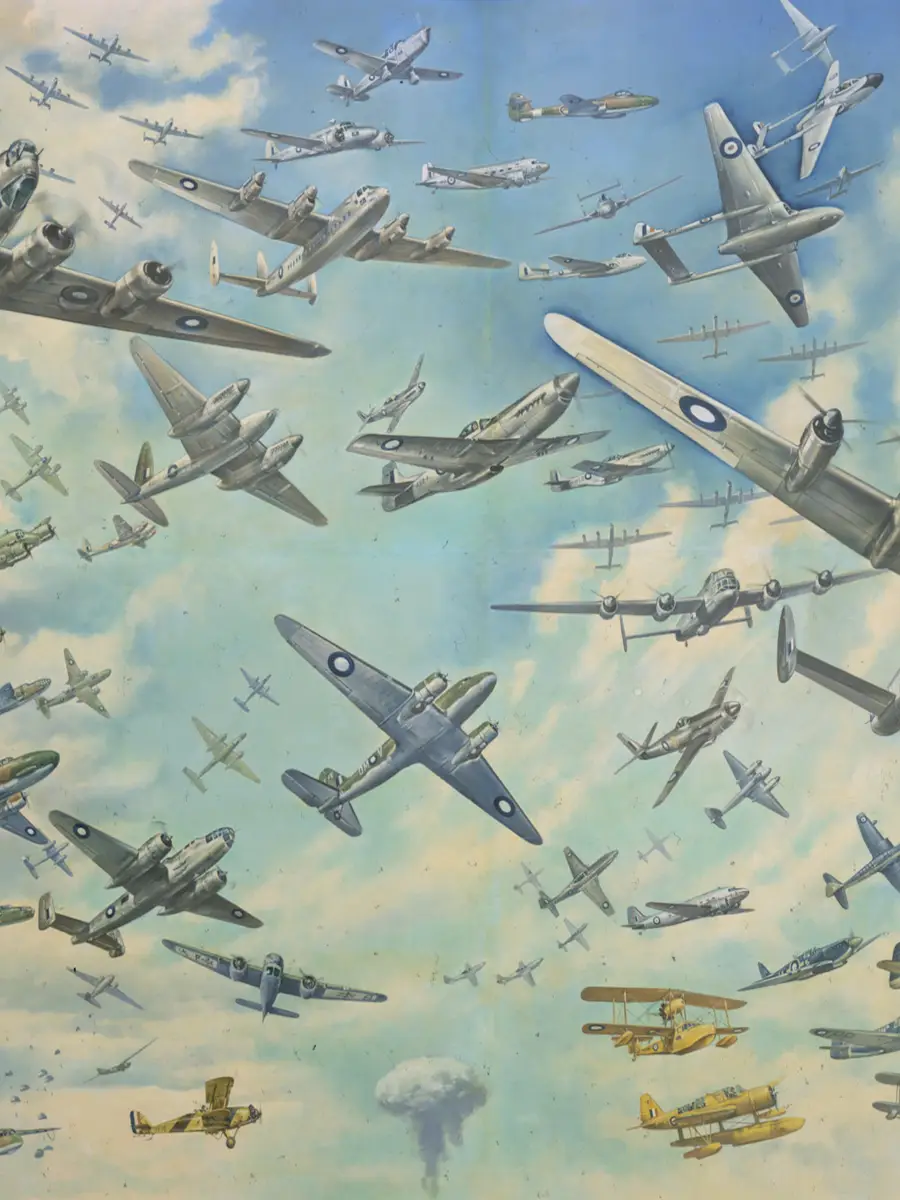
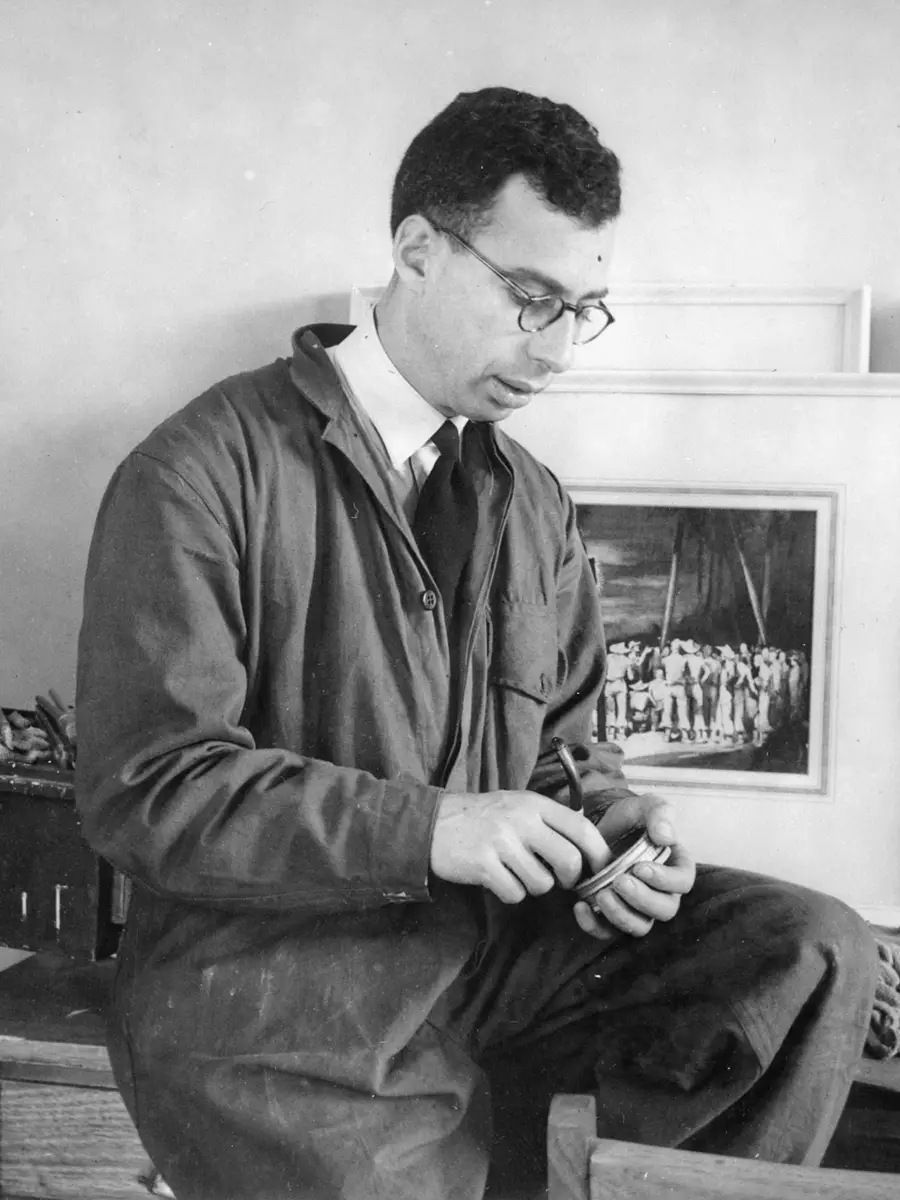
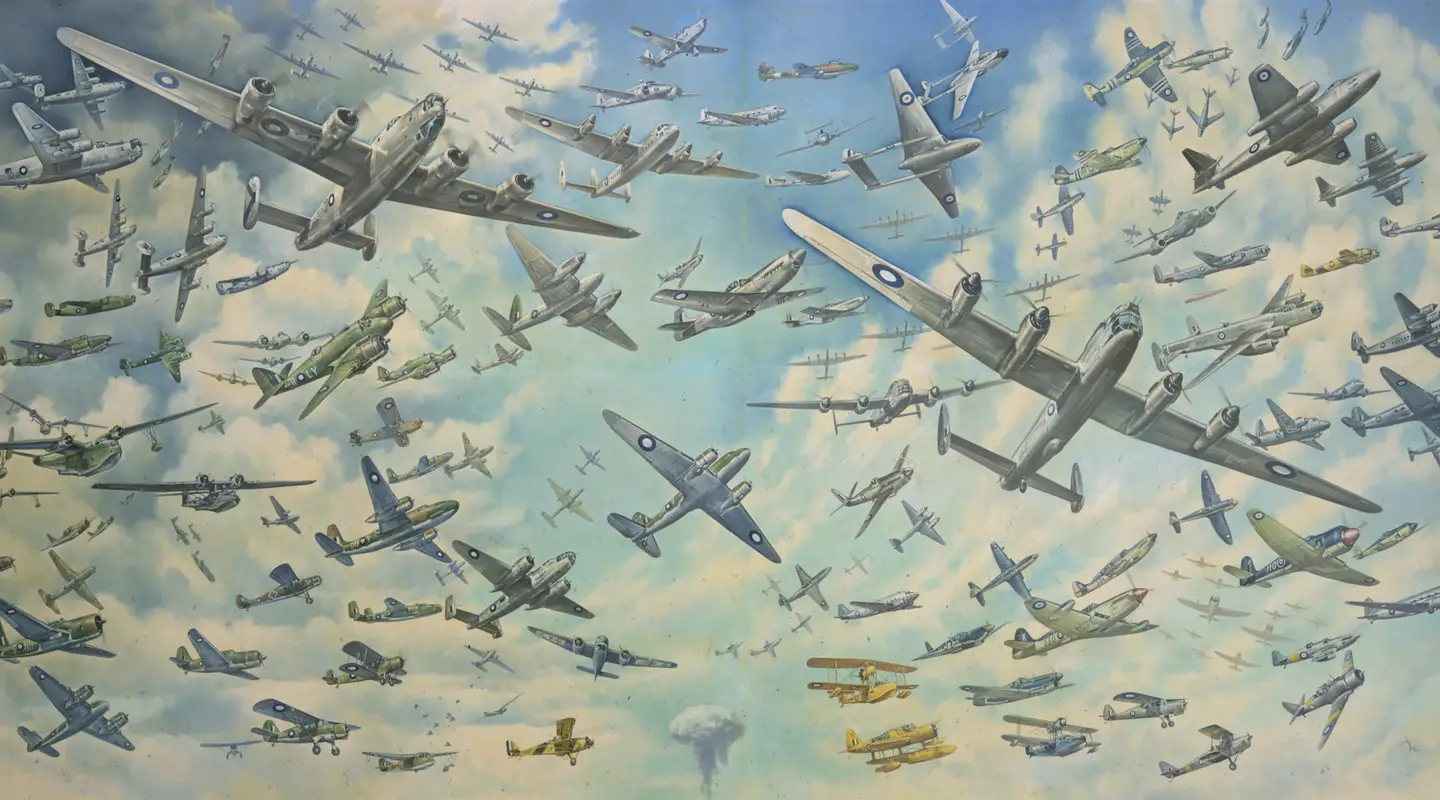
Painted by renowned artist Harold Freedman, the Mural of Australian Military Aircraft is a monumental work that traces the evolution of Australia’s military aviation from the First World War until the Vietnam War.
Hidden from public view for over 25 years, the mural is now undergoing careful conservation and will soon be on full display once more.
In this video, Curator Garth O’Connell takes a closer look at three aircraft featured in the mural: the Sopwith Triplane, the Bell UH-1 Iroquois helicopter and the Lockheed C-130 Hercules. He explores their unique features, the innovations they introduced and their lasting significance to Australia's armed forces.
I first visited the Memorial as a 10 year old and one of my earliest and strongest recollections of the Australian War Memorial is Aircraft Hall.
This stunning mural, one of the largest murals of its kind in the world, it's also been hidden for a quarter of a century.
This artwork by Harold Freedman has been an inspiration for millions of young Australians such as me when I was a kid growing up.
In those days you could buy posters in the gift shop and I took home this mural and then plastered it on my wall at home where it remained for the next 10 years and it's been a very real part of my growing up.
So this artwork is more than a bit of paint, it's a lot of history and I'm really happy that it's being unveiled again after over 25 years.
This artwork by Harold Freedman is known as the Mural of Australian Military Aircraft and it was painted in the late 1960s and early 1970s.
It was on display from then until 1999 and then it was covered up. We have a few of the panels of it open and exposed, they've been worked on very meticulously by our conservator colleagues.
It reveals the remarkable skill and the tenacity of my staff who have restored this remarkable work of art centimetre by centimetre, blemish by blemish. They have restored 250 square metres of artwork.
Today I've chosen three aircraft which are depicted in the mural to help show the diversity of use of aircraft by Australians from 1908 until 1972.
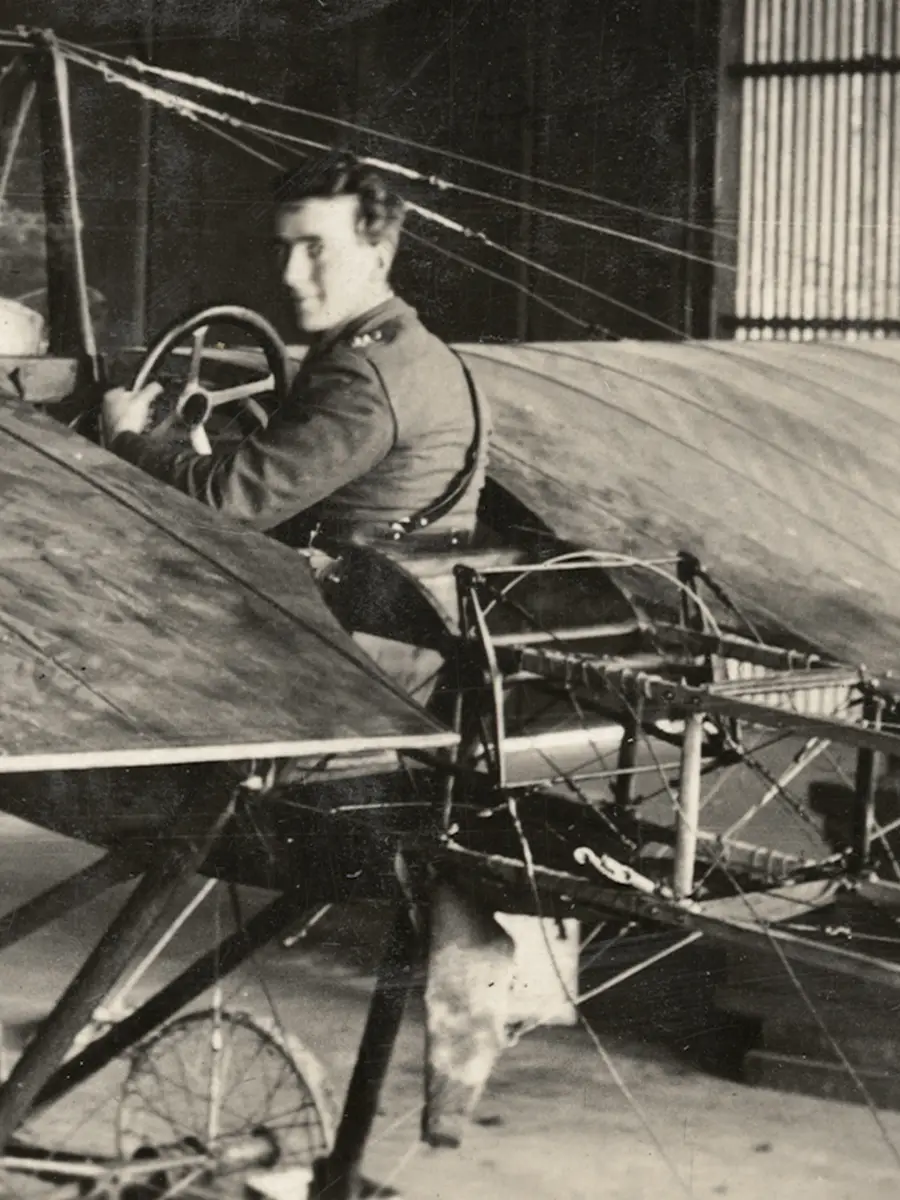
The first aircraft is a Sopwith Triplane, this one was flown by our highest scoring Australian fighter pilot Robert Little with 47 confirmed air to air claims during the First World War.
Robert Little was a very highly distinguished and highly decorated Australian pilot who flew with the Royal Naval Air Service and the Royal Air Force.
The Sopwith Triplane was very good at climbing, that was its main strength, was its ability to turn and to climb really fast and that enabled it to outmanoeuvre German biplane aircraft.
Its main problem was though its engine was not strong enough to fly fast in battle.
The Sopwith Triplane became famous during the First World War because of a fight in which Robert Little was alone against 11 German biplane aircraft.
For over 30 minutes he outflew all 11 aircraft before they all decided to leave because they were running out of fuel.
The mural is really important because it doesn't just talk about or show the technical aspects of these aircraft, there's also a human story to each and every aircraft.
The UH-1 Iroquois is my second aircraft that I've chosen, it is famous and iconic for the Vietnam War.
It was used by all three branches of the Australian Defence Force. Cool thing is Australia was the very first export customer for the Iroquois and it went on to a 45 year career with the Australian Defence Force.
The sounds of the Iroquois, it's a very distinctive waka waka waka sort of noise or thump thump thump and that sound was famous for our Vietnam veterans.
It could mean help's coming, it could mean you're getting out of there, out of trouble or you're going into trouble and also overseas, it could mean also your life's about to be saved.
And the Iroquois was a revolutionary aircraft for the Australian Defence Force because it enabled our people to get into places which were inaccessible to fixed wing aircraft and it was used to rescue, to drop supplies to thousands of Australians during flood disasters and famines overseas.
It's been used in peacekeeping operations in the Middle East, all over the world by Australians, so it's a very important aircraft.
The third aircraft I've selected is the C-130 Hercules. The C-130 Hercules was introduced into Royal Australian Air Force service in 1958.
The Hercules are still in service over 60 years later.
The Hercules is revolutionary because of its ramp, its roll-on roll-off capabilities, the ability to land on all types of airfields, it can fly long distance, it can carry a lot of troops and supplies and they also are very reliable, they're very good to maintain.
It has been involved in every type of operational or peacekeeping mission that Australia's done since 1958. And for members of the Australian Navy, Army, Air Force, veterans, it's become part of the furniture.
It is so famous, it is iconic.
The three aircraft which I spoke about today cover different chapters of Australia's military aviation and they are all depicted in the mural here in Aircraft Hall.
I hope it reminds them that in this place of story, every one of those aircraft tells a story, not just of the men and women who flew them, but of the men and women who maintained them, of the operations on which they served, of the families who worried for those who were flying them and engaged with them.
But I think it's ultimately that idea that this is a place of story and even the mural itself has a story.
I hope it inspires people to look up, to think and to engage with this work of art as a total piece, a 250 square metre piece, but also aircraft by aircraft, story by story.
Hidden from public view for over 25 years, the mural is now undergoing careful conservation and will soon be on full display once more.
Come and experience this remarkable mural in person at the Australian War Memorial’s Aircraft Hall.