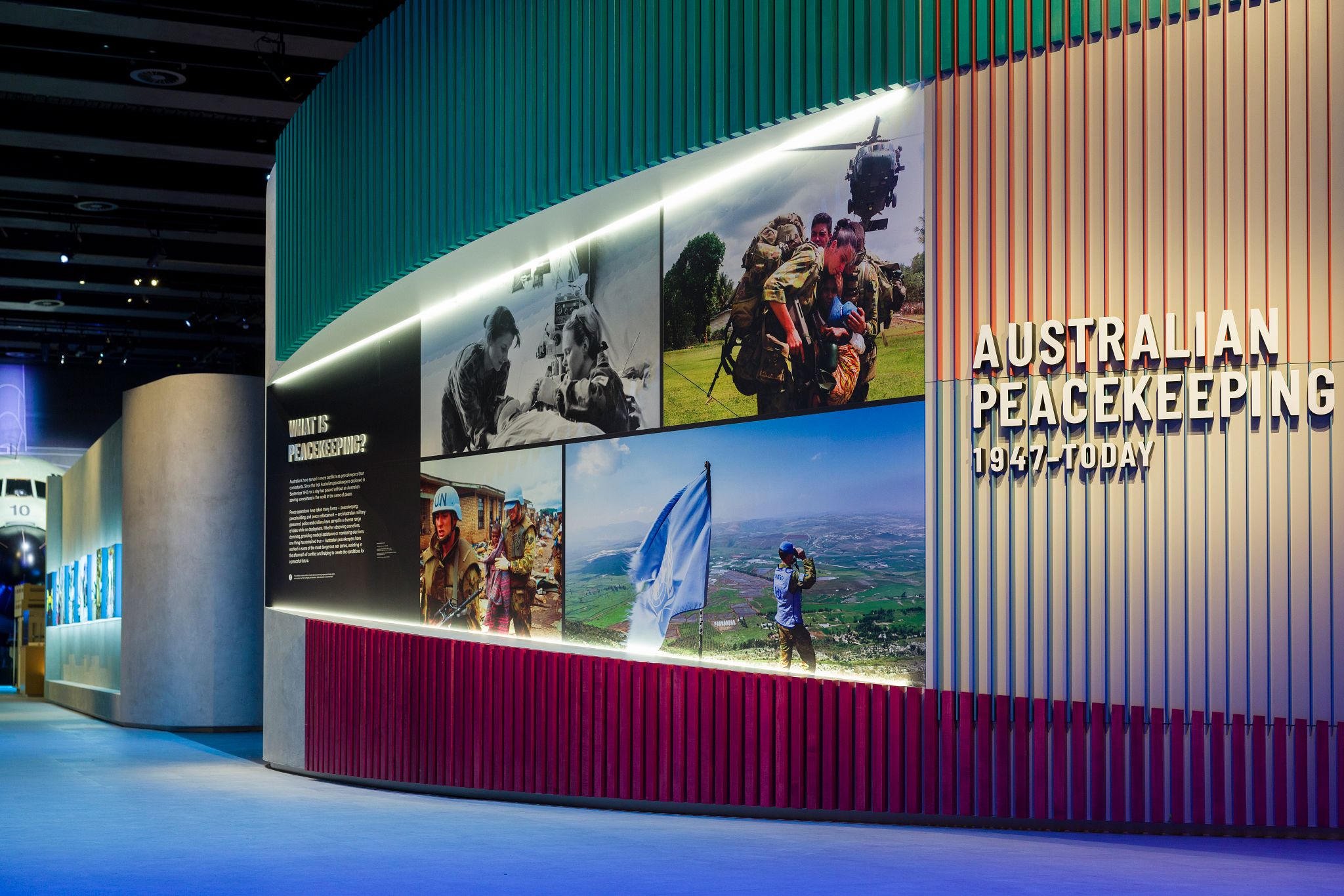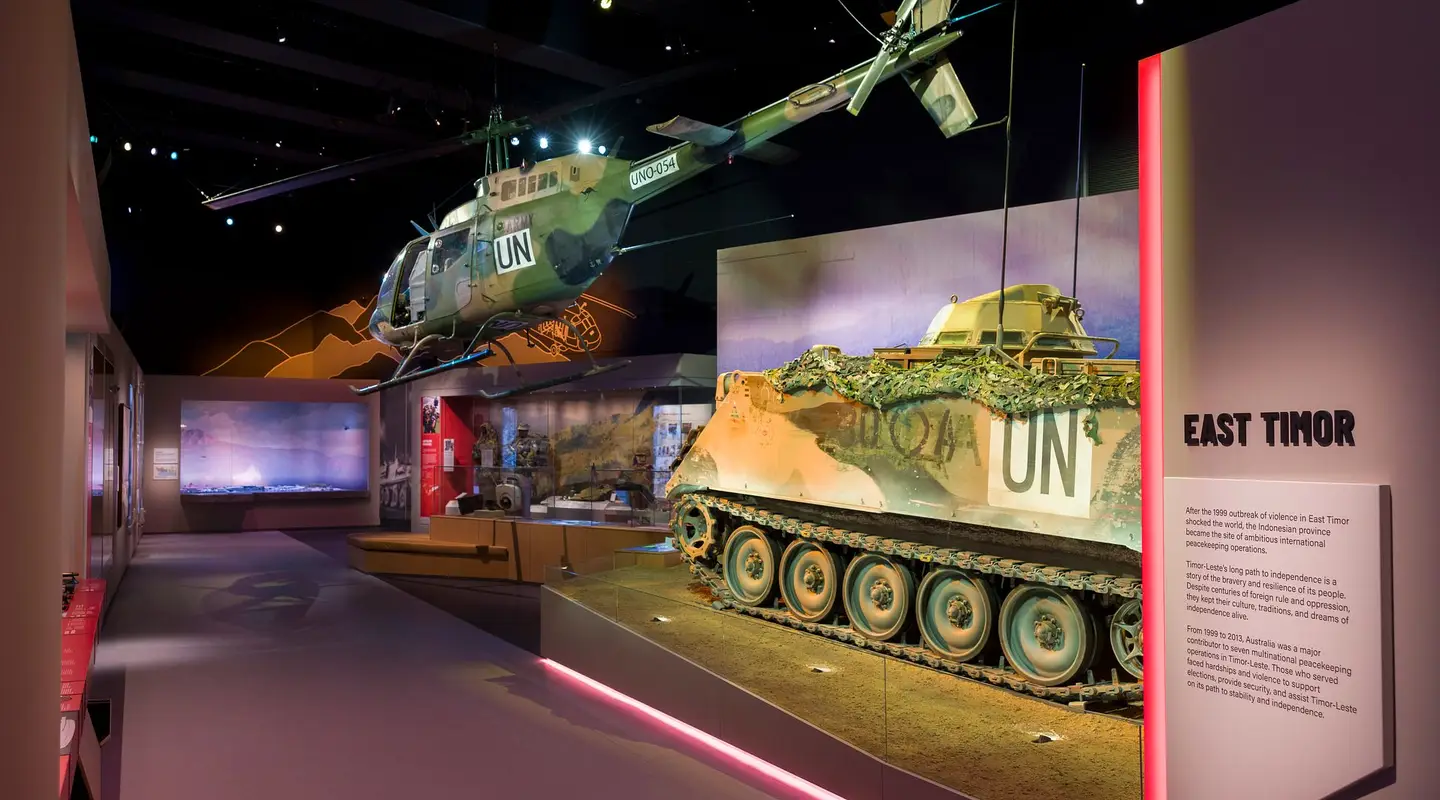
Go behind the scenes of the Memorial's new peacekeeping gallery and discover how curators brought more than 75 years of Australian peacekeeping service to life.
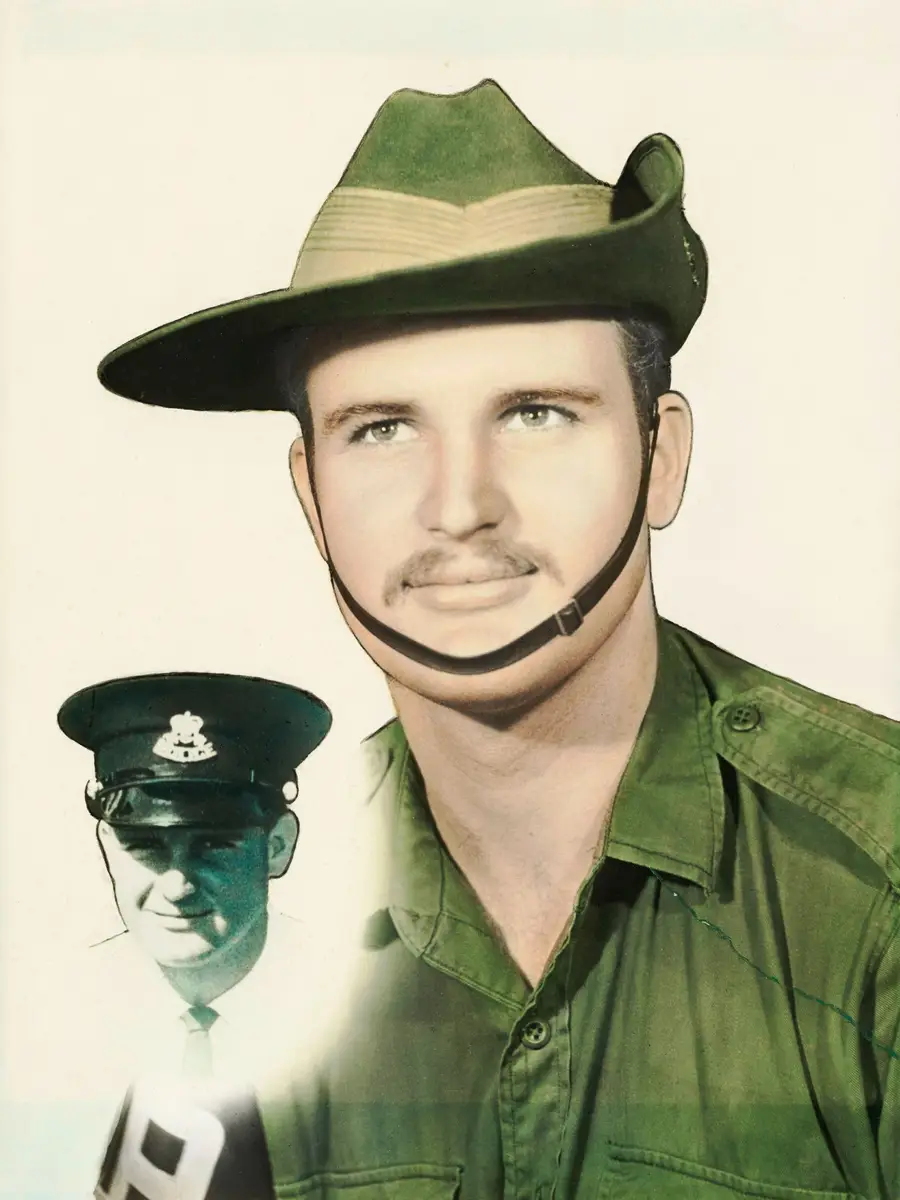
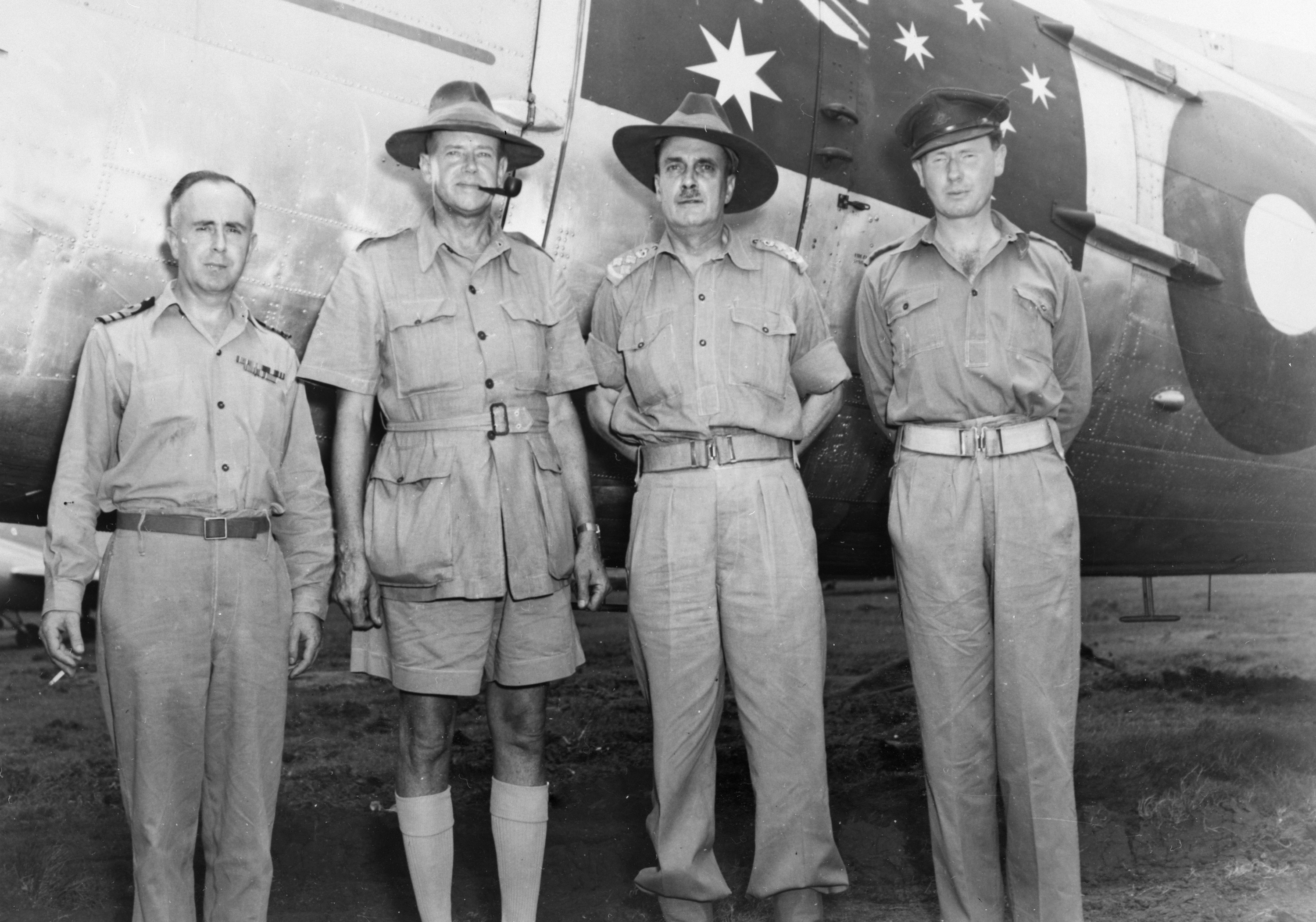
On the 14th of September 1947 four Australians – Brigadier Lewis Dyke, Major David Campbell, Commander Henry Chesterman and Squadron Leader Lou Spence – arrived in Yogyakarta. They were there to monitor a shaky ceasefire between Dutch forces and Indonesian independence fighters in Netherlands East Indies (today’s Indonesia) – making them the world’s first peacekeepers.
Since then, not a single day has passed without an Australian peacekeeper serving somewhere in the world.
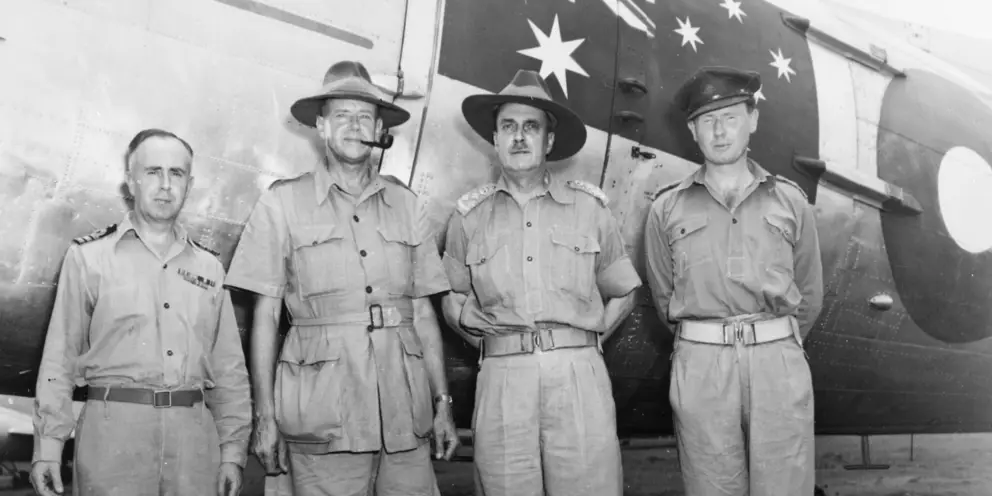
Three of the first four Australian peacekeepers stand in front of an aircraft with Charles Eaton.
There is no official nominal roll of those who have served in Australian peacekeeping, but an estimated 60,000 Australians have served on a peacekeeping operation. These deployments have included members of all three services, as well as Australia’s state and federal police, civilians from the Department of Foreign Affairs and Trade, and personnel from other government departments, including the Australian Electoral Commission.
Telling a complex story
Australia has a long, complex and proud history of peacekeeping.
Telling that history is not straightforward. It is not a linear narrative; the peacekeeping gallery needs to jump across time and space. It is a story more than 75 years long that spans four continents and multiple, often unrelated, conflicts, each requiring its own unique peacekeeping response.
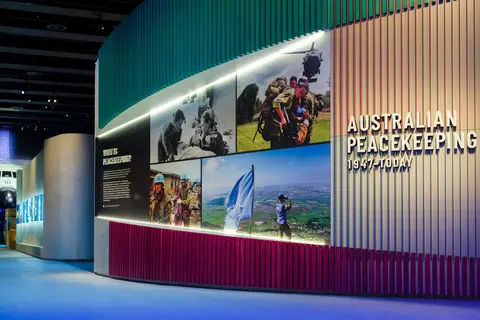
Australian Peacekeeping: 1947 to today gallery. Photo by David Whittaker AWM26.PR.016
How do you break this complex story down and present it in a coherent narrative for the general visitor, while also making it meaningful to veterans who know their deployment so intimately and have often been profoundly affected by their experiences?
We realised that the best way to present these complex histories to the public is to hear from the people who have lived through them. Since 2019, we have talked to hundreds of veterans of Australian peacekeeping operations.
It also became clear that the stories we tell do not begin with Australian boots on the ground. To explain why Australia sends personnel to assist people far from home in the aftermath of war, we need to look at what preceded the deployment. As much as possible, our gallery looks at the history of the country and the conflict to which Australians were sent as peacekeepers.
These conversations and insights helped shape the new Australian peacekeeping: 1947 to today gallery.
Building the new gallery
Visitors will discover a gallery divided into five zones, each exploring a different aspect of Australia's peacekeeping story.
The first zone provides the who, what, where, when and why of Australian peacekeeping, introducing the people, places and missions that have shaped more than 75 years of service.
One of the key features is a showcase of nine uniforms worn on Australian peacekeeping operations, representing (among others) military observers, police officers, heavily armed infantry and civilian election monitors. Together, they reflect the diverse roles Australians have undertaken in peacekeeping missions.
In this video, Senior Curator Melissa Cadden explores how this showcase was developed and the curatorial work involved in bringing these stories together.
The peacekeeper showcase is our introductory showcase for the exhibition.
When we were first conceiving the gallery, one of the approaches we wanted to take was telling the history of Australian peacekeeping through the experiences of those who were there.
So we've built this showcase around nine mannequins, each representing the service of a particular person, and the showcase shows that diverse, complex craft of peacekeeping and the diverse range of skill sets involved.
One of the things that we wanted to get across was Australian accomplishment in peacekeeping operations.
Australians were the first in the field in 1947, and we've continued that engagement to the present day.
So we wanted to get across that breadth of service and the fact that Australians are well regarded internationally for their contributions to international peacekeeping.
We have the story of Major General Cheryl Pearce in the showcase, and that's representing her role as the Force Commander for the United Nations Force in Cyprus.
And she led a multinational force of over 800 troops from 15 nations, all working to de-escalate tensions and prevent fighting between the Greek Cypriot and Turkish Cypriot communities. And Pearce is the first Australian to hold this position, and she's the first Australian woman to command a UN force.
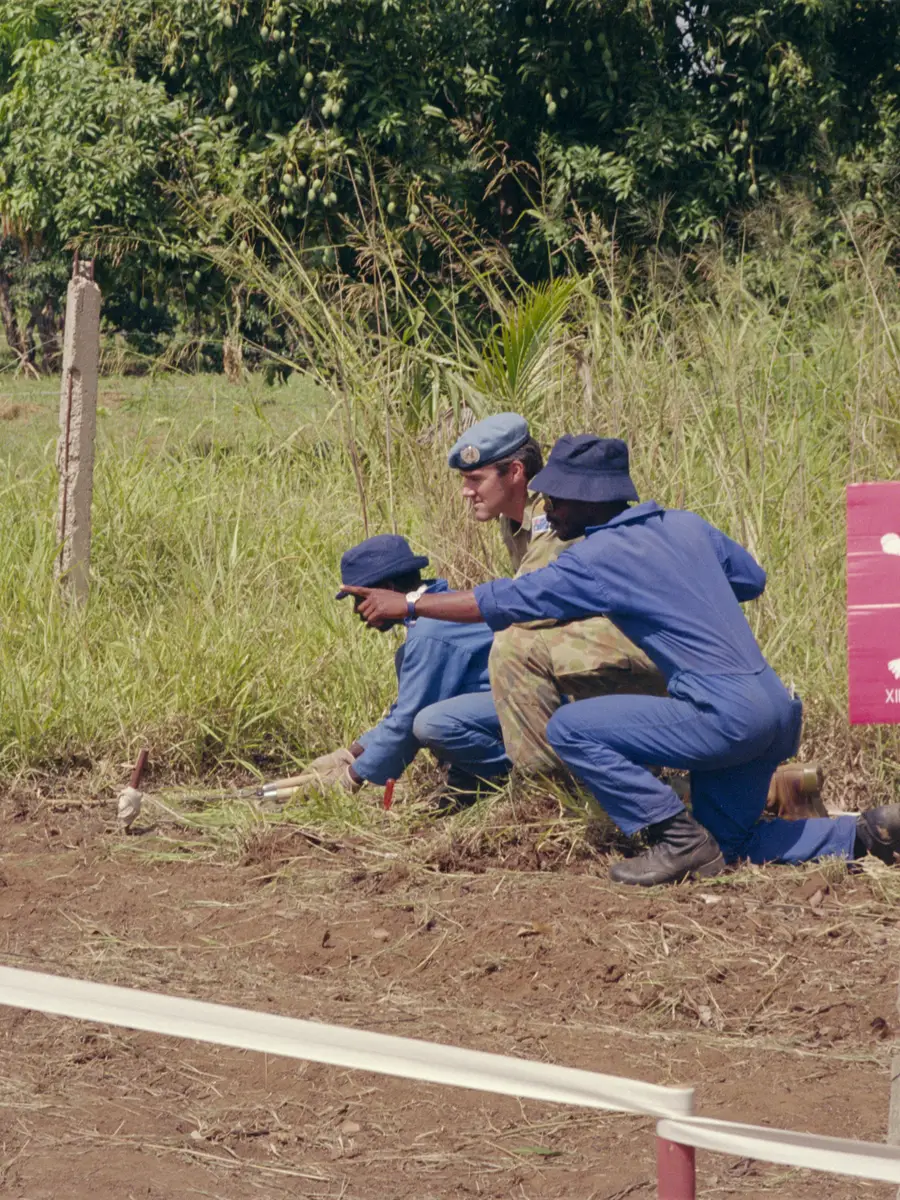
Another story in the showcase is around humanitarian demining and Australia's contribution to demining operations around the world.
And demining is a really crucial form of peacekeeping. It enables landmines to be removed so humanitarian aid and movement across land can take place.
But what Australians have done in humanitarian demining operations is to empower the local communities in those places to deal with the threat of landmines.
So they provide education on identifying and dealing with landmines and removing landmines as well.
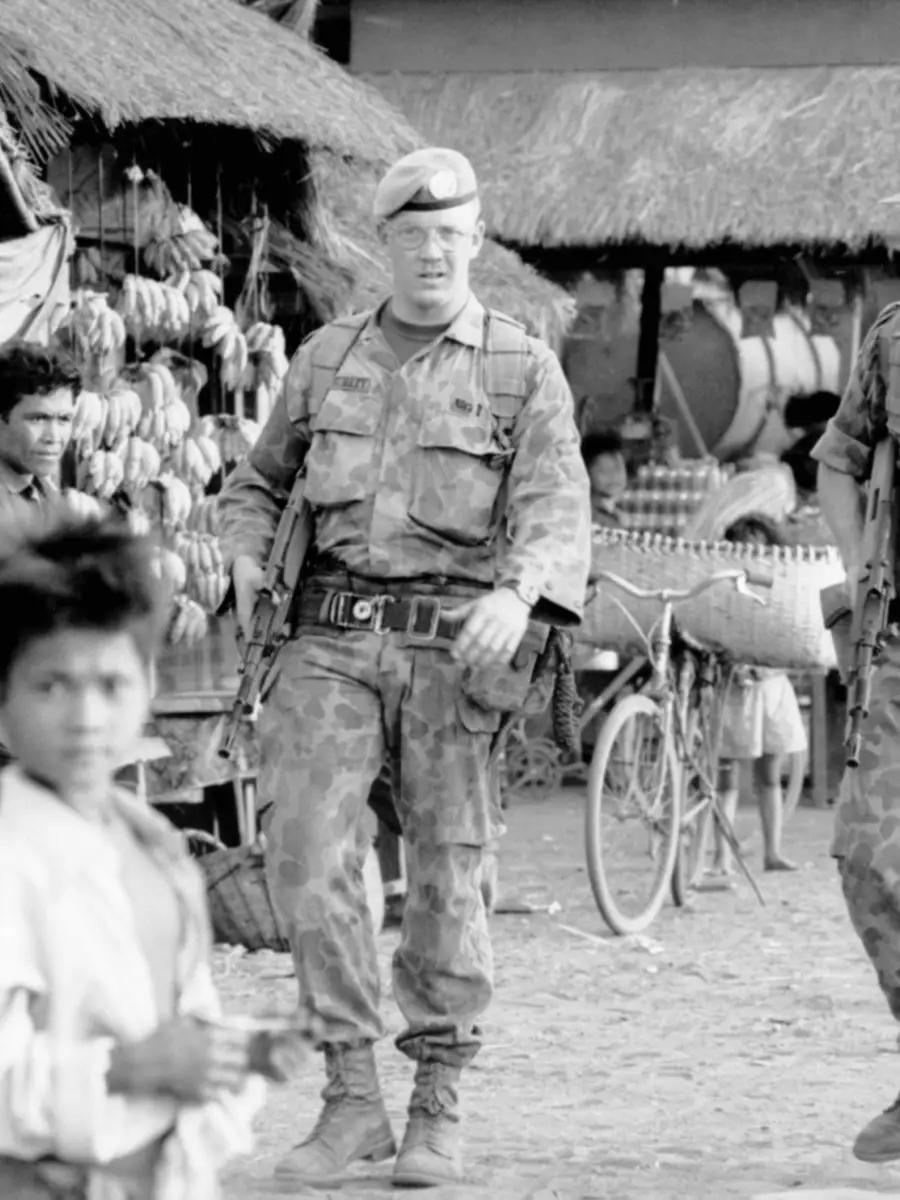
The process of holding free, fair, transparent and non-violent elections is really important in peacekeeping to create stability.
And Australia's been engaged in operations such as Cambodia where we've deployed in order to protect that electoral ballot process.
What we wanted to do is include uniforms that were actually worn on the particular operations that we were speaking about so we could tell their story.
One of the fundamental philosophies of this gallery was that we wanted to treat peacekeeping really holistically.
We wanted to include multiple perspectives in different points of view in the exhibition, and we wanted to get across people's lived experience of these operations.
We've been able to create a really strong sense of the diversity of experience within peacekeeping operations.