Some objects hold more than memories. They carry traditions that have connected generations in remembrance.
The Memorial’s National Collection includes two special objects: the oldest wreath in the collection, laid by the Duke of Gloucester in 1934, and a cloth poppy worn by First World War veteran Stanley Nettleton Mason at the Memorial’s official opening on Remembrance Day in 1941.
Both reflect traditions that continue today. Wreath laying and wearing a red poppy remain important ways to honour and remember those who served.
In this video, explore the history and meaning of these objects, learn how they are cared for in the National Collection and discover why these traditions remain part of our commemorations today.
Poppies became a symbol of remembrance even before the First World War, going back into 19th century literature and folklore.
They're associated with everlasting sleep or eternity. They took on significance more associated with the dead of the First World War.
The soldiers' folklore was at springtime when the red poppies came up and started blooming in the fields, it was representative of the blood that had been shed in those Flanders fields.
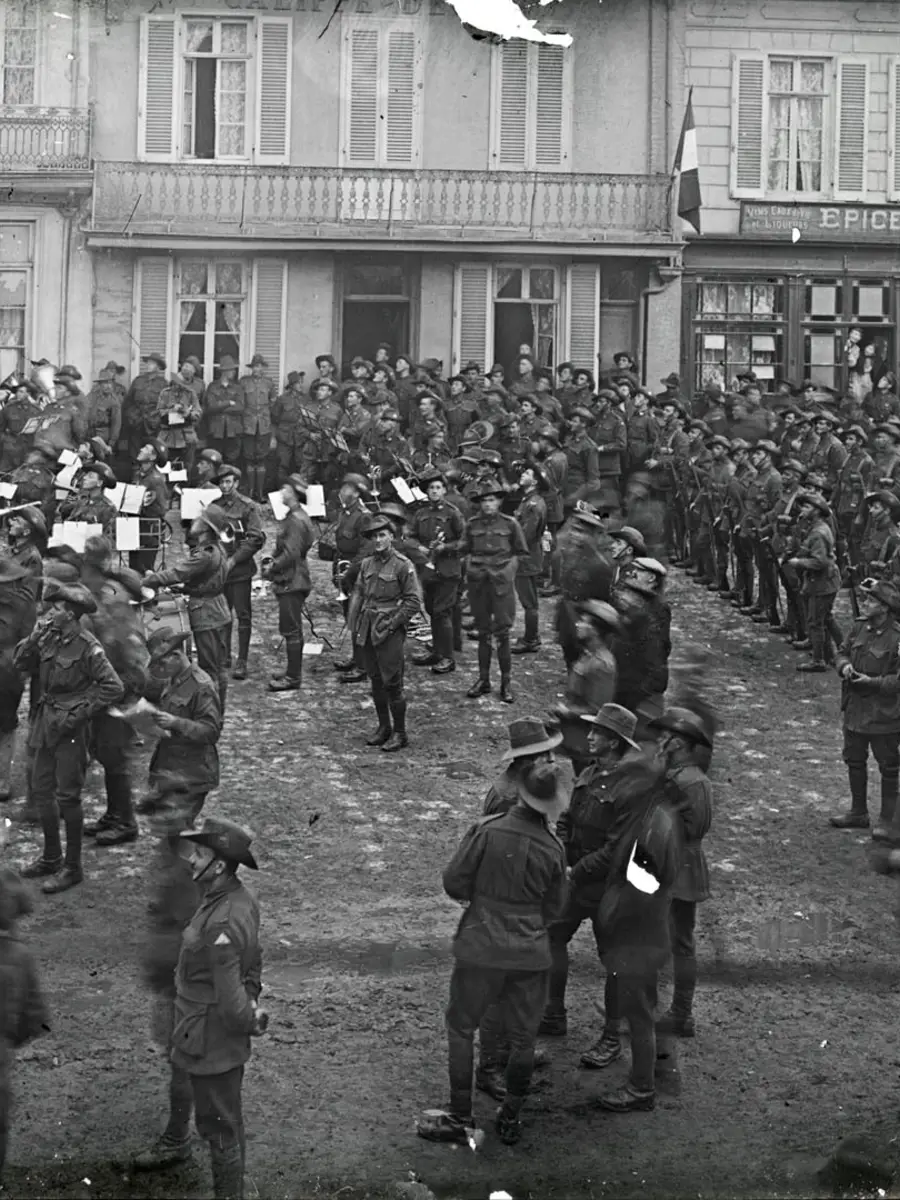
This wonderful poppy was the poppy that all veterans who attended the opening of the Australian War Memorial on what was then Armistice Day in 1941, they were presented with a poppy to wear, and this one, Private Mason, carpenter from Queanbeyan, from the 18th Battalion, he wore this on that day and it's been preserved.
The Duke of Gloucester was King George V's son. When he came here to Canberra, he came to the site of the Australian War Memorial, which was then being constructed, and he wanted to plant a tree here.
The sapling had been propagated from a pine cone sent back from Gallipoli in 1915.
The story was that there was an Australian soldier who took part in the attack with his brother, and his brother was killed in the attack on Lone Pine.
And after the attack, the surviving brother ripped a pine cone off one of the Turkish logs that had covered their trenches, and then sent it back to his mother, who he knew would be grieving for the lost son.
She then propagated the pine cone, and the sapling grew, and the Duke laid the wreath next to the pine tree.
So both these objects have been preserved here at the Australian War Memorial as part of our collection of historic artefacts.
With the wreath, some of the flowers are silk, but some of them are crepe paper that has been soaked in wax, coloured wax, and then formed into the shape of petals. They're very fragile. You could easily break one off.
We make sure that they're housed in acid-free enclosures. We make sure that they're not subjected to changes in relative humidity and temperature and shock.
And they're also enclosed in a light-proof box so that we don't get light damage, which would pretty quickly fade them if they're exposed to UV.
When people see the wreath, they'll feel a connection to the past. It symbolises the continuation of the wreath-laying tradition and of the poppy tradition, but also a continuation of the idea of Armistice Day and Remembrance Day being that day when we, as a nation and as a Commonwealth, remember the war dead.