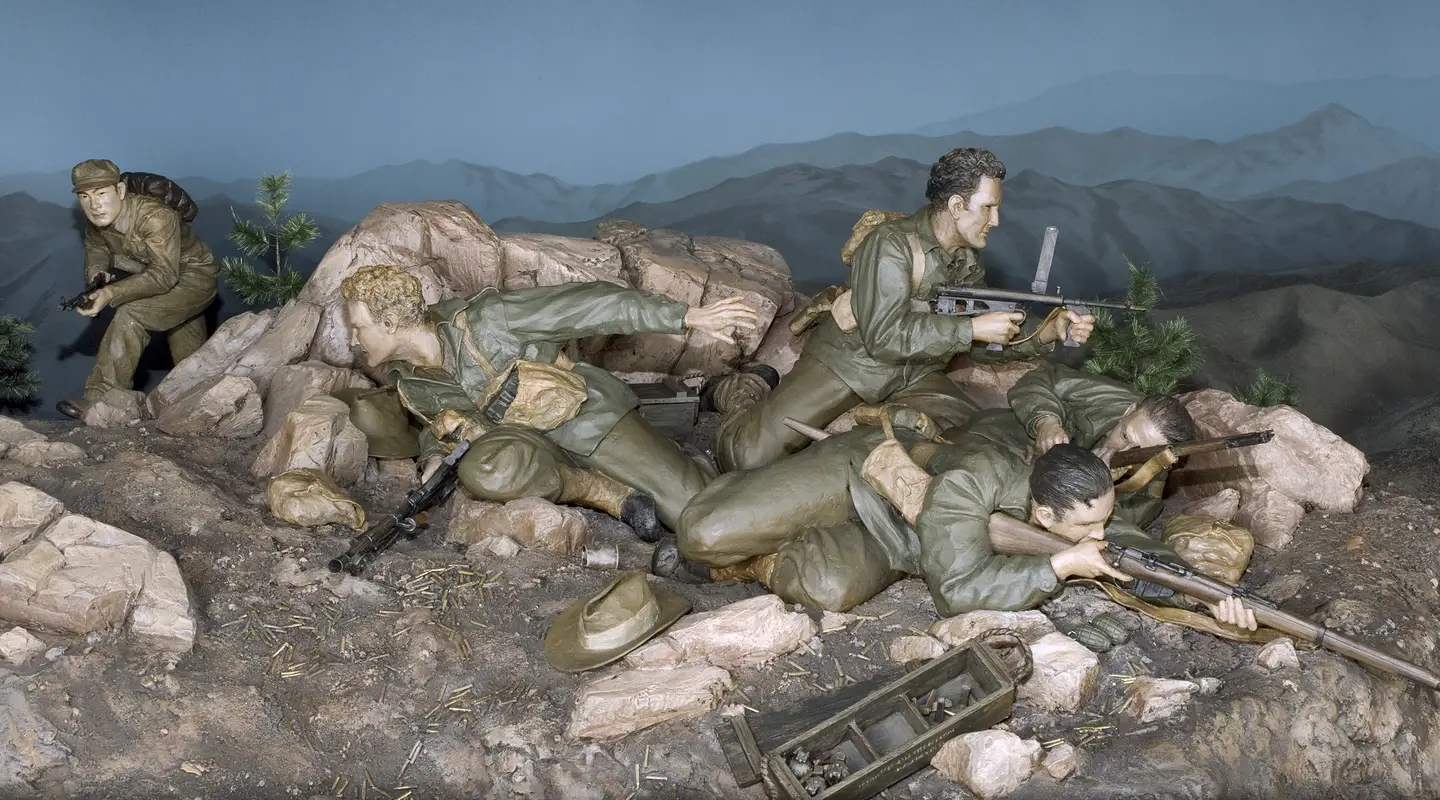
Seventy–five years ago this week, one of the most significant battles in Australia’s military history was fought in the hills and valleys to the north of a little, but tactically significant, village called Kapyong.
From the war’s outset in June 1950, South Korea’s capital, Seoul, had changed hands four times as the war raged up and down the Korean peninsula. On 22 April 1951, as part of their broader Spring Offensive, Chinese forces routed a South Korean division at the head of the Kapyong Valley, driving broken soldiers and frightened civilians before them as they advanced south to once again threaten the capital.
Standing in their way was the 27th British Commonwealth Infantry Brigade, which had been in rest positions near the village of Kapyong, sitting astride a significant east–west road, giving those in control of the valley a direct path to Seoul.
While the British battalions and brigade headquarters prepared to leave Korea, the 3rd Battalion, the Royal Australian Regiment (3RAR) and the 16th Field Regiment, Royal New Zealand Artillery Regiment, prepared to join the incoming 28th Brigade while the 2nd Battalion, Princess Patricia’s Canadian Light Infantry (2PPCLI), prepared to join their own brigade as it arrived from Canada.
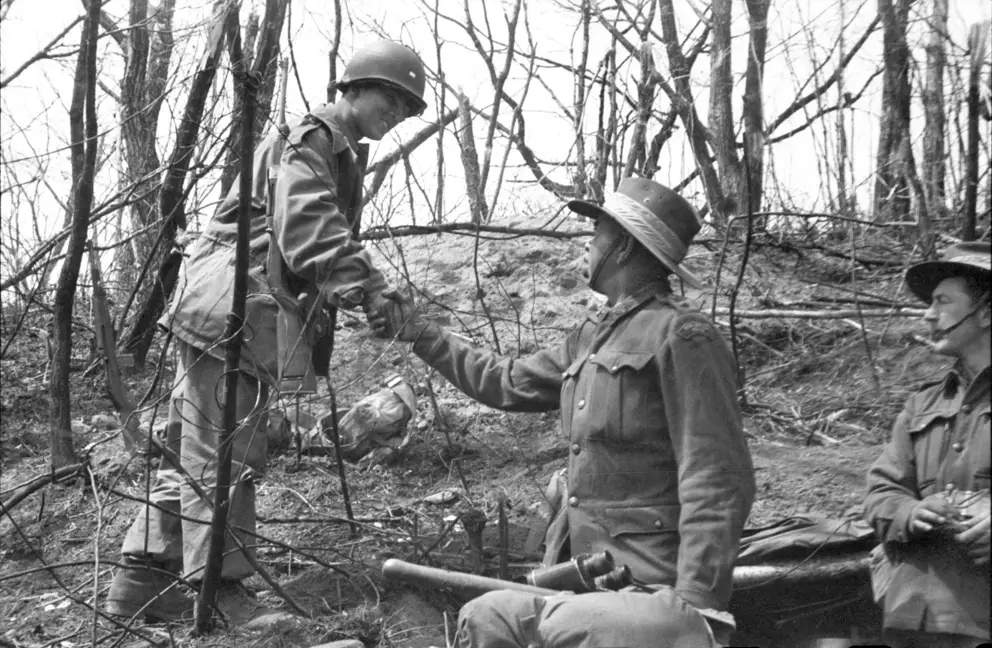
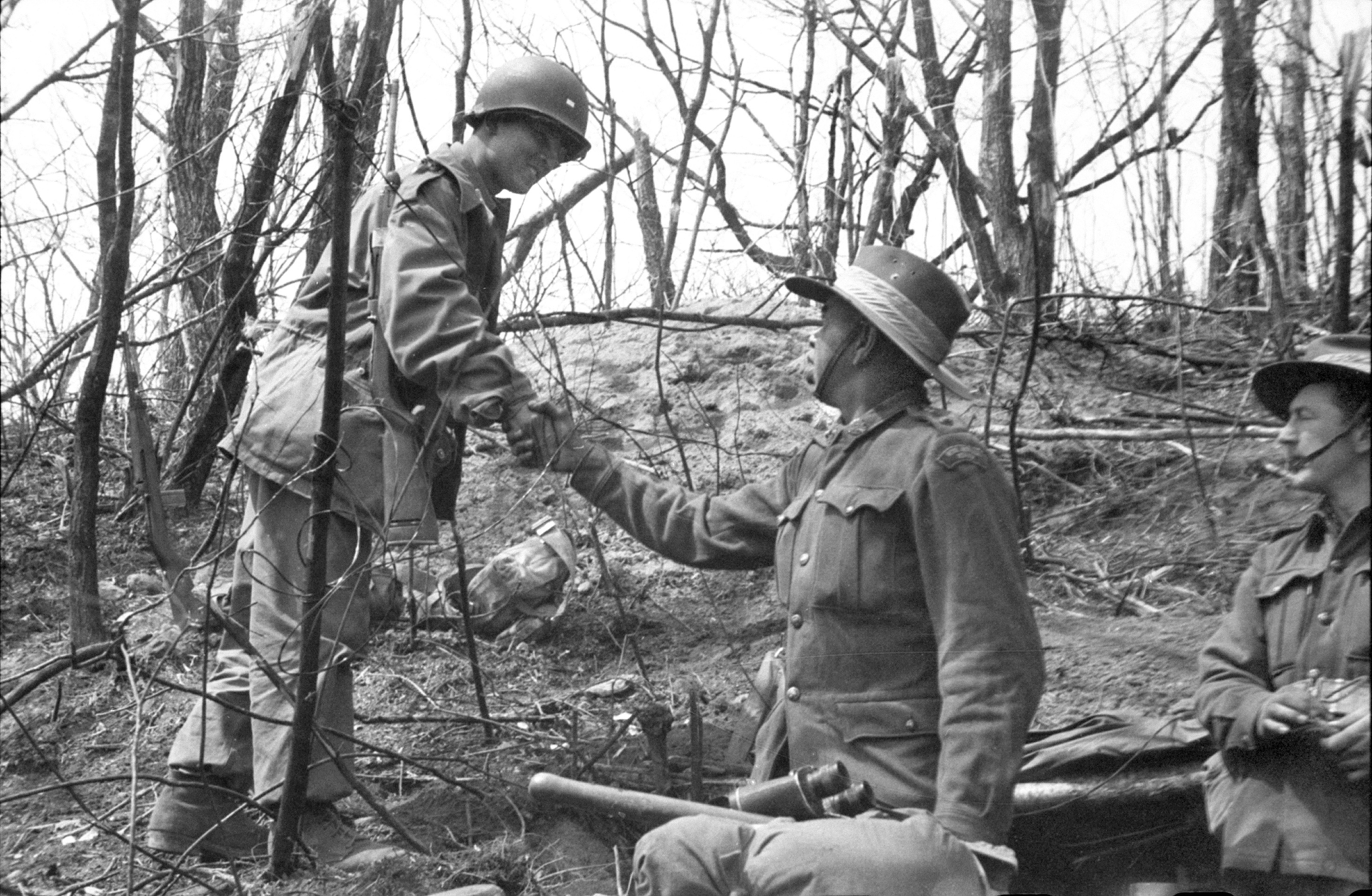
This image was taken when 3RAR handed over to the South Koreans prior to going into rest positions
For the men of 3RAR, the rest had come at an opportune time. Weeks of hard fighting had left the men worn out, and the chance to shower, be issued new uniforms and eat hot food soon restored their equilibrium.
Anzac Day, the 46th anniversary of the Gallipoli landing, was only days away and the men prepared to commemorate the event.
Private John Murphy served previously in the Irish army before emigrating to Australia in 1949. He joined 3RAR as a reinforcement in March and recalled:
“We were going to have a get together with the Kiwis [and] with the Turks. The Turkish Brigade was only a few kilometres away … that would have been a historic event because … they were meeting again as friends.”
Private John Murphy
Murphy’s father had served with an Irish Battalion on Gallipoli alongside Australians, and both father and son held the Australians in high regard. The Turkish brigade commander, Brigadier General Tahsin Yazici, had fought the Australians on Gallipoli and had taken a demotion to lead his brigade to Korea, where he once again encountered the Australians, this time as friends.
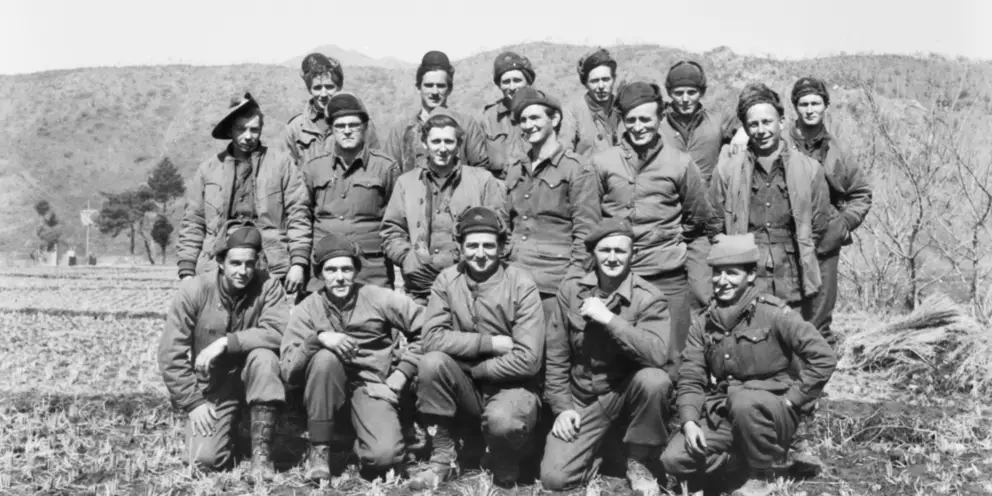
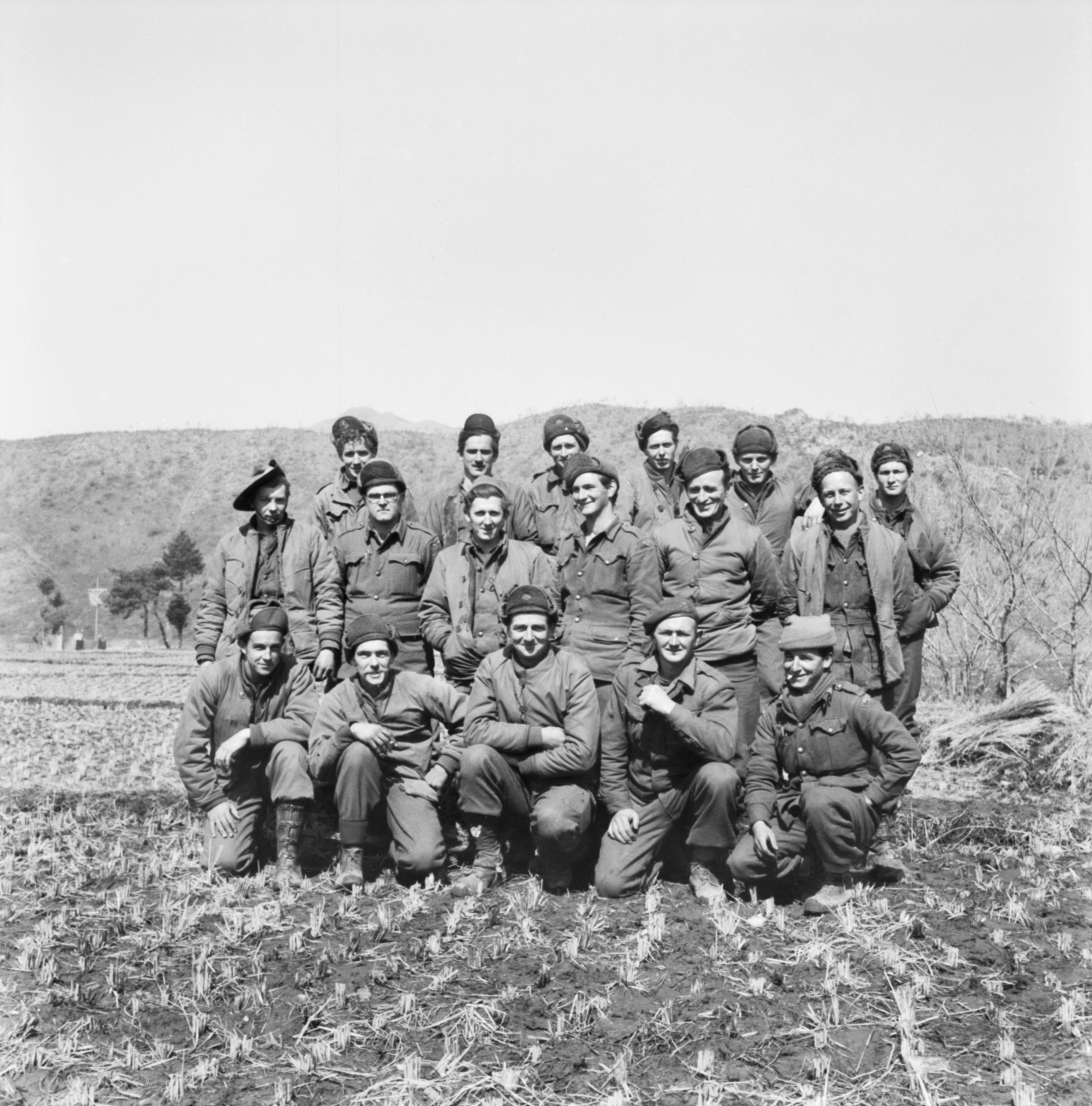
John Murphy (back row, second from right) with members of 1 Platoon, A Company, 3RAR. Photographer: Ian Robertson.
But another Murphy arrived to spoil the picnic.
In the early hours of 23 April, the Australians were called to occupy a series of hills to the east of the road leading south to Kapyong with the Canadians occupying hills to the west of the road. By the afternoon, the New Zealand gunners and the Middlesex Battalion occupied positions further south.
By mid-morning the Australians knew all was not well, as the sounds of fighting to the north grew louder and what had started as a small stream of fleeing civilians and South Korean soldiers became a flood.
Murphy’s platoon, 1 Platoon, A Company, occupied the forward-most positions on Hill 504.
“We could hear the shots following the Chinese as they started to intermingle with the South Koreans and refugees … We knew that we were going to be in for it. Sure enough we heard the whistles going.”
The first Chinese probing attacks fell against a platoon of US tanks forward of B Company’s positions. And not long after that, the Chinese attacked in earnest.
We can only imagine how Murphy and his comrades felt as the Chinese attacked.
“they used whistles… to gather them together when they were attacking a position and then they sounded a bugle… they would move up close to your position and start hurling these grenades but luckily enough they were eight second grenades… plenty of time to pick 'em up and chuck them back again.”
Private John Murphy
The Chinese attacked A Company’s positions numerous times throughout the night and only began easing up as the sun rose. “I'd been flattened by a grenade,” Murphy recounted, “but was lucky enough to still function…” Sadly a number of Australians and two of the New Zealand artillery forward observer party had been killed and many were wounded.
Throughout the day of 24 April, Australian casualties continued to mount and as Chinese attacks threatened to encircle the battalion and ammunition began to dwindle, 3RAR was ordered to withdraw.
Late in the afternoon US aircraft accidentally dropped napalm into 3RAR’s positions, killing two members of D Company and severely burning others.
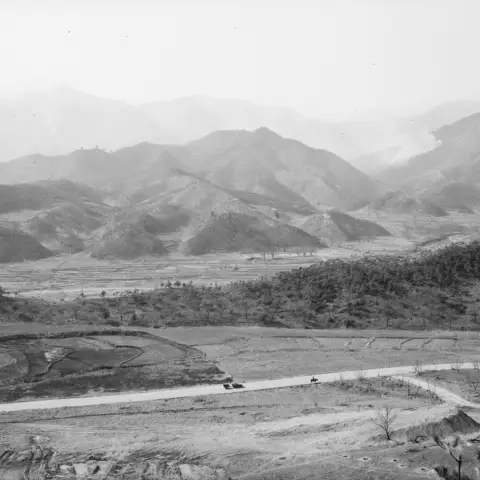
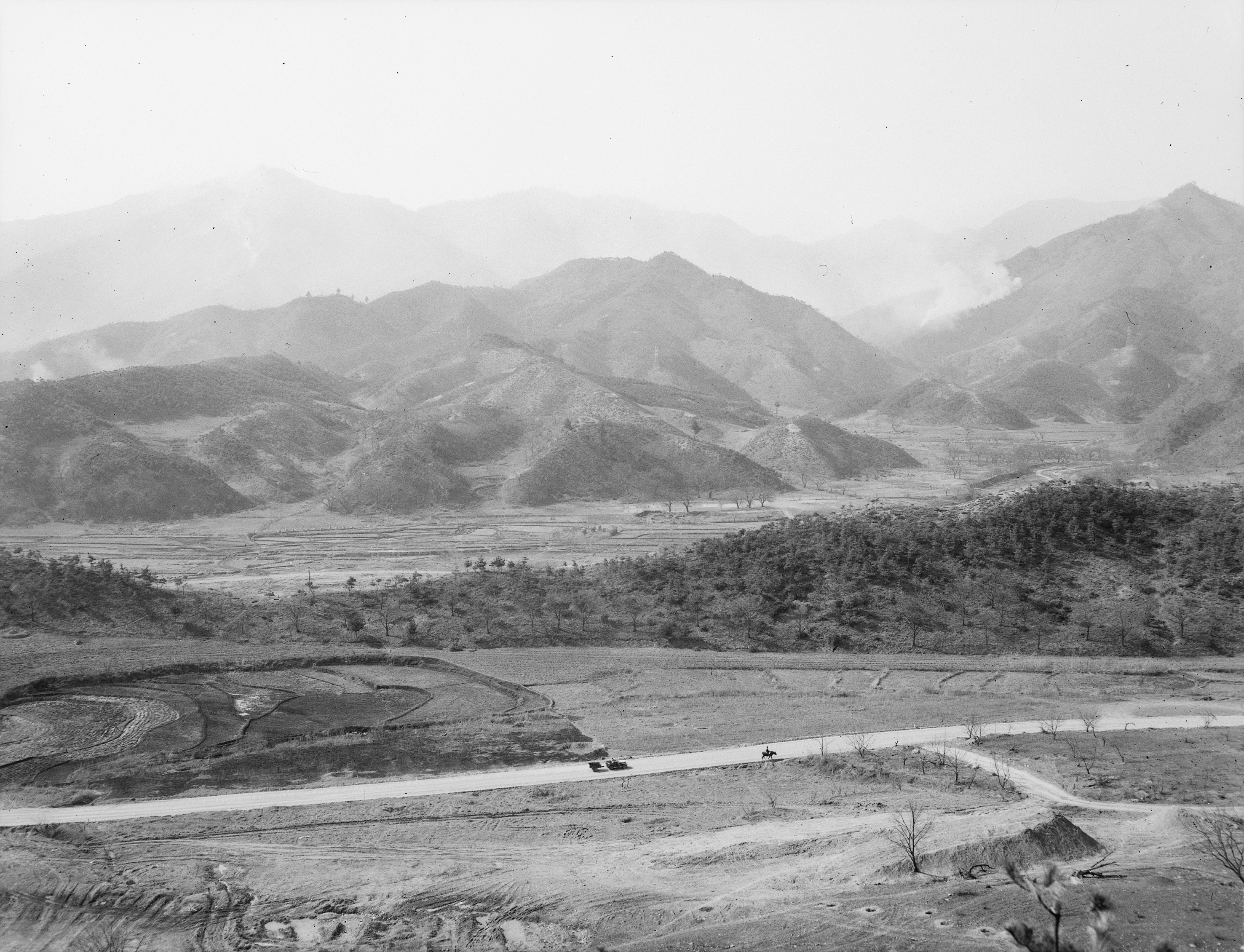
An elevated view of the Kapyong Valley and surrounding hills where 3rd Battalion, The Royal Australian Regiment (3RAR) were in position during the Battle of Kapyong.
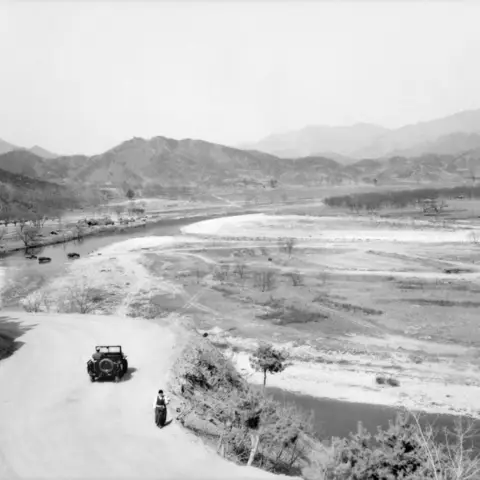
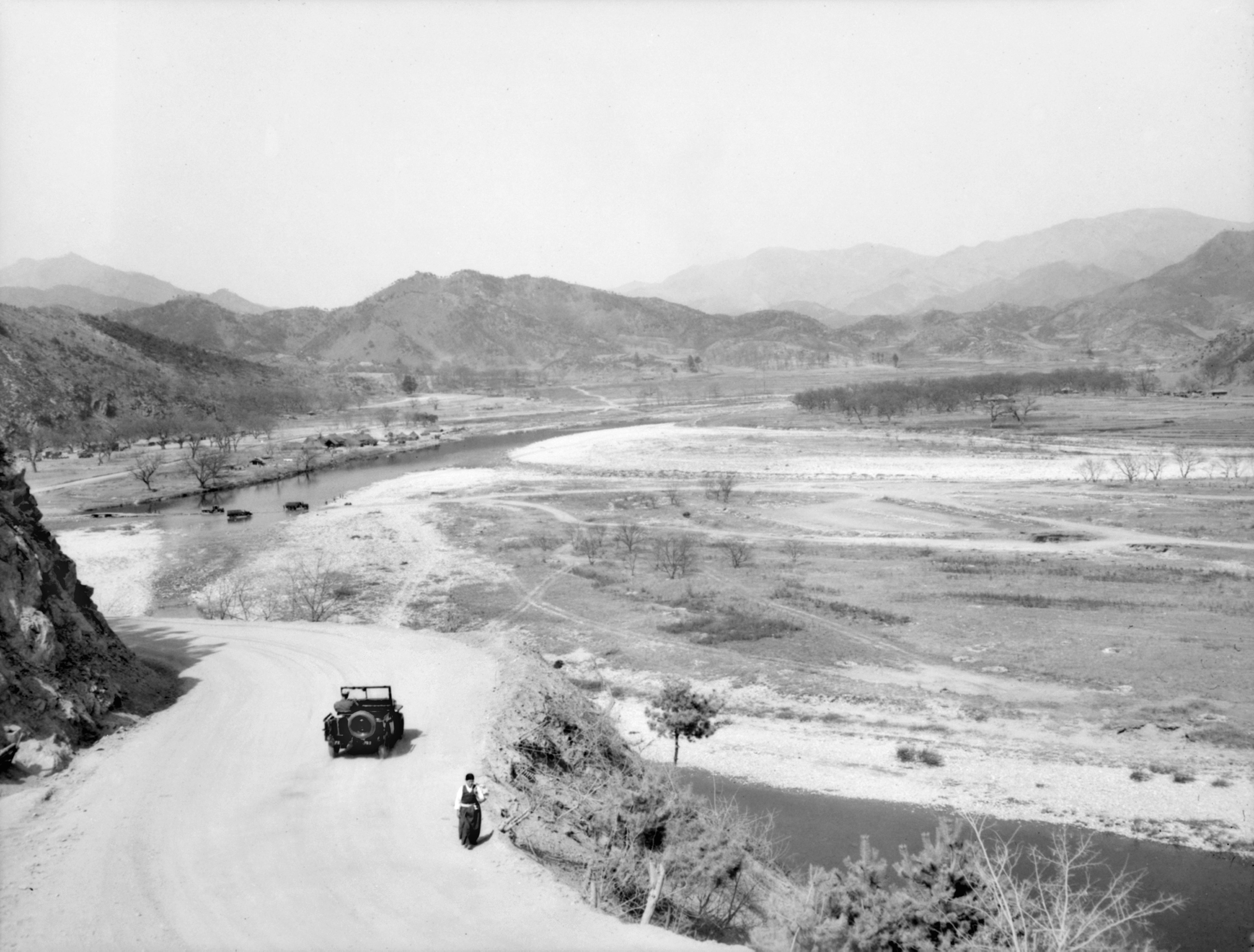
View of the river valley, seen from the defensive positions held by 3rd Battalion, The Royal Australian Regiment (3RAR) during the Battle of Kapyong.
Murphy remembered the aftermath: “we had to tend to them and … when the fighting withdrawal was on, we had to carry them out.” He described witnessing the horrible burns suffered by his comrades and the efforts they made, along with 40 Chinese prisoners of war, to carry the wounded and burned men to safety.
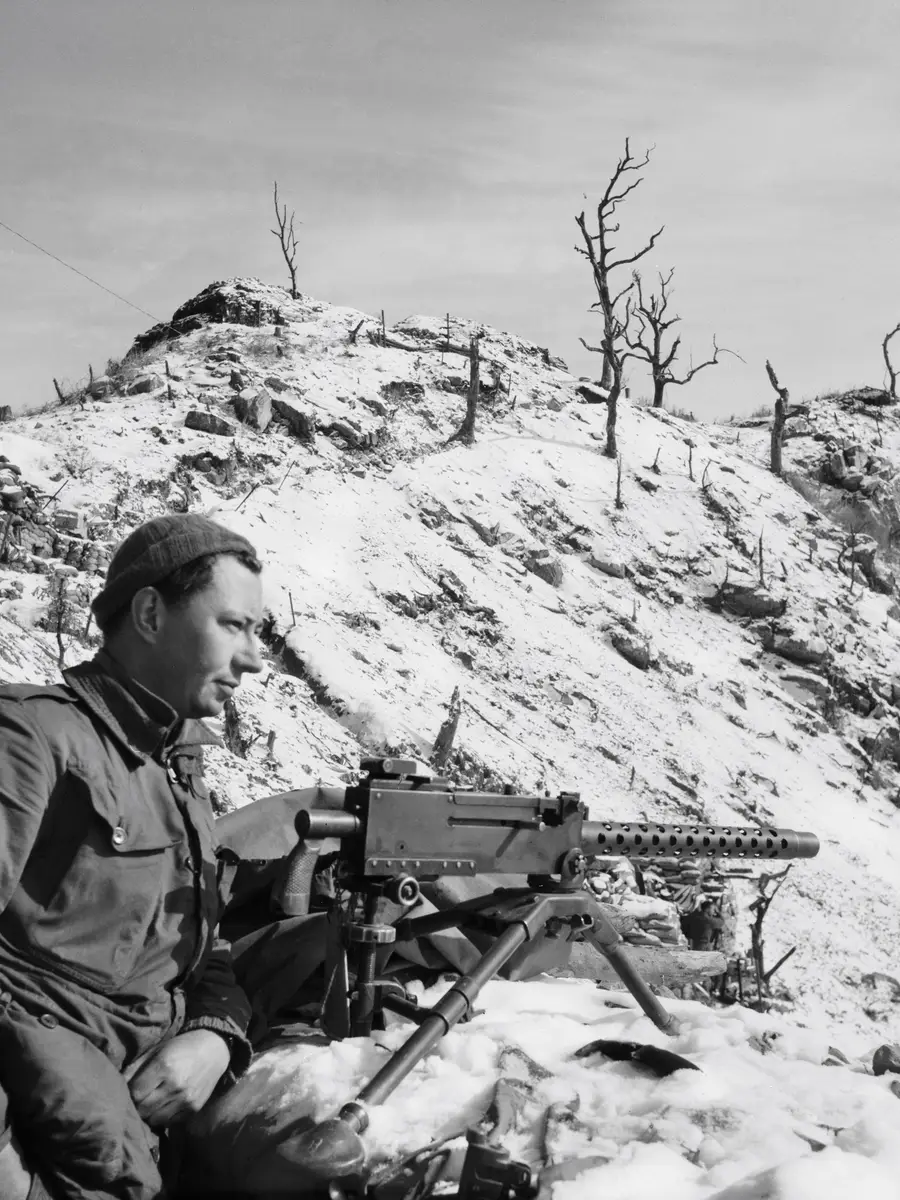
It was a near-run thing, 3RAR withdrew in contact with the enemy, one of the most difficult manoeuvres to accomplish in war. They were assisted by the New Zealand gunners, whose fire support was spot-on. Fire support was also provided by US tanks and the Canadians with heavy machine-gun fire from across the valley.
It was after midnight on 25 April, Anzac Day, that the last Australians entered positions held by the Middlesex Battalion. Murphy’s feelings were clear, even years later:
The Canadians too held firm when they were attacked that day and throughout the next night. Once more, fire support provided by New Zealand artillery and US tanks helped the Canadians stay in place.
The intense fighting cost the Australians 32 men killed or died of wounds and 59 men wounded. Three men were taken prisoner of war, one of whom, Private Horace William 'Bill' Madden, died in captivity and was later awarded the George Cross for his bravery and self–sacrifice.
The Canadians suffered 10 men killed and 23 wounded. Two New Zealanders who were part of a 3-man forward observer party with A Company, 3RAR, were killed and the remaining man wounded. The US tank crews had lost 3 men killed, 12 wounded and two Sherman tanks knocked out.
The passage of time continues to thin the ranks of our Korean War veterans, but the significance of their deeds is still felt today in Australia and the wider Asia–Pacific region. The predominant feeling among the veterans is pride. Not hubris, but pride in the job they did to preserve the security of the Republic of Korea, and pride in watching the country rise from the ashes, becoming one of the most technologically advanced societies in the world and one of Australia’s strongest allies.
As Australia marks the 111th Anzac Day, spare a thought for the veterans on the 75th anniversary of the Battle of Kapyong. The battle stands as a reminder of shared sacrifice, allied cooperation, and the cost of defending peace in a divided world, which matters now more than ever.
Lest we Forget.