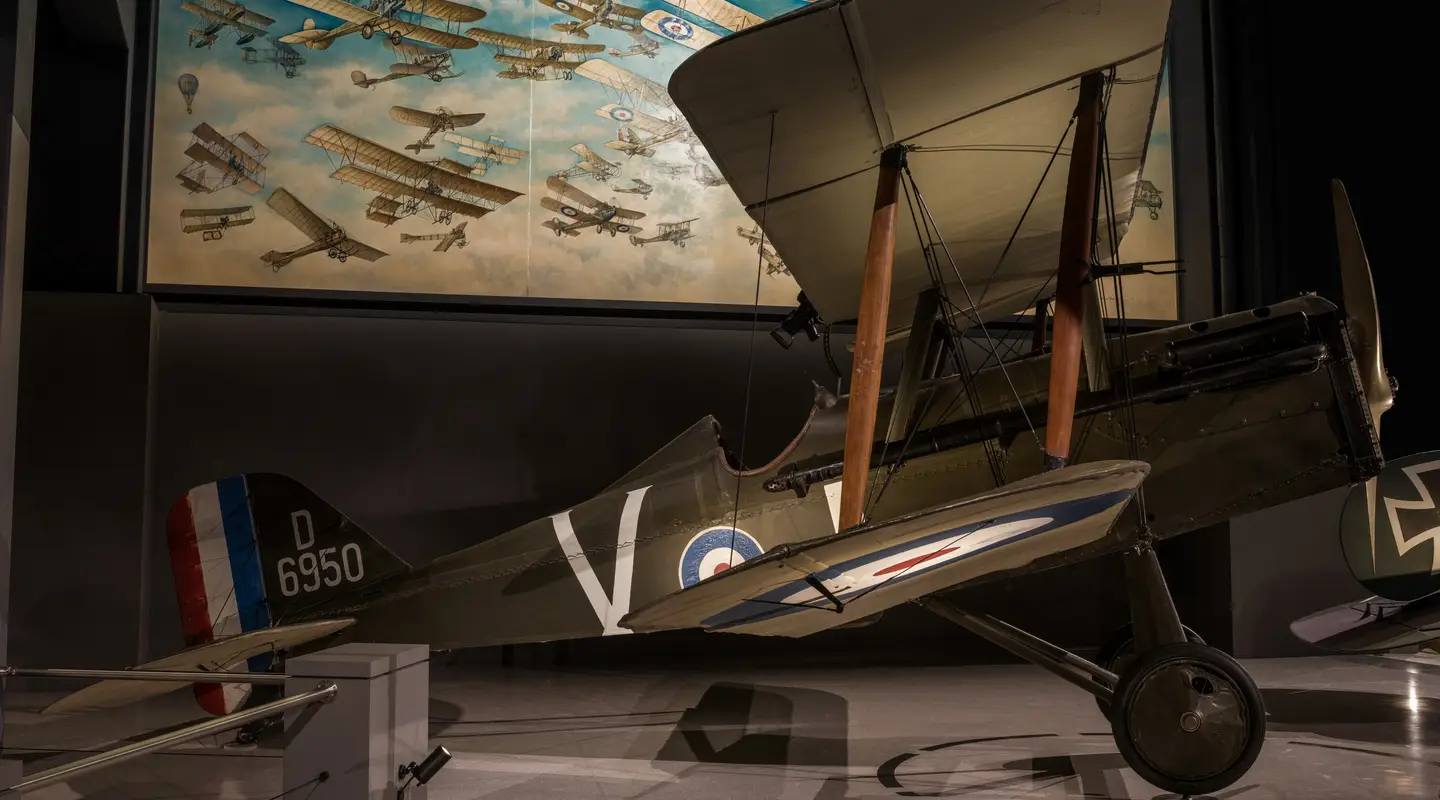
Aircraft Hall has re-opened to the public, marking the return of First World War aeroplanes and once again fully dedicating the space to telling the story of Australian military aviation.
Bringing Aircraft Hall back to life involved much more than moving aircraft into place.
Over two years, curators, conservators, designers and project teams worked together to reshape the space, uncover new stories and create new experiences for visitors.
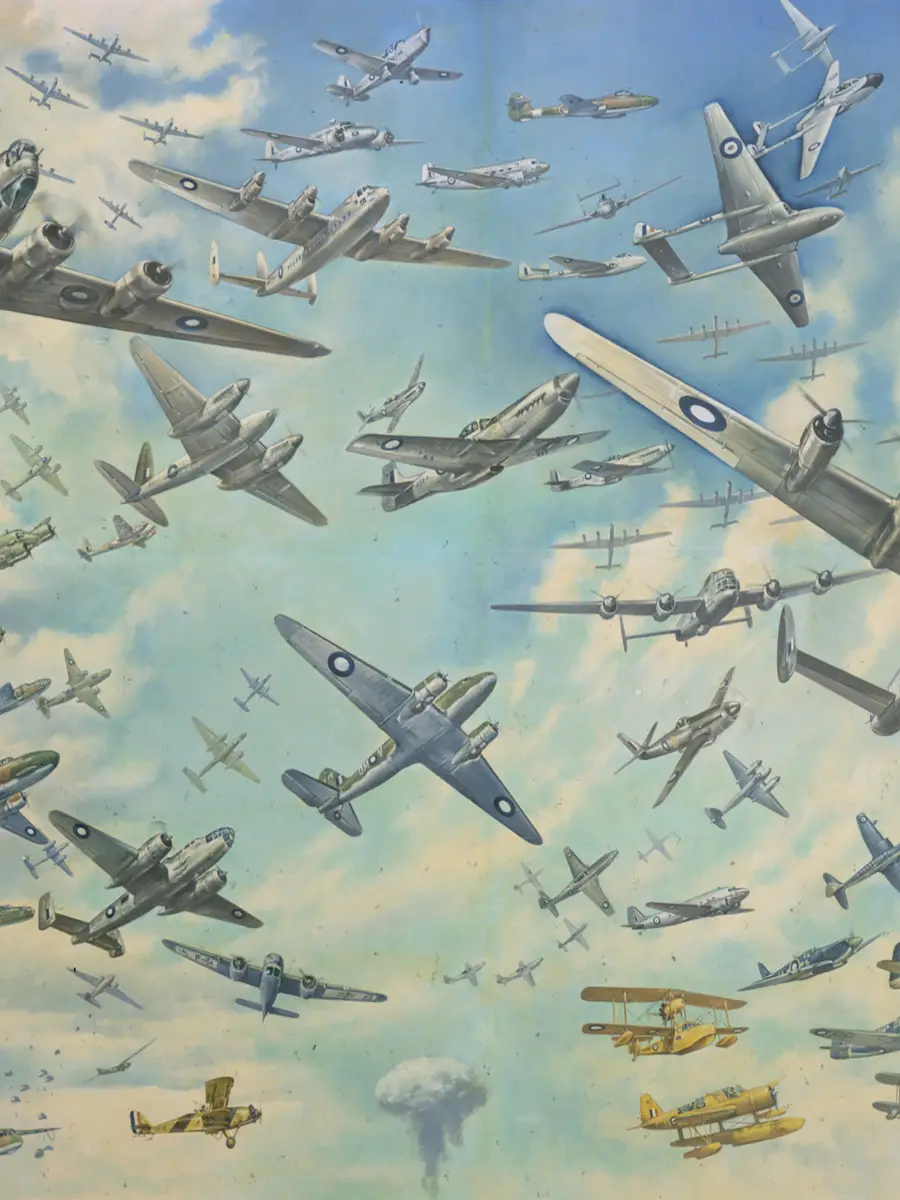
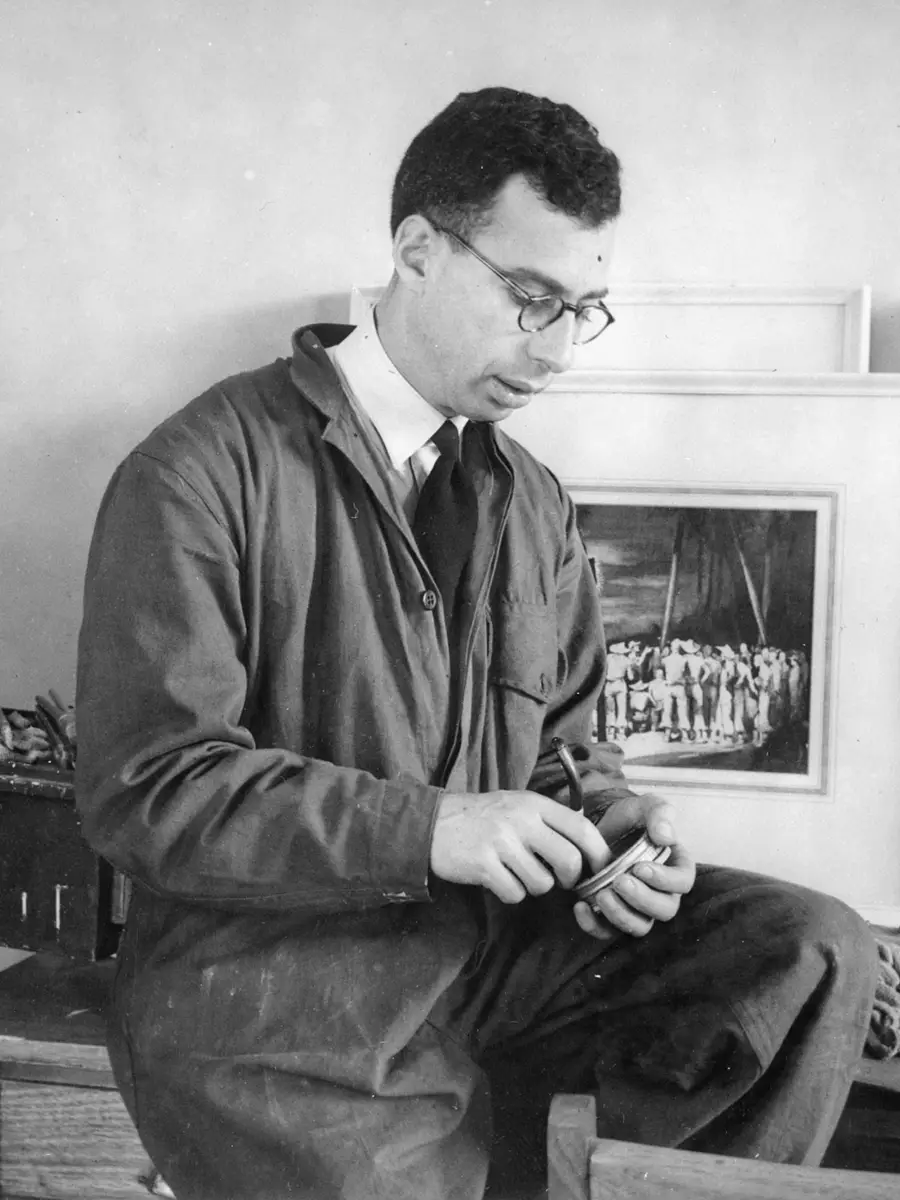
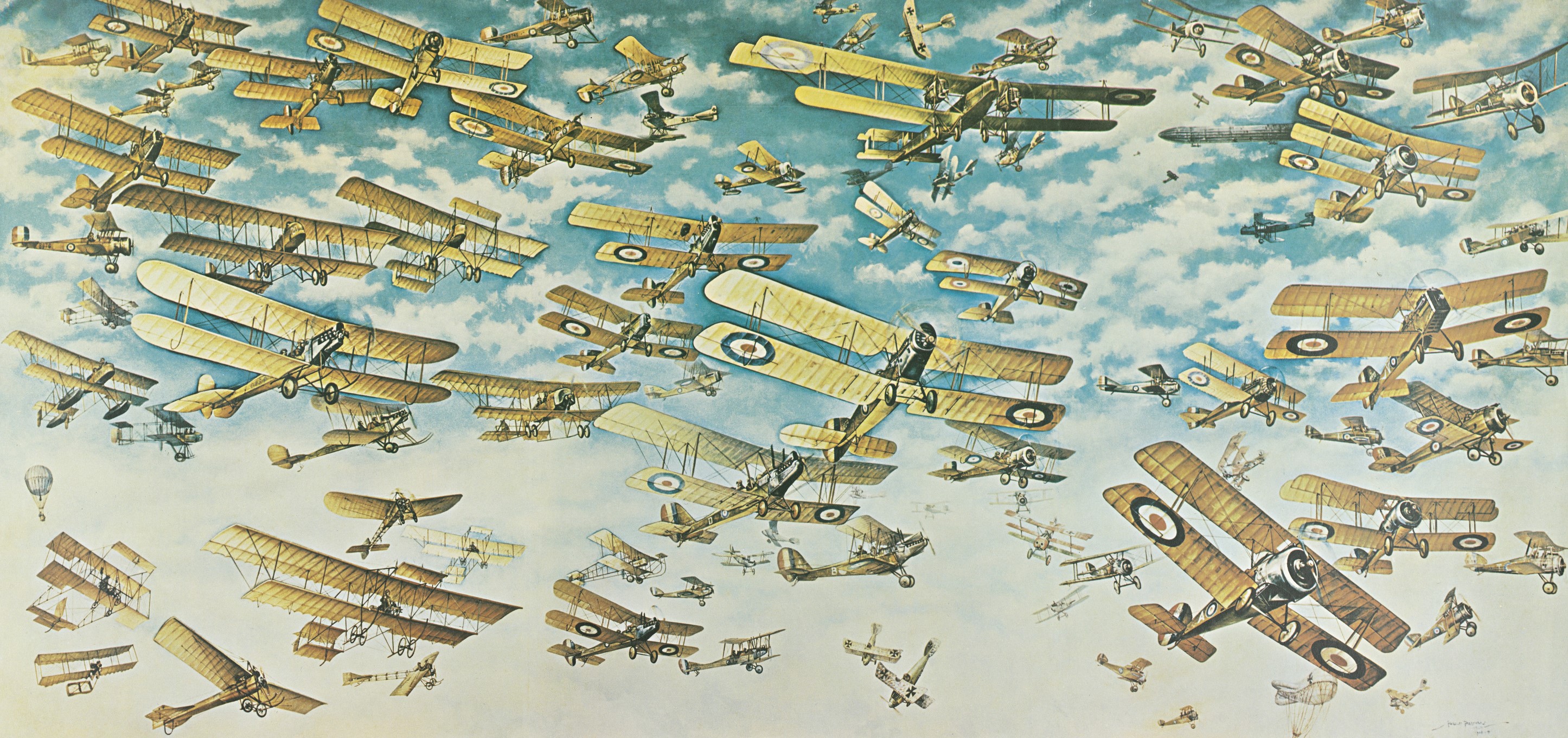
The renewed gallery offers new perspectives on Australia's military aviation history while reconnecting visitors with some of the Memorial's most iconic objects, including Harold Freedman’s Mural of Australian Military Aircraft.
War in the Air: a renewed Aircraft Hall
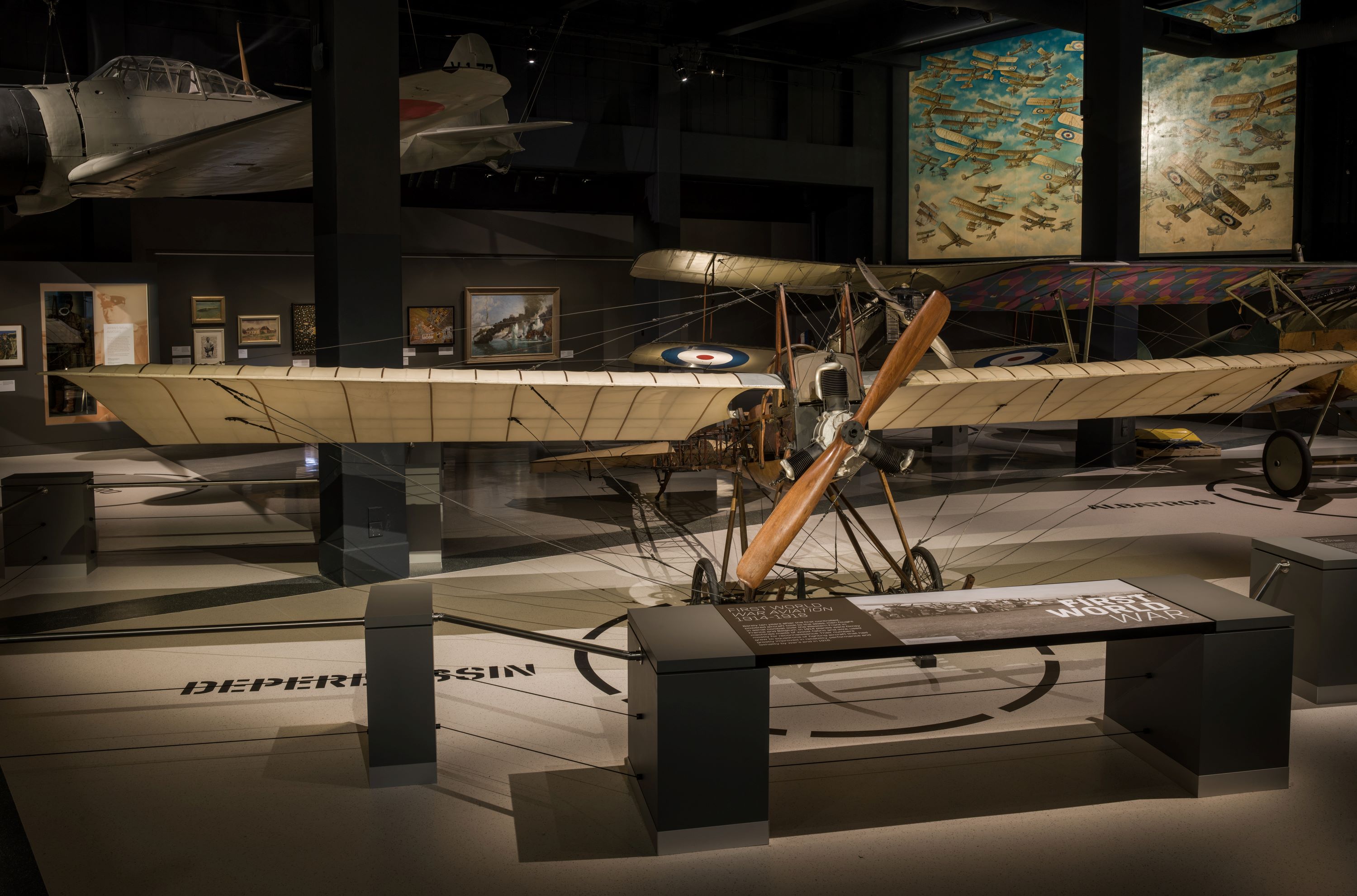
The renewed Aircraft Hall exhibition, "War in the Air", covers Australian military aviation over four decades - from just before the First World War through to the Korean War.
The return of some First World War-era aircraft, long absent from the space, shows the striking contrast between flimsy aircraft made of fabric and wood, and the powerful machines of the Second World War, and those of the Jet Age. The exhibition highlights how rapidly aviation technology changed and also Australia’s close involvement in that transformation.
While much is new, parts of the exhibition have remained unchanged – namely the Korean War section and most of the Second World War "Bombing of Darwin" display.
In retelling the First World War story, curators have re-used content and familiar stories from the previous "Over the Front" exhibition in the old Anzac Hall.
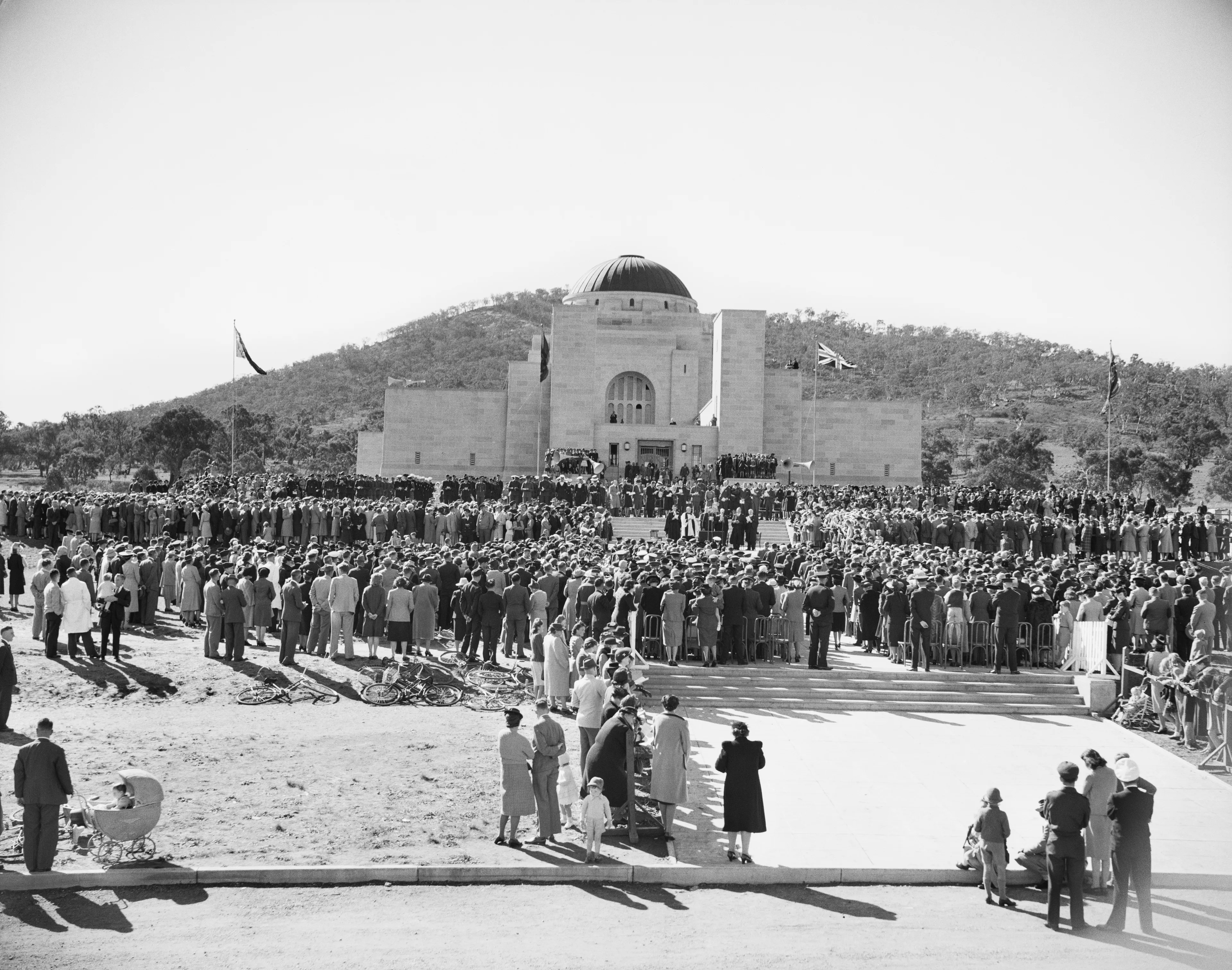
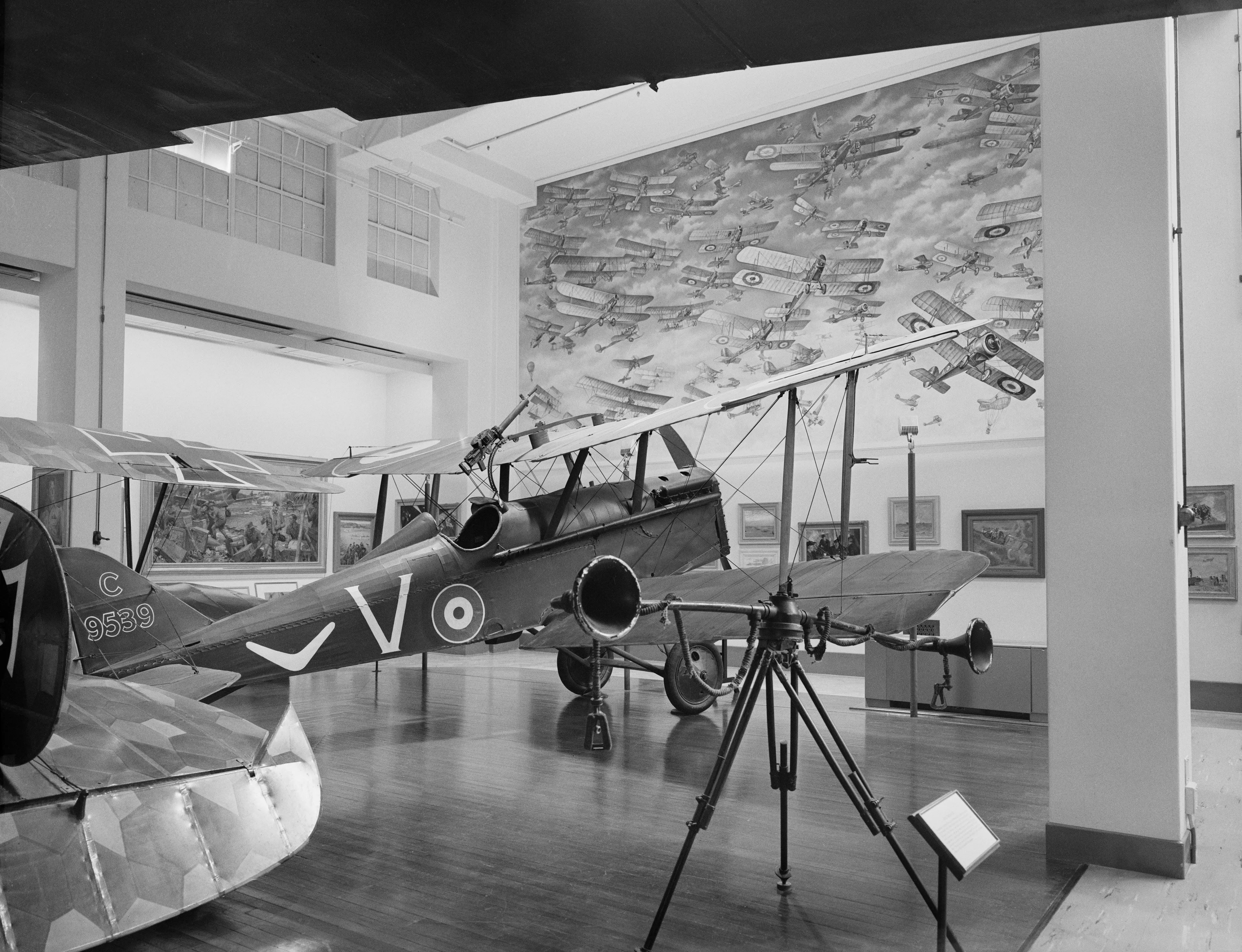
Importantly, the gallery itself is part of the story. When the Memorial first opened on 11 November 1941, this space (then known as Aeroplane Hall) was dedicated to telling the story of aircraft and the war in the air.
Over the decades it has evolved through several incarnations: many visitors will remember when Lancaster bomber G for George dominated the space, or later when it became Bradbury Aircraft Hall, home to "Air Power in the Pacific 1941–1953".
Today, "War in the Air" reconnects the gallery with its original purpose while reinterpreting Australia’s aviation story for a new generation of visitors.
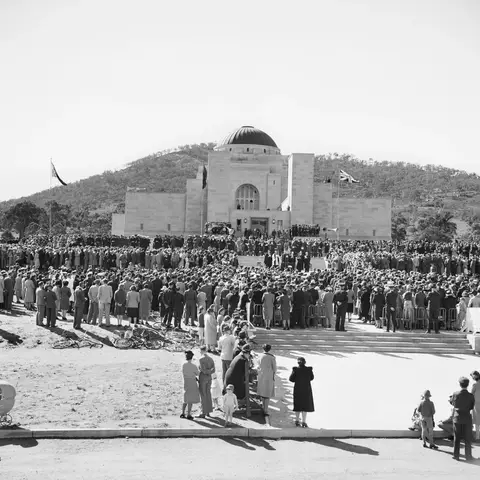
Onlookers line the front entrance of the Australian War Memorial at the ceremony for the building's opening in 1941.
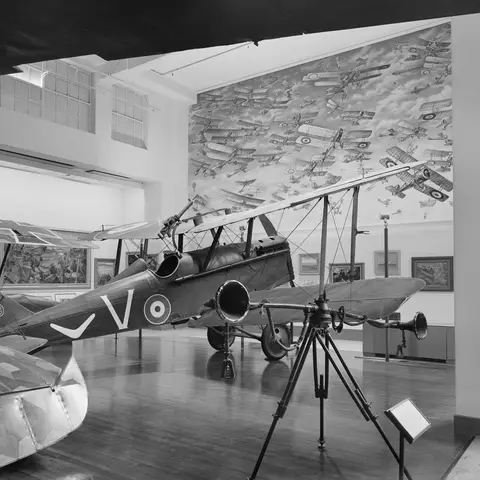
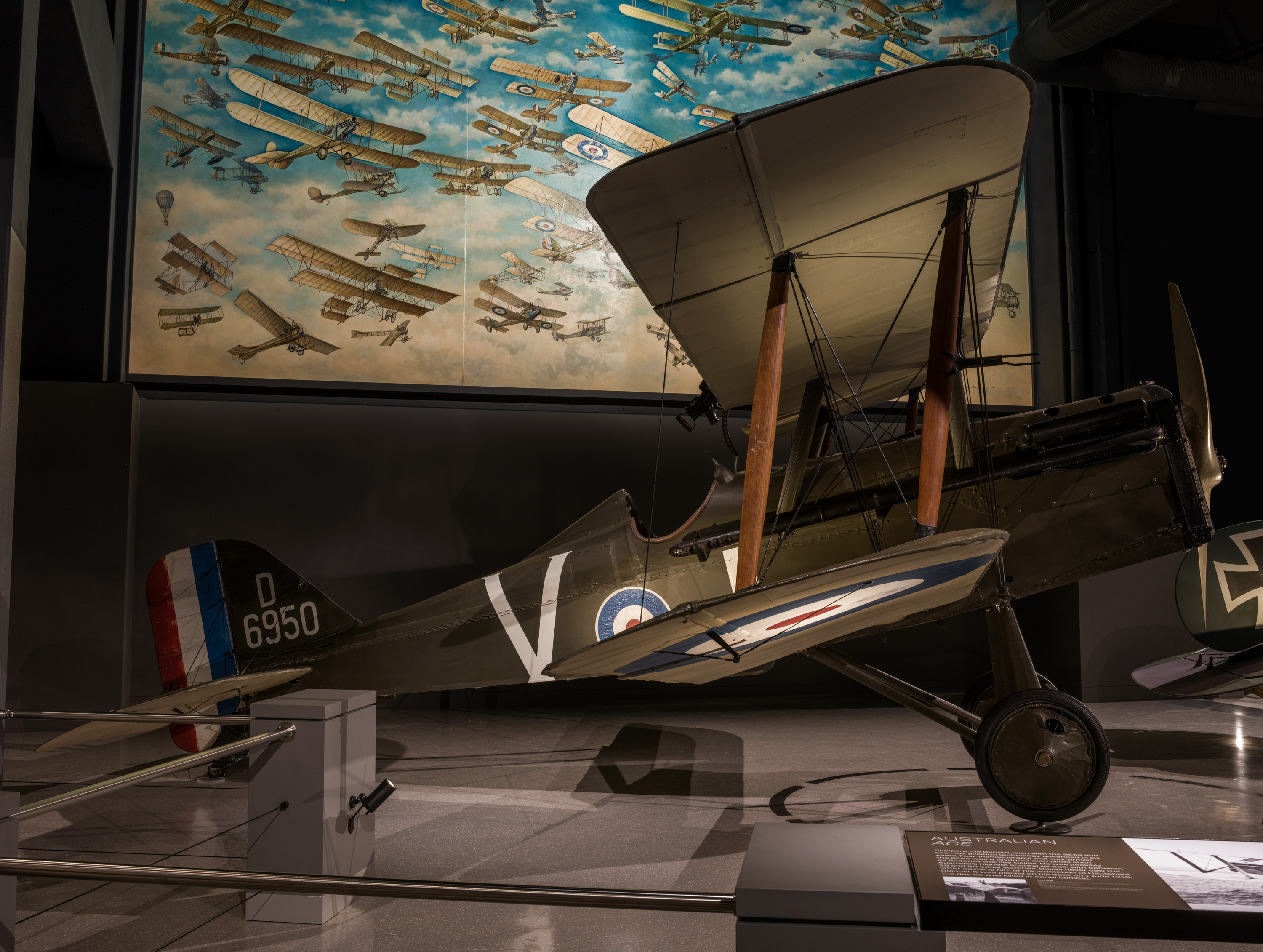
A view of Aeroplane Hall showing an S.E.5A Aircraft in the foreground and a section of the Mural of Australian Military Aircraft.
What's new?
Returning to Aircraft Hall after long absences are three rare First World War-era aircraft.
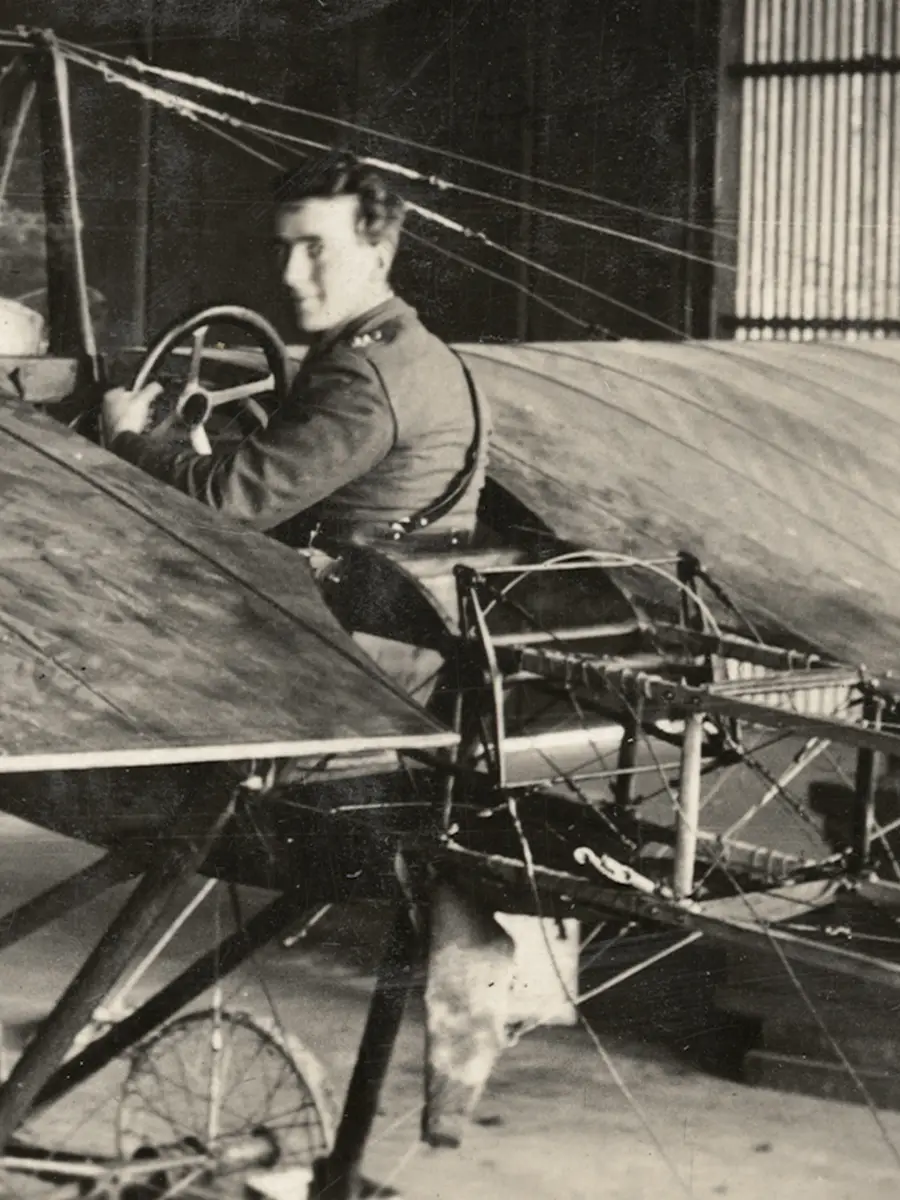
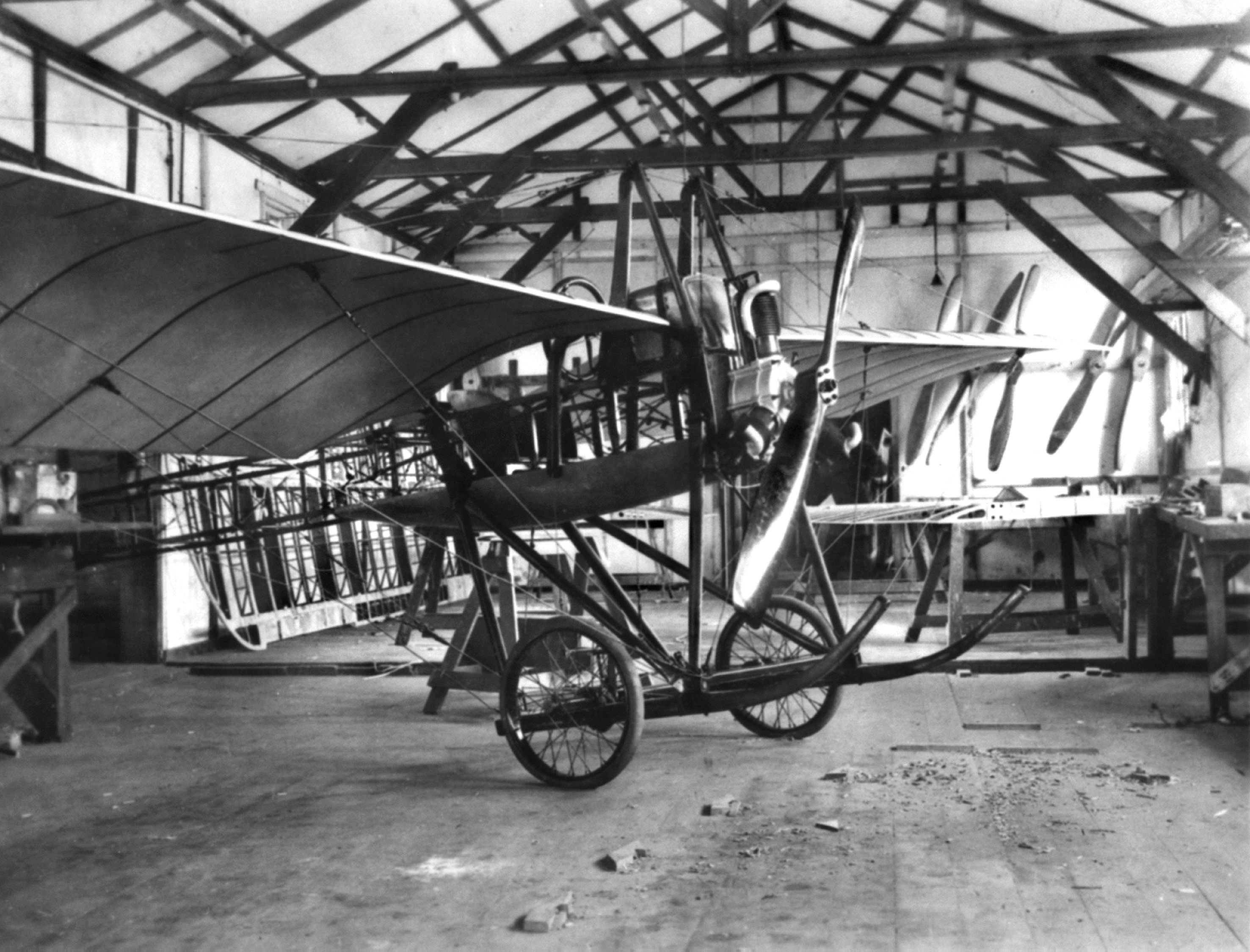
Deperdussin
The Deperdussin Type “A” is a pre-First World War training aircraft. French-designed and British-made, two of these aircraft
were acquired in 1912 for our new Central Flying School at Point Cook, Victoria.
Only one of these very flimsy-looking machines remains, and it is Australia’s oldest surviving military aircraft.
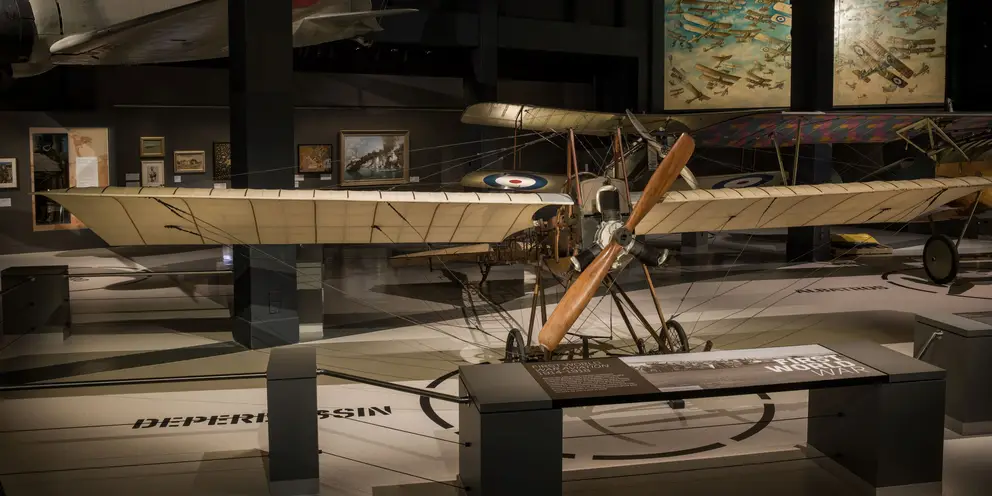
The Deperdussin, a pre–First World War trainer, is Australia’s oldest surviving military aircraft. Photograph by Ian Roach. AWM26.PR.017.43
Albatros D.Va
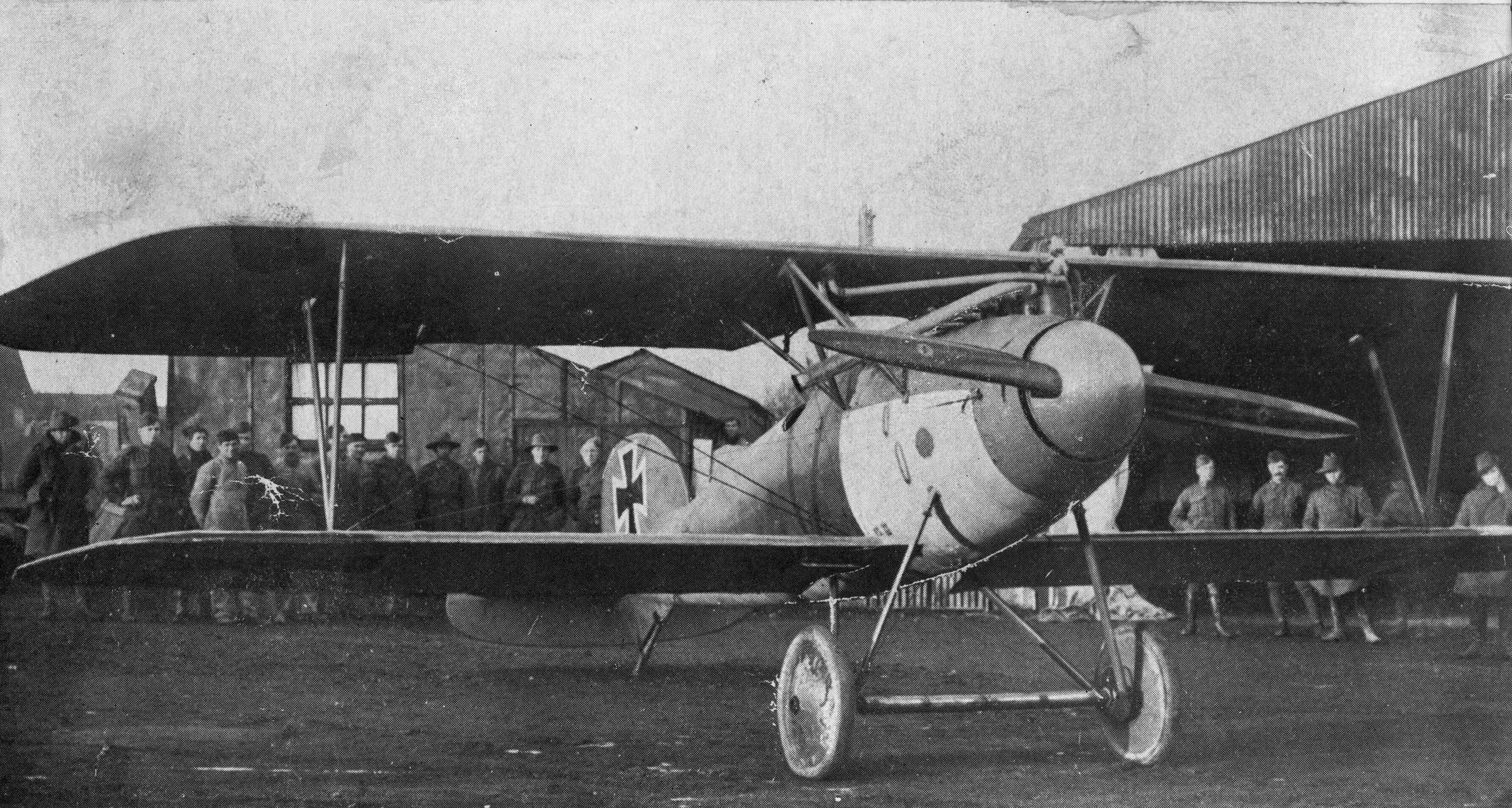
The Albatros D.Va is a First World War German fighter/scout biplane. It came into service in mid-1917, becoming the most numerous and important German fighter until it was replaced by the Fokker D.VII in 1918. About 1,600 Albatros D.Va’s were built; they were the standard aircraft for German fighter squadrons on the Western Front. Allied airmen also encountered them in Palestine and Syria.
S.E.5a
The Royal Aircraft Factory S.E.5a is a First World War British fighter biplane. Like the Albatros, it debuted on the Western Front in mid-1917 and proved a formidable and successful aircraft, and very popular with pilots. The 5a had a more powerful engine than the original type. Around 5,000 were built during the war. This type was operated by No. 2 Squadron Australian Flying Corps from early 1918 until war’s end.
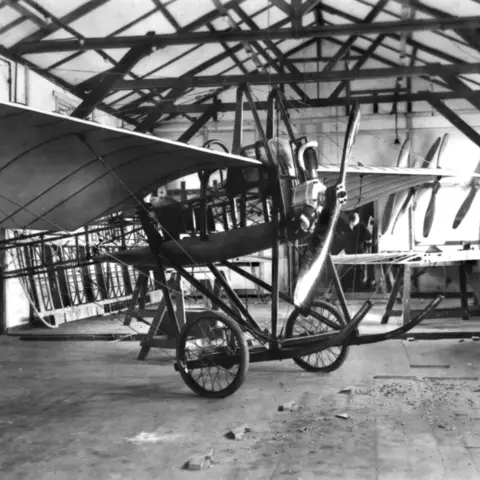
An aircraft assembly shop showing a Deperdussin aircraft in the foreground.
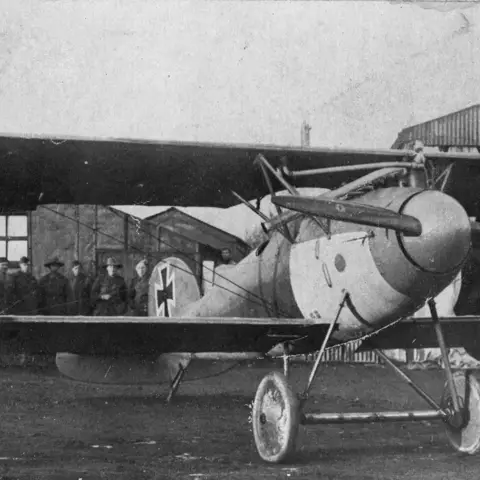
Albatros D.Va captured by 3 Squadron, Australian Flying Corps (AFC).
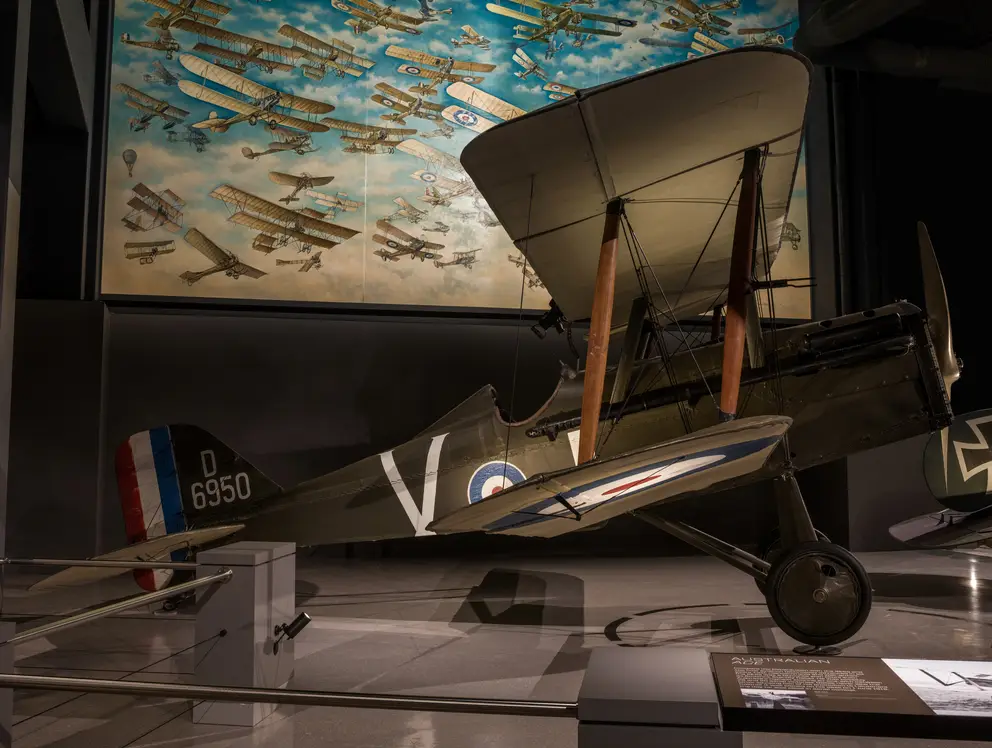
New Aircraft hall. Photograph taken by Ian Roach. AWM26.PR.017
The murals
Another major change for Aircraft Hall is the reintroduction of Harold Freedman’s vast mural on the gallery walls depicting Australian military aircraft over the decades.
Covered since 1999, the murals can now be seen again in all their glory.
They are still undergoing careful conservation treatment to ensure the delicate task of removing the coverings is successful, but most is now clearly visible to the public.
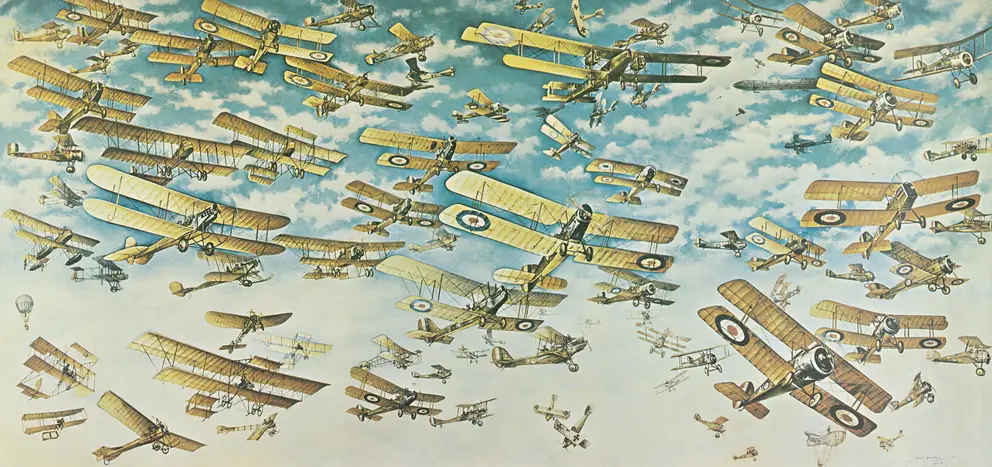
First section of mural depicting aircraft 1909–1918. Harold Freedman, untitled [Mural of Australian military aircraft] (1968–69, oil on canvas on hardboard, oil on canvas on hardboard, 460 cm x 910 cm)
Old favourites, new stories
Peter Jackson's 'Over the Front' film
In support of the First World War story, Aircraft Hall also sees the return of the Sir Peter Jackson film, Over the Front in the gallery’s theatrette. While not on such a vast screen as before, the piece is still impressive to watch.
Jackson and his team used actual flying aircraft, scale models, and extensive computer animation and digital effects and re-enactments to recreate aerial combat over the Western Front in the summer of 1918.
The Trainer: Avro Anson
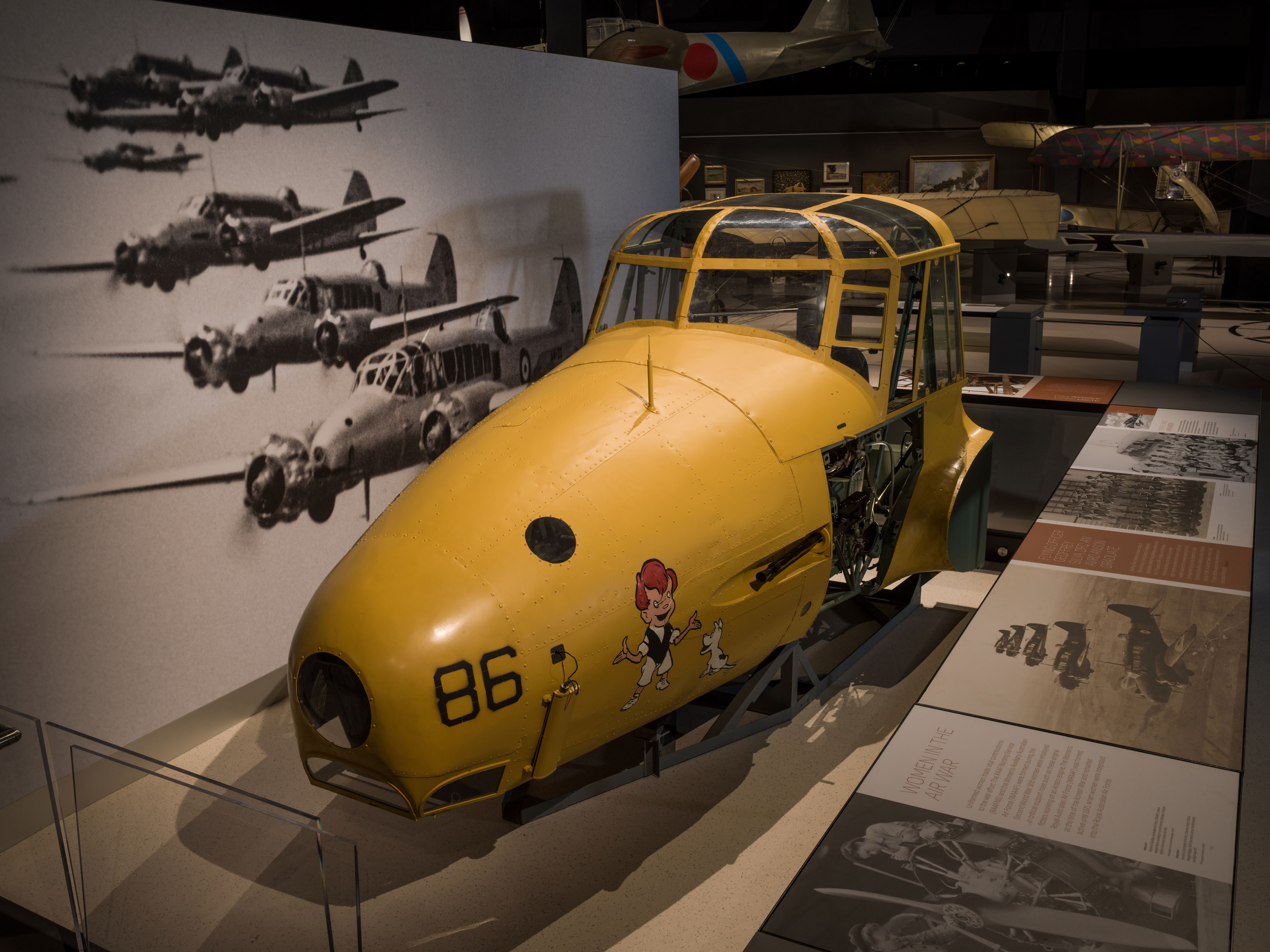
Also returning to this gallery space is the Avro Anson. This British twin-engine multi-purpose aircraft was built from 1935 onwards. It was the RAAF’s first aircraft with retractable landing gear and fully-enclosed cockpit, and was initially used for maritime patrol.
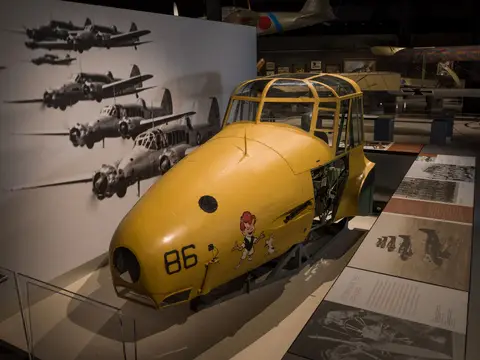
The RAAF operated more Avro Ansons than any other aircraft type. This cockpit section is displayed with a new perspective in Aircraft Hall.
By the start of the Second World War, however, the Anson was considered obsolete for combat flying, so it was primarily used to train air crew. Typically there were either three or four men aboard, training in a variety of roles.
The Memorial is displaying the cockpit and nose section differently this time, so visitors can get a better look at it from the front
and side angles rather than just looking into the cockpit. Now visible is the aircraft’s paint scheme, its armament, bomb aimer’s position and its Ginger Meggs nose art.
So many Australian airmen were familiar with this aircraft and fond of it from their early days of training. Women, too, became familiar with this aircraft, some working on it as engine fitters, for example.
The RAAF ended the Second World War with over 1,000 Ansons and they continued in service until 1955.
Bombing of Darwin
The Bombing of Darwin section has been slightly reconfigured and now includes a mixture of traditional and new artworks. The latter includes four recently-created and acquired Indigenous artworks from the likes of Jack Dale Mengenen, Susan Wanji Wanji, Pauletta Kerinaiua, and Gary Philip Lee. The older paintings by Arthur Murch, Roy Hodgkinson and Ray Honisett remain.