HMAS Diamantina’s role in the surrenders of Nauru and Ocean Island in 1945.
HMAS Diamantina (I) was the scene of two well documented Japanese surrender ceremonies in 1945, at Nauru and at Ocean Island. The ship’s only wartime commanding officer, Commander Maurice Rose, RANVR took part in these events as the senior Australian naval officer present.
Rose, who began the war as a lieutenant, saw service in England and Norway before serving on escort ships on North Sea and later West African convoys. In 1943 Rose, now a lieutenant commander, was twice mentioned in despatches for ‘zeal, patience and cheerfulness in dangerous waters, setting an example of wholehearted devotion to duty’ and ‘for gallant and distinguished service in action with [an] enemy sub while serving in HMS Alisma.’ He commanded Alisma from May 1941 until May 1943.
Rose became the first Australian to command a Royal Navy frigate, HMS Fal, before returning to Australia in 1944. Here he was given command of Diamantina, which was still under construction at Maryborough, Queensland.
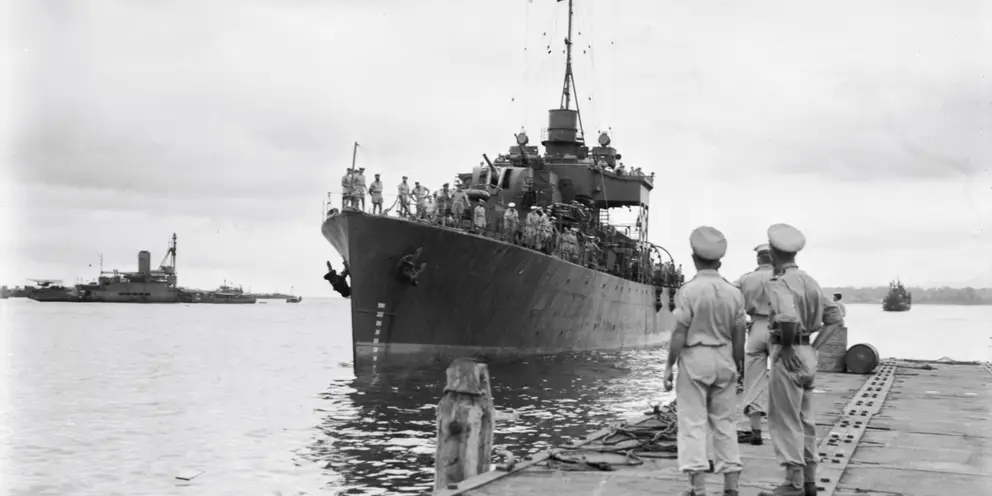
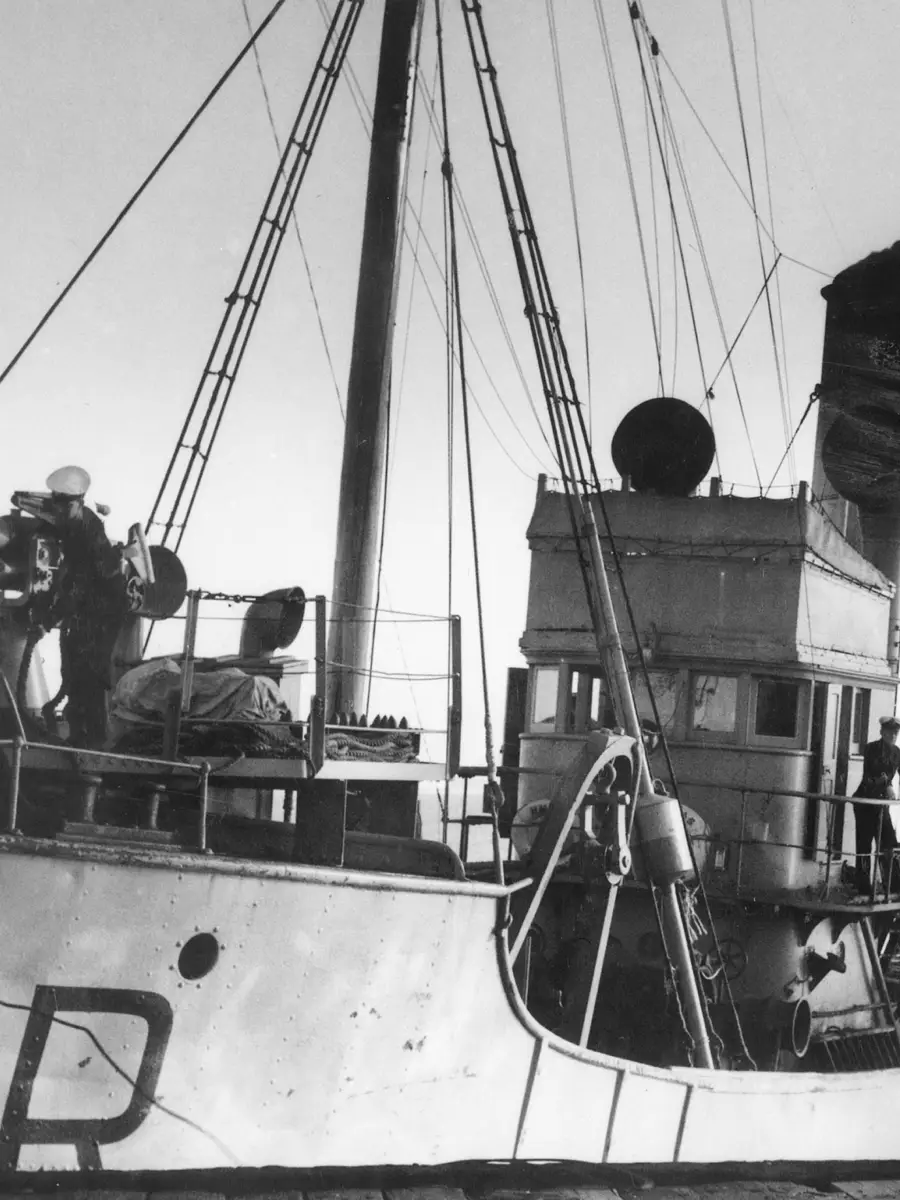
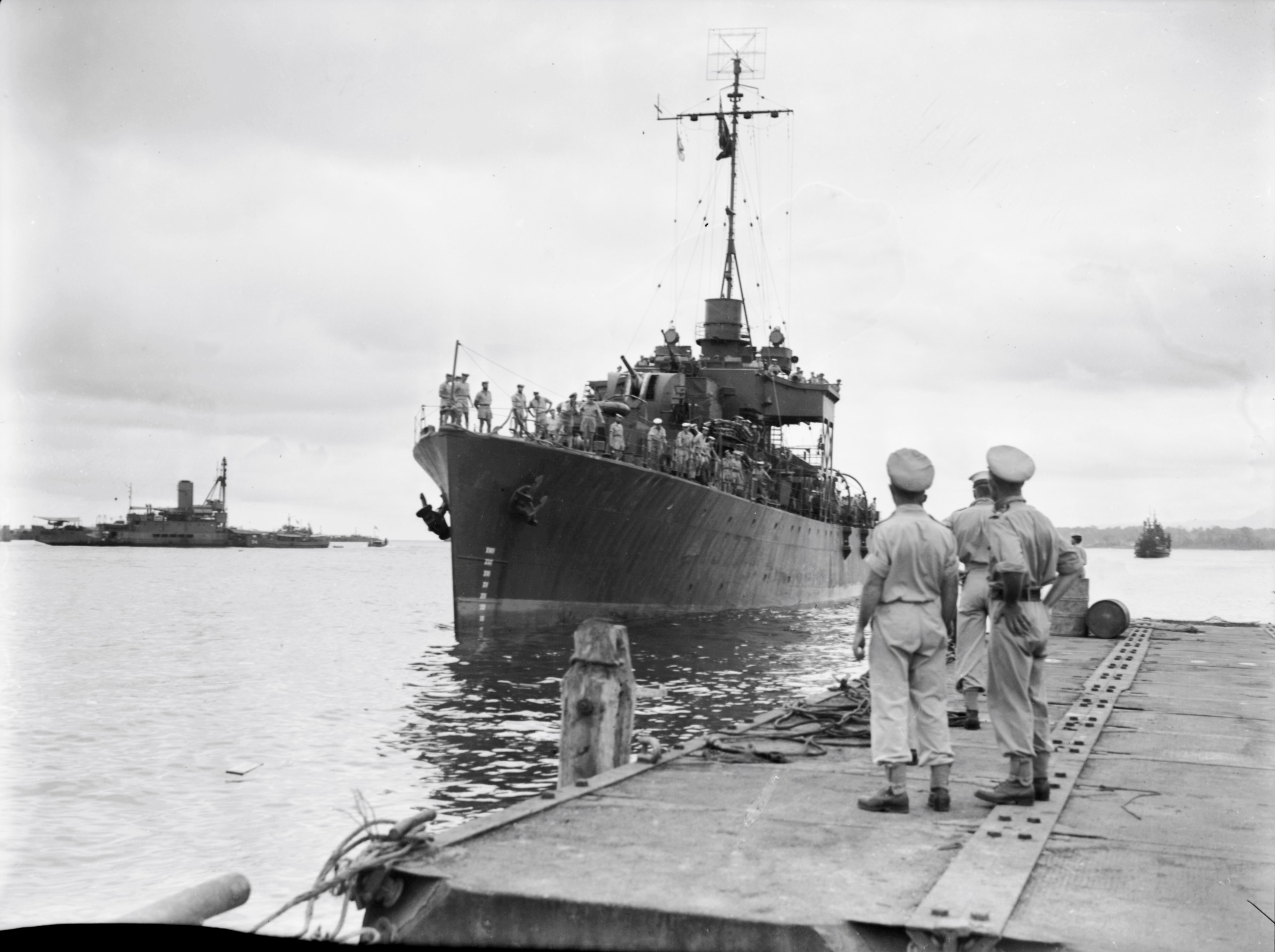
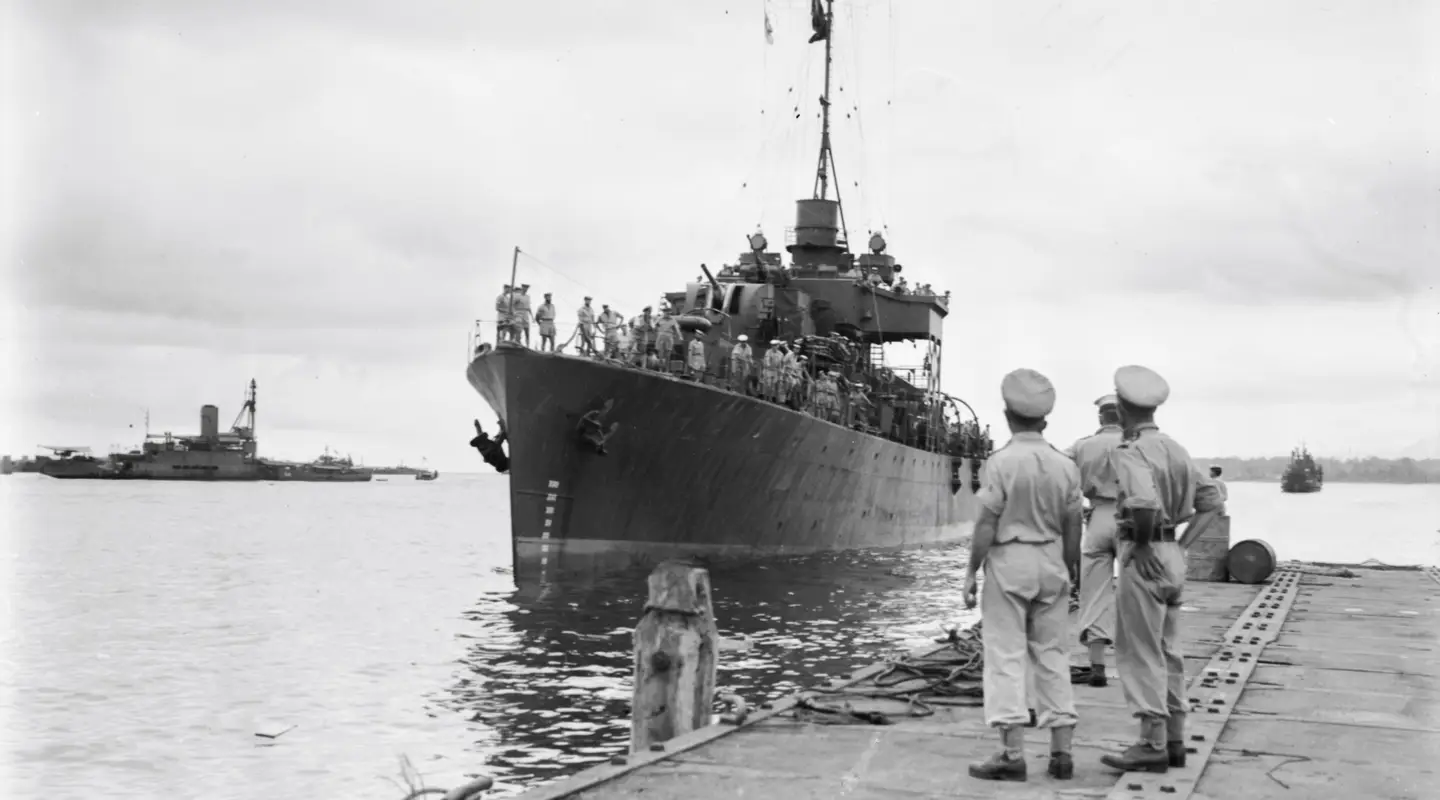
HMAS Diamantina’s wartime service was short, but the crew played an active role in the Japanese surrenders at Nauru and Ocean Island.
Diamantina, the last locally built River–class frigate to be completed before war’s end, was commissioned at Hervey Bay, Queensland, on 27 April 1945. Following sea trials, the ship sailed to Madang in June and went into action the next month, bombarding Japanese positions on Bougainville and the Solomon Islands. Japan’s surrender on 15 August coincided with Rose’s promotion to commander.
Although the war was over, Diamantina still had important work to do, assisting in taking the surrender and disarming Japanese garrisons in the Pacific.
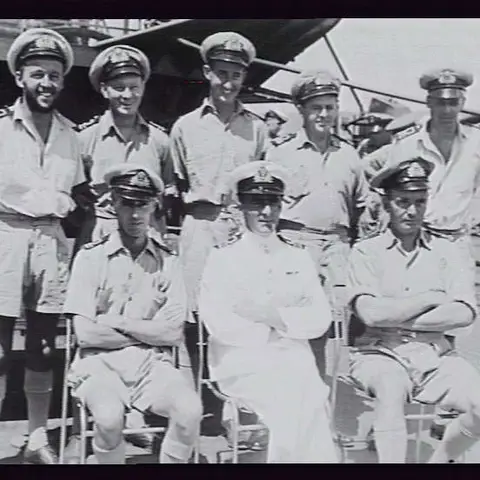
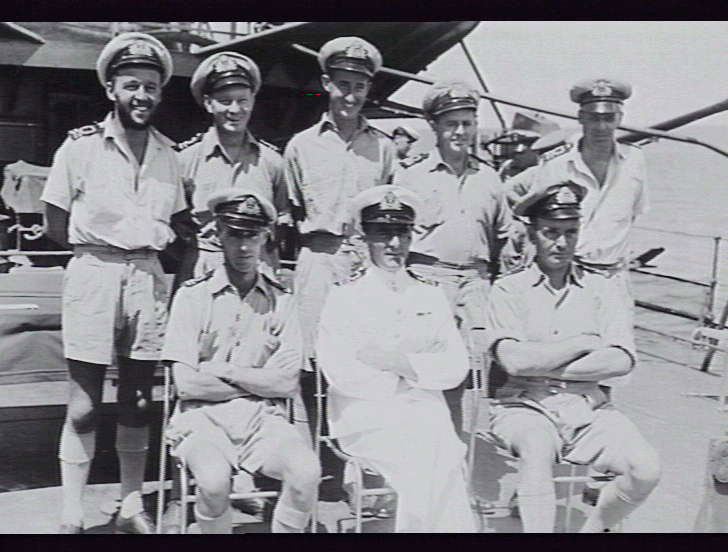
Commander Maurice Rose (front, centre) and officers of HMAS Diamantina following the surrender ceremony at Ocean Island.
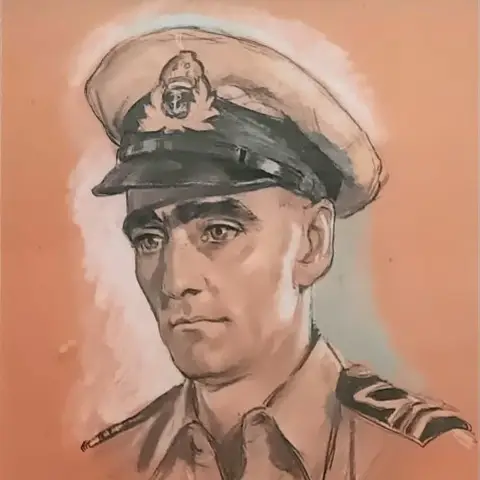
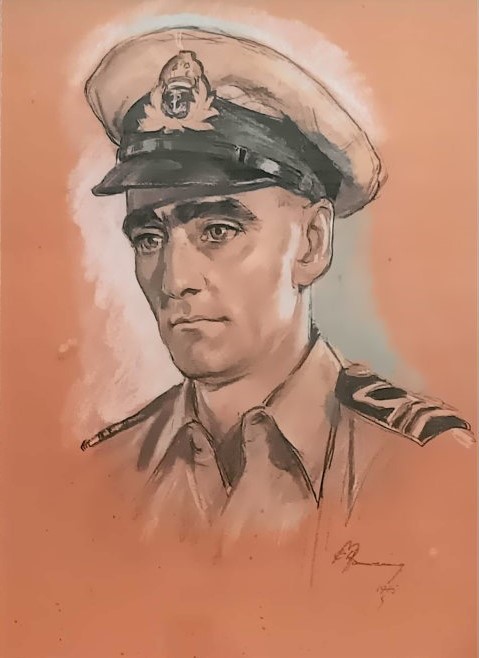
Geoffrey Mainwaring, Commander Maurice Rose (1945, charcoal with coloured pastels heightened with white on paper), family collection, used with permission.
Diamantina sailed from Torokina for Nauru on 9 September, escorting two transport ships carrying Australian soldiers who would occupy the islands and see to the disarming of the Japanese garrisons. Embarked aboard Diamantina were Brigadier John Rowlstone Stevenson DSO who was to oversee the surrender ceremonies, his staff, reporters and a war artist, Lieutenant Geoffrey Mainwaring, who managed to get Rose to stop long enough to draw his portrait.
Surrender on Nauru Island
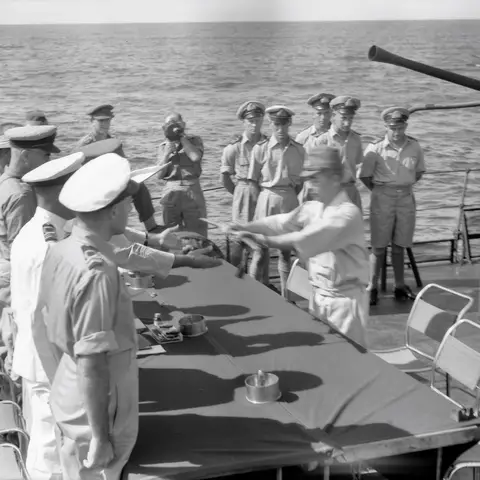
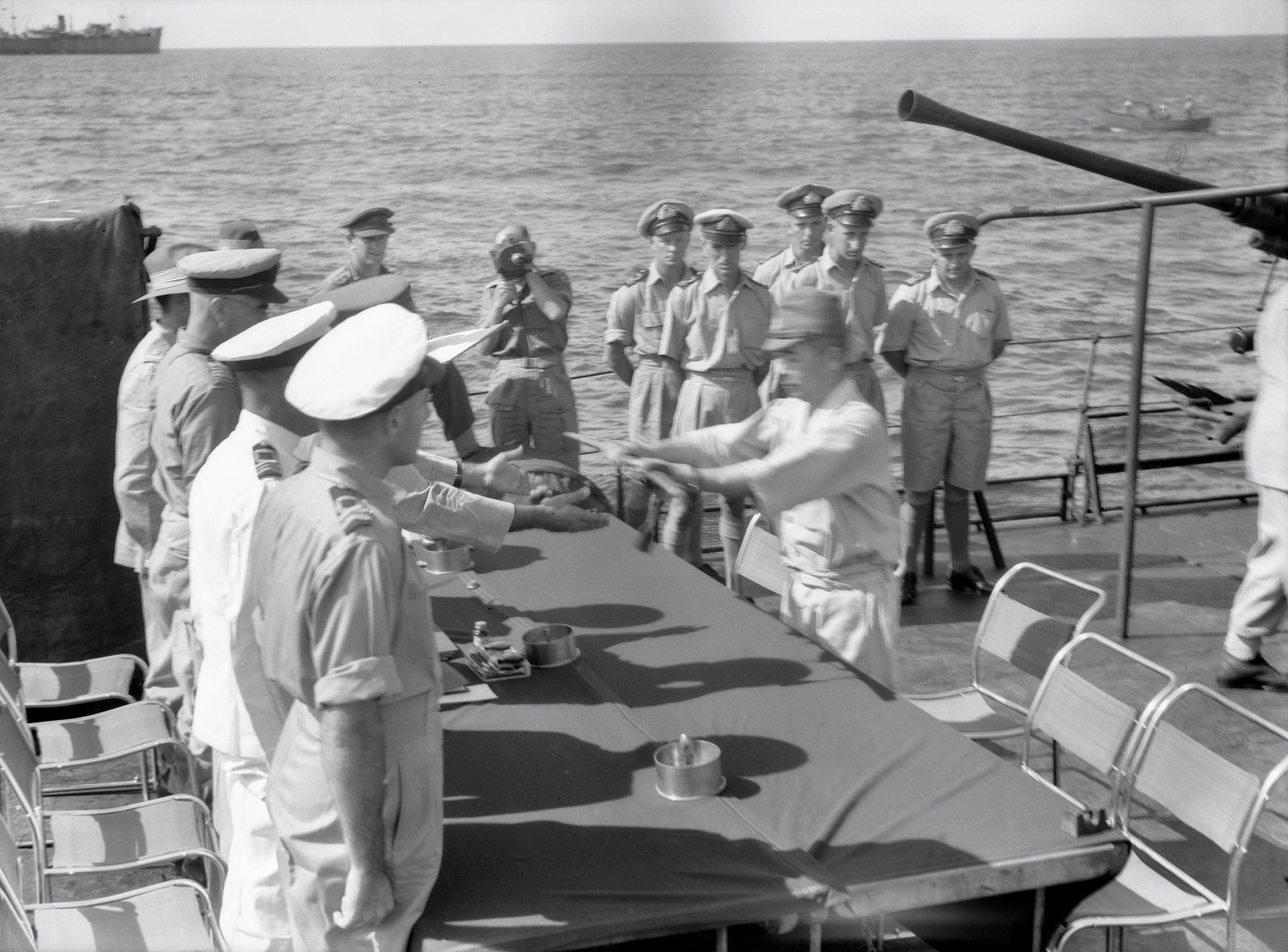
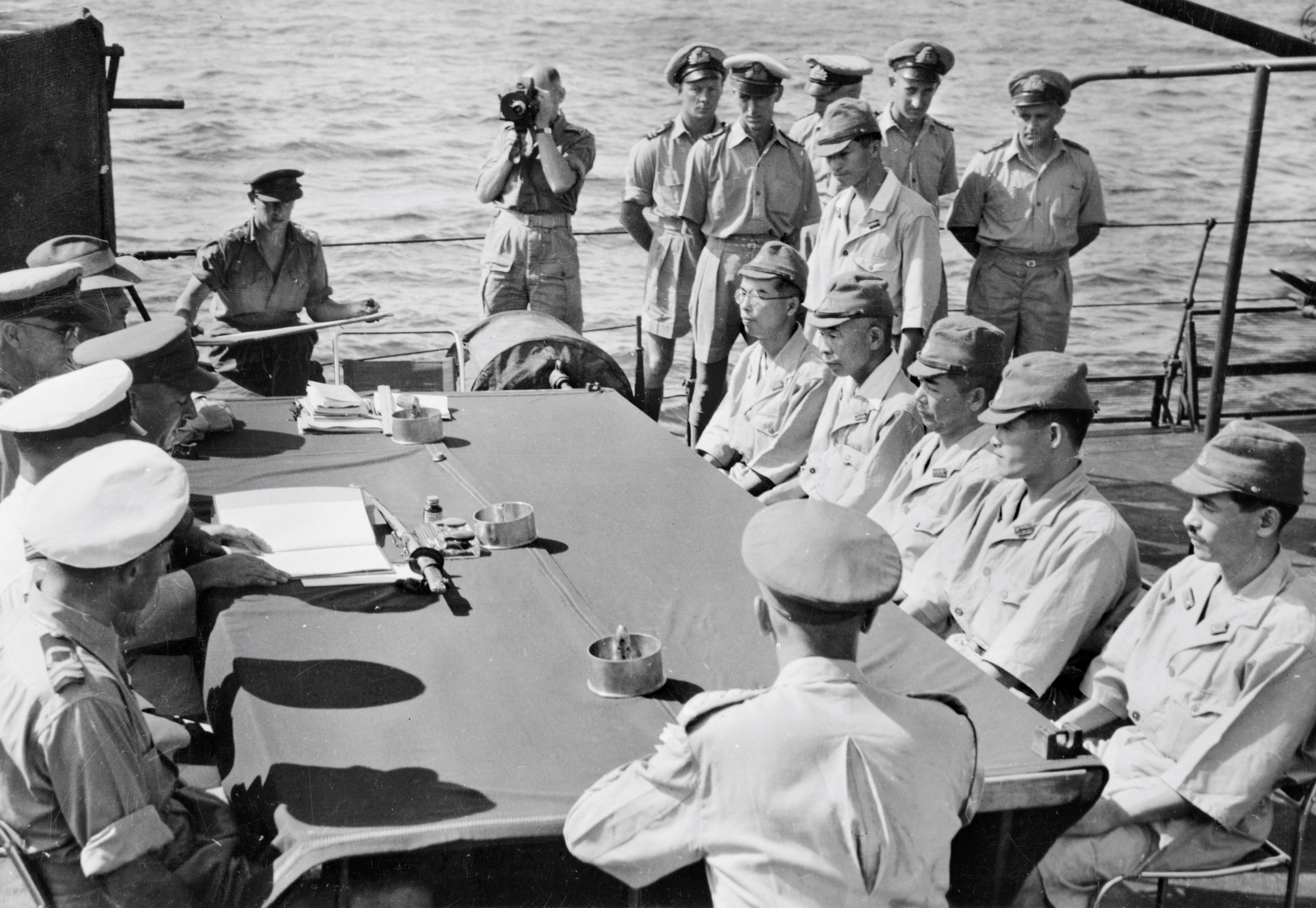
Brigadier John Stevenson (obscured, centre) receives Captain Hisayuki Soeda’s sword, prior to the surrender of Nauru. The sword was later presented to Commander Maurice Rose (second left).
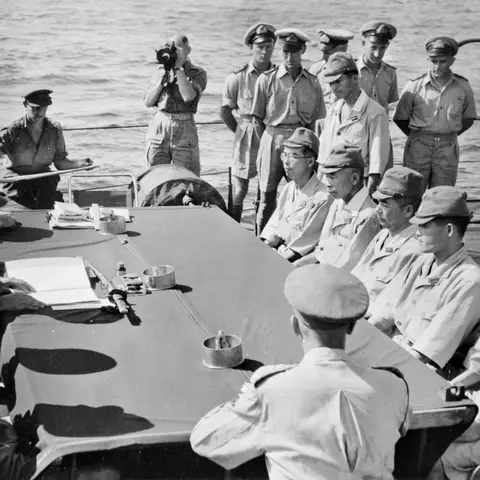
Brigadier John Stevenson (left centre) reads the terms of surrender to Captain Hisayuki Soeda (centre right) before the Japanese surrender of Nauru. Photographer: Percival Robert John Spiden.
Captain Hisayuki Soeda, the senior Imperial Japanese Army officer on Nauru, came aboard Diamantina during the afternoon of 13 September. Rose reported ‘the surrender ceremony was held on the quarterdeck, Captain Soeda surrendering his sword to Brigadier Stevenson, then seating himself with his officers on either side of him. Brigadier Stevenson read the Instrument of Surrender, an interpreter read the Japanese translation, and then it was signed by Captain Soeda followed by Brigadier Stevenson.’ Stevenson presented Soeda’s sword to Rose after the ceremony.
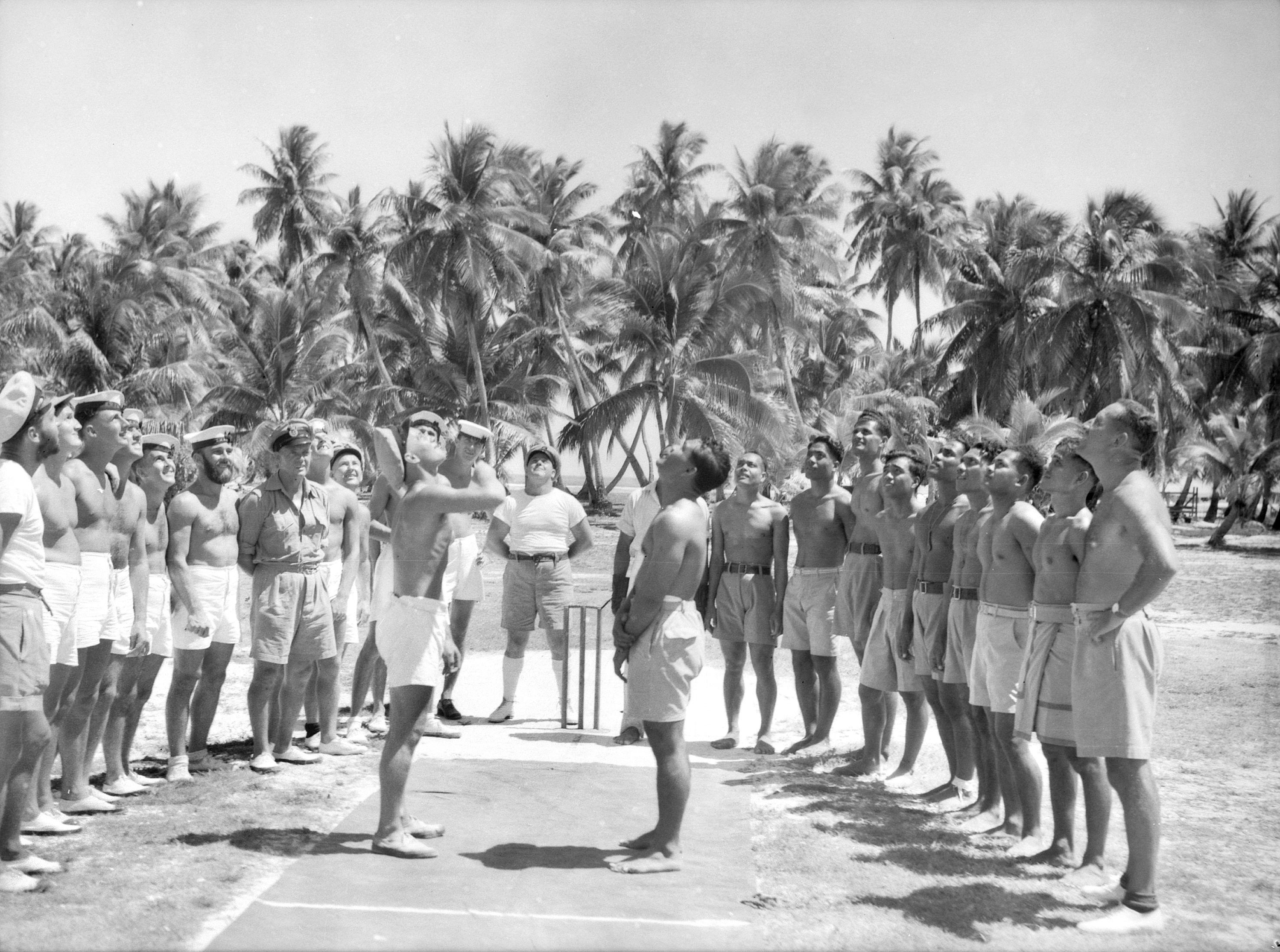
With Nauru secured, Diamantina sailed for Ocean Island, stopping at Tarawa along the way. Here the crew played cricket against a team of Gilbert and Ellis Islanders; Diamantina’s team won, 190 runs to 152.
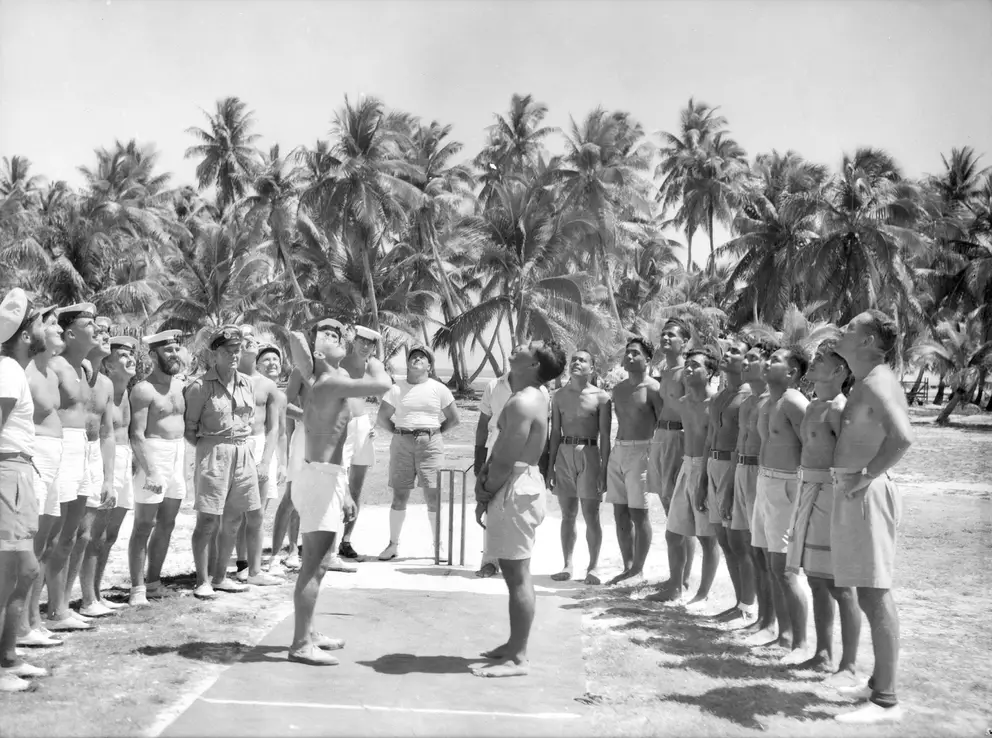
Tarawa played host to a cricket match between the crew of HMAS Diamantina and a team of Gilbert and Ellis Islanders. 27 September 1945.
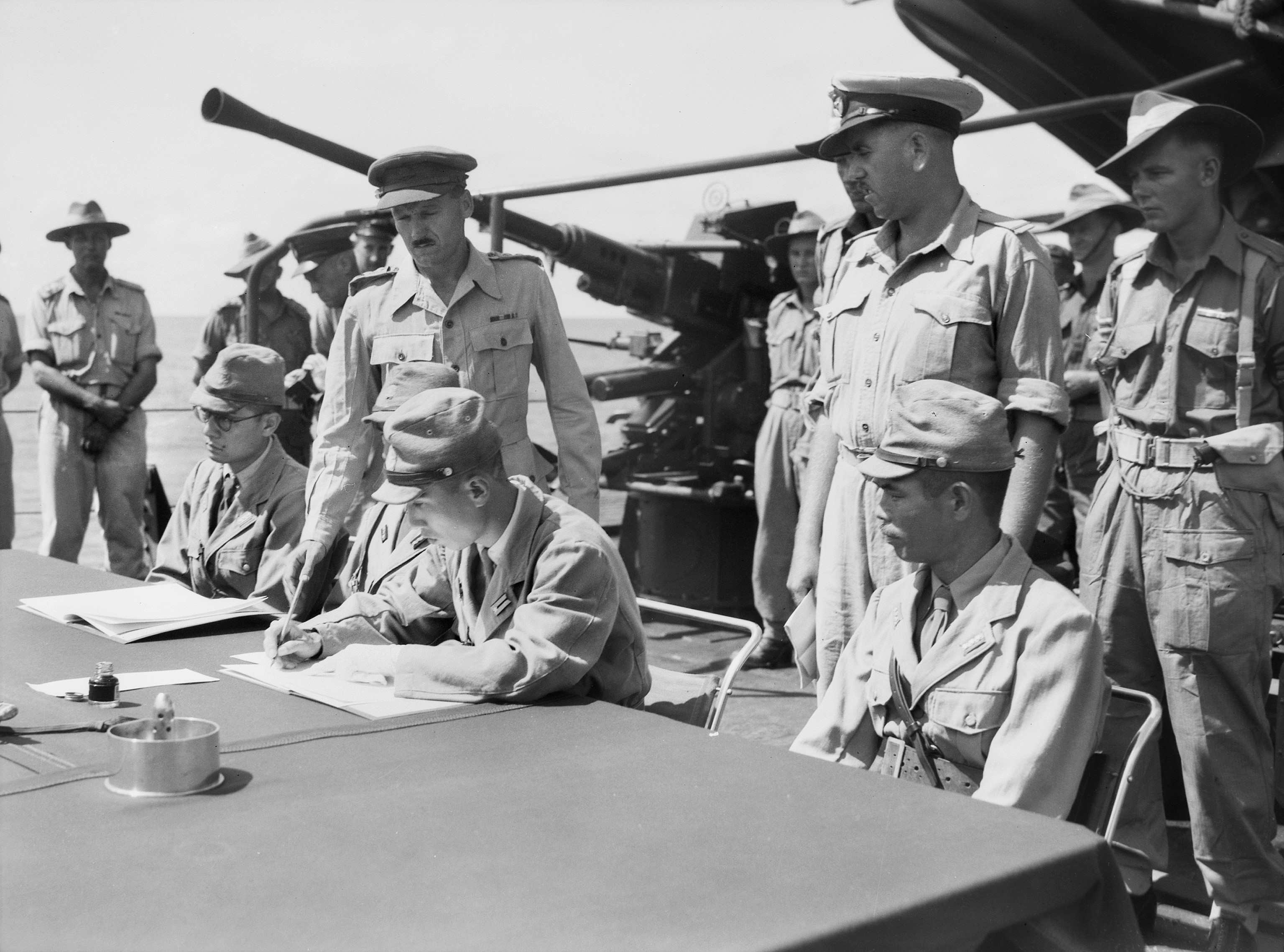
After reaching Ocean Island on 30 September, Lieutenant Commander Naoomi Suzuki surrendered his forces the following day.
Returning to Torokina, Rose handed over command of Diamantina on 22 November and sailed for home and demobilisation soon after.
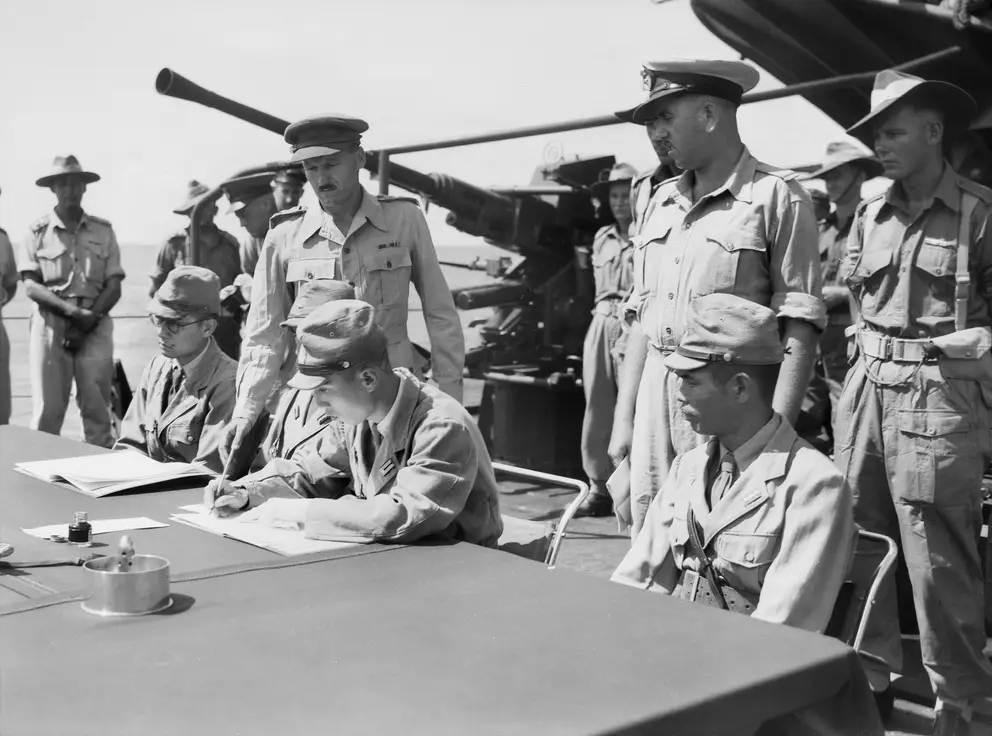
Brigadier John Stevenson, with Commander Maurice Rose to his right, oversees Lieutenant Naoomi Suzuki’s surrender of Japanese forces on Ocean Island. 1 October 1945.