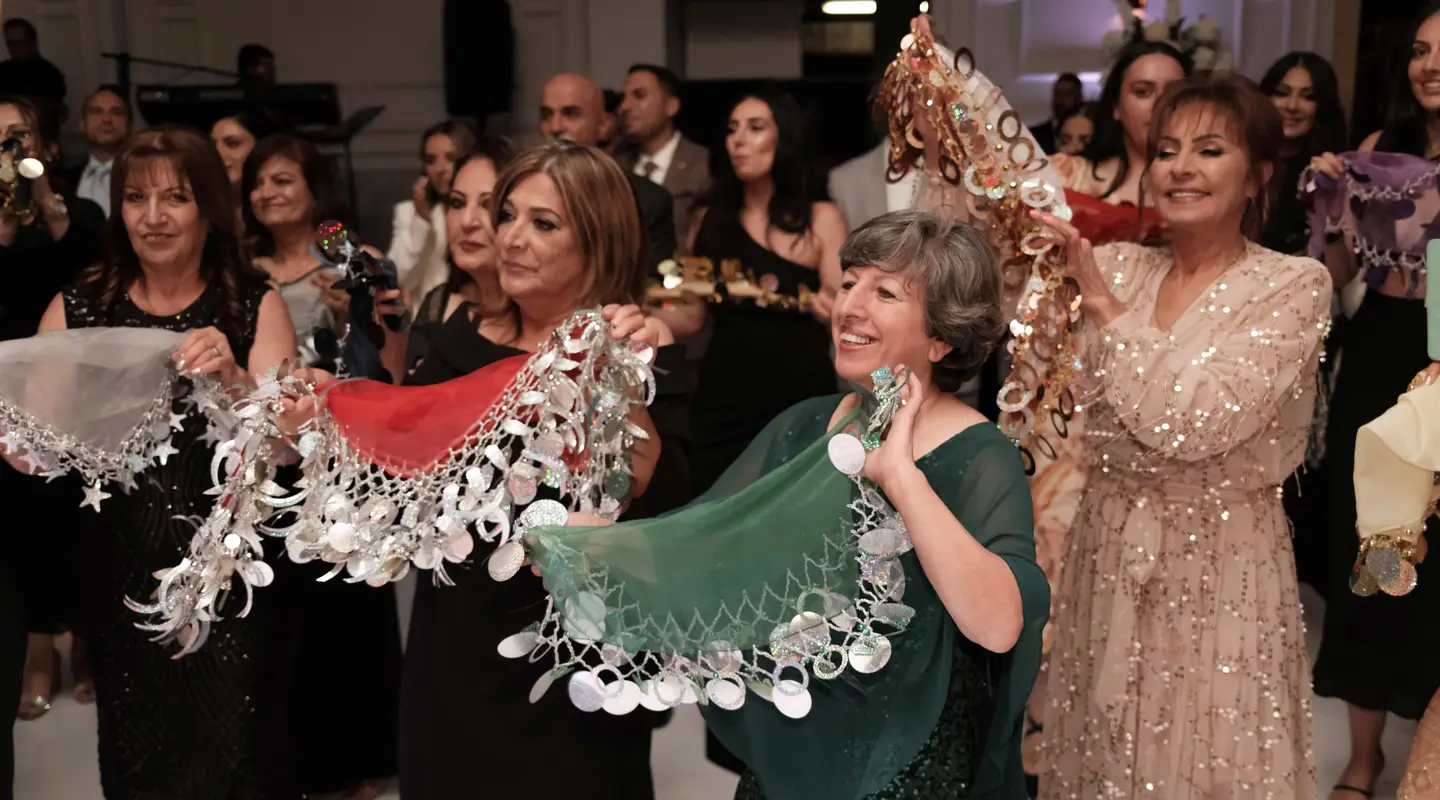
After decades of conflict, millions of Iraqis and Syrians remain displaced. Some have found refuge in Australia, and their stories became part of the Memorial’s mission to tell the Australian experience of war.
War displaces entire communities, as people flee from violence, persecution and lack of resources. While leaving their homeland behind isn’t easy, they find safety and rebuild their lives in new countries, such as Australia.
Community organisations help provide essential services, while local groups use sport, music, and food to create spaces for cultural connection and healing.
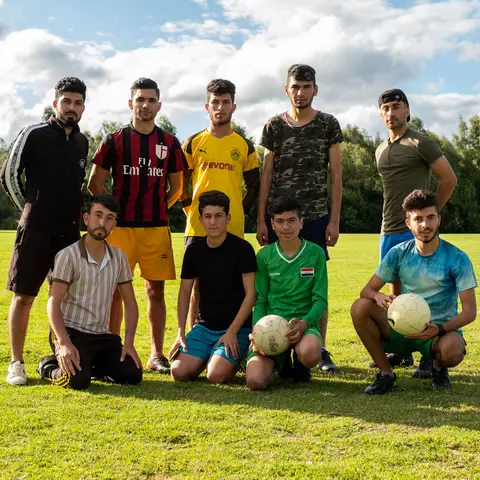
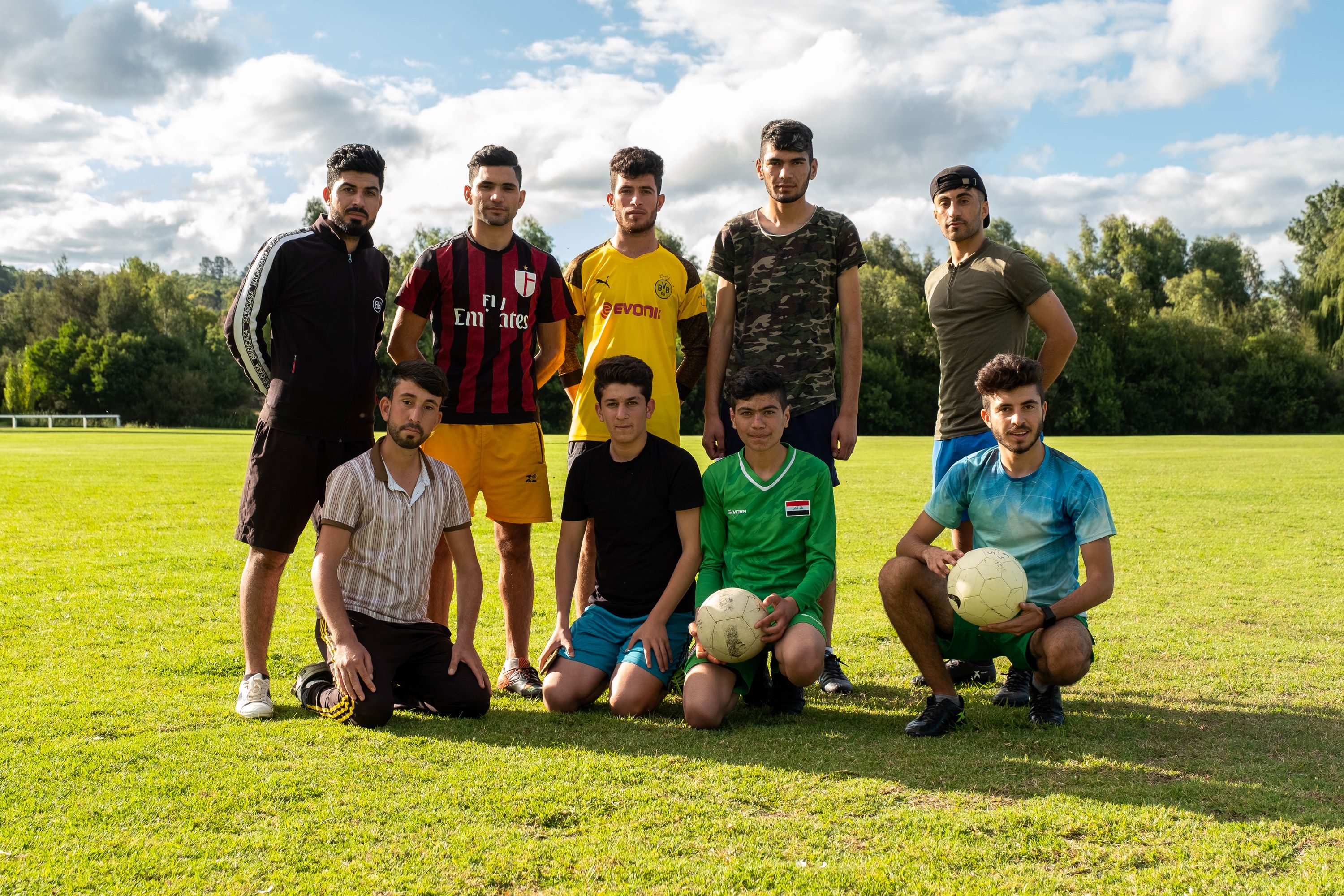
Yazidi soccer players in Armidale. Photograph by Simon Scott. AWM2024.366.43
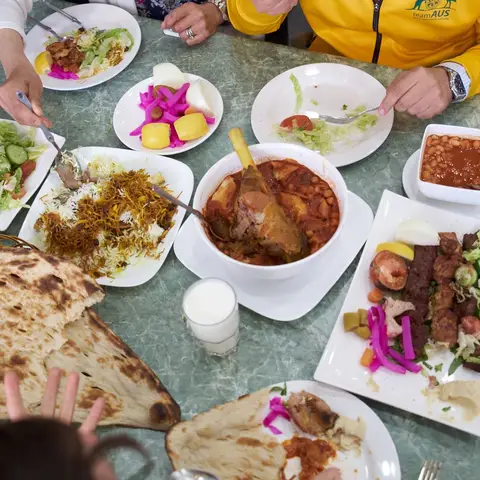
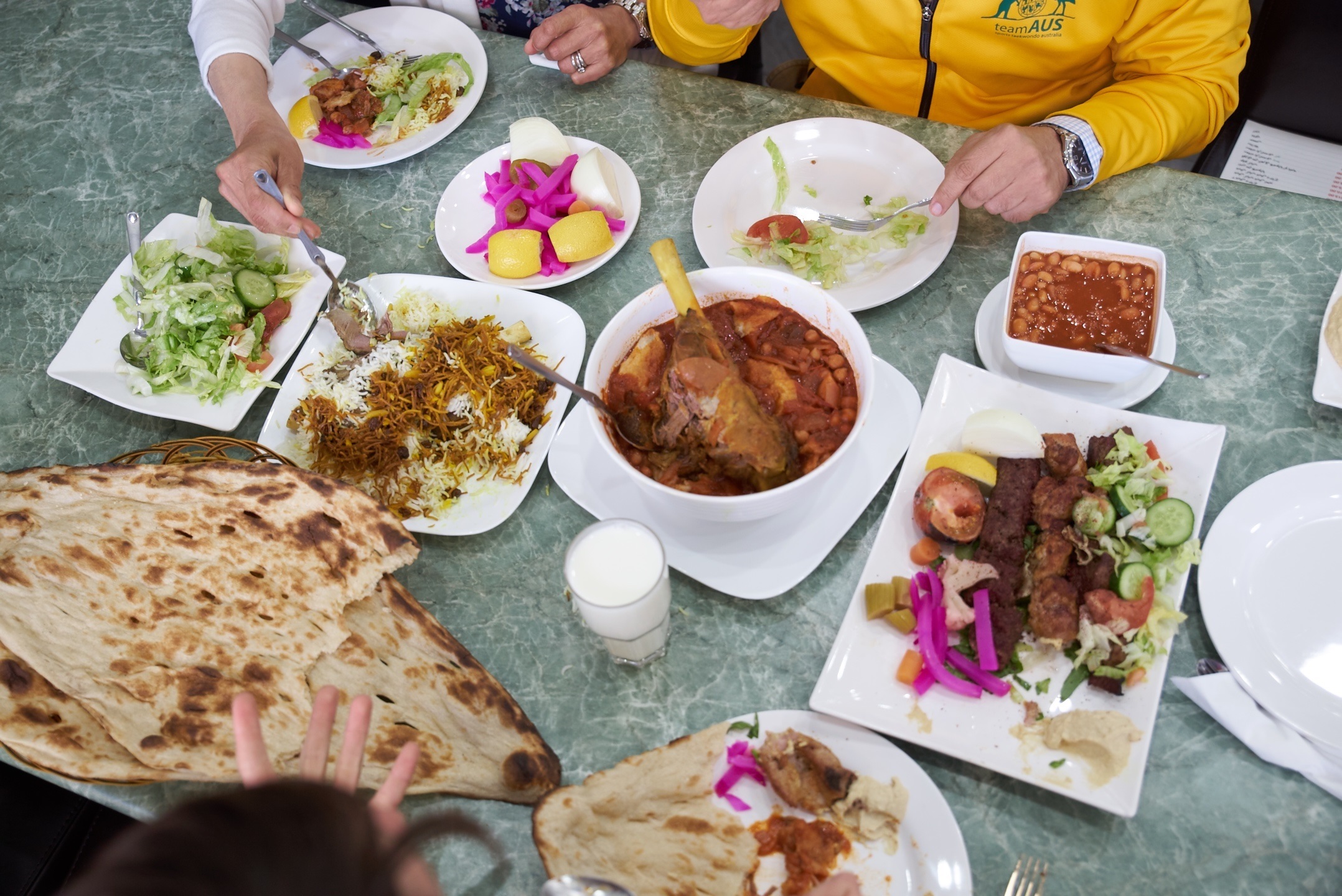
Masgouf cooked at Al-Dhiaffah Al-Iraqi Restaurant, Fairfield. Photographed by Kimberley Low.
Working with community
Engaging with members of the Iraqi Australian community was one of the highlights in developing the new Conflict in the Middle East from 1990 gallery.
The curatorial team built relationships with groups whose stories had largely gone untold in the Memorial previously. Meeting communities in places such as Fairfield in Sydney (known as "Little Baghdad") and Wagga Wagga, for example, meant the team were able to bring new objects and stories into the gallery.
In this video Assistant Curator Greta Wass discusses the development of the Rebuilding Community display and how collaboration with Iraqi Australian communities shaped the stories and objects featured in the gallery.
In front of me here is our display called Rebuilding Community that tells the story of Iraqi Australians.
It tells the stories of people who have been displaced by almost three decades of conflict in the Middle East and that have immigrated here to Australia.
We've put together a collection of photos and objects that kind of capture that sense of trying to rebuild community and rebuild connection here in a new country.
These really brightly coloured glittery scarves that you'll see are called yalekhtas and they are a traditional Assyrian object. So they're typically used at Assyrian celebrations, things like weddings.
You'll see photos or footage of them being used and they're kind of like twirled in the air and they create this really beautiful sea of colour that kind of has this sense of joy and celebration and having overcome really difficult things.
We also have this large object which is a fish grill and it's used for cooking something called masgouf which is a real staple for Iraqi community and essentially fish is splayed open and then grilled over open flame or coal.
So some of the other objects that you'll see on display are things that hint to like games and food and drink and music.
We have a backgammon board because you'll notice when you visit any Iraqi community, particularly men, are really into that game playing.
They'll often be seated at a cafe with tea in hand and kind of playing backgammon which is a really long tradition.
When it comes to selecting objects and photographs for display, we do try to do it in a really community led way. So we speak to community leaders and people in these communities and see which kind of common threads tend to weave through different people's experiences.
So what you see kind of represents things that have come up again and again and those are those ways that people come together like music, dance, cooking.
So it's kind of a broad range of objects that we hope different people will feel a connection to.
We have made a really concerted effort as part of the development project to bring in those Iraqi Australian voices.
It's also stories of civilians, stories of Iraqi people both in Iraq and here in Australia, stories of veterans' families.
These wars obviously have such far reaching consequences for everyone involved so we do hope that we've managed to kind of thread those narratives through the galleries so that people that come here can see themselves represented.
Help tell this story
The ‘Rebuilding Community’ display is only the start of sharing these experiences.
The Memorial is keen to hear from Iraqi and Syrian Australians to develop the collection and capture more stories.
To offer material for the collection, follow the directions on the donations page.
Photographs by Helene Cochaud, Simon Scott, Kate Geraghty courtesy of Sydney Morning Herald, Sitto Studios, Kerry Neale, Kimberley Low, and Helen Tran courtesy of Fairfield City Museum and Gallery.