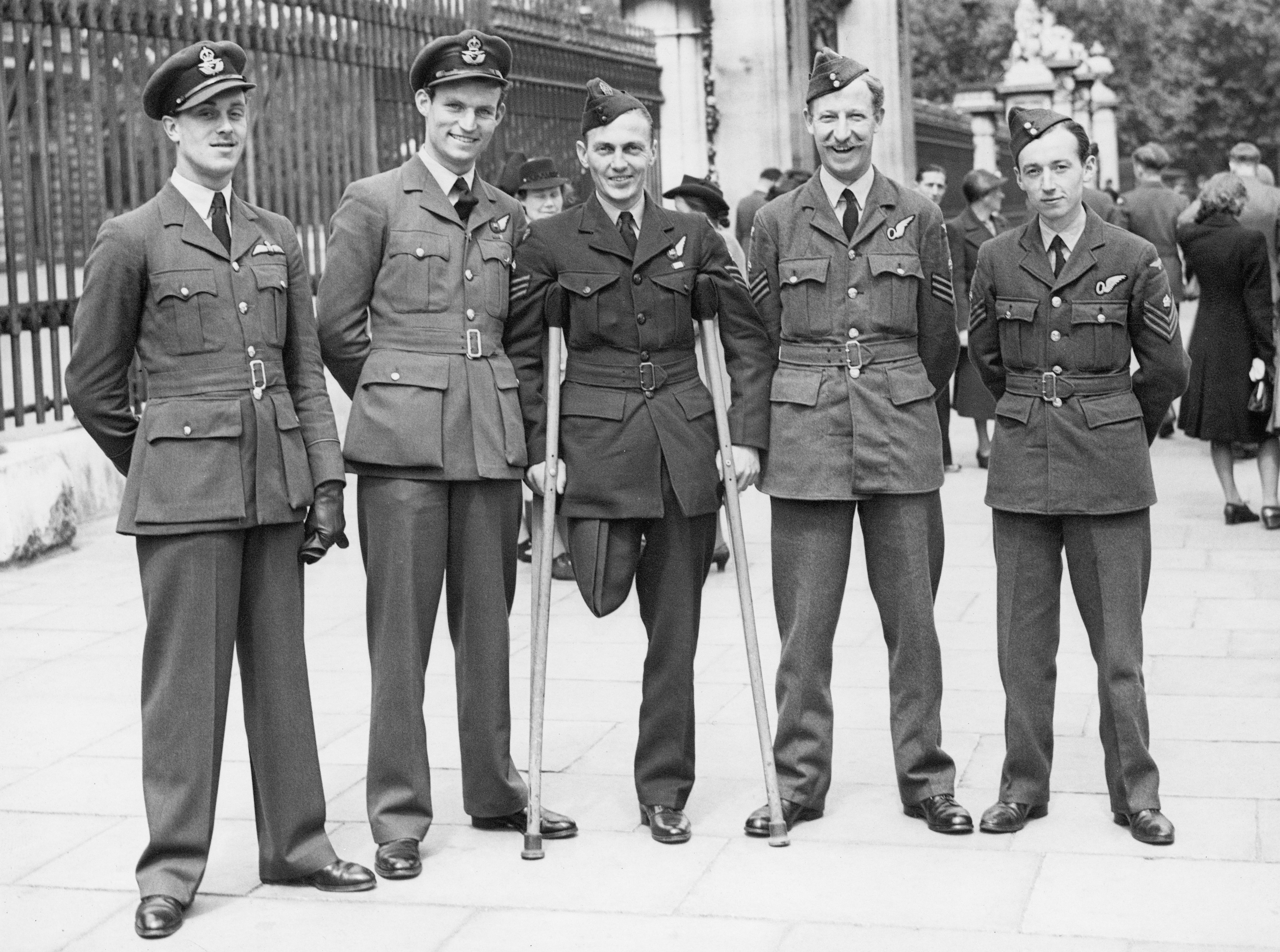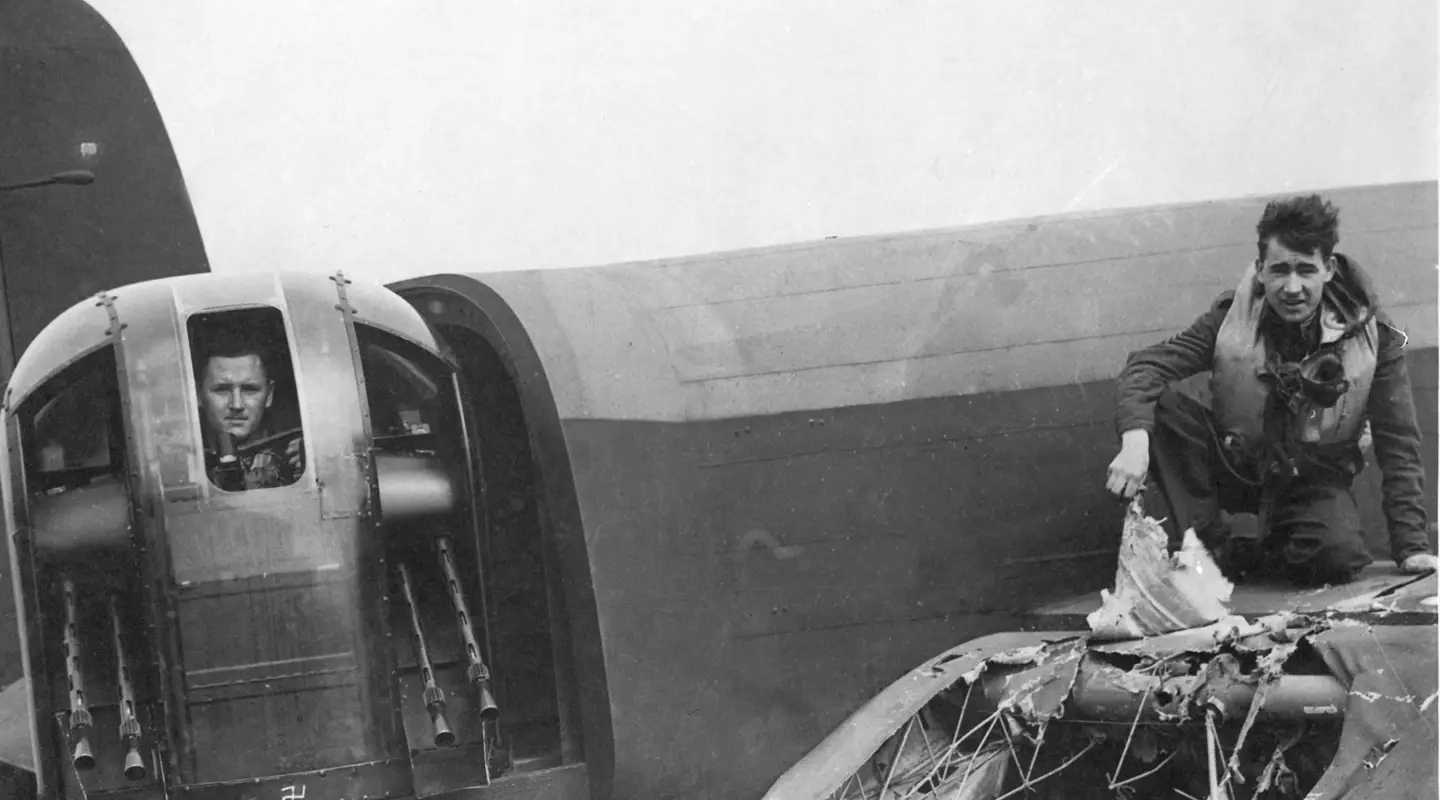
Often overlooked but vital to every mission, the tail gunner's position was known as the coldest and one of the loneliest seat in Bomber Command.
Discover the story behind a new display in the Australians in Bomber Command gallery at the Memorial.
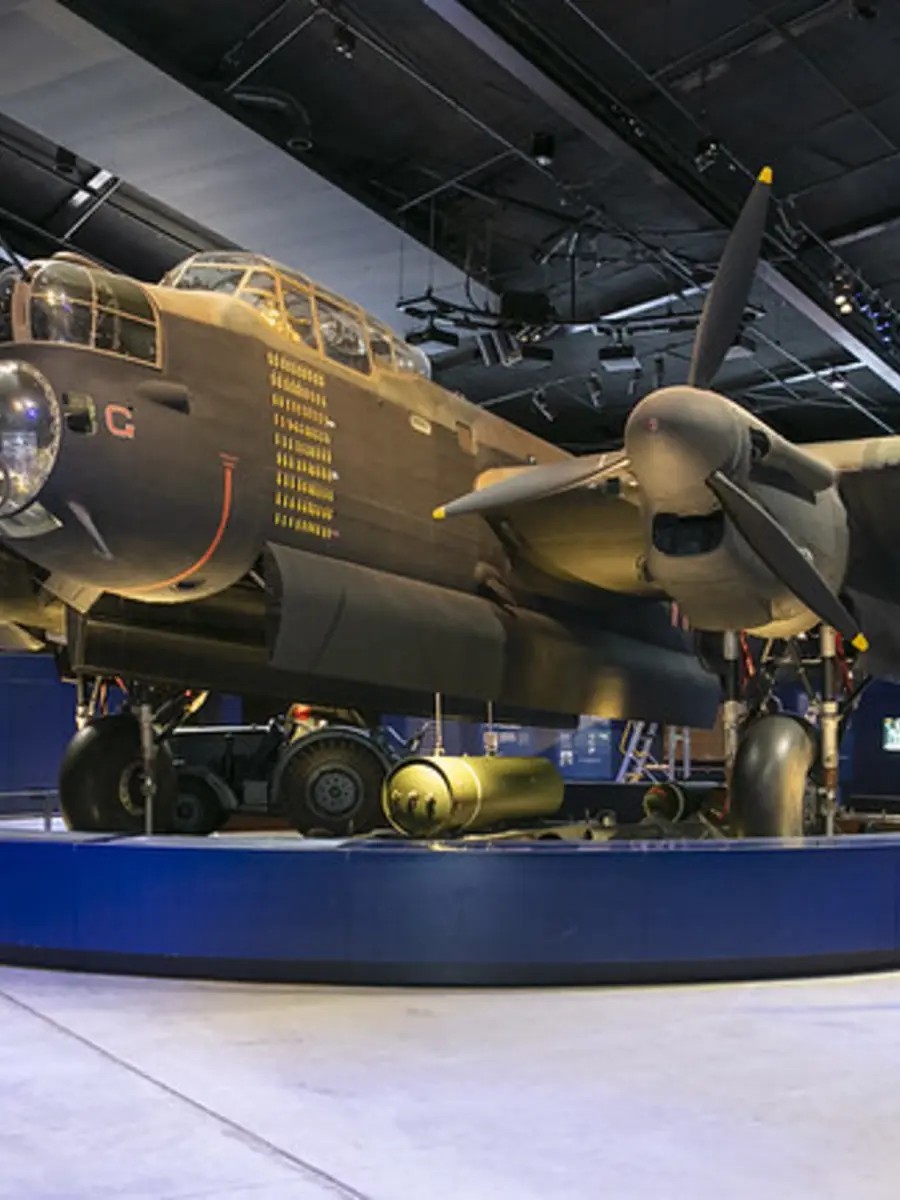
Featuring 48 objects, the display reveals the full uniform, kit and equipment a tail gunner would have worn and carried on a mission aboard a Lancaster bomber. These items include the various layers of clothing worn to withstand the freezing conditions to rations, evasion maps and survival equipment.
Each item offers a glimpse into the physical demands and dangers of one of Bomber Command's most challenging roles.
Watch now
The tail gunner showcase here in the Australians in Bomber Command exhibition contains 48 objects that a tail gunner would have carried on board with him on the aircraft.
The uniform he wore, everything that was in his pockets and all the protective equipment required to carry out a mission on a Lancaster aircraft over Germany.
The role of the tail gunner was crucial to the fate of the aircrew of a Lancaster.
It was their job to defend the aircraft from enemy night fighter actions and they also communicated with the pilot to manoeuvre if they saw an enemy aircraft coming to attack them.
He worked in very tight, confined space at the back of the aircraft, a very lonely position and you'd be sitting there for up to eight hours, maybe even as long as 10 hours on some missions in freezing conditions up to minus 30 degrees Celsius or lower.
He would also take with him his escape and evasion equipment.
These were maps of France and northwest Europe that would be hidden in his uniform as well as other hidden escape equipment such as compasses that would be disguised as buttons on his uniform.
He also took with him portrait photos in the style of Dutch, Belgian and French identification papers.
This was in the case that if he was shot down and made contact with the resistance movements they'd be able to make him a fake identity paper in the style of the country in which he found himself in.
Of the some 7,000 Lancaster bombers that were manufactured, 3,500 of them were shot down on operations. It shows you how dangerous it was for serving and flying operations in Bomber Command.
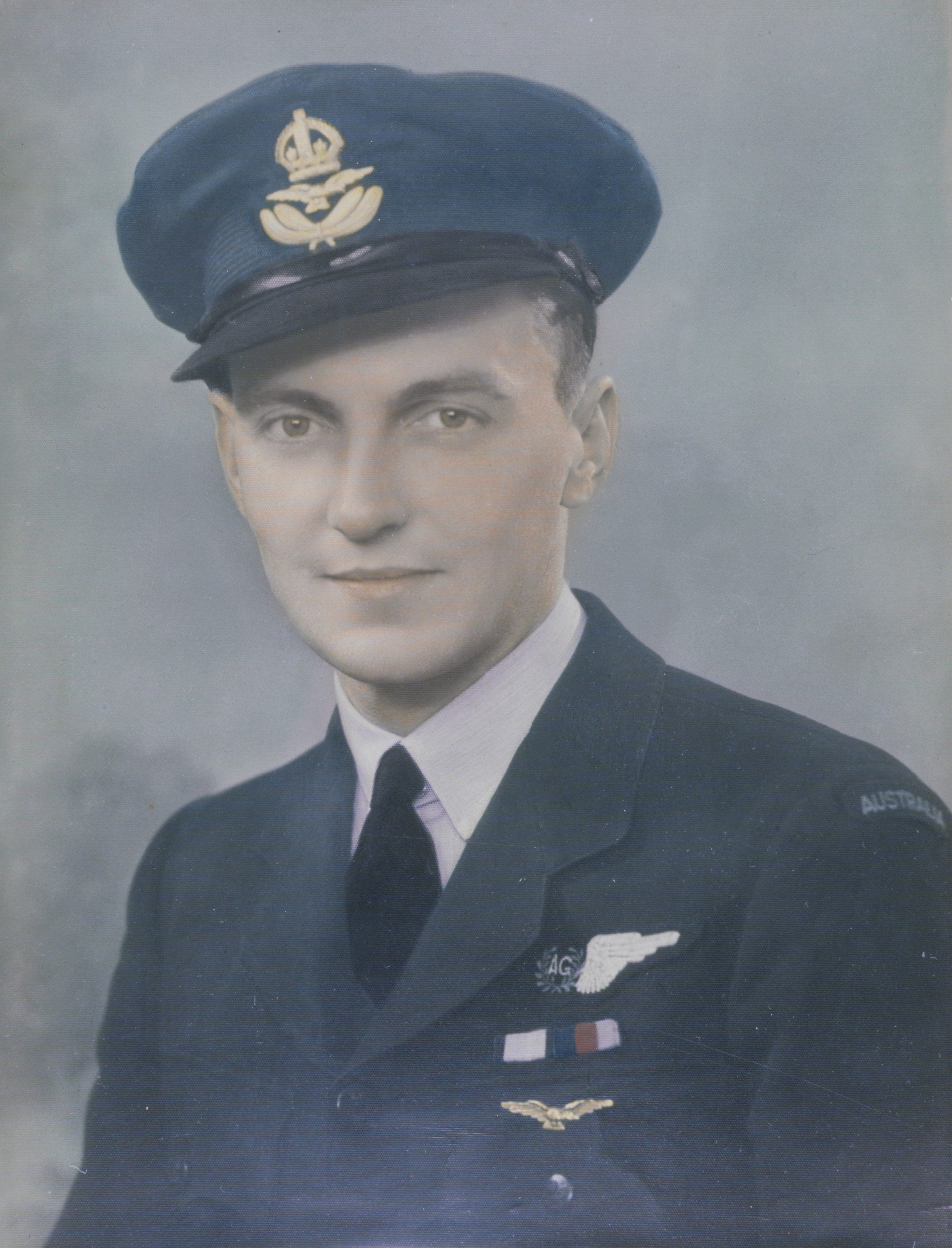
So one of the tail gunner stories we tell in the gallery is that of flight sergeant Geoffrey Chapman-Smith.
Chapman-Smith was a tail gunner in a Lancaster aircraft that became under attack from night fighters and he was badly wounded.
In fact his foot was partly severed but despite his horrific injuries he stayed at his post defending the aircraft for hours on the return journey to England.
When they landed he had to be cut out at the back of the aircraft using fire axes and his leg was eventually amputated.
Chapman-Smith survived and he was awarded a conspicuous gallantry medal.
Just one of 10 Australians to be awarded such a medal during the Second World War.
One thing we wanted to do in the Australians in Bomber Command gallery was continue a tradition that was established by Charles Bean in 1918 when he collected the uniform of Private Giles on the Western Front.
That uniform has long been displayed in our First World War galleries. What we wanted to do was to put together an entire kit and equipment of airmen from Bomber Command in the Second World War and we chose the tail gunner. It's a less glamorous position on the aircraft.
Pilots and navigators often get a lot of the attention. The tail gunner with the mid-upper gunner defending the aircraft were crucial to operations.
"I won't go out"
One tail gunner story in the galleries is that of Flight Sergeant Geoffrey Chapman-Smith. During a raid over Berlin in February 1944, Chapman-Smith’s Lancaster came under attack from a German night fighter.
He was severely wounded, with his right leg and foot partially torn off by cannon fire. Despite his horrific injuries and suffering frostbite, Chapman-Smith remained at his post for three hours, continuing to defending the aircraft.
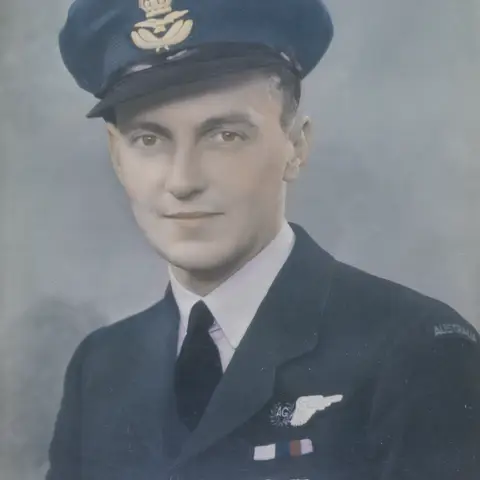
Portrait of Flight Sergeant Geoffrey Charles Chapman-Smith
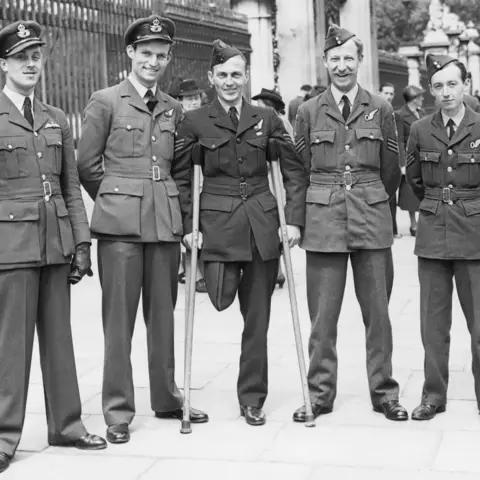
Group portrait of Flight Sergeant G. Charles Chapman-Smith CGM, of Sydney, NSW (centre) with members of his crew outside Buckingham Palace.
"I kept saying to myself, 'I won’t got out, I won’t go out'. The pain in my leg was unbearable"
Flight Sergeant Geoffrey Chapman-Smith
For his actions he was awarded the Conspicuous Gallantry Medal. Chapman-Smith’s leg was later amputated and after recovering from his wounds he continued to serve as a gunnery instructor. His pilot, Pilot Officer K.P. Doyle of the Royal Canadian Air Force said of Chapman-Smith: "He wanted to stay and watch for fighters. He's got bags of guts."

About the author
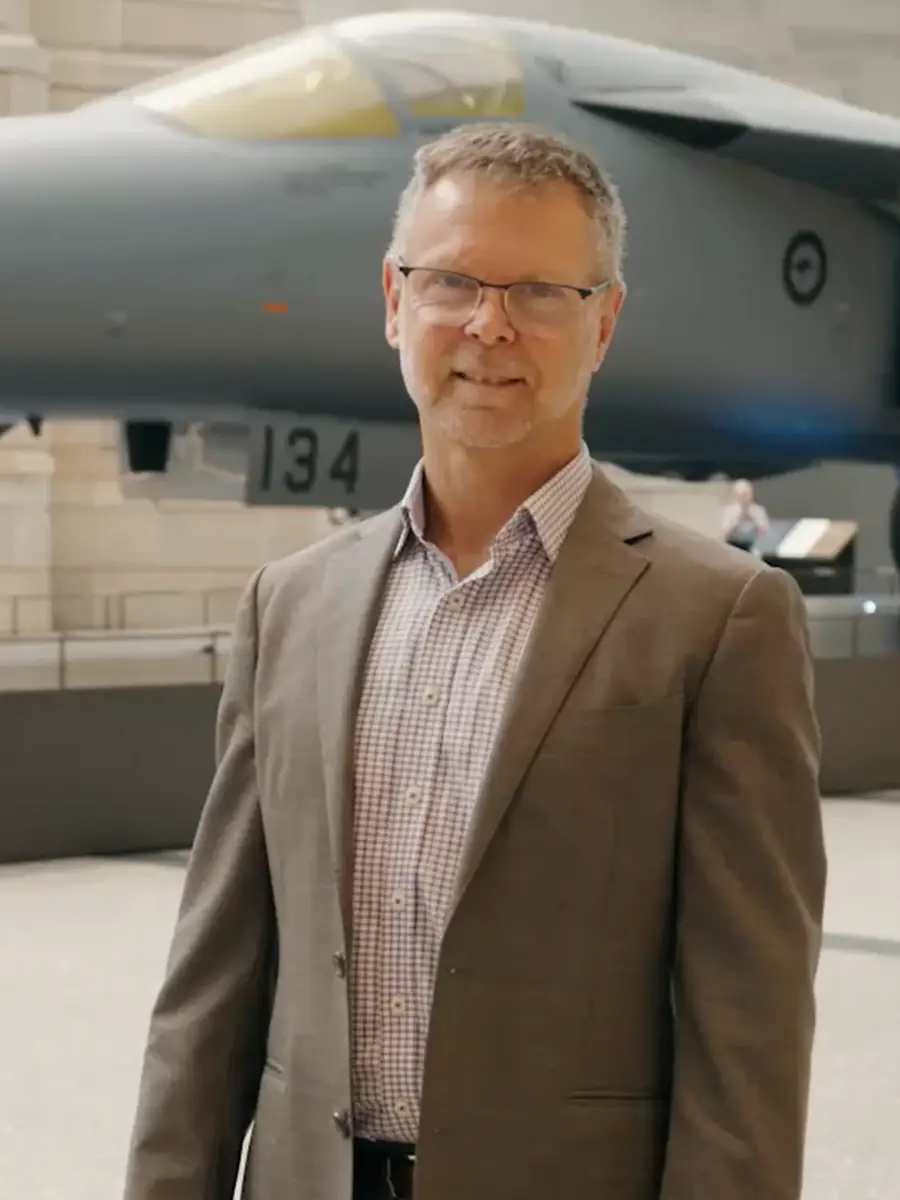
Dr Lachlan Grant
Dr Lachlan Grant is a Senior Historian at the Australian War Memorial.