What makes someone run towards danger to save another person? From acts of bravery to extraordinary endurance, discover what drives ordinary people to risk everything for others, and what it really means to be a hero.
Through Their Eyes shares real life experiences of war, some of which may involve sensitive or distressing subject matter. Themes may include violence, death, trauma, and loss. We aim to share these stories with care and respect, but please take your wellbeing into account while listening. If you need support at any time, visit our show notes for resources.
The Australian War Memorial acknowledges the traditional custodians of country throughout Australia. We recognise their continuing connection to land, sea, and waters. We pay our respect to elders past and present. We also acknowledge the veterans who have served, those that are still serving, and the families that love and support them. This episode is brought to you by the support of Leidos Australia.
Stuart Bennington:
Owing to heavy machine gun fire in Shrapnel Valley, three patients were re-wounded in transit and the three casualties occurred among bearer division. Number 202, Private J. Simpson shot through heart, killed while escorting patient.
John Barrington:
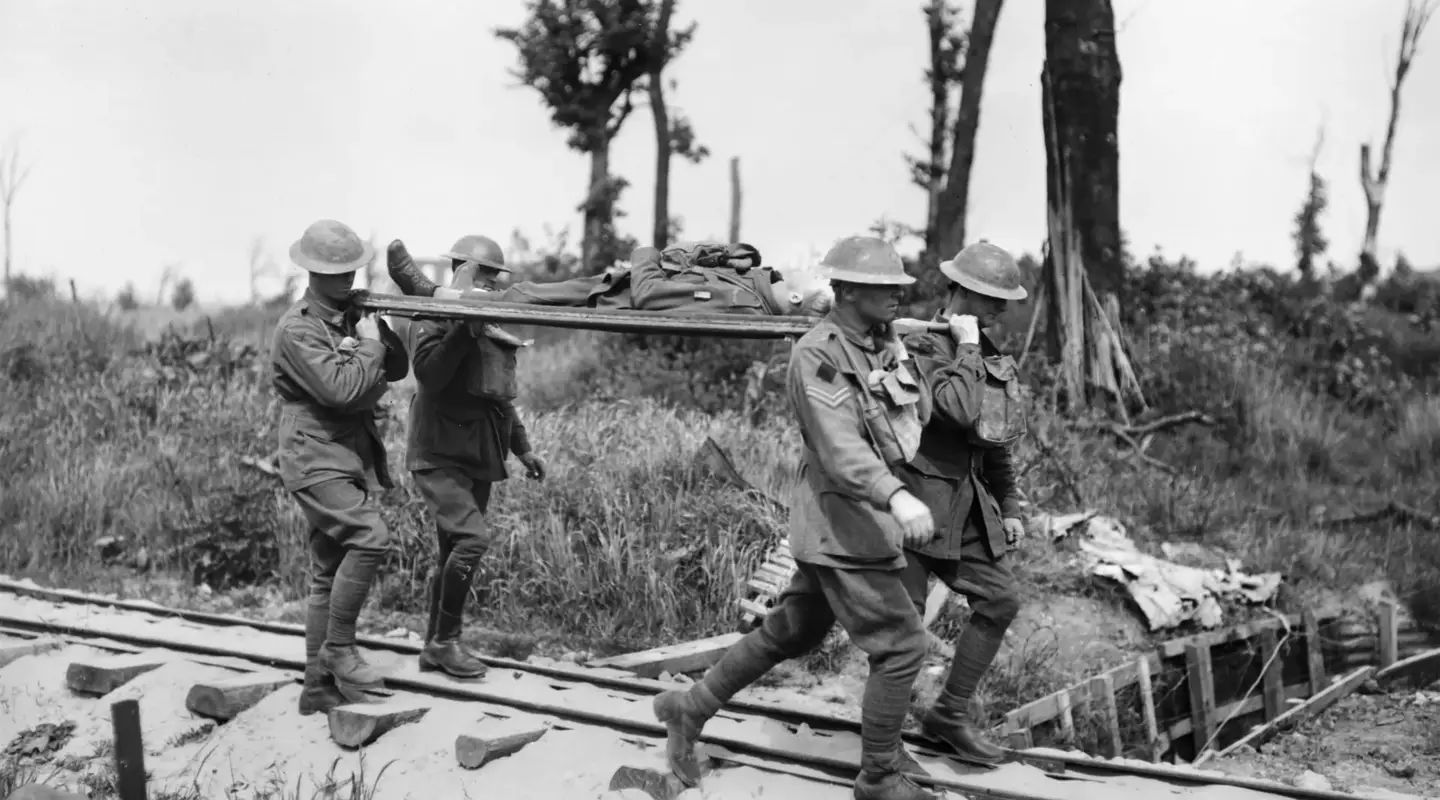
The voice you just heard is AWM curator of official records, Stuart Bennington, reading from the First World War Third Field Ambulance Unit Diary for 19 May 1915. The entry records the death of Australia's most famous stretcher-bearer, John Kirkpatrick Simpson, the man with the donkey. Unarmed stretcher-bearers performed extraordinary feats of valour, risking their own lives to rescue wounded soldiers from the battlefield. Once in medical care, nurses worked to keep wounded soldiers alive, often under the most trying circumstances, sometimes coming under fire themselves.
I'm John Barrington and these are the stories of the ordinary Australians who risked their lives to save the lives of others. Welcome to Through Their Eyes.
The Australian War Memorial's research centre holds millions of pages of archival documents that help tell the story of Australia's experience of war. There are letters sent home to families, diaries filled in at the end of impossible days, official reports recording acts of extraordinary bravery. Photographs, notebooks, and personal papers that preserve experiences their authors could never have imagined we'd still be reading more than a century later. It's also a place where Australians can come to trace their own family story of service, and where the stories of both the famous and the unknown service personnel are preserved. Among them are names like John Kirkpatrick Simpson. A stretcher-bearer at Gallipoli, Simpson and his donkey carried wounded men from the battlefield again and again. AWM's senior curator, Sue Ducker, has spent years researching and sharing the stories from the AWM's archive, and she starts by telling us who Simpson was.
Sue Ducker:
John Simpson was the alias John Kirkpatrick enlisted under in the First World War. Although most people today know of him as either John Kirkpatrick Simpson, or simply the man with the donkey, his family always referred to him as Jack. What many people don't realise is that Simpson wasn't actually born in Australia, he was born in the north of England at Tyne Dock South Shields in 1892. His father was a seafarer, and his family was only just reaching financial stability when in 1904 disaster struck. Jack was only 12 years old when his father, Robert, was badly injured whilst away at sea. And as a result of this accident, his father was returned to their small home and he was left bedridden. The impact of this event was devastating for his family, and Jack left school to take up work delivering milk to help support his mother and his sister.
Interestingly, at this time milk carts were pulled by donkeys. So, this was Jack's first interaction with donkeys as working animals. Five years later, sadly his father passed away and by this time his mother was taking in lodges and his younger sister Annie was in paid work. Two days after they buried his father and now 17 years of age, Jack signed onto a ship and went to sea. His sudden departure greatly distressed his mother and he didn't even take the time to say goodbye to his sister Annie. Whether or not this decision to go to sea was sudden or something he'd quietly contemplated for a very long time, it did give him a better wage and allowed him to better support his family at home. And generally from this time on, he sent about a third of his wage home to his mother. And it was working on ships in the Merchant Navy that took him to Australia in 1909, where at the port of Newcastle in New South Wales he deserted his ship and began travelling throughout Australia.
And he did this for the next five years up until his enlistment. Like many young men in Australia at the time and sort of like a backpacker today, he took on itinerant work wherever he could find it, but working on the ships eventually became his regular employment and he moved to a better paid position of trimmer, and was eventually promoted to fireman. And just to explain with these jobs, they were dirty, hard, physical work. A trimmer's job involved shovelling coal around the stokehold inside a ship. So, when he became a fireman he was stoking coal in the engines that powered the ship. His letters home from these years reveal a young man devoted to his mother and his younger sister, Annie.
He was always happy to recount his adventures and pass on any news of men from South Shields he came across in Australia. However, after a number of years, in March 1914 a tone of homesickness starts to enter his correspondence and he starts saying things like, "I'm beginning to get tired of this country." And then he goes on to tell his mother that he was planning to return home to England by the end of June the following year. But unfortunately for Jack, the war broke out in August. Believing that the Australian contingent would go directly to England, John Kirkpatrick enlisted on the 26th of August 1914 under the alias of John Simpson. Simpson was his mother's maiden name. He used an alias to ensure that once in England, if he deserted the Australian Army to see his family and then later join the British forces, his ruse would go undetected.
Once enlisted, Simpson undertook military training at Blackboy Camp in Western Australia, and it was here that he was spotted and selected by Captain McWhae of the Australian Army Medical Corps to be a stretcher-bearer, and he was selected on account of his strong muscular physical condition that had been built up over many years of heavy work working in the Merchant Navy. Sadly for Simpson, once the contingent sailed it headed for Egypt and not England, and Simpson was bitterly disappointed.
He says in his letters that he never would've enlisted if he had known that he would not be going to England. So he arrived in Egypt, and after further training, on the 25th of April 1915 at 4:30 AM, Simpson landed at Anzac Cove. Jumping into the cold water, he made his way ashore under fire with his unit immediately sustaining casualties. Those that made it across the beach were able to take shelter behind the sandbanks at the end of the beach, and here they were pinned down by heavy sniping, and here they could do little more than attend the wounded amongst their own unit. As the hours dragged on, the sniper fire eased and Simpson's field ambulance set about improving their makeshift shelter, and they set up collecting posts and began searching, and started to bring in the wounded from along the beach and then up into the hills as far as they could go.
The difficulty of this task was amplified by the scattering of the landing units, making any systematic search for the wounded impractical and rendered the recording of casualties in meaningful way just impossible. Between the ill-defined tracks, the inadequate maps, the wounded could not be located and the medical units were not in the positions they were reported to be, and the unexpected inundation of casualties in the first two hours only added to this overwhelming sense of chaos. After stretcher bearing with his unit on the first day, Simpson was reported missing on the second. He had commandeered a donkey, many of which had been brought ashore to help with transporting supplies, and he dressed it in a headband made from a Red Cross brassard, which is a shoulder band with a red cross on it. And on his own initiative, he was working from the aid post at Anzac Cove going up and down Shrapnel Gully and way up into Monash Valley.
He was collecting and carrying down the wounded immobile men on the donkey, mostly arm, leg, and foot wounds back down the valleys to the beach and ambulance stations. Having deserted his unit, his commanding officer, Colonel Sutton, sent out two men to bring him in, which they did do. But after speaking with Simpson, the Colonel allowed him to continue with his self-imposed task using the donkey. Simpson soon began to be noticed by the troops and hierarchy alike. He was known for his affable personality, and he was happy to stop for a smoke and a chat between rescues. And there's a quote from Colonel John Monash, later general, that describes Simpson at this time.
Stuart Bennington:
Private Simpson and his little beast earned the admiration of everyone at the upper end of the valley. They worked all day and night throughout the whole period since landing, and the help rendered the wounded was invaluable. Simpson knew no fear and moved unconcernedly amid shrapnel and rifle fire, steadily carrying out his self-imposed task day by day, and he frequently earned the applause of the personnel for his many fearless rescues of wounded men from areas subject to rifle and shrapnel fire.
Sue Ducker:
On the 19th of May at around 10:30 AM in the morning, after about three weeks of dangerous work, Simpson's luck ran out. He was shot through the heart by a sniper while escorting a patient down to the beach. Sadly, Jack's family did not receive the news for some time and continued to write to him for months after he was killed. When his mother was told of her son's death, she described her grief as her heart bursting with sorrow. And his sister Annie, even into old age, forwarded money every year to the Gallipoli Legion of Anzacs for a wreath to be placed on her brother's memorial near the Shrine of Remembrance in Melbourne. And here in the memorial's research centre, we are very privileged to hold his extensive letters to his mother, Sarah, and his sister Annie, from when he left home to his death in 1915.
These letters are digitised and can be accessed and read on the Memorial's website.
John Barrington:
After the withdrawal of Australian forces from Gallipoli, the Australian Imperial Force went on to fight in the Middle East and on the Western Front in France and Belgium, where the horrors of heavy artillery and trench warfare were experienced by Australians at scale for the first time.
It's on the Western Front where we meet private Lawrence "Snowy" Atherton, a country boy born in Wagga Wagga, New South Wales. He was just 19 years old when he enlisted. He served with the 8th Field Ambulance on the Somme, outside Ypres at Passchendaele, fighting in the final German and allied offensives of the war in 1918. At Passchendaele, he spent 72 hours evacuating the wounded, enduring intense shell fire while his unit suffered heavy casualties. In recognition of his actions over those days, Snowy was awarded the military medal. Dr. Ian Hodges, historian and author of the book, He Belonged to Wagga, tells us about the life and war service of Lawrence "Snowy" Atherton.
Dr Ian Hughes:
Snowy Atherton was born in the late 1890s, but we really don't know very much about his early life, and at some point he moved to Sydney and he was working in Sydney as a chemist's assistant. He was 19 years old when he enlisted in the AIF in July 1915. And so, he was one of those people who missed the early rush of enlistment, but he enlisted in the peak month of recruitment for the First World War when 36,000 plus other men enlisted as well. And the only clue we have as to why he enlisted when he did is that he had to get his teeth fixed before he could be accepted into the army. So, he may have tried before to get in and didn't get in, got his teeth fixed, and he finally was able to enlist in mid 1915. Snowy Atherton probably became a stretcher-bearer because of his civilian profession as a chemist's assistant.
So, he was assigned or posted to the 8th Field Ambulance, and from there as a private with no special skills, medical skills, he would've become a stretcher-bearer. He arrived too late to serve on Gallipoli, but he spent many months in Egypt. He didn't actually go to France until the middle of 1916, and he noted when he got to France and was on the train heading north to the British sector what a pleasure it was to be in a green country after all those months in the desert. stretcher-bearers on the Western Front were incredibly brave men and they were recognised as such. It's not uncommon to see the word superhuman in descriptions of the work they were doing. And in fact, one battalion historian said of stretcher-bearers on the Western Front that it was the most dangerous and the most strenuous job on the modern battlefield.
When a battle was on and perhaps the infantry had reached the point that they were to advance to, they would all be in their trenches seeking cover. The stretcher-bearers, on the other hand, had to expose themselves, and it was very difficult in many places to carry a stretcher through the trenches. And you read about men, their knuckles are bleeding because they're rubbing up against the trench walls. And so, quite often they'd climb out and walk out in the open carrying the stretcher, and that relied on the goodwill of the enemy not to shoot them, and that didn't always happen. A great many stretcher-bearers became casualties. So, it was an extremely dangerous job but it was a job to which the stretcher-bearers you read about were very dedicated, and willing to risk their lives to rescue wounded men and bring them back.
Snowy's first battle was Fromelles in 1916. That was his first experience of carrying wounded men from a battlefield en masse. It was the first big battle that he was involved in. Then he went on to serve on the Somme. And so, by late 1917 he was a veteran. He was a very experienced soldier, a very experienced stretcher-bearer. And the dates that we're discussing indicate that he was in the Battle of the Menin Road during the Third Ypres Campaign. He was carrying nonstop for many, many hours without food, without rest, like the rest of the stretcher-bearers. And so, he found himself in a position where he had to keep working despite exhaustion, despite the danger, and he saw many of his friends killed and wounded.
For him it was another battle, one of many that he'd been in and one of many more that he was going to be in, but this one stood out because during that period he owned the military medal for bravery, partly for getting his little group of stretcher-bearers through unscathed, but specifically also for his and another bearer's rescue of a wounded man who was about 150 metres out in no man's land under fire, and they went out in the open and brought him in. And for that, Snowy earned the military medal. He maintained a very detailed diary through almost to the end of the war. He described the action in which he earned the military medal. Without mentioning anything about his own courage in the diary, he did write at the top of the page, "Earned military medal," and underlined it, but he never said anything about his own work, only about the work of others. And the following is a very evocative quote from that diary from that time.
Shannon Sutton as Archival Voice:
At the line, it was just like hell. Fritz dropping shells everywhere. He blew in the dugout next to the aid post and the medical officer decided to evacuate the post as it meant death to us if we stayed there. We loaded up a waggon with stretcher cases and just moved off about five yards ahead when a shell burst right where we left. We started off to make for the next post. Fritz put a big shell, I thought we were all gone when it burst. Les Townsend got wounded in the hand. He went straight off to the dressing station. I saw an officer coming over the hill about 10 yards away from us. Just as he went to step over the hill, a shell burst right under him, blowing his back to pieces. He died about a minute after. My heart was in my mouth. Just about 10 minutes after that, they brought another one of our boys of the 8th Ambulance on a stretcher, shot to pieces.
It was poor Henry Mercer out of C Section. He was semi-conscious. He lasted for about 20 minutes, then he died. I heard afterwards how it occurred. It appears that they were carrying a wounded man on a stretcher from the Hooge Tunnel to our post at the crater. They got about halfway when a shell burst right under the stretcher. The names of those unfortunate poor fellows who were carrying the stretcher was Mac Doyle, he was killed, Lou Ballard, also Mercer. Bill Hipplesay, he was blown about 20 yards from the stretcher. They brought the report in that he was dead also, about half an hour after he turned up. He told some of the boys that he was stunned and it took him a while to regain his senses. So, that was four of our boys out of C Section killed on one day. I don't mind the carrying, but it's the shelling that comes over.
I have been in some stiff places out in the Somme and Bullecourt, but this Ypres sector takes some beating.
Dr Ian Hughes:
Snowy wrote those words after the Menin Road battle, and he continued his service and went on to carry a stretcher through the large battles of 1918. But it seems though that there was nothing that compared for Snowy with the fighting around Ypres and the time that he owned the military medal. Snowy survived the war and he came home in 1919, early 1919, and he worked his passage home actually as the ship's dispenser of medicine. So, he didn't have the nothing to do type cruise home that a lot of soldiers had. He actually had a job to do, and he did it right up until the point when he arrived back home in Australia.
After that, his wife is not very well known. He married a woman called Queenie sometime in the 1920s, and the little we know of him post-war is that he and Queenie were very heavily involved in the 8th Field Ambulance Association, and they turn up in the newspapers in the late 1920s when Queenie was the vice president of a committee that was set up to organise a ball for the 8th Field Ambulance to raise money for struggling returned soldiers.
Other than that, we know that he lived in the eastern suburbs of Sydney, that he supported East's Rugby League Club when it existed. But we also know that in 1916, Snowy injured his back on the Somme while he was stretcher bearing, and he wrote that he was unable to seek treatment for it because he had to continue carrying for nine days. We don't know much about what happened with that injury afterwards until the 1960s when he approached the repatriation department for a pension based on the fact that he had an injured spine and bronchitis, but he was denied. And so, he never got any benefits through the repat. Stretcher-bearers had to carry through mud, they had to carry for hours. And so, any injury of that type you would expect would affect him into later life. And it seems that that's what happened, but he never got any kind of recognition for that.
But he lived into his 80s. He died in 1981, again in the eastern suburbs of Sydney where he'd been living, and he seems, as far as we know, to have led a successful life as a returned soldier. He stopped working as a chemist's assistant at some point. We don't know when. And when he enlisted for service in World War II, which he did, he listed his occupation as traveller, which I take to mean some kind of commercial traveller. His service in World War II was not very long. He was in his 40s by that time and he never left Australia, and it seems that he enlisted in 1942 when perhaps the perception of danger from the Japanese was at its height. A year later in 1943 he was discharged, service is no longer required, and that's really the last in a military sense that we hear of Snowy Atherton, and his civilian life is quite opaque. We really know very little about it.
John Barrington:
Atherton's courage was characteristic of many stretcher-bearers. All across the Western front they were making the dangerous journey over and over again, heading into the fighting to bring wounded men back. Another one of these stretcher-bearers was a far more unassuming soldier from Numeralla, New South Wales, whose actions would become extraordinary. His name was Ernest "Ernie" Corey. Andrew Currey, reference services manager at the AWM's Charles Bean Research Centre, joins us to talk about how he became a hero.
Andrew Currey:
Ernest Albert Corey was born on the 20th of December 1891 in a small town east of Cooma, and was the eighth child of Thomas and Ellen. After school he gets a number of jobs as a labourer, and he becomes a blacksmith striker at some point just prior to the war. A blacksmith striker is the assistant to a blacksmith who actually swings the hammer, while the blacksmith manipulates the metal that's being struck. A good way of making a young person physically strong and physically capable, which will hold him in good stead for his later career as a stretcher-bearer. He's working in Nimmitabel when the men from Snowy River Recruitment March kicks off from the small town of Delegate, and presumably that would've been fairly well known as it worked its way from Delegate through the small towns in the region. And when it arrived at Nimmitabel, he's one of 30 men who downed tools and quit their jobs, and join the recruitment march, where 144 enlisted in the AIF.
In the First World War, there were two types of stretcher-bearers. There were the regimental stretcher-bearers who were an inherent part of an infantry battalion, was essentially an infantryman first and a stretcher-bearer second, and then either volunteered or were selected to become the regimental stretcher-bearers. The other type of stretcher-bearers worked with field ambulances or other medical units further behind the lines. Field ambulance stretcher-bearers tended to be selected and trained at recruitment, and didn't undertake much military training beyond their basic training. Ernie Corey volunteered to become a regimental stretcher-bearer. After his initial training he leaves Australia, goes overseas. They then sent to the Western Front, and his unit, the 55th Battalion, is in support in the lines recently taken by the Australians after the Second Battle of Bullecourt. And in heavy fighting overnight, the 54th Battalion who are in the line receiving the brunt of the attack, they suffer enormous casualties.
The CO of 54 sends a message to CO 55 Battalion asking for infantry assistance. A second request is sent later asking for medical assistance. And so again, C Company answer that call and Ernie Corey volunteers at that point to become a stretcher-bearer. Corey and his mates then spend 17 hours clearing Australian and even German casualties from that battlefield over the course of the day of May 15th and into that night. Corey is one of four men who are awarded Military Medals for that action in providing assistance to the Australian casualties.
Stuart Bennington:
Recommendation for Military Medal, 29 May 1917. During the enemy attack on the frontline facing Queant on 15th of May 1917, Private Corey, whilst acting as a stretcher-bearer, showed great courage and devotion to duty. Although under direct enemy observation, he carried out his duties continuously for 17 hours without rest and in a manner worthy of the highest commendation. Although an untrained stretcher-bearer, he, together with the rest of the bearer party, saved by first aid the lives of seriously wounded men. The commander of the 54th Battalion wrote an appreciative letter for the help given, specifically mentioning the stretcher bearing party for their good work. Brigadier General Clarence John Hobkirk.
Andrew Currey:
Around four months after him being awarded the Military Medal, his unit then moves up to participate in the actions of a battle that generally becomes known as Third Ypres or Passchendaele. His unit's first involvement is at the Battle of Polygon Wood. On the 26th of September, again, this is an attack that is strongly resisted by the Germans, he and the stretcher-bearer parties spend enormous time evacuating casualties out of there. It becomes trickier for stretcher-bearers in getting casualties across open ground. The physicality of the role becomes very important in stages like this. And one way that they had to manage that was they broke the journey, or the carry, as the stretcher-bearers used to call it, into different stages and they would have what they call bearer relay posts. The recommendation that Corey gets is for his second Military Medal. In military parlance this is called being awarded a bar.
The way this worked was rather than giving you a second medal to hang in your medal set, a bar indicates you received the same medal on a separate occasion. So, this is granted and so he becomes MM and Bar. On the 8th of August 1918, the AIF undertook the first battle in what became known as the Hundred Days or the Advance to Victory, and it saw some of the greatest single day gains achieved by the AIF and the British in most of the Western Front fighting. The high command principle then becomes just keep pressing on, just keep pressing. So, the downside is that it is much harder on your troops as you are relentlessly attacking. So, you have under-strength, tired, under-pressure units about to attack well-prepared German defences. When the brigade and the 54th Battalion try and cross the river, they're met by very punishing fire, and so the casualties are very high.
In these conditions where it's broad daylight and you have to cross a river, you have lots of casualties in trenches, on roads, the stretcher-bearers again have an awful lot of work to do. As the battle progresses, Ernie Corey and the other stretcher-bearers in the battalion are again hard at work evacuating casualties. Most of this is under fire, all of it is under observation by the enemy, and a lot of them are also hit and made casualties themselves. On this day, he receives another recommendation for a Military Medal. This is the second bar, and for me this is the award that demonstrates his bravery most clearly, and the recommendation reads ...
Stuart Bennington:
Recommendation, second Bar to the Military Medal, 4 September 1918. For conspicuous gallantry and devotion to duty during operations at Peronne PM 1st and 2nd September 1918. This man, who is a stretcher-bearer, dressed and carried wounded of several units through the whole operation. Although the enemy artillery machine gun fire was exceptionally heavy, this did not debar Private Corey from carrying on. He worked continuously and arduously, and was the means of saving the lives of many wounded. He was most unselfish, through and cheerful at all times under all circumstances. His conduct was a great example to all his comrades, his careful handling of the wounded and his knowledge of first aid helped greatly to relieve their sufferings. His was a fine example of courage, coolness, and devotion to duty under heavy fire. Brigadier General James Campbell Stewart.
Andrew Currey:
After his third medal at Peronne, a month later the battalion is undertaking what becomes the final push to crack the German positions at the Hindenburg Line. It's called the Hindenburg Line, they are a succession of very well-prepared positions, rather like Peronne, and again, the unit is under-strength attacking a well-entrenched enemy in dangerous positions. Having worked for the past 12 months under incredibly dangerous conditions through shell, machine gun and rifle fire and remaining unscathed, today his luck ran out. Returning to collect a Captain Goldrick, whom he had bandaged earlier, a shell landed near him and blew him up. He was badly wounded in the groin and right thigh, and his first aid bag was blown off him. He crawled the short distance to retrieve it and dressed his own wounds. He then began crawling back towards the aid post and had gone about 300 metres before he was spotted by members of his battalion who picked him up.
He was evacuated to a dressing station, then to a casualty clearing station where he was operated on. For this day's work, he received the third Bar to his Military Medal. After the war, it's generally believed he's the only person in the British Army ever to receive the Military Medal four times. Ernie Corey survives the war and is returned to Australia in 1919. He settled back in the Cooma District where he met and married in 1924. They have one daughter, Patricia. He ends up with various labouring jobs. He's a contract rabbiter, hunting rabbits at one point, but then ends up living in Canberra and gets a number of jobs as a labourer.
In the Second World War, he volunteers to join again. He's accepted into the army and then is ultimately appointed to the second Garrison Battalion. He's discharged medically unfit with asthma in 1943. In his 70s, he's moved to a nursing home in Queanbeyan. In his 80s he dies in August 1972. He's buried with full military honours at the Canberra Cemetery.
John Barrington:
After the stretcher-bearers rescued and retrieved wounded men from the battlefield, they took them to the regimental aid post. These aid posts were usually located about 200 metres behind the front lines, and it was here that the wounded were given vital first aid and had their wounds dressed. They were triaged, and soldiers with minor wounds were bandaged and quickly sent back to the front lines. More severely wounded men were transported by stretcher-bearers who carried them to the advanced dressing station. The trip could be between two and five kilometres and could take around six hours to complete, with as many as 36 stretcher-bearers working in relays to carry each patient. Then there was the main dressing station, which could be another 5 to 13 kilometres beyond the advanced dressing station. From there, patients were moved to a small hospital called a casualty clearing station, which was generally located near a vital communications hub, such as a railway junction.
A trip from the front to the casualty clearing station could take between 8 to 10 hours. Casualty clearing stations were typically 15 to 40 kilometres beyond the main dressing station, and had wards and operating theatres where urgent surgeries were undertaken. Patients were stabilised and then sent on to general or base hospitals for full recovery. Casualty clearing stations were staffed with orderlies, doctors and nurses.
Rebecca Van Der Werff is a curator of digitised collections at the AWM, and has researched the stories of many First World War nurses. She takes us into the story of Sister Alice Ross-King and one terrifying night when the casualty clearing station where she was nursing the wounded came under attack from German aircraft. What Alice did next would earn her the military medal for bravery.
Rebecca Van Der Werff:
Alice Ross-King was born in 1887 in Ballarat. Her father moved their family to Perth when she was quite young, but unfortunately her father and her two brothers died in a drowning accident in Swan River. Alice and her mother soon came back to Melbourne and I think she had a pretty Melbourne City upbringing. She must have had a drive to become a nurse from a really young age, because before she was old enough to actually train as a nurse she was volunteering at various hospitals. She was assisting with a matron at a small hospital, and during a typhoid epidemic she was at Alfred Hospital doing volunteering work. Well, she continued working there to do her training, and once she had gained her certificate there she stayed on to become a sister and a night superintendent and also acting matron. Before the First World War started, Alice Ross-King was in a position of leadership at a private hospital on Collins Street.
The women who were volunteering to become nurses during war were quite young, driven women, had a really strong sense of duty, and also were keen to practise their training and education on a world scale. Alice Ross-King kept a series of diaries while she was overseas serving for the war effort. Her diaries are a sharp and lively depiction of all the people and places she encountered when she was in Egypt and France. She described in great detail about her nursing duties, which included attending the wounded coming in from Gallipoli, and later those wounded throughout the Somme Offensive in the Western Front. She also describes in her diaries many cases of diseases and pneumonia. Alice certainly had the social stamina of somebody in their 20s. When she wasn't working extremely hard, she was partying hard. She was out in Alexandria, in the city, jumping on trams, just trying to absorb as much of this environment as she could, like anyone who was going on an overseas adventure.
She was wanting to see pyramids, the Sphinx, she was going to the bazaar, she was buying feathers and silks and books. She was going to tea houses and plays and musical events. And the whole time she was doing this, she was doing it with new friends. She was honestly just absorbing as much of the environment as she could. Despite all the gruesome things that she was seeing and all the blood and horror and wounds, she also had this positivity about her. You could tell in her words she had a love of poetry and just the beauty of life. Even though she'd be at hospital working all day with the most horrible things and seeing so many deaths, she'd still come out. In her diary she would describe the moonlight, or the sunsets, or the wildflowers or the pastries, and she just had this real loveliness to the things that she saw, and she saw these things in people too.
When she made friends with people, she would describe their eyes, and the things that they say, and the things that interest her. And I think she really, in that sense, really wore her heart on her sleeve. You could tell she didn't like doing nothing. She was always volunteering for the next project, she was always volunteering for the next thing that needed to be done. Also volunteered early on in the war to be on a return ship home for those who were too wounded and needed to return to Australia. And of course when she came back to Melbourne, she was keen to get back to Egypt to continue with her work. The return ship full of reinforcements that she found herself on coming back to Egypt took quite a few days to get there, and she often experienced a lot of seasickness and was working hard on the ship's ward with various cases of diptheria and seasickness.
And she also found herself gaining more friendships with those on the ship and soon became quite chummy with a young officer, Harry Moffitt. There's a small gap of a few days in her diary, and when she returns to writing she has declared undying love for this man. She has fallen head over heels, says that she's never felt this way towards anyone before. She is absolutely smitten with Harry Moffitt. She returns to Egypt, back to her work. Harry is stationed on the other side of the city, but she meets with him quite regularly. They're basically dating, having tea on top of the pyramids, watching the sunset. In early 1916, her and all the other nurses in Alexandria were moved to France. When they first arrived, they were initially disbanded and working in various other small hospitals, often under English doctors. I think that working in France became quite a different scene to that of Egypt.
There was a massive amount of wounded English, Irish, Scottish, Canadians. They just were never ending. They were coming in with their legs blown off, their feet blown off. They had bullet wounds right through their abdomens and bladders. Some of them had been lying on the battlefields for four, five, six, seven days before they were dragged off into hospital. The fact that they were alive was amazing. They'd come in, their clothing completely torn, stiff with blood, completely covered in parasites. It was horrific what they were dealing with. So many of them were instantly going into hospital and they were receiving amputations. You could tell from this point in her diary when she's working in France, just how weary she'd become of war. Although she was trying to experience as much as she could, her diary had a lot less talk of tea parties and meeting people.
There was a lot more, "Where is Harry? I hope he's alive. Where are all these people coming from? There are so many wounded, we don't have anywhere to put them. They're coming in on train loads." So, while she's working in France and dealing with all these wounded soldiers from the Somme, half her mind is with her beloved, her sweetheart, Harry. She doesn't know where he is, she doesn't know if he's still alive. She's receiving letters from him every now and then, but they're often 10 days out of date. She doesn't know what's happened in between that time. She's hoping for the best, she's looking for his face all the time. Unfortunately, on the 19th of July in 1916, he was killed in the village of Fleurbaix. Her world was completely shattered from that point. She got in a really dark head space and was obviously completely heartbroken.
She had trouble believing that he died. She was often looking for his name on prisoner of war lists, hoping that he had gone. The reality really set in as time went by and she did continue working, and she mentions in her diary that she can't stand the silence so I think she preferred working. It was something she could do robotically while she was mourning. In July 1917, Alice was sent to the No. 2 Australian Casualty Clearing Station at Trois Abres at Armentières, and it's here that Alice's most remarkable experience occurred. On the night of 22nd of July 1917, a German aircraft bomber attacked the casualty station that she was working at. This is how she described this event in her diary.
Meredith Tibbitts as Alice Ross-King:
I want to write the story of the bombing while it is still fresh in my mind. I was at the head just when Wilson came for me. Gilmore, a very bad pneumonia, was frightfully delirious and Captain C had suggested giving him sedative enemata. I went along the duckboards on the way to the tent where Gilmore was when Fritz was caught in the search light just above us. Batty caught my arm and pointed up saying, "Doesn't he look pretty, Sister?" Wilson walked on swinging a lantern. Then we heard the whir of dropping bomb. "Get down, get down," cried Batty, and dived under the ward table. Though we had been ringed often before, we had not been hit, and I just ran on after Wilson expecting the bomb to hit the railway line, but it fell ahead of me and it was followed by four others. The noise was so terrific and the concussion so great that I was thrown to the ground and had no idea where the damage was.
I flew through the chest and abdomen wards and called out, "Are you all right, boys?" "Don't bother about us," was the general cry from there. I raced along the duckboards towards Gilmore's tent. Although every light was out and there was a faint moon, the sky was full of search lights and fragments from the Archies were falling like rain. I remember one hitting a board right in front of me. I met the cook running along the duckboards, making for the paddock next door, swearing hard. When he saw me, he shouted, "It's put out my bloody fire, Sister. It's put out my bloody fire." Then met patient running in pyjamas. "I've got my paybook, Sister," he shouted as he passed. I raced on and the next thing I knew, I went over into a bomb crater. I shall never forget the awful climb on hands and feet out of that hole, about five feet deep, greasy clay and blood, though I did not know then that it was blood.
It was right in front of Gilmore's tent, which has three marquees joined together with about 46 stretcher cases in it. The tent had collapsed, and though I shouted nobody answered me, or I could hear nothing for the roar of the planes and Archies. I seemed to be the only living thing about. I tore along to the theatre, the lights were out and the doors shut. I hammered on the door and called out, "Help, help. We've been hit." But no one came. Topsy told me afterwards that every bottle had been broken and they were in pitch darkness and afraid to move because there was so much free chloroform and ether about. They were expecting a fire. I raced back to the tent and the first one of the staff I saw was the Padre. "Oh, what shall I do, Padre? I can't get help." "Just leave it to the Lord, Sister, "said the dear old pet.
A very decent chap he was. It seems such a mad thing to say, but he was very much shaken. "I'll go and get some help, Sister, but you must get undercover." I tried to get into the tent again and get hold of a stretcher handle under the fly. There was a patient on it, but he was dead as I found out afterwards. The stretcher handle must have been splintered and I fell backwards into the crater again. I cannot remember who came next or what I did, except that I kept calling for Wilson to help me and thought he was flunking, but the poor boy had been blown to bits. Somebody got the tent up, and when I got to Gilmore he was crouched on the ground at the back of his stretcher. He was at the far end of the tent. He would not take any notice of me when I asked him to return to bed, so I lent across the stretcher and put one arm around him and tried to lift him in.
I had my right arm under a leg, which I thought was Gilmore's, but when I lifted I found to my horror that it was a loose leg with boot and putty on it, one of the orderly's legs which had been blown off and landed in Gilmore's bed. Next day, they found the trunk up a tree about 20 yards away. I have no distinct memory of what followed, but apparently I carried on with the job. The bombing happened at 10:30 PM, and when I next remember clearly it was early daylight and Fritz was coming over again. I got a bad attack of trembling when I heard Fritz again. Over 20 men killed by concussion, they were lying on stretches on the ground. Three bombs fell in the camp and two outside, one in the mortuary and one in the cemetery.
Rebecca Van Der Werff:
For her brave actions that night, she won the military medal along with three other nurses, Dorothy Cawood, Clare Deacon, and Mary Jane Derrer. Alice continued to work as a nurse after that event throughout the rest of the war. Of course, when armistice took place, she was celebrating on the streets along with everyone else. I don't think they could really believe that the end of the war had happened.
Meredith Tibbitts as Alice Ross-King:
Yesterday was a wonderful day. There has been an armistice. The Boche has given in. Two months ago, we would not have thought it possible. I'll have no more wounded. People were dancing in the street, just a skeleton staff in the wards. John Pughan and Blue came out for me to see the town. One very drunk Australian soldier came up to me leading a white draught horse he had pinched from a Frenchie's cart. It had a red collar on it. He said, "Here you are, Sister. I wouldn't want this horse again, I'm going back to Australia." I said, "Is it your horse?" He said, "No, but you can have it." And I was left with a horse. The next day we caught a train and had a day in Paris. The fares were paid and no passes asked for.
Rebecca Van Der Werff:
I think she was hoping to stay in Europe for a little bit longer for a little bit of sightseeing, but as soon as they mentioned that they needed nurses to be home to help deal with the wounded that was coming in, she was again like, "Okay, sign me up. Let's go home." Her war story doesn't end there though. In the 1930s, she was involved with some training of voluntary aid detachments, and during the Second World War she'd moved closer into Melbourne and developed the Australian Army's Women's Medical Service. Alice Appleford by then was then appointed as a major, and she worked with thousands of nurses on their way to duty in the Second World War. She also was heavily involved with a lot of Red Cross fundraising. She helped raise a lot of funding for the war effort, but as well as helping efforts for widows, children, other nurses, and happened to fall in love with the very charming doctor, Dr. Sydney Appleford.
They moved to Gippsland and she had four children with him, two girls and two boys. Alice was awarded the Florence Nightingale Medal in 1949 by the International Red Cross. Her citation is descriptive of her character. No one who came in contact with Major Appleford could fail to recognise her as a leader of a woman. Her sense of duty, her sterling solidity of character, her humanity, sincerity, and kindliness of heart set for others a very high example.
John Barrington:
Alice Ross-King's courage is a powerful example of the courage and endurance typical of many Australian service nurses, but for another Australian nurse, courage would mean something different, surviving.
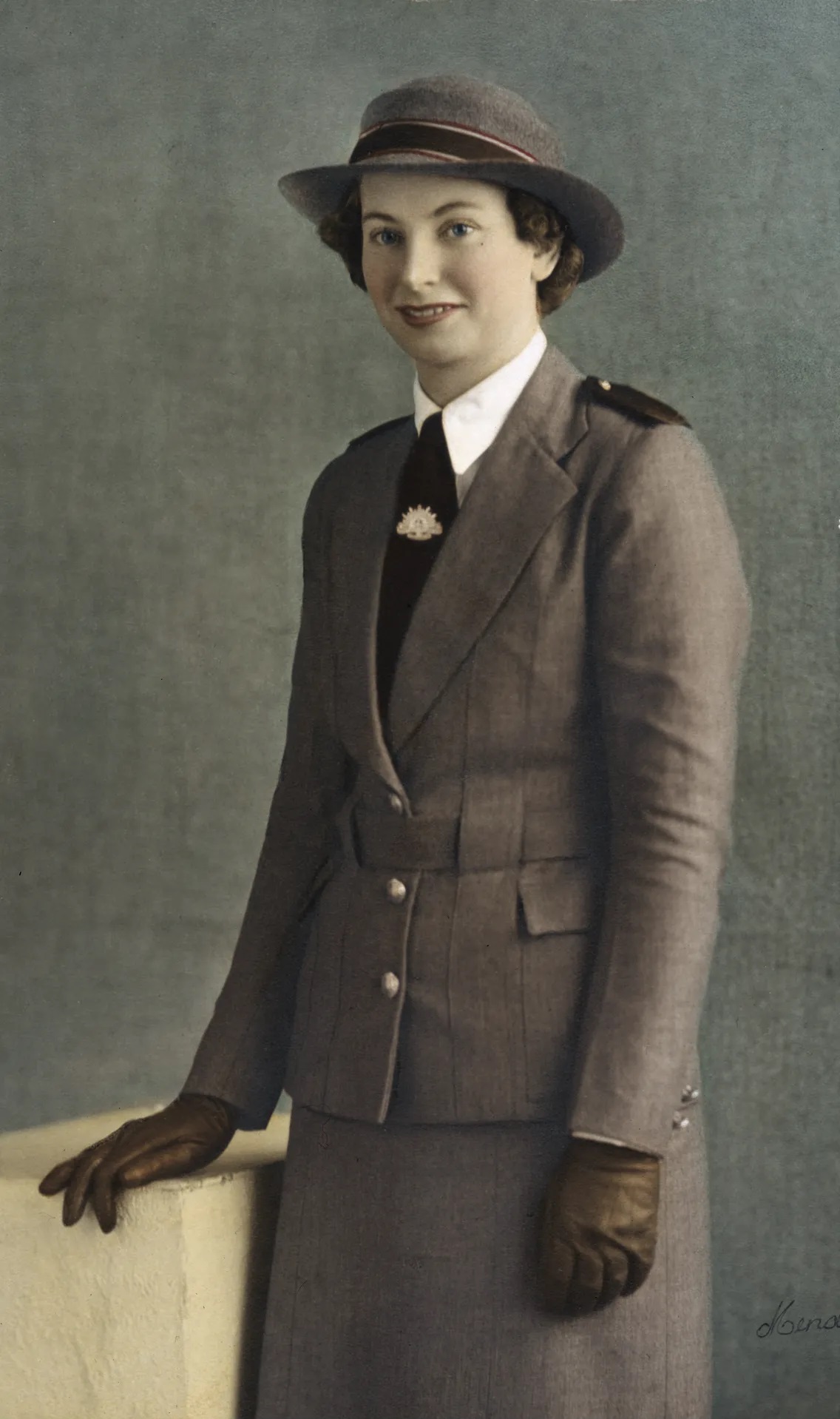
During the Second World War, Sister Vivian Bullwinkel survived the sinking of her ship, the Bangka Island Massacre, and more than three years of deprivation as a prisoner of the Japanese. Penny Fisher is a curator of digitised collections at the AWM and has been responsible for the digitization of the wartime diary and papers of Vivian Bullwinkel. She traces Vivian's remarkable story from the desperate evacuation of Singapore in 1942 to the years of captivity that followed.
Penny Fisher:
Vivian Bullwinkel was born in South Australia during the First World War. She grew up in Broken Hill in New South Wales, attending the local schools where she loved and excelled in sports. Vivian actually credits her mom as a motivator to becoming a nurse. Her mom herself wanted to be a nurse, but was of the generation where it was of the norm for women not to work. But as mothers often do, she saw something in Vivian and encouraged her to take up nursing, and so she did. She then began her training in Broken Hill in 1934, and upon graduating, qualified in midwifery 12 months later before she began working as a nurse in Victoria. It was in 1941 at the age of 26 that Vivian volunteered for service, feeling a strong call to enlist. Her brother was already in the Royal Australian Air Force and she wanted to help, saying, "There was never any doubt in my mind once war was declared I was going to enlist. I felt as if my friends were willing to go and fight for their country, then they deserved the best care we could give them."
And so, Vivian reported for duty in May of 1941. So, the memorial holds an extensive collection of Vivian Bullwinkel's papers, with contents that spanned from 1916 through to 1998. Donated to the memorial by Vivian herself, it includes her wartime diaries and notebooks, extensive correspondence relating to her experience as an Australian Army sister, as well as photographs, news clippings, letters, and ephemera relating to her post-war career and voluntary work. Her diaries and notebooks have entries dated from August 1941 through to February 1942, and they give us a firsthand account of the evacuation from Singapore. Vivian found herself in Singapore after embarking as a staff nurse with the newly raised 2/13th Australian General Hospital in September of 1941. Following the Japanese invasion of Malaya in December the hospital was withdrawn to Singapore, and on the 12th of February 1942, along with 65 other nurses, Vivian was evacuated on the SS Vyner Brooke.
Her entry written in her diary from the 14th of February 1942 reads, "Beautiful sunny morning, calm sea, an anchored, very pretty island. Peacefulness disturbed as planes flew over and machine-gunned boat. All took to lower deck as prearranged, but raid all over and much discussion on planes sinking us and enemy aircraft. Took up anchor and steamed along. 2:00 PM, air raid siren. All down to lower deck and flattened down. Six planes attacking once more, bombs hit, second, third time, third bomb below the waterline, whistle for all on deck to take to lifeboats."
Two days later, on the 16th of February, the ship was sunk. Survivors reached the shore of Bangka Island in the Dutch East Indies, now known as Indonesia. A couple of days later, after surviving on only water, the group decided to surrender to the Japanese with a group of civilian women and children sent towards the town in search of food and assistance. But shortly afterwards, a group of Japanese soldiers arrived on the beach with those remained, and the events that followed are shocking.
John Barrington:
In 1983, Vivian was interviewed about her wartime experiences by ABC broadcaster Tim Bowden. What follows is a recreation of an extract from that interview. These are Vivian's own words, recalling what happened on the beach on that terrible day in February 1942, read here by an actor.
Voice Actor (As Vivian Bullwinkel):
We want to be taken prisoners, and once again, he was sort of pushed away and then they ordered the men and told them, rifle and bayonet point, round into another cove, and we were left sitting. So there were 22 of us, 23 with the English woman. Well, they came back wiping their bayonets so that we hadn't heard any shots, so we realised what had happened. And I can always remember this lass who was beside me saying, "There are two things that I hate most, and that's the sea and the Japs, and I've got both." And then when they arrived back in front of us, they ordered us to stand and they'd marched us or sort of shepherded us into the water. And then as we got out about waist level, they started machine-gunning from behind, and I was hit just on the side at the back and the bullet came through, but I wasn't aware of it at the time.
And then I always sort of felt that when you were shot, you'd sort of had it anyway. And with the force of the bullet and the waves, I was knocked over into the water, and in doing so I swallowed a lot of salt water and then I became violently ill, and by this I still didn't realise I was still very much alive. Next thing I though, "Well, they'll see me heaving as I'm vomiting." So, I tried to stop that and I just sort of lay there, and I wouldn't know how long. And then when I sort of did venture to sit up, there was nothing. All my colleagues had been swept away. There was no Japs on the beach. There was just nothing, just me.
Penny Fisher:
So, we've just heard Vivian describing the events on Radji Beach when the Japanese soldiers murdered nearly 100 allied servicemen and 21 Australian nurses. And there have been some recent media's reports that considered the possibility that Vivian and the other nurses were sexually assaulted before they were marched into the sea and then openly fired upon. And while this is possible, as the only survivor and witness, Vivian's unable to formally respond to these questions as she did pass away in 2000. But that doesn't take away from the extraordinary feat of survival. Vivian survived the massacre and spent two weeks in the jungle of Bangka Island, caring for a wounded British soldier while recovering from her own gunshot wound to the abdomen, then decided to both surrender on the 28th of February on 1942 when they were taken prisoner by the Japanese. Vivian was then interned at Muntok in Bangka Island where she was reunited with 31 nurses who had survived the sinking of the Vyner Brooke, before being transferred to camps in Palimbang in Sumatra, where she was then interned for two and a half years.
While in captivity, neither she or the other nurses, once she shared their story with her, ever spoke of the events on the beach, and when she was asked about it, actively lied about it, fearing for retribution. But once she was taken prisoner, Vivian was optimistic, believing that everything was going to be okay. It was better to be a prisoner than it was to be lost in the jungle. While in captivity, she did the best she could with what little she had, and she spoke of the worst times as always feeling just that little bit on edge with things feeling they were getting just that little bit worse all the time. But Vivian also maintained that a sense of humour was really important to keep within the camps. And she said that she found no matter how the dire the circumstances, that she could always find something to laugh at.
And to help stay sane while they endured through illness and starvation, the prisoners formed a choir. They swapped recipes of food they longed for, celebrating birthdays, making cakes out of rice, decorating them with jungle leaves to make it feel that little bit festive, also celebrating Christmas and Easter. And there's actually a really fantastic example from her collection that shows her ability to make light of a situation. In the only postcard that she was allowed to send home, she wrote to her mom in March of 1943, and there's a lovely little quote in which she said, "My roving spirit has been somewhat checked." And then after two and a half years of Palimbang and Sumatra, the remaining survivors were taken back to Muntok where they were then liberated on the 16th of September in 1945. Vivian spent a total of three and a half years as a prisoner of war.
After leaving the camp, all the nurses, the surviving nurses, they were all very malnutritioned, and they were taken back to Singapore for recuperation where they were given a very basic diet. And in her interview, she actually speaks of soldiers sneaking in steak and eggs, and hoping that the hospital would cook them up, but because of their malnutrition the hospital refused. It was a very simple diet of bone broth, and she did say that she was sad that they'd taken away rice because it was all they'd known for three years, but yet there was a recuperation time within Singapore before returning to Australia. Well, after the war, Vivian became an Australian national hero with news of her survival of the massacre appearing in the press just days after her liberation. After years of silence, she was finally able to tell her story. She gave evidence before the Tokyo War Crimes trials in December of 1945, and she was described as a model witness.
Her post-war career can also be traced through her collection, and she credits her return to nursing as how she was able to return to daily life with relative ease. Upon returning to Australia in 1947, she was awarded the first of many honours and awards, which was the Royal Red Cross Second Class. Others also included the Florence Nightingale Medal, an Order of the British Empire Medal, and the Officer of the Order of Australia. Vivian then went on to marry in September of 1977 to Colonel Francis West Statham, and then in 1992 chose to return to Bangka Island where she selected a site for a memorial, and it was in the following year in 1993 that her ambition to make a fitting tribute to her colleagues was finally realised with the dedication of the memorial on the island.
John Barrington:
From the cliffs of Gallipoli to the battlefields of the Western Front, and years later the fall of Singapore, we've heard stories of people who walked in danger, carried the wounded to safety, cared for others under fire, and somehow endured the unimaginable. Some became legends and others were almost forgotten, but what made these ordinary Australians risk their own lives to save someone else?
Dr Ian Hughes:
Snowy Atherton was just an ordinary young man. He was 19 years old when he enlisted, and he was still in his early 20s when the war ended. What made stretcher-bearers different, obviously, was the fact that they didn't carry a weapon, and many people wanted to enlist and wanted to help the war effort and wanted to serve, but not all of them wanted to kill, and Snowy Atherton was one of those men who didn't want to kill but wanted to play his part in the war. And so, he took on a role that was extremely dangerous, but he also took on a role that at first at least was questioned by a lot of other infantrymen who didn't regard stretcher-bearers as sharing the courage that the infantry shared. That soon was erased, that way of thinking when people saw what stretcher-bearers did and the risks that they took.
I have seen one quote where a crew of stretcher-bearers was described as a social unit of courage. If you're working in a team at close quarters in dangerous situations like that, you don't want to be the one who lets the team down by running or by not doing your duty. And so, the presence of three other stretcher-bearers encouraged the fourth to carry on and to behave with the sort of courage that stretcher-bearers became known for. And it's very common to read the word heroic used by other infantrymen in relation to stretcher-bearers. And if you read memoirs and diaries from the First World War, you will often see references to stretcher-bearers, how brave they were, the risks they took, and the fact that they were perhaps considered even braver than infantrymen by the end of the war.
Rebecca Van Der Werff:
What I find most interesting about Alice's story is that her diaries allow us to see the First World War from a different perspective. We often hear about soldiers in the trenches, but Alice's story shows us what war looked like from a medical perspective, but also from a woman's perspective. The endless wounded arriving, the fear and exhaustion, the nurses working under conditions that could be just as dangerous as those faced by the soldiers. Her military medal recognised one night of extraordinary bravery, but her wartime service represented years of difficult and dangerous nursing. Alice Ross-King's story is therefore not only a story about courage under fire, it is also a story about duty, compassion, and of thousands of Australian nurses who went overseas during the First World War to care for the men who had been sent there to fight. When we talk about Australian heroes, the nurses are an indelible part of that legend.
Andrew Currey:
If you're an infantryman and you're wounded, the person that saves your life is obviously going to be an important figure in that life and in your thoughts and commemorative activities around your service. But it's fascinating that that is not something that seems to translate into broader military commemoration. The enthusiasm is about the fighting, the killing the enemy, the winning the battles. So, why is it that men like Ernie Corey are encouraged to pick up a stretcher and turn that enthusiasm and desire to saving the lives of their mates? A regimental stretcher-bearer was considered a combatant. They were permitted to take up arms and fight and defend, but none of them seem to have ever done that. Once they become a stretcher-bearer, that seems to become their life, their role, their commitment to their mates and to their unit. And Ernie Corey in particular, being awarded four Military Medals for that work was clearly well cut out and well suited for that role.
Sue Ducker:
John Kirkpatrick Simpson was a young man who was placed in extraordinary, difficult and dangerous circumstances at the Anzac Beach on the shores of Gallipoli during some of the bloodiest weeks of the Anzac campaign. And he displayed incredible courage as he rescued and transported his patients through rifle and shrapnel fire, and without hesitation, becoming known as the man with the donkey. For his devotion to duty, he was awarded a mention in dispatches, and although at the time there was some efforts towards a recommendation for a VC, nothing formal ever eventuated. But Simpson's story really resonated with the Australian people at the time. And at that time, everyone would've known someone like John Simpson working his way around Australia and sending money home to his family. And his story of heroic selflessness still resonates with everyday Australians today.
Penny Fisher:
Vivian Bullwinkel's story is one of incredible courage and survival that has resonated with people for decades. She was the sole survivor of the Bangka Island Massacre, and she came to epitomise courage, sacrifice, and bravery, which was just all born from her drive to selflessly help and care for those who enlisted to help their country. She continued to nurse while in captivity, helping those with what very little that she had, and once liberated, continued in her dedication to the nursing service, serving for many years after the war and going on to do volunteer work as well. Her heroic story is etched into Australia's experience of the Second World War and will continue to inspire for decades to come.
John Barrington:
This episode was researched and produced at the Australian War Memorial by Sue Ducker, and featured her voice along with Shannon Sutton, Dr. Ian Hodges, Andrew Currey, Rebecca Van Der Werff, Penny Fisher, Stuart Bennington, and Meredith Tibbitts. If you'd like to explore any of these stories further, to read diaries, papers, letters, or view objects from the memorial's collection, you can find links in our show notes.
Voice Over:
This episode is brought to you by Leidos Australia.
Behind these acts of courage are the stories of five remarkable people.
At Gallipoli, John Simpson Kirkpatrick became a legend for carrying wounded men to safety with his donkey. On the Western Front, Lawrence “Snowy” Atherton and Ernest Corey faced relentless shellfire to rescue the wounded, yet their names are far less known.
Nurses Alice Ross-King and Vivian Bullwinkel faced danger of a different kind. One continued caring for patients as bombs fell around her. The other survived the sinking of the Vyner Brooke, the Banka Island massacre and years of captivity under the Japanese.
Through their experiences, we explore heroism in its many forms, from acts of bravery to extraordinary endurance and ask what drove ordinary people to risk everything for others.
Collection items and related stories
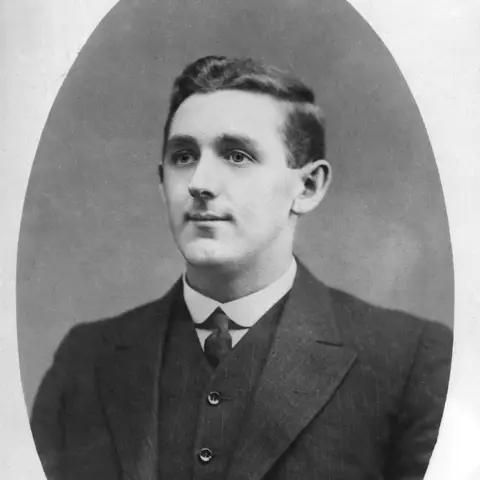
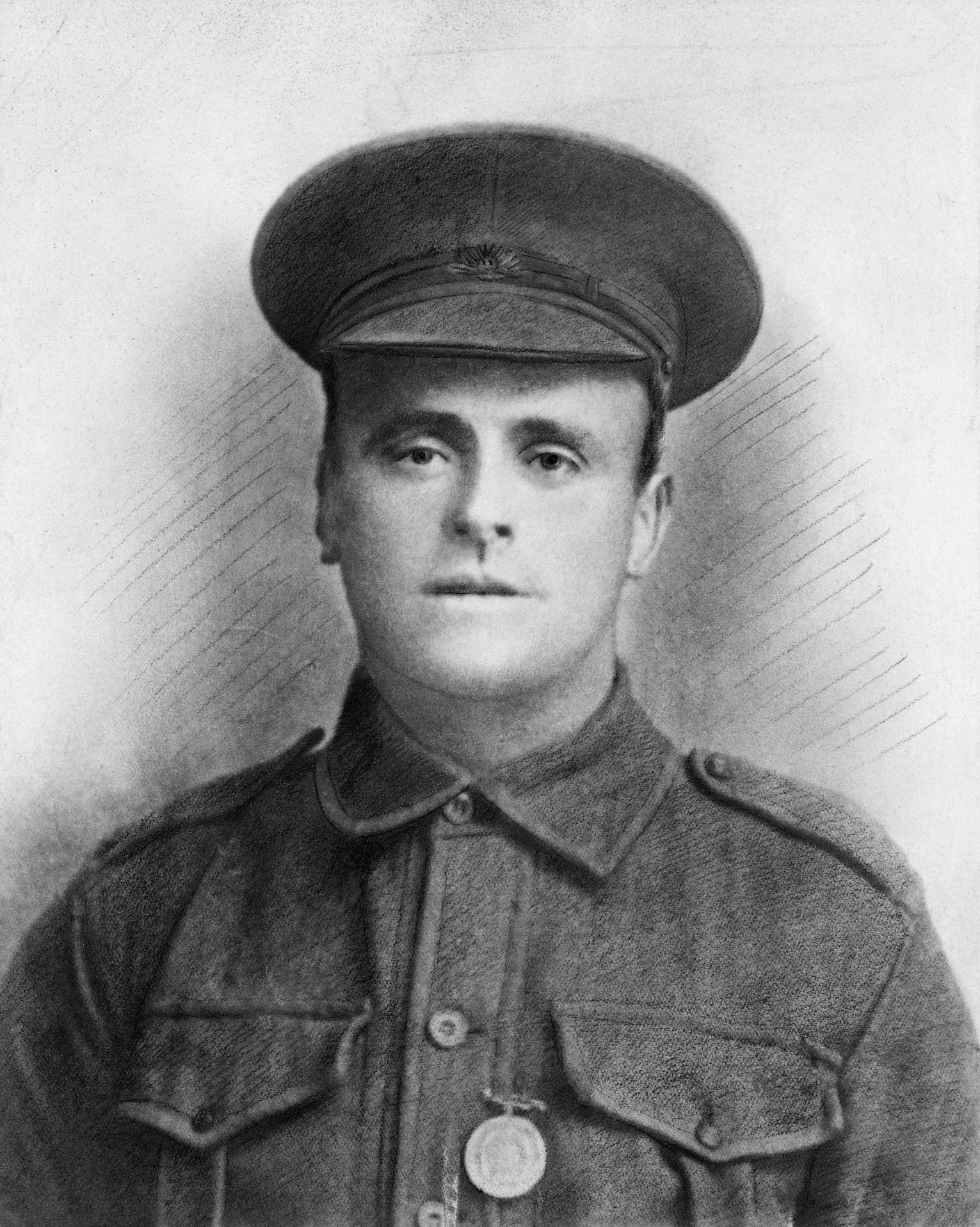
Studio portrait of Private John Simpson Kirkpatrick
Explore the story of John Simpson Kirkpatrick
- Discover the story behind one of Australia's best-known in the AWM's Anzac Voices: John Simpson
- Explore letters exchanged between Simpson and his family in the AWM's private records collection
- Learn more about the life, service and legacy of John Simpson Kirkpatrick and his donkey
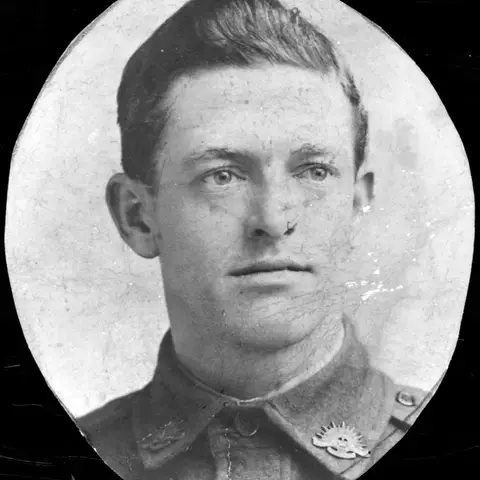
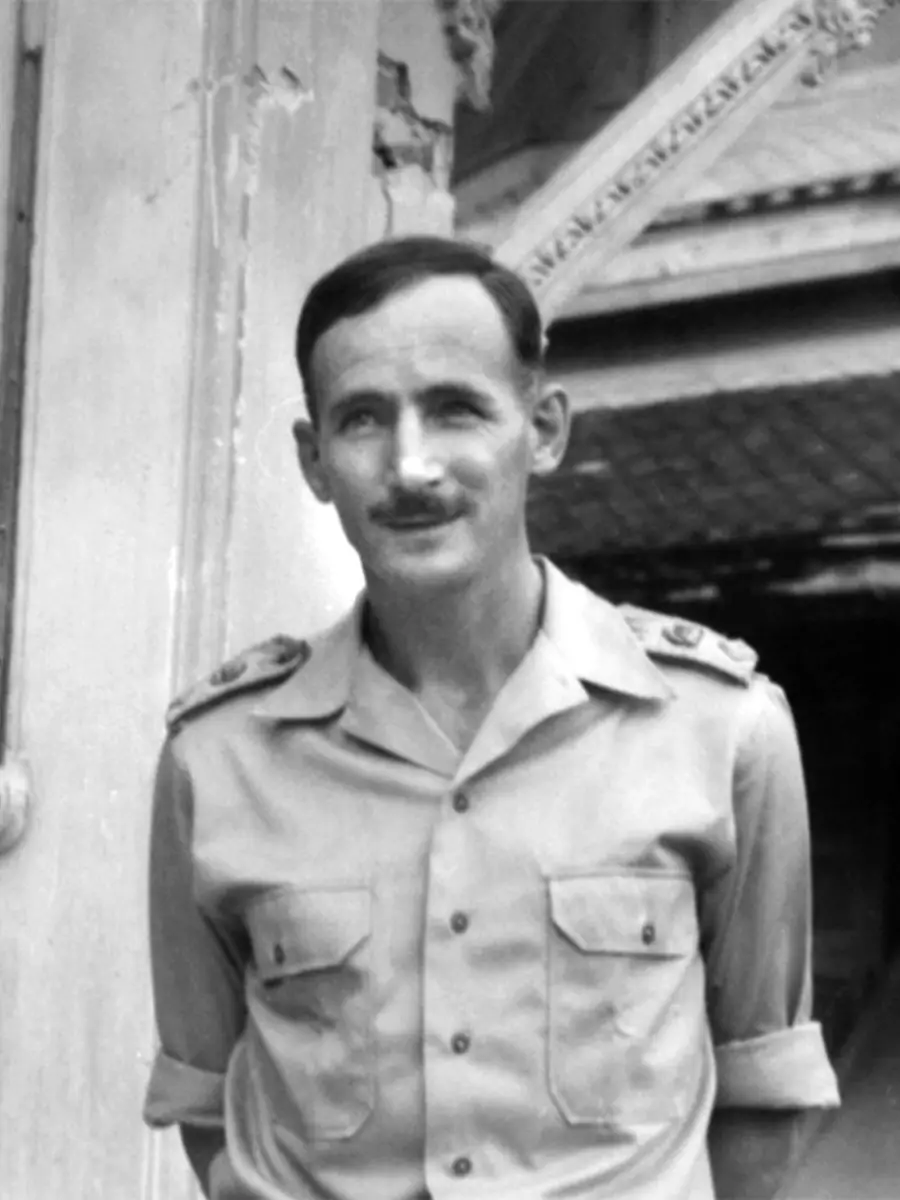
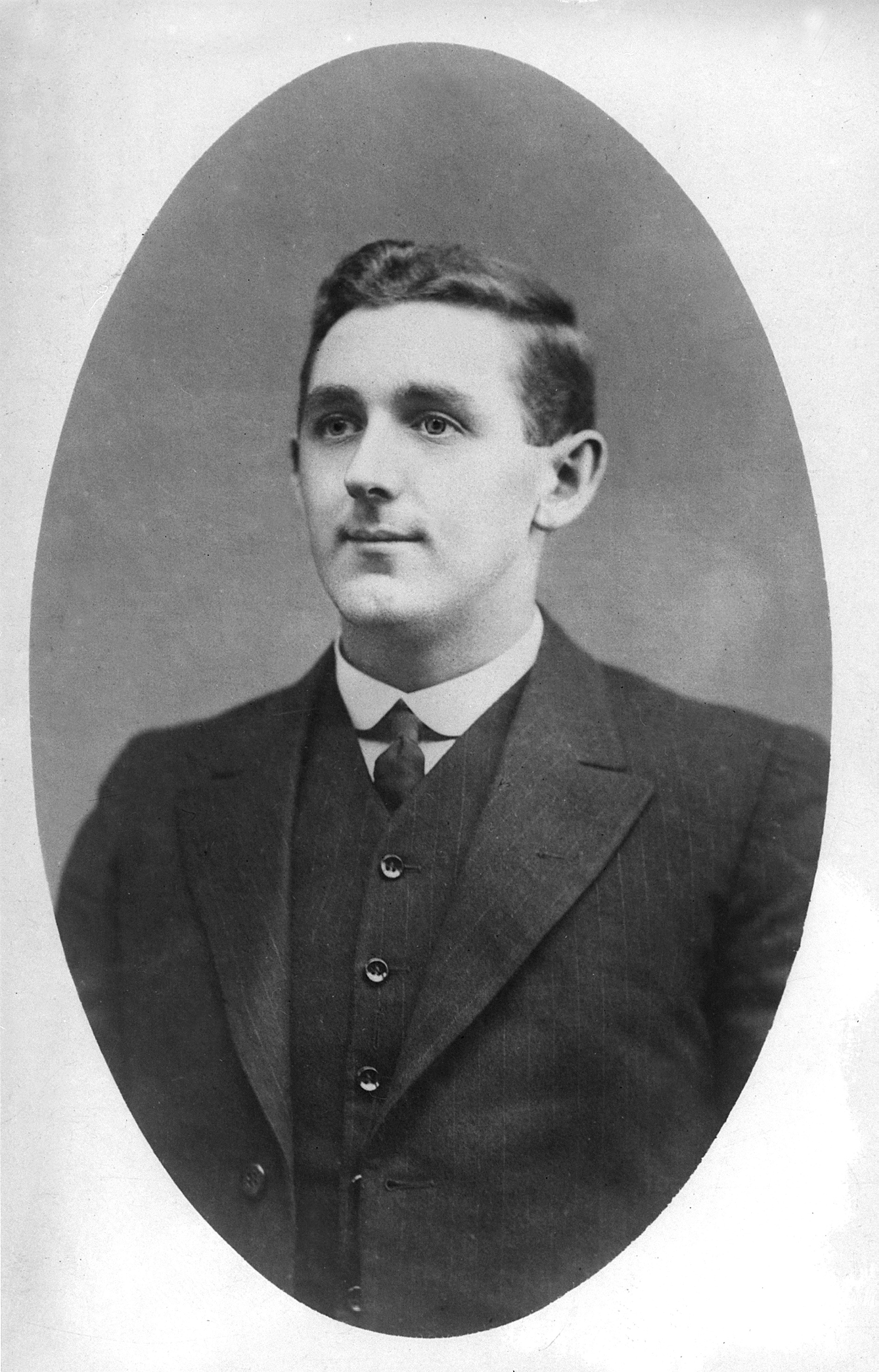
Portrait of 6766 Private Lawrence (Snowy) Atherton, B Section, 8th Field Ambulance, of Sydney, NSW
Explore the story of Lawrence "Snowy" Atherton
- Explore diaries, photographs and personal papers in the AWM's collection on Lawrence "Snowy" Atherton
- Discover the story behind Atherton's bravery under fire through his Military Medal and service history
- See one of the medals awarded to Atherton for his First World War Service, the 1914-15 Star
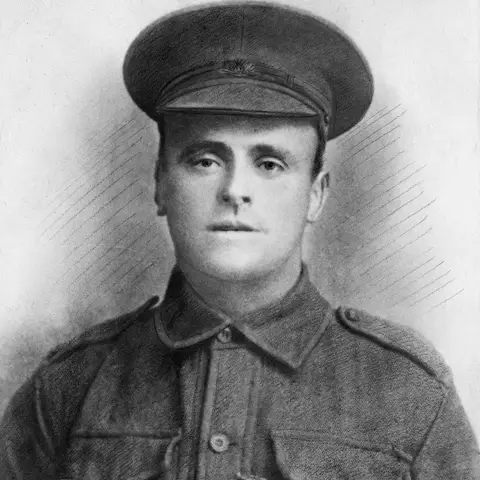
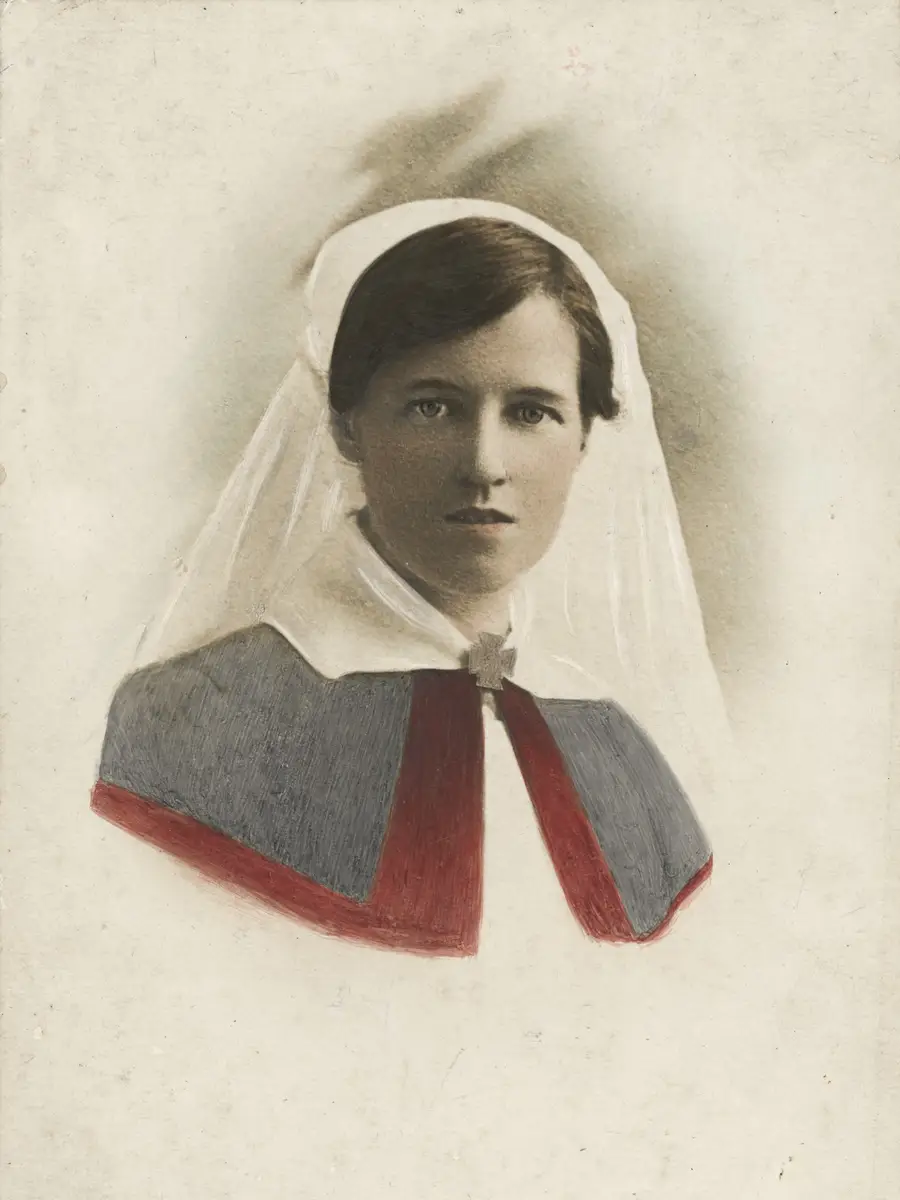
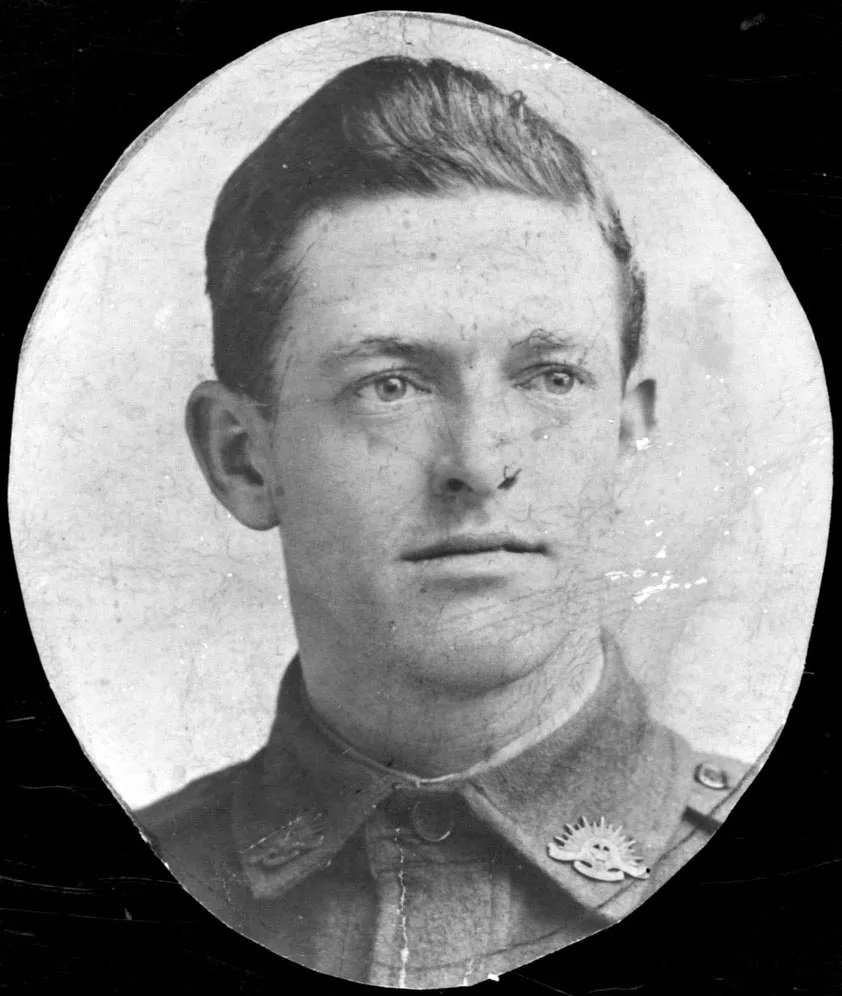
Studio portrait of Private Ernest Albert Corey, 55th Battalion AIF.
Explore the story of Ernest "Ernie" Corey
- Discover the remarkable story behind Corey's four awards for bravery through his Military Medal with three bars
- Explore Corey's service, honours and related collection items in the AWM's collection record
- View the steel helmet worn by Corey during the First World War
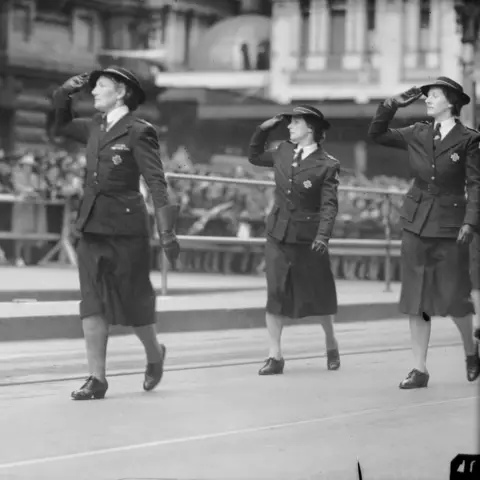
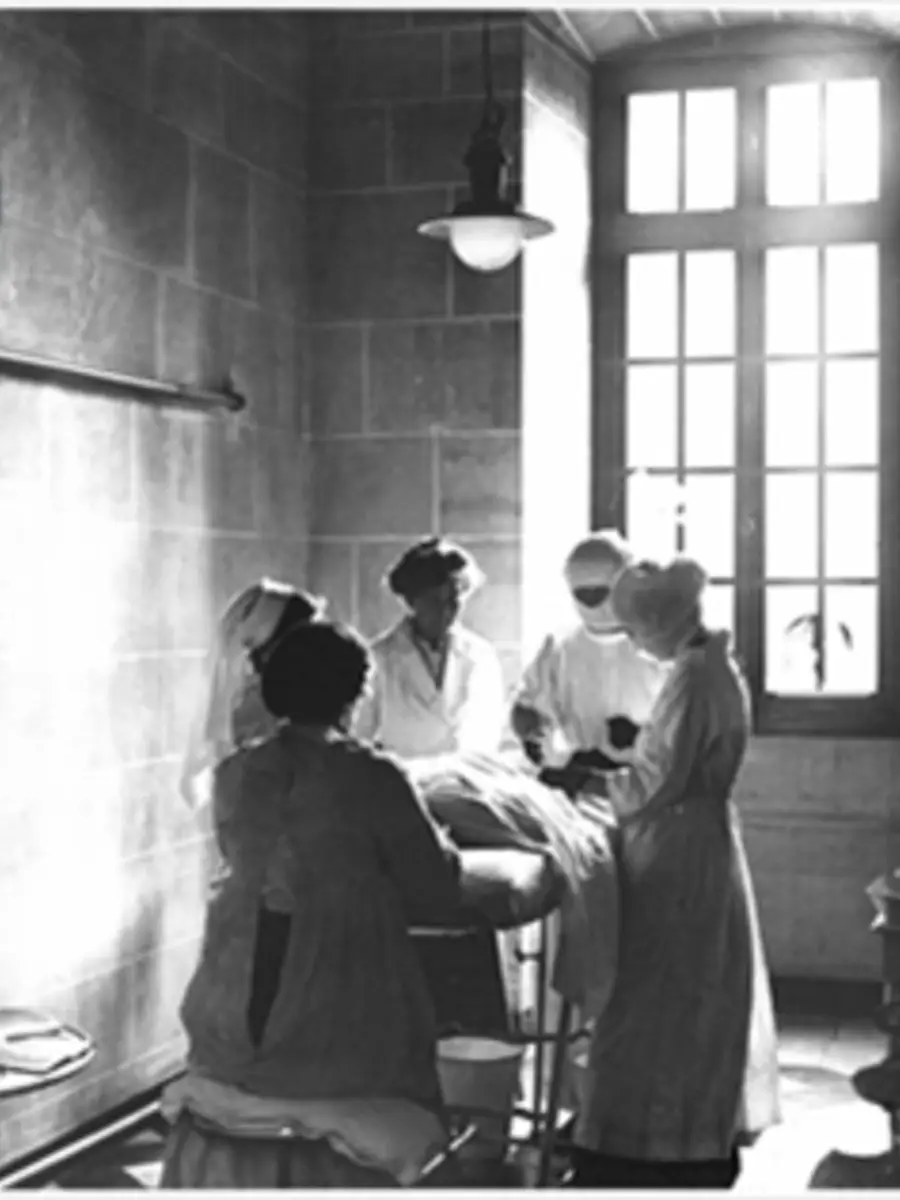
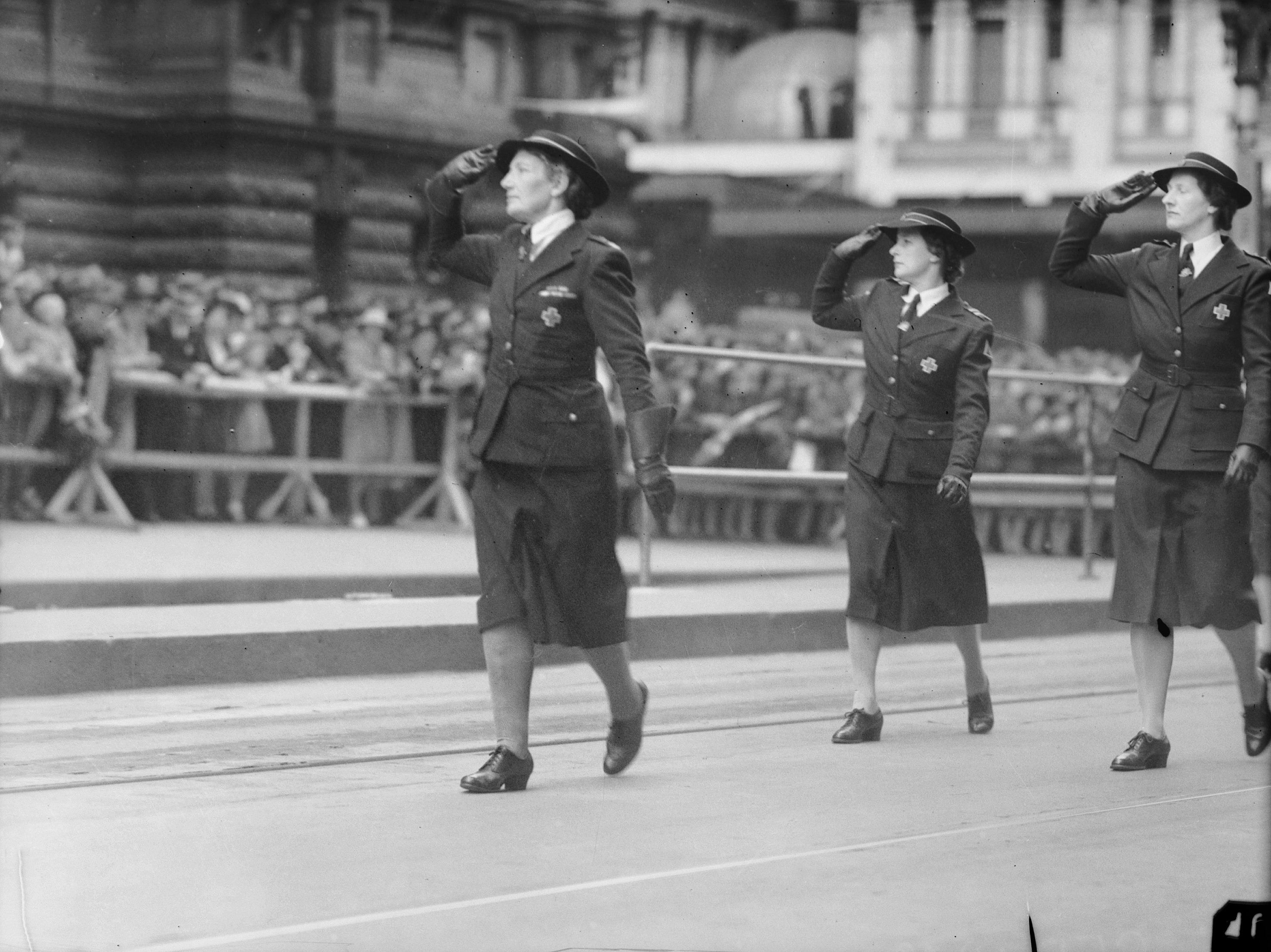
The leaders of the Australian Red Cross Voluntary Aid Detachment, Melbourne 1942
Explore the story of Sister Alice Ross-King
- Explore Ross-King's wartime experiences, photographs, and objects in the AWM's collection
- Discover Ross-King's experiences of wartime nursing through her diaries, letters and personal papers
- Follow Ross-King's experiences in France, where she received the Military Medal, in her 1917-1919 diary
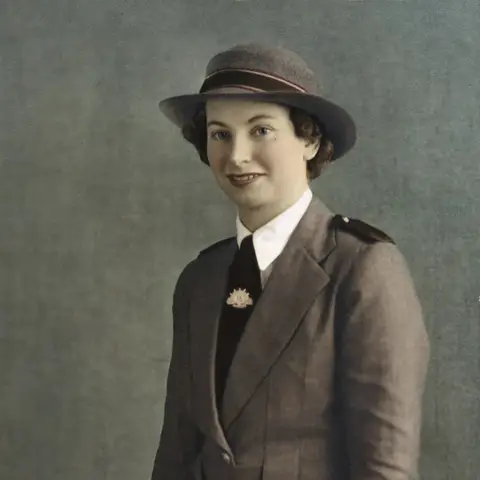
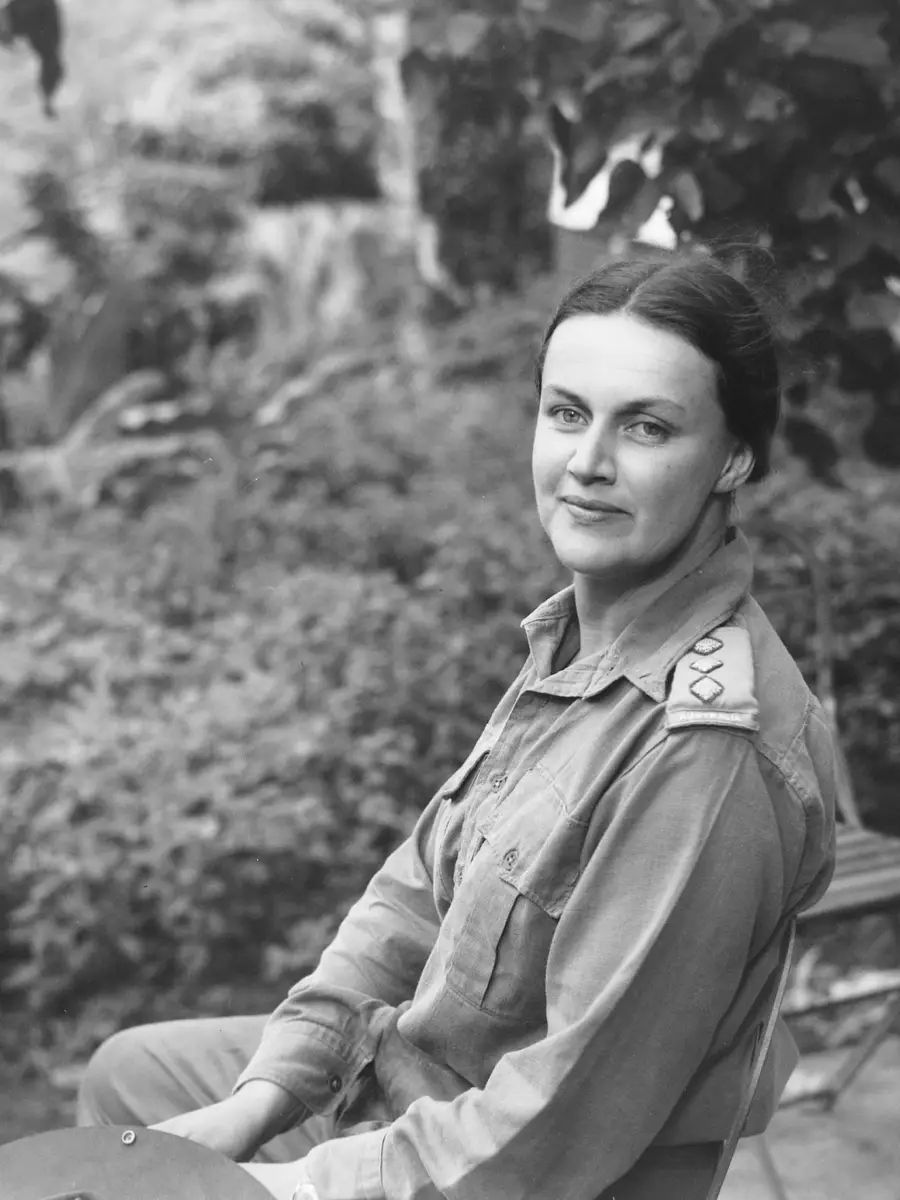
Studio portrait of Staff Nurse Vivian Bullwinkel, Australian Army Nursing Service (AANS), in service dress uniform
Explore the story of Vivian Bullwinkel
- Listen to Vivian Bullwinkel recount her experiences as an Australian Army nurse and prisoner of war in her 1982 interview with Tim Bowden
- Explore Sister Bullwinkel's objects as part of the 'Fifty Australians' exhibition
- Discover Bullwinkel's wartime experiences, timelines, and photographs in the AWM collection
- Read the AWM's article on the sinking of SS Vyner Brooke and the Banks Island Massacre
Voices
- Sue Ducker
Senior Curator Digitised Collections, Research Centre, Australian War Memorial - Dr Ian Hodges
Military historian and author whose work has explored Australian experiences of the First and Second World Wars. His doctoral research examined the First World War generation, including the experiences of Lawrence “Snowy” Atherton. - Andrew Curry
Reference Services Manager, Research Centre, Australian War Memorial - Rebecca Van Der Werff
Assistant Curator, Digitisation on Demand, Research Centre, Australian War Memorial - Penny Fisher
Curator, Digitised Collections, Research Centre, Australian War Memorial - Shannon Sutton
Curator, Digitisation on Demand, Research Centre, Australian War Memorial - Stuart Bennington
Curator, Official Records, Research Centre, Australian War Memorial

About the host
John Barrington
John is the host of Through Their Eyes. Drawing on his experience presenting and reporting for 3RRR Melbourne, Good Shout Stories, triple j HACK, ABC Radio and The Project, he brings a fresh perspective to Australian War Memorial storytelling, connecting you with the people and experiences behind Australia’s military history, inspired by his father's Second World War service. As your guide through the podcast, John helps reveal the human stories and overlooked perspectives, making history accessible and relevant.