How do you capture the scale and complexity of one of Australia’s largest overseas deployments in a single scene?
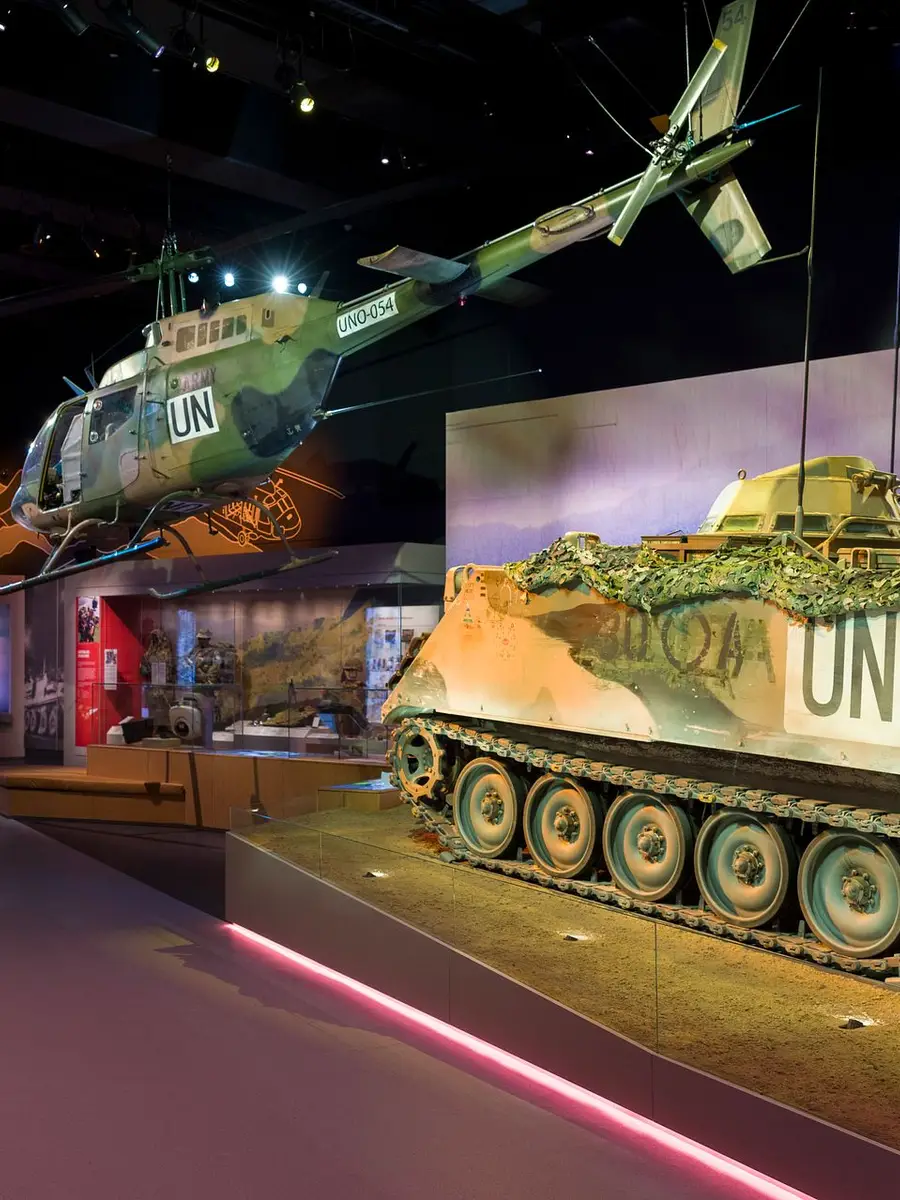
For the new Australian Peacekeeping from 1947 – today gallery, senior historian Dr David Sutton turned to a tradition the Memorial is known for: the diorama.
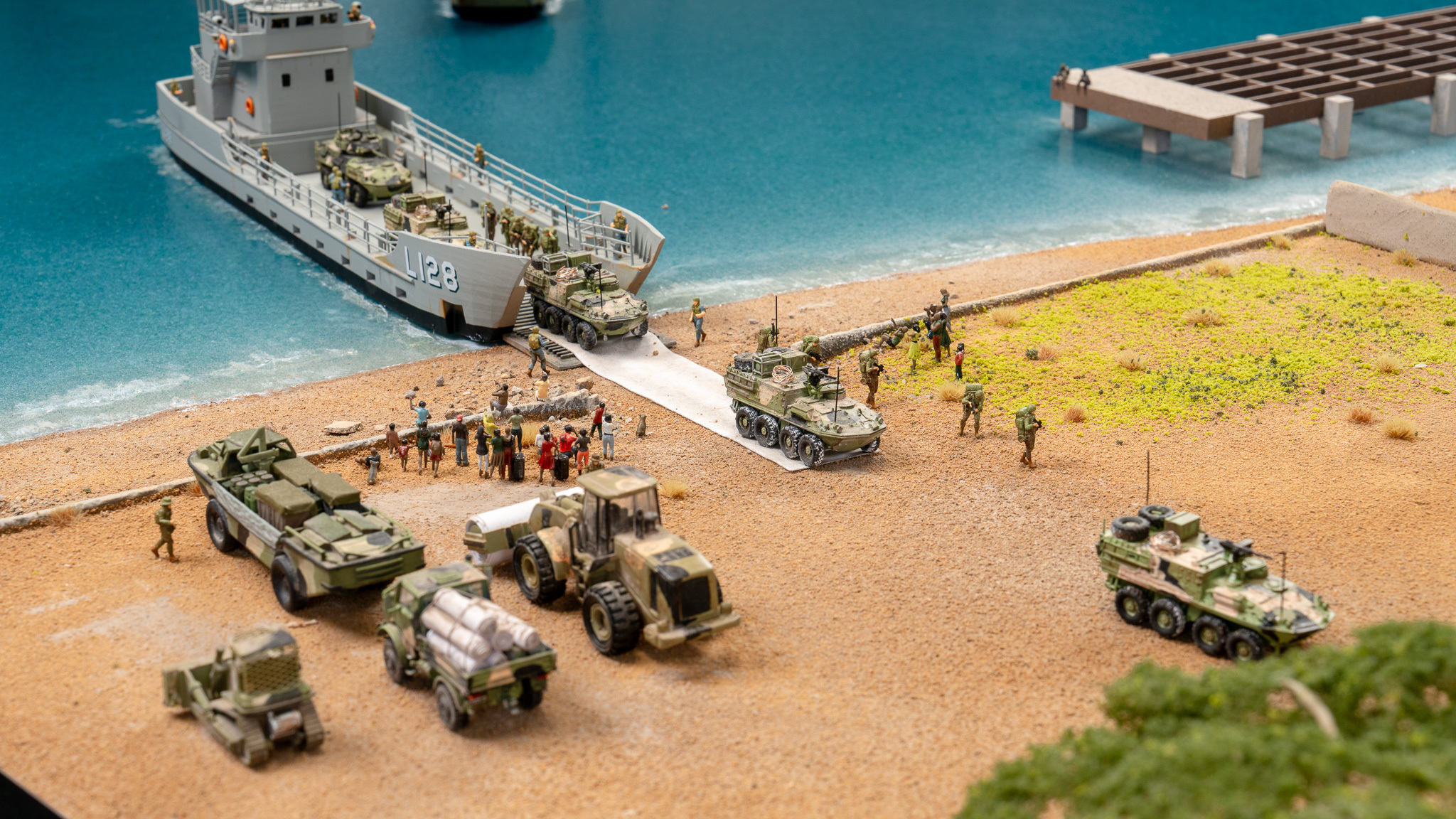
The new diorama depicts day two of INTERFET, the Australian-led International Force East Timor deployment in 1999. It was a pivotal moment, as large elements of the Australian force arrived into Dili and began spreading from the port throughout the devastated city. Alongside thousands of Australian personnel, forces from around the world arrived to confront militia violence and a humanitarian crisis.
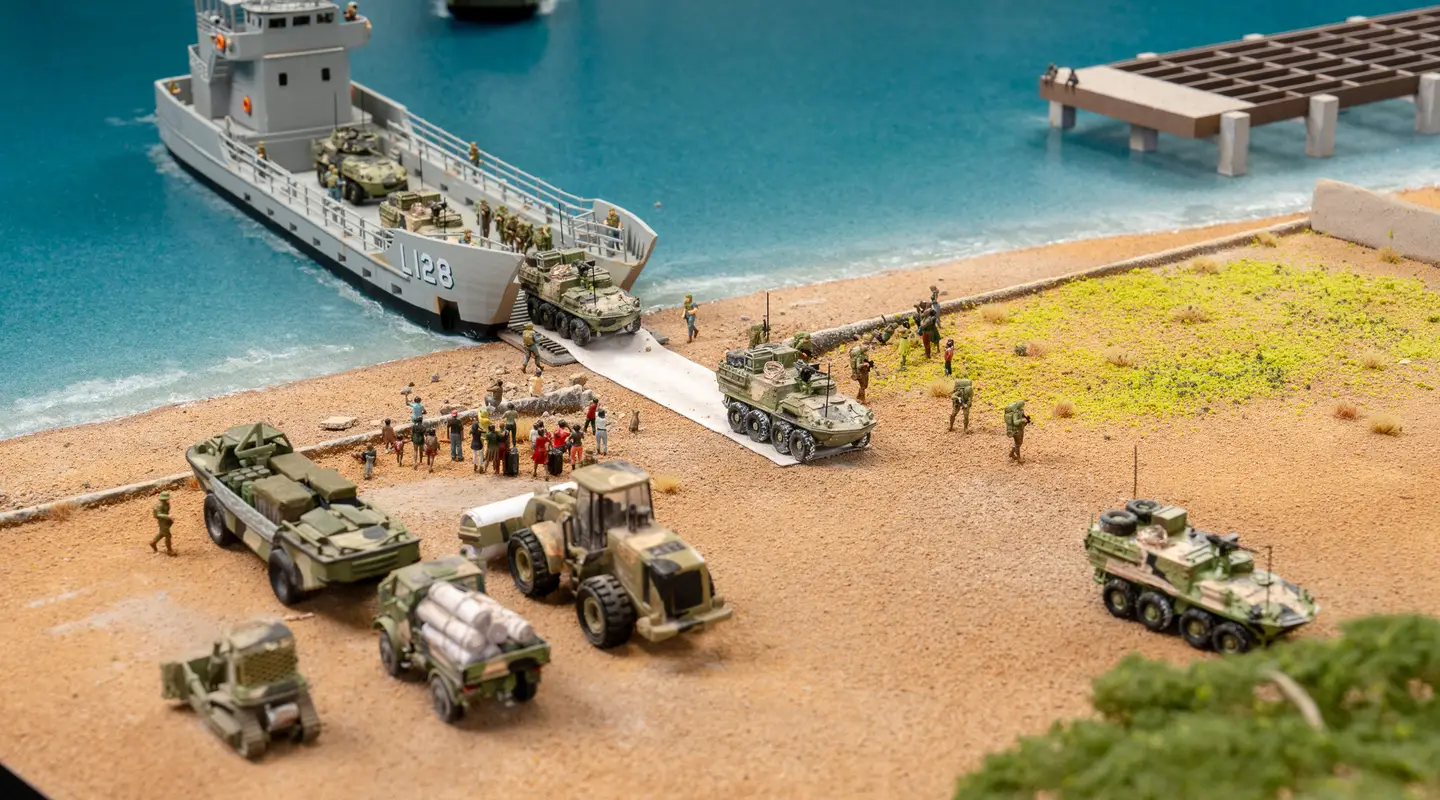
Close-up of Dili Diorama detail – HMAS Labuan lands troops and ASLAVs, 21 September 1999. AWM2026.12.34
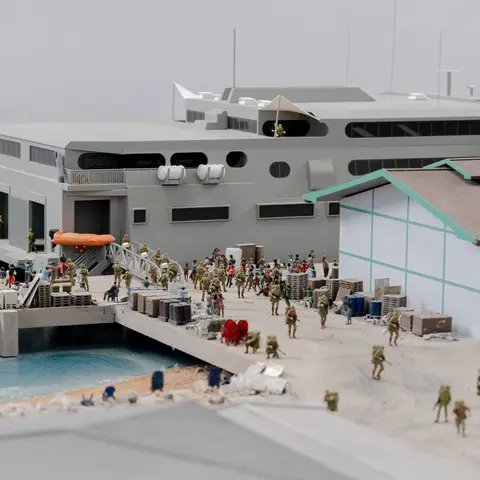
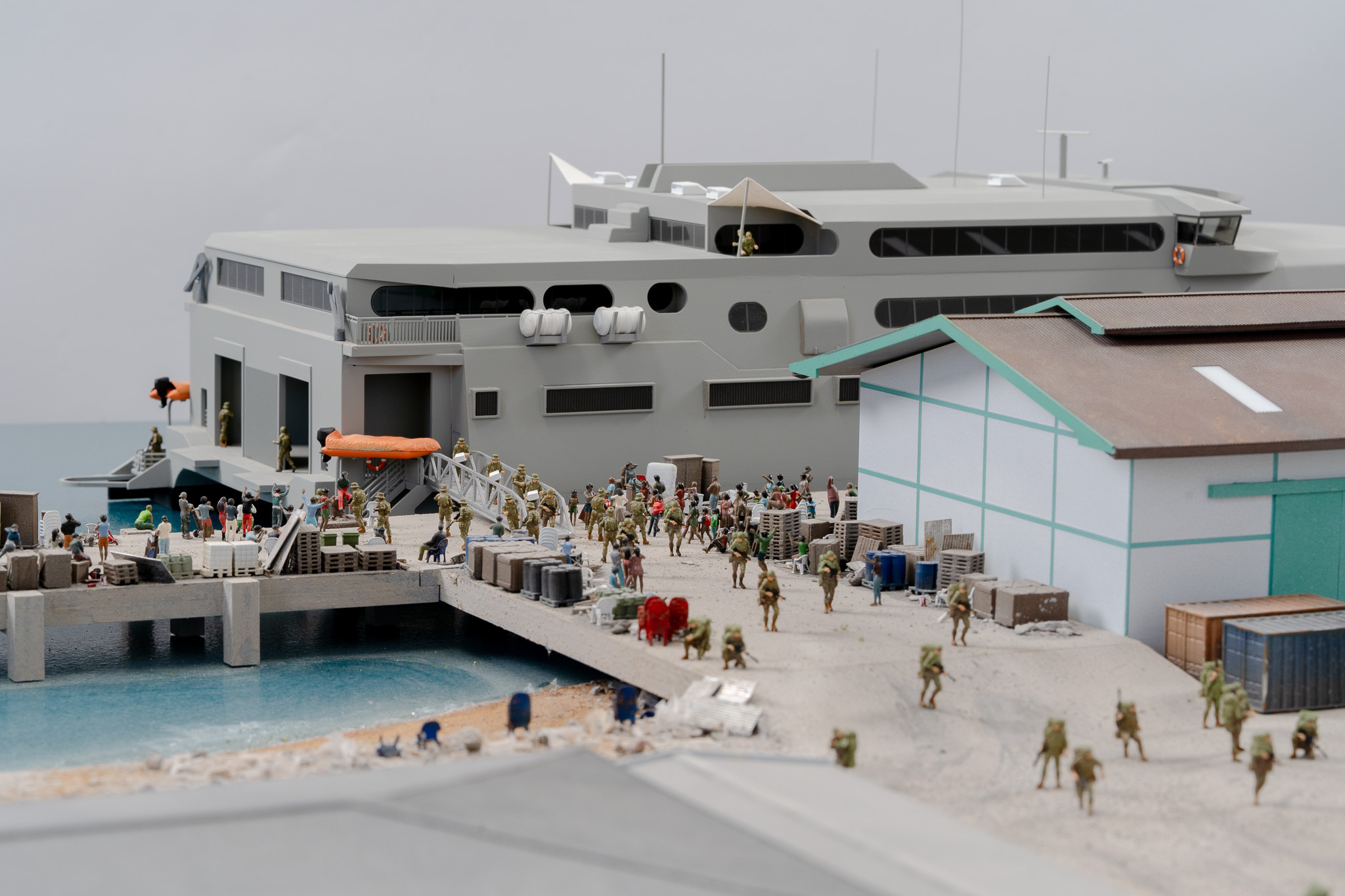
Close-up of Dili Diorama detail – Australian troops disembark HMAS Jervis Bay carrying water ration boxes.
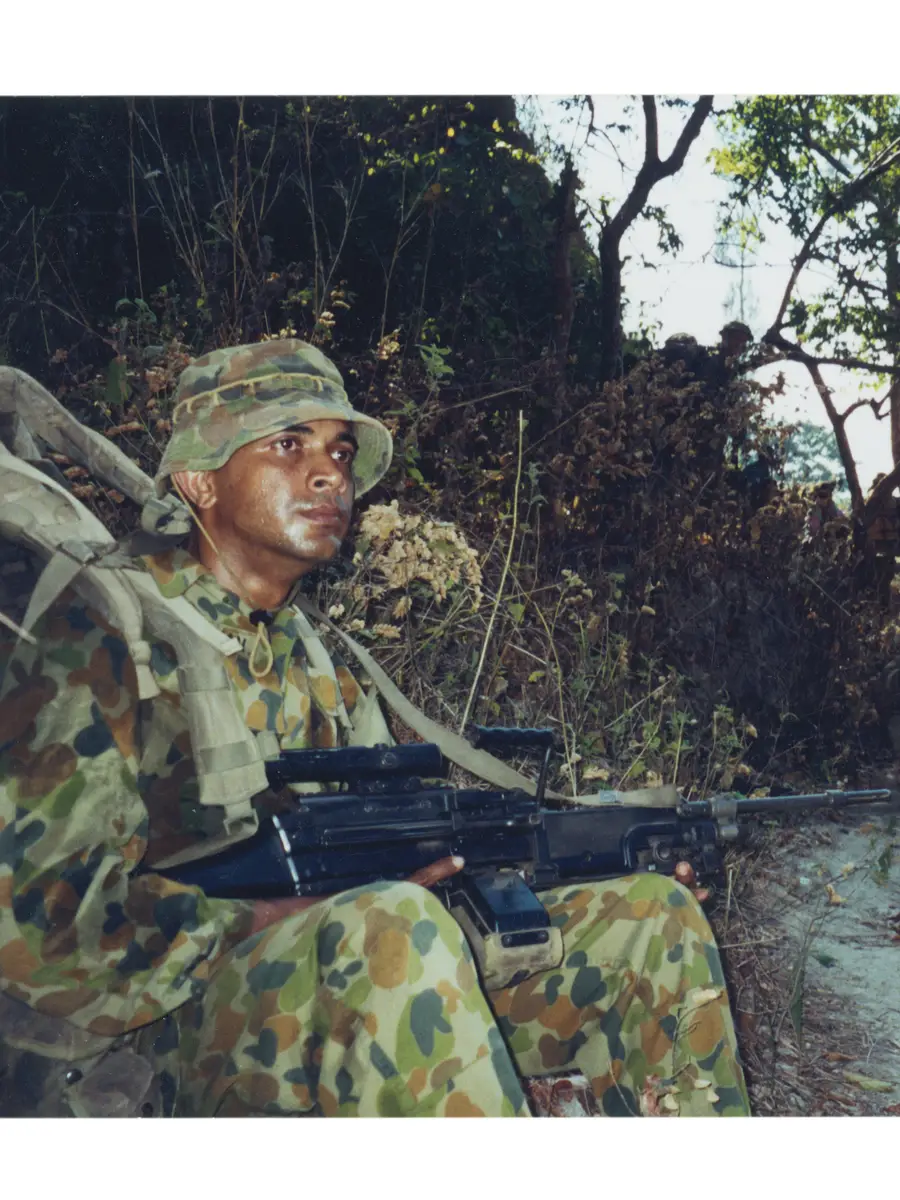
The challenge was to accurately recreate a moment in time. With no blueprint for depicting a particular day, curators turned to those who had been there. Veterans shared their memories, while photographs and film footage provided clues to everything from military vehicles and aircraft to the trees and fences in the background.
Watch now
Years of research, conversations and collaboration went into creating the diorama. Watch the video to go behind the scenes and discover how this remarkable diorama was brought to life.
When we started to think about how to tell the story of INTERFET, which is a large Australian deployment to East Timor, we wanted to find a way to just get across the sheer scale of the deployment.
Eventually we hit upon this idea of, well let's draw upon the traditions of the Australian War Memorial, let's make a diorama.
So the diorama is day two of INTERFET, and that of course is the day when the main Australian force arrives from the Navy and starts spreading from the Dili port out throughout the city.
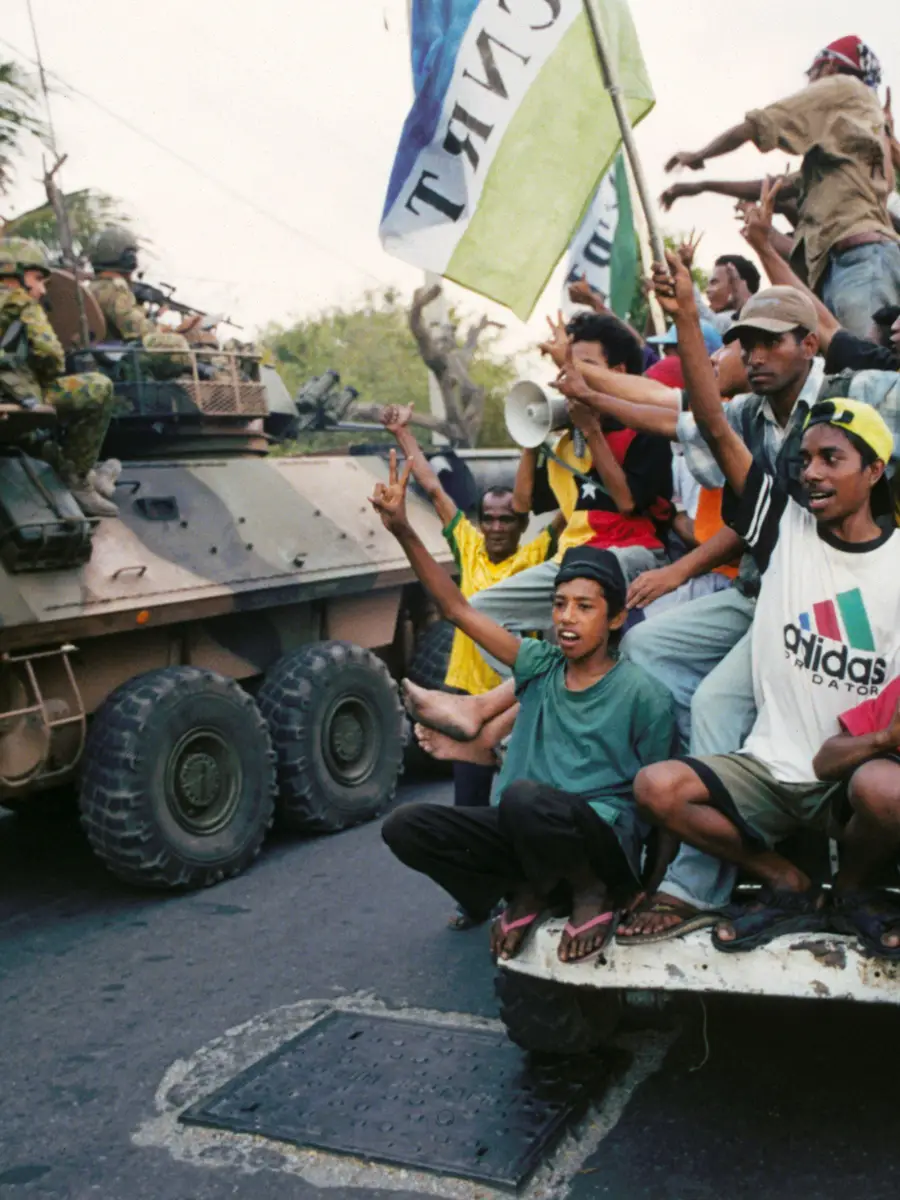
Many thousands of Australians along with partners from all around the world arrived into this devastated area in the face of huge militia violence, a huge humanitarian crisis, to help bring about some measure of peace.
Some of the key elements we wanted to show was the arrival of all three services, so the Army, the Navy and the Air Force, which is why we showed day two of INTERFET.
We also wanted to show some of the destruction of the city, so in the diorama you can see Navy coming in, a C-130 flying out, Army spreading out throughout the city, and of course the ruined part of the city where that terrible militia violence has been occurring.
There's no book on how to just create a diorama which accurately depicts a single day and a single point in time on that day.
So then I started talking to as many veterans as I could who were there on the day, reviewing photographs, film footage, pausing on some old bit of film footage from 20 years ago, just to see exactly what some fence or tree in the background might have looked like.
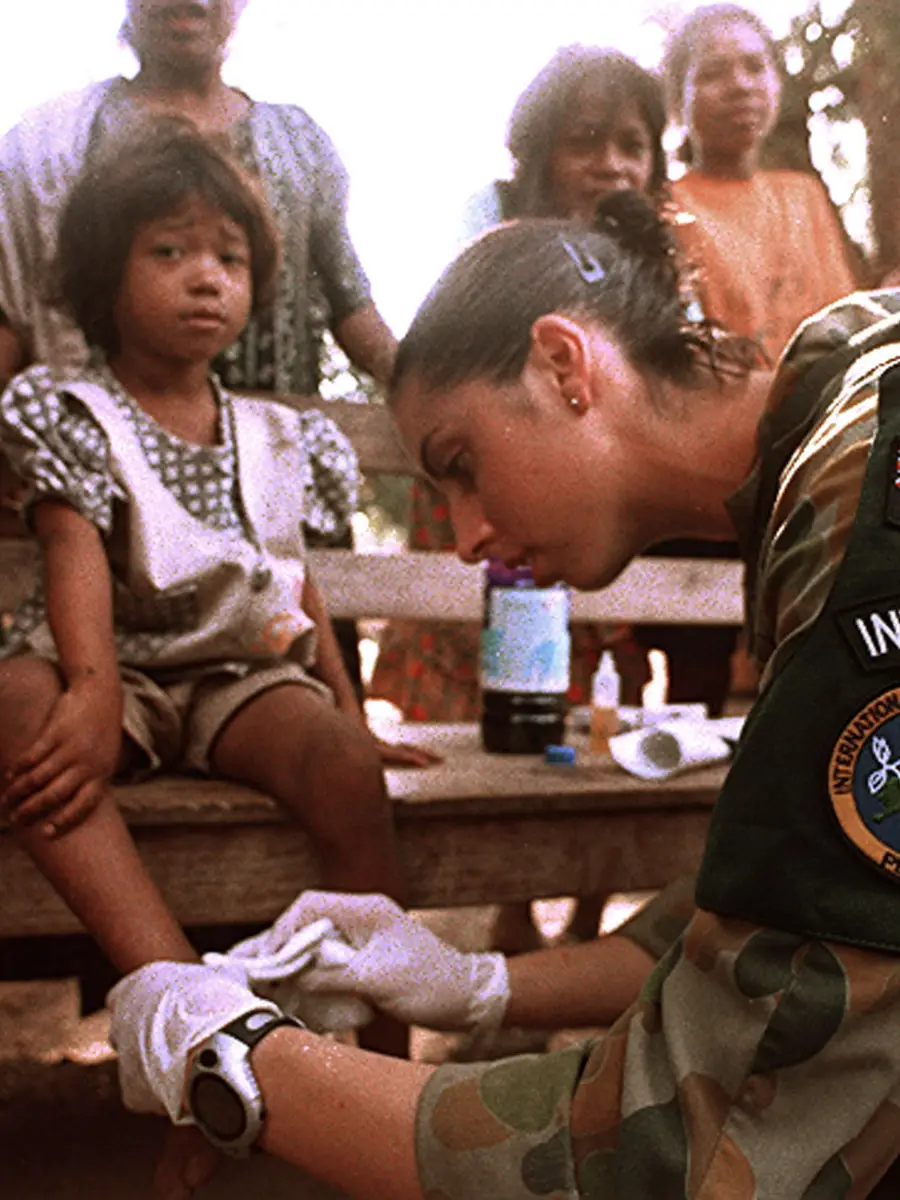
One thing we of course needed to capture is not just the Australian military side of things, but the humanitarian crisis that are occurring as well.
So Australians when they arrived at the port found this huge throng of people, local East Timorese people who'd been put through weeks of militia violence and had fled up to the hills, but then when they awoke saw this huge international armada offshore, so then they start to come down from the hills towards the port to get that help, and it's into that throng of people that the Australian troops are coming directly off their ships and straight out into the city.
So we show all those civilians their possessions strewn across the port and the humanitarian crisis that's occurring.
One of my favourite little elements of this is the depiction of the HODSU.
This was a really small three-man unit which essentially went through the bay in a tiny little tinny boat, surveying it for reefs and things underwater which might not be seen, in order to allow the large ships to come through.
I've worked on this project for so many years and talked to so many people, and one of the great privileges is of course getting to know and become quite good friends with some of the people who were actually depicted in this diorama.
And I know that it's actually really important for so many of them in seeing that their story is recognised and really feeling part of the Australian story.
It's been a huge project to work on, it's been very exciting and very difficult at times, but it is something that I pinch myself about to think that I've been responsible for helping to get a diorama at the Australian War Memorial.