From the battlefields of the past to the challenges of today, discover the Australians who dared to ask, “Is there a better way?” Explore how necessity, creativity and determination have inspired inventions that changed lives.
Voice Over:
Through Their Eyes shares real life experiences of war, some of which may involve sensitive or distressing subject matter. Themes may include violence, death, trauma, and loss. We aim to share these stories with care and respect, but please take your well-being into account while listening. If you need support at any time. Visit our show notes for resources. The Australian War Memorial acknowledges the traditional custodians of country throughout Australia. We recognize their continuing connection to land, sea and waters. We pay our respect to elders, past and present. We also acknowledge the veterans who have served, those that are still serving, and the families that love and support them. This episode is brought to you by the support of Leidos Australia.
John Barrington:
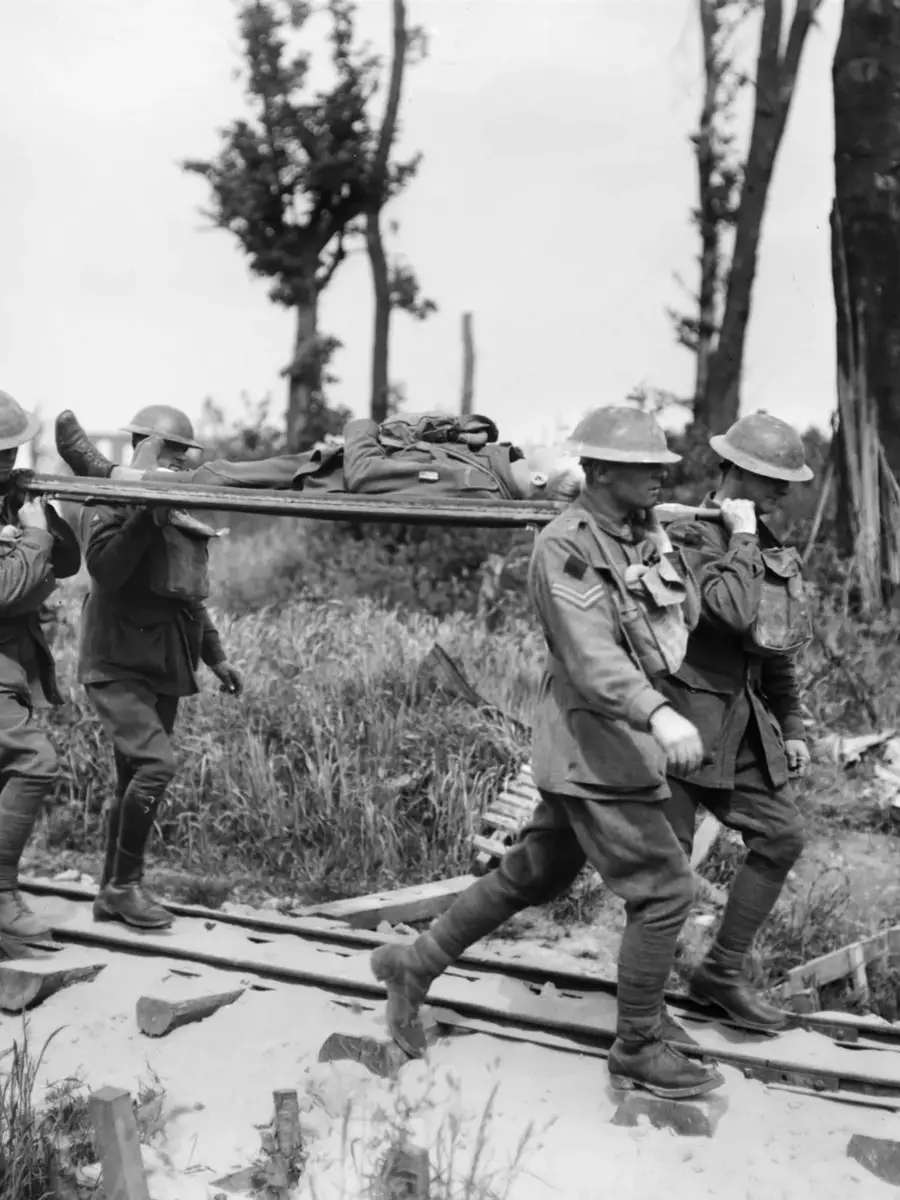
Imagine trying to carry a wounded man through mud, under fire, and with equipment that simply wasn't made for the conditions around you.
Charles Bingham:
There was mud and mud and mud. Wherever you went there was six or eight inches of mud, to carry a stretcher through that mud was bloody hard work.
John Barrington:
The voice you just heard was Charles Bingham, a private in the 14th Australian Field Ambulance. He's reflecting on his time in France, where he worked as a stretcher bearer during the First World War. Carrying casualties through conditions like these was exhausting, gruelling work, and it was this very struggle that caused one Australian man, Alexander Worsfold, to begin imagining different ways of doing it.
Years before the First World War, another Australian was thinking about solving a different problem. How could an armoured vehicle travel across difficult and broken ground? Lancelot de Mole’s answer was a vehicle running on continuous tracks. There was just one problem. He proposed his idea in 1912, two years before the First World War had even begun, and the British War Office rejected it.
More than a century later, another Australian encountered a very different problem. Emily Pyke spent 13 years in the Royal Australian Navy, where her own experience exposed gaps in the protective clothing available to women. Her experience would lead her to develop a world-first innovation, fire-safe protective undergarments for women working in some of the most demanding environments.
Archival Audio:
Taxi out for take-off, taxi out for take-off. Over.
John Barrington:
By the Second World War, the race to invent had moved to the skies. Bombers flying over occupied Europe faced fighters, anti-aircraft guns, searchlights and an increasingly sophisticated enemy radar network.
So how do you hide hundreds of enormous aircraft from a radar detecting your every movement? Part of the answer was named ‘window’. And an Australian, Charles Merryfull would help develop a machine to release it.
Conflict has driven some of the fastest and most consequential technological change in history. But inventions don’t appear out of nowhere. They begin with people, with problems and with ideas. Ideas that can be rejected or embraced, improvised or carefully developed, and whose impact isn't always obvious from the beginning.
I’m John Barrington, and these are the stories of Australians who saw a problem, imagined a better way, and turned that idea into something real.
Welcome to Through Their Eyes.
When we think about protective equipment, we might picture body armour, helmets, or fire-resistant uniforms. But protection also has to begin with what you wear underneath. And for most of us, choosing what to wear underneath our clothes isn't a decision with particularly high stakes, but in the military, it can be.
In environments where fire and extreme heat are a risk, the wrong material can become dangerous. Synthetic fabrics can melt against the skin, and for women, finding undergarments that were both protective and practical wasn't always straightforward. It was a problem Emily Pyke came to know during her 13 years in the Royal Australian Navy.
That experience would become the starting point for Undatech, and an entirely new approach to protective clothing designed with women in mind. Emily takes us back to where it began.
Emily Pyke:
Throughout my 13 years of service in the Royal Australian Navy, I was quite fortunate to have a very diverse career operating across different types of training establishments, operational deployments to the Middle East and the SLIPPER and MANITOU. And throughout that time I had exposure to different risk profiles, different types of PPE, and I experienced that a lot of the protective gear and a lot of the uniforms, particularly when I joined, were not designed around my body.
So I joined in 2012, and during that time they did not issue undergarments.
I identified that starting with the products worn closest to our skin, which is the most critical, unmanaged and unprotected gap, and mandated in a number of protective equipment policies and uniform policies across high-risk sectors where the undergarments are part of the protective ensemble and they need to be at a certain fire-resistant or fire-safe level.
And so for a woman needing to wear a bra at all times throughout any type of role that I'm conducting, any type of uniform protective equipment, there is nothing on the commercial market that was ever designed to be worn in the physically demanding and dynamic environments of the ADF and defence forces globally.
The protective equipment on the outside is still designed around a male's anatomical needs, not a female's body.
So body armour, for instance, is a great example of that, where it is a flat plate. That flat plate has been tested to the international standards within the US on a flat clay model. So it has not been designed around breasts.
The wearing of any undergarment outside of a T-shirt and the protective gear under that. So the different types of equipment that our boarding party need to wear. And we've got aviation, our flight crews, all of those uniforms I've had the privilege of wearing and that protective equipment at some point, even if it was for a short amount of time.
And that's basically where I've had exposure to how that feels and how that fits and how that protects or does not protect.
I find the came from actually it was around 2022. So my wife was posted over to New Zealand, and I was fortunate enough that it was an accompanied position. So I was able to drop down to part-time within the Navy.
Unfortunately, I do my role from a working-from-home environment, so I was able to take on some, some work within a training establishment, more admin roles, and during that time am an entrepreneur at heart.
So I thought, well, with my other few days a week, how about I come up with a business idea and I see how, see how I like being an entrepreneur and a business owner.
So I developed a workout underwear range called Bare Thrills, which I've since sold, and that was just me testing the market and going through what it looks like to have a concept, develop a product, trial the product, and then have the product sold to a consumer market via a website.
And that did quite well.
Throughout that time, I started to talk to the New Zealand Defence Force and kind of looked at, if we've got fitness standards and we've got a lot of physically demanding roles within defence forces globally, is this something that they would ever look at? And then I kind of started to look a little bit deeper into it.
And this underwear was actually made from, you know, workout material because the idea behind it was you don't wear your everyday clothes to work out in, so why are we wearing our everyday underwear to the gym?
And then I realised that, okay, well, it says actually in some of these uniform policies that you have to wear fire-retardant undergarments or 100% natural fibres and was just thinking a female's bra and how all the hazardous materials that kind of go into that structure.
So the underwire, foam, excess elastic, sometimes exposed metal that goes onto the shoulders, which is where, you know, the heavy load-bearing equipment's worn.
I was like, well, you still can't actually wear this product. So that's where the concept kind of came from, which was my old business, but was going down the route of actually, why are undergarments issued as part of the PPE?
You know, it's occupational breast support. And also menstruation management are a part of what it looks like to protect the female workforce. And it's a part of our makeup. And when we are operating in these extreme conditions, particularly if you think about firefighters, and just considering why we're not thinking about this when we're supporting the whole workforce, not just the majority.
From Bare Thrills was born UndaTech, and we went through and we received the, were finalists in the New Zealand Defence Force Innovation Awards in 2022.
And it was just a concept. It's just an idea. We then posted back to Sydney. I went back to full-time Navy, and we received the Chief of Navy's Innovation Excellence Awards whilst I was still serving.
And there was a number of different points as well where it was recognition what we were doing was a bigger problem than just my service experience, the world by me, it was affecting other women.
And that's when I really thought, okay, so maybe I should really start to, to work on this and to see where I can take this and what this means to make a fire-resistant bra that's still supportive and a fire-resistant menstrual brief and have them as part of the protective system, because when you're issued your uniform and protective outerwear, you should also be issued a product that's worn closest to the skin is the foundation of the protective layer.
It should never be just dismissed as a discomfort issue, because I think that that is really where the barrier is and why breast support and menstruation management have commonly been overlooked.
There is a reason why, since the early 2000s, synthetic base layers were actually banned in conflict zones, and this was mainly only considering the undershirt being the synthetic sport shirts that our soldiers were wearing, because when they were in line of conflict or being blown up, it was actually, it melts and it acts as a shrink to the skin, like it just turns into plastic because that's what it is.
And that can be the difference between a survivable event, an event that could lead to a fatality or a life or injury because of the undershirt that you wore under the protective layer.
So that really took shape in 2023 and then 2024. I took my long service and the Defence Trailblazers and the University of New South Wales had a number of initiatives that had an early-stage defence innovation focus, and I was able to take advantage of those initiatives.
So that's where it started to gain traction and started to gain its legs.
And then I had to make a decision in 2025, do I stay in there as a petty officer, electronic warfare manager, or do I go all in on UndaTech and leave the safety blanket of Defence?
I'd made the decision not to stay on and continue my career in the Navy, but to go all in and become a founder and CEO of UndaTech.
Feel like I'm able to make more of a difference with doing what I'm doing now because of the impact it has globally on women on the frontlines in these high-risk environments.
Where it really starts and what we're really good at doing is co-developing with the end user to make sure everything is fit for purpose.
So our protective range was tested.
We did a donation to the Ukrainian Armed Forces. There are 70,000 women serving in the Ukrainian Armed Forces, and about 7,000 of those are actually on the frontlines. And we were able to donate a small amount, and all we asked for was feedback, and we're hoping to donate more products.
The UK Ministry of Defence in 2020 actually did a research project on their recruits coming through. They saw that there was higher rates of breast injuries, with women commonly coming through with just commercial off-the-shelf bras, then going into military training.
It's a big shock to the system. It was for me going from not training at all, just able to pass the initial fitness test, into every single day, you know, this is what we're training for. And then you go into the job-specific types of physical fitness.
If you think about what these sports bras that they are commonly wearing are actually designed for, you know, a 45-minute PT session or a HIIT session or a run session, they're not designed to be worn on a 14-to-20-hour shift under heavy equipment or quickly jumping into a prone position, and, or even going days without sometimes being able to wash, depending on if you're in the field or not.
So that's why the commercial products are not fit for purpose, and they're actually causing more damage.
And then the ones made from their synthetic fibres that create the compression, they're highly flammable. If you're, you know, within an explosion or those high-risk roles, that can melt under those protective layers.
So that's where it's really important to not dismiss breast support and menstruation management as just discomfort.
Women are such capability within the Australian Defence Force, emergency services, mining, construction, and if anything that speaks on how strong and truly capable they are.
And I spoke with a firefighter and she told me the experiences in which you have no opportunity to change your products in a clean and hygienic area, and sometimes you don't really get the opportunity to, which is the same case within the Defence Force.
And I've got an example from my last deployment, a girl in my Mess. When you're conducting boardings and you're over there on the foreign vessel, there's nowhere for you to go to the bathroom, particularly as a woman. Can't just go off the side of a ship.
If you are during your period, there's nowhere for you to change. So we were under a lot of pressure, under the pump. And she forgot about a product that she left in. And that was over almost two days. Her, she started to feel the effects of what's happening when the blood turned septic. That could have ended really, really badly. And that story is not uncommon.
And recently we've had a lot of exposure and a lot of positive exposure for what we're doing. We have global trials right now operating through the UK MoD, Irish Defence Force. The Canadian Armed Forces were doing trials through one of their main suppliers. We've also got trials going domestically with some of our state-based fire services and rural fire services.
You know, we're coming into one of Australia's hottest summers on record. How defence forces and militaries globally are also growing rapidly and trying to retain as well. And Europe and the UK, we've seen a lot of focus and a lot, I guess, attention for what we're doing because they understand the difference between female-specific PPE and what that looks like to tailor it to protect the male workforce as well, is different, and it's becoming a priority over there.
And those are the conversations that we're having. And we've got data here within Australia conducted on our own Australian Defence Force by Dr Celeste Coltman and her team. And we work with Dr Celeste Coltman, who is a PhD in breast biomechanics.
Ninety-seven women within the Australian Army. They conducted a three-day scan on women wearing their bras in which they commercially purchased and body armour, and 63% reported breast discomfort while wearing the body armour, which, you know, if it's a flat plate and you have breasts, that's quite a common issue.
And 27% reported breast injuries related to wearing it. So the actual piece of equipment that's designed to protect you has caused 27% of these women to actually have related issues just by wearing it.
And then 22% reported bra and armour integration problems. Women with medium to large-sized breasts actually reported significantly more discomfort and injury. So that was a research project from 2021. This is the researcher in which we're working with. Because we're not redeveloping body armour, it's that base layer and that foundational level, because everything we do is data-driven.
But if we can provide a product which is part of the solution, then this is saying to the workforce, we see you, we support you, and we're thinking about how we can make sure that you are performing at your best, or be compliant or safe and comfortable because they are designed to be worn under the protective outerwear.
That's why we created these products. So, it's not just the world by my service experience, even though that has shaped a lot of what we do, we just want to make sure we're providing those options to enable the best out of the high-risk workforce globally.
John Barrington:
Emily's idea was born from trying to solving a problem she knew firsthand. But innovation doesn't always begin with a problem you've experienced yourself.
Sometimes a good idea just comes first, long before anyone recognises just how useful it might become. More than a century before Emily founded Undatech, another Australian had an idea that seemed to arrive too early, and his name was Lancelot de Mole.
Today, the idea of a tank seems almost inseparable from the First World War. A huge, armoured vehicle, capable of carrying men and weapons across ground that soldiers on foot could barely cross. But Lancelot de Mole was thinking about a similar type of technology before the war had even begun. Shane Casey, curator at the AWM uncovers the story of Lancelot de Mole and an idea the world wasn’t ready for.
Shane Casey:
Lancelot Eldin de Mole was a brilliant but overlooked figure in Australian military history. Born in Adelaide, South Australia on March 13, 1880, de Mole was a distinctive figure. At a little over six foot one, he was unusually tall for the time, but remarkably slight, weighing only around 63 kilograms.
He grew up with three sisters and one brother. His father, Frederick, was a civil engineer and surveyor, which probably heavily influenced Lancelot’s career path. In 1885, his family moved to Melbourne, and 12 years later, when Lancelot was 17 years of age, he moved to Western Australia to work on survey, mining, and engineering projects with his father.
It was in this survey work in 1911 when an idea came to him. He kept seeing his buggy bumping and sticking in soft and stumpy ground. Turning to a companion he said, “we want a caterpillar for this job.” By that, he meant one of the newly developed tractors developed in the US for farm work. But as caterpillars couldn’t turn easily, he set to work designing one that could. In 1912 he proposed the design and sketches to the British War Office for a “travelling caterpillar fort" or chain-rail vehicle which was designed to easily steer, carry heavy loads, and cross rough ground, and obstacles.
In essence it was a tracked, armoured military vehicle, an early concept of a military tank four years before the first appearance of a tank in action. We are fortunate to have within the Memorial collection of artifacts a 1/8th scale model of the proposal.
The full-size vehicle would have been 37 feet long or just over 11 meters. The hull of the model is slab sides – vertical – and fabricated from thin steel plate. The vehicle is propelled by two continuous tracks on each side of the hull. A toothed sprocket at the front was connected to the drive shaft and drove the tracks.
It was steered by pivoting the front sprocket drive left and right through a small radius. This had the effect of bending the track towards the direction of travel. This meant that the tank could be steered like a car. The main value was that a curve could be taken instead of the vehicle having to be ranged around, as was the case with the tanks later used on the battlefields of France. They were steered by causing the chain traction to move faster on one side than the other. A further difference was that the track travelled inside the body of the vehicle rather than on top of it and so it was protected from shell fire. Viewed from side on, it looks quite what you would expect from a tank.
The tank was said to have been capable of bridging a 16-foot gap, just under 5 metres, and it could be driven backward, forwards or allegedly sideways at will. And both the front and rear had climbing faces, designed to help the vehicle cross obstacles.
De Mole’s design was unlike anything yet seen on the battlefield, but unfortunately, he was notified in June 1913 that his idea had been rejected. Apparently, the authorities were not experimenting further with chain-driven vehicles.
In September 1914, a Captain Breadon, with whom de Mole had worked in WA, sent a letter to the Minister for War in London, praising the virtues of de Mole’s ideas, and noting that if the device was fitted with machine guns or small guns, it would serve as a moving fortress, against which an entrenched army could not stand.
By that stage, the war in Europe had already transformed into trench warfare, with both sides dug in in opposing lines 200 to 300 metres apart stretching from the coast of Belgium to Switzerland. No side could prevail against the opposing barbed wire, machine guns and artillery support.
De Mole thought his design would allow the Allied forces to break the impasse, and push through the German trenches. He subsequently submitted improved designs in 1915, together with the offer of his services in any suitable capacity. He received a reply that, without a working model, they could not use them at that time.
When the South Australian Inventions Board was created later that year, he submitted his designs to them, but again without success. No written reply ever came back to him, and the verbal reply from the Secretary of the Board was that “the ground at the front is very rough, and that there might be holes in the ground that it would fall into.” This of course was some time before tanks were actually used.
Lancelot was certainly a very persistent person, as evidenced by a substantial body of letters stretching over 30 years. He stated in a letter to the Defence Department in 1920 that he had a high sense of honour, it read:
Lenny Preston (reading archival letters):
The fact that I would not sell my tank design to the Germans in 1912 when it had been turned down by the War Office will prove that I am intensely loyal to my country.
Shane Casey:
His wife wrote that his own words were…
Lenny Preston (reading archival letters):
If my own country doesn’t want my brains, I’m not going to sell them to a beastly foreigner.
Shane Casey:
De Mole was clearly surprised when the first tanks appeared on the front.
Lenny Preston (reading archival letters):
When I saw the first pictures of these tanks, they seemed to be identical with my own idea submitted in 1912.
Shane Casey:
He then decided his only chance was to get a model made and take it to England himself. It seems that he thought that if he joined the army, the process might be easier. He tried a number of times to enlist and finally succeeded in September 1917. By then de Mole was 37 ½ years old. He sailed for England with the 10th Battalion in October.
Getting 'duty leave' from his training camp, he proceeded to London and had a room at the Munition Inventions Department placed at his disposal. The model went before a committee of experts, but de Mole was not allowed to appear with it.
They reported satisfactorily and recommended that it be sent before a second committee, and that de Mole be re-called from his training camp to demonstrate the capabilities of his invention.
After waiting six weeks in camp and writing and telegraphing without success, he again got leave and went up to London to make inquiries about it. After some trouble, he found that the model was in a basement in one of the Government departments and the correspondence had been ‘pigeon-holed’.
It had never even reached the second committee stage. De Mole’s frustration was clear. In the letter we heard from earlier, he wrote:
Lenny Preston (reading archival letters):
It is quite useless putting my design before any board of experts as such boards always turn down everything good or bad, which is new and therefore beyond their experience.
Shane Casey:
Within a week of being in London, de Mole was recalled to camp and sent to France. We don’t know much about de Mole’s day-to-day service there, but newspaper accounts from 1919 state that he fought with the 10th Battalion at Villers Bretonneaux, Merris, and Meteren, and we can see from the battalion’s war diaries they were engaged in heavy fighting at the time he was with them.
In mid-June he became ill with influenza, and he spent most of the next two months in hospital. When he was released, he was transferred to the Le Havre Corps Depots and remained in France until after the end of the war. He was subsequently transferred to the Australian Munition Works Branch in London. It wasn’t until mid-July 1919 when he was given leave to work as a draughtsman. Around six months later, he returned to Australia.
A Royal Commission was established after the war to recognise and reward those whose inventions had contributed to the war effort. The Commission awarded considerable sums to the individuals who had worked on the tanks that were actually used in France. But it found that there was no evidence that de Mole's invention had had any influence on British tank designs, and indeed that the Landships Committee and those who were tasked with producing the first workable tank in 1915 and sixteen were unaware of de Mole's work.
The committee noted that his invention anticipated, and in some respects surpassed the designs that had been put into practice in 1916. But they said that a claimant must show a causal connection between the making of an invention and the use of a similar invention by the government. De Mole’s ideas had been kept by the War Office but never referred to. The Committee nonetheless awarded him 965 pounds for expenses incurred and he was later awarded a Commander of the Most Excellent Order of the British Empire, or CBE.
When de Mole appeared before the Committee in London in 1919 it excited considerable press reaction both in England and in Australia. Some of the comments in newspapers read:
Lenny Preston (reading archival newspapers):
If only we had had these machines in 1914.
Stephen Toaldo (reading archival newspapers):
Unparalleled War Office ineptitude.
Lenny Preston (reading archival newspapers):
Gross injustice to an Australian.
Stephen Toaldo (reading archival newspapers):
They prolonged the war for 4 years.
Shane Casey:
However, it’s possible that de Mole’s tank may never have been successful. Some people argued that because it had never been built to full-size, it had never been tested. Certainly, it would have been very, very heavy for bridges, and it had an overly complex track mechanism which might have easily failed. And the power plant for the tank had never been resolved.
After returning to Australia, de Mole became an engineer in the design branch of the Sydney Water Board. A letter to the Treasurer in 1936 from the Water Board gives us a glimpse of the man behind the inventions. It describes someone imaginative and constantly coming up with new ideas. The letter reads…
Lenny Preston (reading archival letter):
De Mole worked in our office for several years. He is a very simple honest chap not very successful in his general work because his training was in railway surveying whereas the whole of his interests lies in the direction of mechanical engineering. He is a man with a most fertile imagination and is in the habit of producing more novel gadgets than any other man with whom I have been associated.
Ever since he returned from the war, he has found it difficult to secure continuous employment and has had to dodge about from one job to another – frequently out of work for quite considerable periods.
The man’s lack of fundamental training in mechanical engineering is undoubtably the cause of this trouble, but that he did a fine piece of work that deserves public recognition in the production of his models and designs for the tank is unquestionable. He is married but has no children and I know that he and his wife have over the past 20 years been able to get along on a very small average annual income.
Everyone who knows De Mole appreciates his creative abilities and respects him for his complete honesty and simplicity.
Shane Casey:
Although he is best known for his tank design, he worked on ideas for various inventions throughout his life. He worked on an ore concentrator, a parachute shell, an automatic telephone exchange, a tracked landing gear for aircraft, and sound devices as weapons. De Mole passed away in Sydney in 1950.
John Barrington:
Lancelot de Mole’s story shows that a good idea is not the only thing that matters. Whether the timing is right for the world to embrace an innovative idea is just as important.
Innovation does not always start with seeing a problem before everyone else. Sometimes it begins with experiencing the problem yourself and deciding something needs to change. For Alexander Worsfold, that problem was carrying wounded men from the battlefields of the First World War.
Charles Bingham:
We were evacuating at times, four or five hundred men a day.
John Barrington:
Hundreds of wounded men, and every one of them had to somehow be moved from where they fell, through shellfire, mud, and broken ground, towards medical care. These were no easy journeys for the people carrying them.
Charles Bingham:
You had to, had to take your stretcher everywhere you went.
John Barrington:
That's Charles Bingham, a private in the 14th Field Ambulance, remembering the work being so physically demanding that eventually sheer exhaustion caught up with him.
Charles Bingham:
And I got to England later on with the sheer exhaustion of stretcher bearing, and I went to King George Hospital at Waterloo, one of the nurses said to me, "Do you think you can wash yourself?", I said, "Yes, I think so". So, I went to the big bathroom, and she turned the taps on. She said, "I'll leave you, I'll be back". So, she left me and I went to sleep. I was so tired I went to sleep. And she came back and there was water all over the bloody floor and I was sound asleep, so she woke me up and drained all the water out, and said, "I'm not going to leave you", and she called another girl and the two of them bathed me, which was the first I'd had for a month anyway. And they put me to bed and all I did, they kept waking me up to give me food and the doctor said, "What's the matter with you?". All I wanted was to sleep.
John Barrington:
This was the reality Alexander Worsfold knew too. Alexander served with the 9th Australian Field Ambulance during the First World War. But faced with the challenge of moving wounded men through conditions like these, he didn’t simply accept the equipment available to him. He started designing alternatives.
Kerry Neale, curator of the new Discovery Zone at the AWM, takes us into the story of a stretcher-bearer who became an inventor, and the problems he was determined to solve.
Kerry Neale:
“Who is Worsfold?” reads the title of a Sydney Morning Herald article from September 1915 and over 110 years later, it is still the perfect question to pose. Worsfold isn’t a household name when it comes to inventions, but as the article describes him, he really was a special character.
Alexander Worsfold was a master timber craftsman, running a factory in Saint Peters in Sydney, making wheels and parts for carts and carriages. He even crafted some of the sleds, skis and other transport means used by Sir Douglas Mawson and Shackleton for their Antarctic expeditions between 1911 and 1914. Mawson described Worsfold as having “no peers in Australia” when it came to his craftsmanship and wrote that he would never forget the care and skill that Worsfold had shown in designing what they needed for their expeditions.
Worsfold was 45 years old when he enlisted with the 9th Field Ambulance in August 1915. Well above the average enlistment age of 20-24. In fact, he’d only become eligible to enlist when restrictions were relaxed in June that year in order to meet the increase in demand for men, the age limit raised from 35 to 45.
Lenny Preston (reading archival letter):
I have been trying for months to interest the Defence Department in my inventions, and I cannot wait longer. If I cannot make these things, I can go, and with my son, fill a dug-out, or perhaps at the seat of war there may be more opportunity for assisting my country with my technical knowledge than I find here.
Kerry Neale:
Worsfold seems to have been acutely aware of the difficulties and needs of those serving on the Western Front before he’d even deployed. In fact, the Sydney Morning Herald article wrote that…
Lenny Preston (reading archival letter):
It seemed as if the cry from the trenches had been echoing in Alexander Worsfold’s soul, as he anticipated every want.
Kerry Neale:
Even before he enlisted, Worsfold was looking to invent solutions to the difficulties of transporting provisions, munitions and comforts from the field base to the trench, and the movement of wounded soldiers from the trench to the field hospitals.
The evacuation of wounded men from the Western Front was especially difficult given the huge numbers of casualties, the conditions associated with the sprawling trench systems and the fact that evacuation often happened under fire. Transporting a wounded soldier across it could take many hours, requiring at least two men to carry a stretcher and demanded great physical strength. In certain conditions, even six men carrying a stretcher could take up to five hours to move the wounded to the nearest dressing station. Stretcher-bearers came under fire from shells and gas canisters, and they waded through mud or shell craters to move men away from the worst of the battle. Wherever possible, faster, more efficient forms of transport were employed.
Three or four cycles with a stretcher in the centre was the ideal set up, though enough soldiers might not always be available for such duty. Two bicycles side by side joined by a solid bar was another common rig; and in fact, this type of bicycle ambulance had been around since the mid-1890s.
Theoretically, in good conditions, two men could carry a wounded man on a stretcher, but conditions on the Western Front were rarely “good”. To combat the horrible conditions often of rain and mud, it regularly took a lot more manpower. One stretcher bearer wrote, “It took six of us to carry one man. You have no idea of the physical fatigue entailed in carrying a twelve stone man a thousand yards across muddy fields.” This was the situation that Worsfold was hoping he could alleviate with the invention of the transporter.
Made up of three main parts, the transporter consisted of a standard stretcher, which was clipped onto a sledge frame, designed to cross sand, ice or snow, and also to contend with mud. This was on a wheeled attachment made with simple bicycle wheels. This meant it could be moved by just one person; and could also be towed by a motorcycle. As well as this, Worsfold had designed a way that it could be used with a special attachment and hauled along an aerial wire.
Even with a letter of endorsement from Mawson, the Australian military was not interested in Worsfold’s transporter initially. Instead, it was through the support of Lady Strickland and the Red Cross that saw 200 transporters manufactured and sent to the Front.
Worsfold also invented a multitude of other equipment. One of these was a bandage winder, weighing just three ounces. It could be clamped to a surface and used to quickly wind bandages onto casualties. This device was able to fold into a small space, be adjustable and self-gripping onto a table.
He also created a four-ounce stretcher. It was essentially an ultra-lightweight, portable casualty-carrying device. It folded up and could be put in your pocket. With the addition of further straps, it could be used as a sling, by which the weight was taken on the shoulders when erect or on the back and lifting and carrying in a stooped position. It could be used to leave both hands free while carrying a casualty. It could be used as a stretcher in ordinary circumstances.
Worsfold also invented a model of a portable waste incinerator, designed to quickly dispose of rubbish in the field while it made it difficult for the enemy to detect. The prototype for this device was made at Armentieres in France out of ordinary corrugated iron with a curved shelf inside.
Another invention was a mobile folding bridge, that could be transported in a compact form, then unfolded to create a crossing over an obstacle found on the Western Front. It consisted of a trio of pivoting, scissor-action wooden U-frames, one of which was fitted with a pair of folded tin stub axles and wheels with rubber tyres. These frames act as the side rails, with the pair at one end also acting as folding locking device.
Worsfold was developing and making these inventions while he was serving with the Australian Imperial Force, or AIF. But he actually started designing the Transporter before he even enlisted. Most of the examples held in the Memorial’s collection were fabricated by Worsfold while he was working in the AIF Research Section based in Surrey, England. Worsfold had joined the section in June 1918 after service in the Watern Front. This specialised unit was formed in November 1916 to investigate inventions and equipment proposed by soldiers and civilians for use by the AIF. This included the building and evaluation of models for various tactical and technical needs, such as trench warfare apparatuses and oxygen distribution systems. Following the cessation of hostilities, the section changed its focus to designing artificial limbs and apparatus for the care of wounded.
When I think of Worsfold’s story, the saying, ‘necessity is the mother of invention’ springs to mind. And of course, while war clearly causes a great deal of destruction and loss, it also creates the necessity and urgency for people to find better ways of doing things. While there are significant technological advances and innovations on really large scales that come to mind. A lot of medical innovations, technical innovations like the splitting of the atom, for example. What stands out to me with Worsfold's story is the humanity that many of his inventions display. He was considering the everyday struggles of the average soldier and trying to make life just a little bit easier for them.
John Barrington:
By the time Australia found itself at war again, there was a practical place for ideas like Worsfold’s to go. In 1942, the Army established the Inventions Directorate to sift through new ideas that might prove useful to the war effort.
Some ideas promised to develop new weaponry. Others were designed to solve the small, everyday problems of keeping an army moving. And occasionally, something landed on the Directorate's desk that sounded like it belonged decades in the future. Like a robot carrying a bomb.
AWM Curator, Kate Johnston, takes us through just some of the inventions that crossed the Directorate’s desk.
Kate Johnston:
More than 21,000 proposals would eventually make their way to the Directorate, but only a tiny fraction of these concepts, 122 to be precise, were accepted for development. Eighty five percent of submissions were rejected because they were obviously unacceptable for use. Inventions were considered based on a number of factors including whether the invention was technically practical, whether there was a tactical need for it, what existing equipment it might replace, how much it would cost, and whether it could withstand the conditions of use without requiring excessive maintenance.
But an idea didn’t necessarily have to be fully developed to make it through. The remaining 15 percent included inventions that were already technically sound, those that showed enough promise to be developed further, and even some that weren’t technically strong, but were based on an ingenious idea.
Harold Edward Jeffery was a motor engineer and a veteran of the First World War. During the Second, he turned his attention to a problem that armies are still trying to solve today: how do you send something dangerous into enemy territory without sending a person with it?
His answer was a small, tracked vehicle controlled from a distance by electrical cables. What he built looked like a miniature tank. It had a low steel body sitting between two continuous tracks, but here was no driver’s seat, no crew, and no one inside it at all. Instead, two electric motors powered the tracks, while an operator stood at a distance with a small control box connected to the machine by a long electrical cable.
He called it variously ‘a land torpedo’ or’ mechanical robot’ and it could carry explosives towards enemy obstacles or fortifications without a person needing to go with it.
A prototype was tested, successfully enough that three more were ordered. But that wasn’t enough to get the robot into service. Ultimately the Army decided it was too heavy, too expensive, and too vulnerable to small arms fire. It was also quite easily stopped by barbed wire.
For Harold, he continued to invent after the war, devoting his resources to working on innovations to help the many disabled serviceman achieve mobility with devices, such as an electric wheelchair.
Not all the inventions arriving at the Directorate were designed to undermine the enemy. Some were trying to solve much more ordinary problems. Like working out how much food everyone needed.
Staff Sergeant George Pearson came up with a mechanical ration calculator, designed to quickly calculate the quantities of food required for different numbers of troops. Of course, it didn’t have quite the same ring as a remote-controlled explosive robot, but feeding an army is an enormous logistical exercise, and George’s invention promised to make at least one part of that job much simpler.
The Directorate estimated that just twenty of his machines could significantly reduce the clerical work involved and save the Army money. And then there were the rare ideas that made it all the way from someone’s imagination into military service.
Major Cyril Murray developed a new type of switch for booby traps. His idea impressed the Directorate enough to be developed further, and by 1943 the device had entered service with Australian forces in New Guinea.
It was 14cm long, silver in colour, and consists of a hollow cylindrical body made from die-cast metal. The small switch was designed to trigger an explosive, and the clever part was its versatility. It could be activated three different ways. It could detonate the explosive when an enemy soldier stepped or pressed down on something, when they pulled a tripwire, or even when they picked up or moved an object that had been deliberately placed over the trigger.
In October 1950, Cyril received a reward of £1,000 for his invention, almost $50,000 in today’s currency.
The Directorate also directly solicited inventions through magazines and newspapers, and in some cases called for inventors to work on specific problems. Some of these inventions later found use in post war Australia. One of these was a potato harvester, developed by a member of the Royal Australian Air Force, who had been a potato grower.
Another was a machine to reduce the cost of turning flax straw after field harvesting. The new machine had a capacity of 10 to 12 acres a day in comparison with about 2 and a half acres by hand. The Directorate supported this, knowing that after the war, it would help an industry that was otherwise uneconomical. Other machines suitable for rural use included a channel cleaning device for quickly and economically removing weeds and sand from irrigation channels.
The Directorate also supported the development of the first Australian produced landmine detector. It is difficult to assess the value of any invention adopted by the Directorate. Some war fighting inventions simply couldn’t be measured in monetary terms - their value lay in the tactical advantage they gave over Australia’s enemies.
Others, such as a method of preventing a malfunction in a Bren machine gun, might have prevented stoppages of these guns at critical moments and saved many lives.
It was clear by the end of the war however, that the activities of the Inventions Directorate were of considerable value to the war effort, and that many of the inventions would have distinct long-term advantages in peace time.
John Barrington:
In the later years of the Second World War, Allied bombers in Europe were flying night after night. Their mission was to fly deep into enemy territory and drop bombs on targets across Nazi-occupied Europe, in some of the most dangerous conditions of the war. They waged a massive strategic bombing campaign against German industry, oil plants, transport and cities to crush enemy war production.
It is estimated that 10,000 Australians served within these forces, known as Bomber Command, and more than 1 in 3 were killed. Although they represented only a small proportion of Australians who served during the Second World War, their losses accounted for around 20 per cent of Australia's combat deaths.
Even before they encountered the enemy, the flights themselves were dangerous. Operations could last more than eight hours, taking crews across Belgium, France, the Netherlands and Denmark to distant targets in Germany and Italy. They flew at night, sometimes through poor weather, with the constant possibility of mechanical failure or collision with another aircraft. Over the target, there was even the danger of bombs falling from other Allied bombers flying above them.
Archival audio:
Right, well, you all know the target. It’s Berlin, once more. You’ve got 448 aircraft on, and the attacks in five waves. Zero hour is 0315, timing is already worked out and is on the navigation board for you now. Apart from that, the attack is normal, and I’ll just run through the route.
John Barrington:
And then there were the German defences. As the Allied bombing campaign developed, the Germans responded with an increasingly effective and aggressive system designed to find the bombers, track them and shoot them down.
Radar stations could detect approaching formations and help direct night fighters towards them. Searchlights swept the sky, trying to catch aircraft in their beams, while anti-aircraft guns fired from below.
But the Allies had discovered a surprisingly simple way of interfering with the German radar detection systems. Strips of aluminium foil, named Window. Dropped from aircraft in huge quantities, the foil reflected radar signals, filling German radar screens with false returns, making it much harder to tell where the bombers were.
Arthur Doubleday:
Particularly with Window. It negated a great deal of the flak.
John Barrington:
That voice is Australian Bomber Command veteran Arthur Doubleday.
Arthur Doubleday:
Once it was known what it could achieve, it gave a tremendous boost to the crews. The effect on the searchlights, and on the heavy flak, because the heavy flak was just being fired up. It didn't appear to be fired at any one in particular and this was pretty much the case, well certainly the case right through my second tour. I was not troubled by that thought of individually being picked.
John Barrington:
When Arthur speaks about flak, he means the anti-aircraft shells being fired at the bombers from guns on the ground. The shells would explode in the air around them, sending fragments of metal towards the aircraft. And what Doubleday is describing is the difference window could make. Instead of German radar being able to track an individual bomber, window made it much harder to tell exactly where each aircraft was. window worked, but even once they found a way to confuse enemy radar, another problem emerged. How could they release enough of it, at exactly the right rate, from hundreds of aircraft?
That’s where another Australian enters the story. AWM curator, Shane Casey takes us into the story of Flight Lieutenant Charles Merryfull, also known as Joe.
Shane Casey:
Merryfull, who seems always to have been known by his middle name ‘Joe’, went to school at Hurstville, then to Technical High School, and later to university.
He seems to have always dabbled with inventions in his spare time. Joe also had another side to his life. His parents said of him, “Joe always loved flowers and shrubs. He bought a piece of land at Peakhurst to build a home and grow them.”
Joe joined the Royal Australian Air Force in 1942, and after training in Australia and the UK, was posted to 199 Squadron RAF, where he was one of seven Australians flying with about the same number of Canadians, and New Zealanders, with the majority of the aircrew being British.
His squadron’s role was to help protect Allied bombers using what was known as a ‘mandrel screen’. By this stage, the squadron’s Stirling aircrafts were largely obsolete for use as bombers themselves, so they were given a new purpose. The aircraft were outfitted as electronic warfare platforms, and they would fly out over the North Sea to predesignated locations and use jamming transmitters to overwhelm the German Radar. This made it harder for the enemy to detect and track the bomber force. But some of the missions Joe flew on were 'window dropping, where strips of aluminium were dropped from the aircraft to attract German radar and misdirect fire.
Joe flew 21 missions, as pilot of a crew of eight. The aircraft he flew most frequently was a Stirling Mk III 4 engined bomber, codenamed B. In the phonetic alphabet of the early war period, B was given the label ‘Beer’. Although Joe was a teetotaller, always drinking lemonade, and never beer, he kept up the tradition of painting their missions on the side of the aircraft, not as bombs, but as foaming mugs of beer.
Although they were called ‘window’, what Merryfull was dropping took a number of forms. They were essentially aluminised paper strips about 5mm wide, which is around the width of a pencil. And with a length to match half the wavelength of the German radars. So, some were about 25 cm long and some were in 1.2 metre coils, with a small parachute that unrolled it in the air. Today we would likely call it ‘chaff’ instead, but at the time it was given the codename window.
From when it was first used in mid-1943 until late 1944, aircraft dropping window would be loaded with cardboard boxes containing the bundles. One of the aircrew members, the bomb aimer, would laboriously open the boxes and push bundles into the airstream.
It was tiring, erratic in its delivery and filled the aircraft’s interior with loose strips of foil. We found such evidence inside little nooks and crannies in our Lancaster bomber 'G for George' when we did conservation on the aircraft. And the worse part of it, was it took the aircrew away from their main job.
There really had to be a better way. And in 1945, Joe found one. Under his guidance, 199 Squadron developed a machine that could do the job automatically, releasing packets of window from the aircraft. The window launching dispenser systematically dropped the foil in a carefully controlled pattern and at a chosen speed, making it much more consistent and effective, while freeing the aircrew to focus on their main jobs.
We really don’t know how Joe came to design an automatic window launcher – but we can guess that it was seeing a task that needed doing, seeing that it was being done inefficiently, and as he was clearly a skilled engineer, applying his skills to complete the task.
The machine was apparently quite successful. However, you do have to remember, that we are talking about only one squadron of aircraft out of about 140 bomber squadrons. This squadron had perhaps 15 to 20 aircraft that would have been fitted with the machine. They were doing a relatively secret job, and the squadron's records are a bit sparse on the detail. So, because it’s not a typical bomber squadron, there is not much in the way of records.
Although the war in Europe had ended in May of 1945, there was still the war in the Pacific raging, and Joe didn't stop inventing. Tragically, while testing an automatic window launcher for another aircraft, the Mosquito VI, he and his navigator, aircraftsman F Grady, were killed. The aircraft they were flying was seen to break up in the air over Docking in England.
Electronic warfare played an enormous part in the aerial campaigns of the Second world War, and Joe’s device was a small part of that. But we are very lucky in that we still have an example of one of his window launchers, and amazingly, it is chock full of packets of unopened window, ready for launching.
Joe’s Stirling B for Beer flew 79 missions in total. The RAAF recognised that it was a highly significant aircraft and arranged for the fuselage to be preserved for display at the Memorial. Unfortunately, we don’t know what happened to it, as we are not sure it ever made it out from England. Perhaps it survives somewhere, in a warehouse or barn. But his parents wanted to preserve his legacy and they vowed to grow the plants and shrubs on his plot of land that he never had a chance to. They said: “We will do it for him. It will be his monument.” The house was later named 'Stirling' after the aircraft their son had flown. His father, a vet in Peakhurst, also later built a dog drinking fountain as a memorial to his son.
John Barrington:
So, are inventions really born of necessity?
Emily Pyke's story suggests that sometimes, they are. The problem was already there. For Emily, innovation began with experiencing that gap firsthand, and deciding there had to be a better solution.
On the other hand, Lancelot de Mole’s story suggests it’s not always that simple. His idea existed before the First World War created an urgent need for something like it. The problem wasn't coming up with the idea. It was convincing anyone that they needed it.
For Alexander Worsfold, necessity was immediate. He knew what it was like to carry wounded men through the conditions of the First World War and started designing different ways to do it.
And by Charles Merryfull's wartime experience, innovation had become a race. Radar gave one side an advantage. Window found a way around it. And then people like Charles worked out how to make that countermeasure even more effective.
So perhaps necessity alone doesn't create innovation. What it can do is create the conditions for it: a need, a challenge, or an urgency that wasn't there before. Sometimes that problem is urgent. Sometimes it's been there for years, waiting for someone to recognise it. And sometimes, the idea comes first, waiting for necessity to catch up. But in every case, it still takes someone to look at what already exists and ask the same question: Is there a better way?
This episode was researched and written at the Australian War Memorial and featured Shane Casey, Kerry Neale, Kate Johnston, and Emily Pyke. If you’d like to explore any of these stories further, to listen to the full oral histories, or view any of these objects and inventions from the Memorial’s collection, you can find links in our show notes.
Voice Over:
This episode is brought to you by Leidos Australia.
Can the greatest challenges inspire the most extraordinary ideas? Throughout history, conflict has pushed ordinary people to think differently, challenge convention and imagine better ways of doing things.
This episode explores an early vision for the tank, ingenious inventions that helped save lives and ease the burden on wounded soldiers, and a clever device designed to protect aircraft and the people inside them. We also meet Emily Pyke, a Royal Australian Navy veteran turned entrepreneur, who is rethinking protective clothing for women in uniform today.
Together these stories reveal the people behind the inventions, and explore how necessity, ingenuity, and the courage to question the status quo can lead to lasting change.
Collection items and related stories
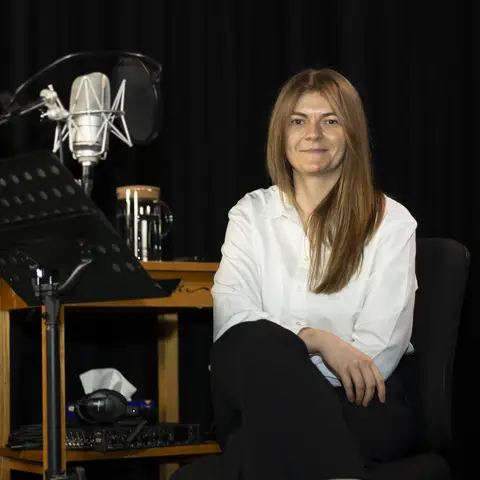
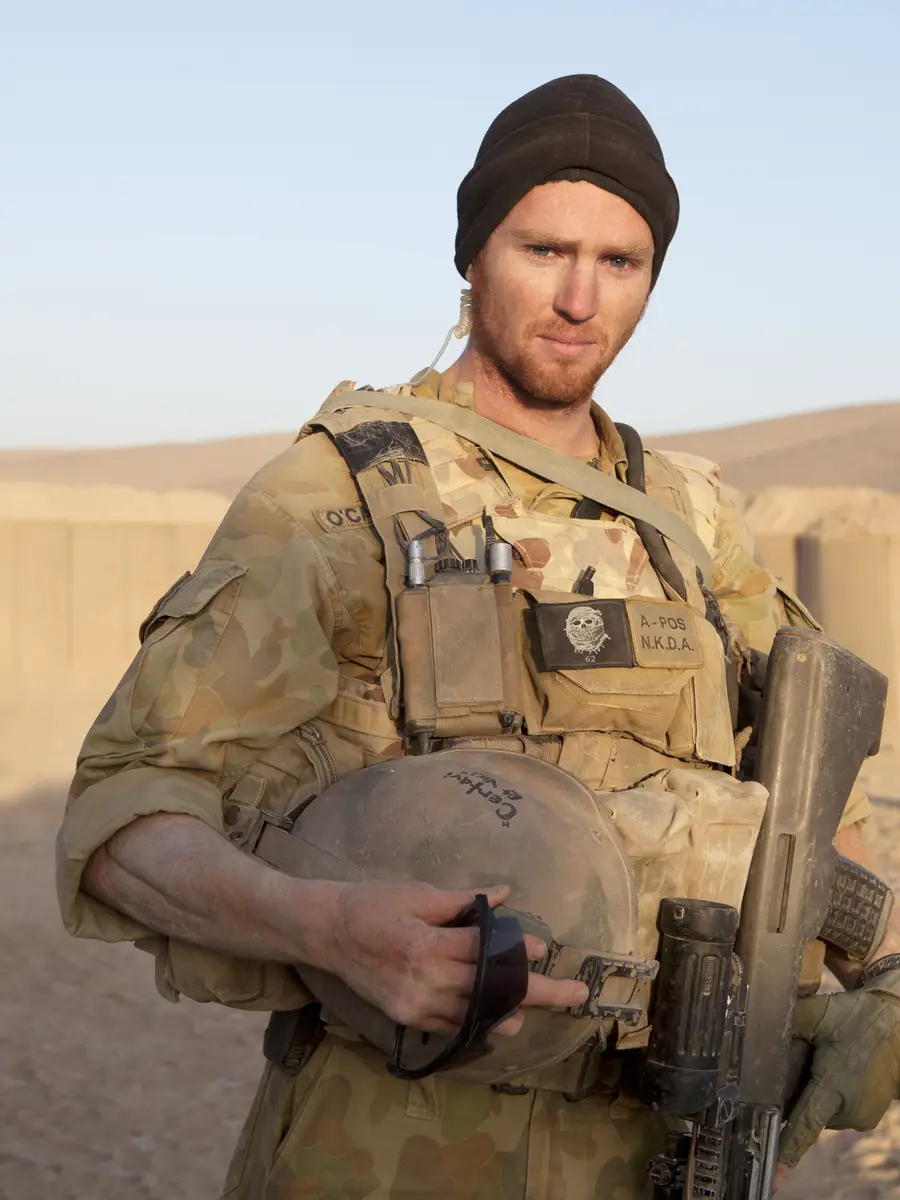
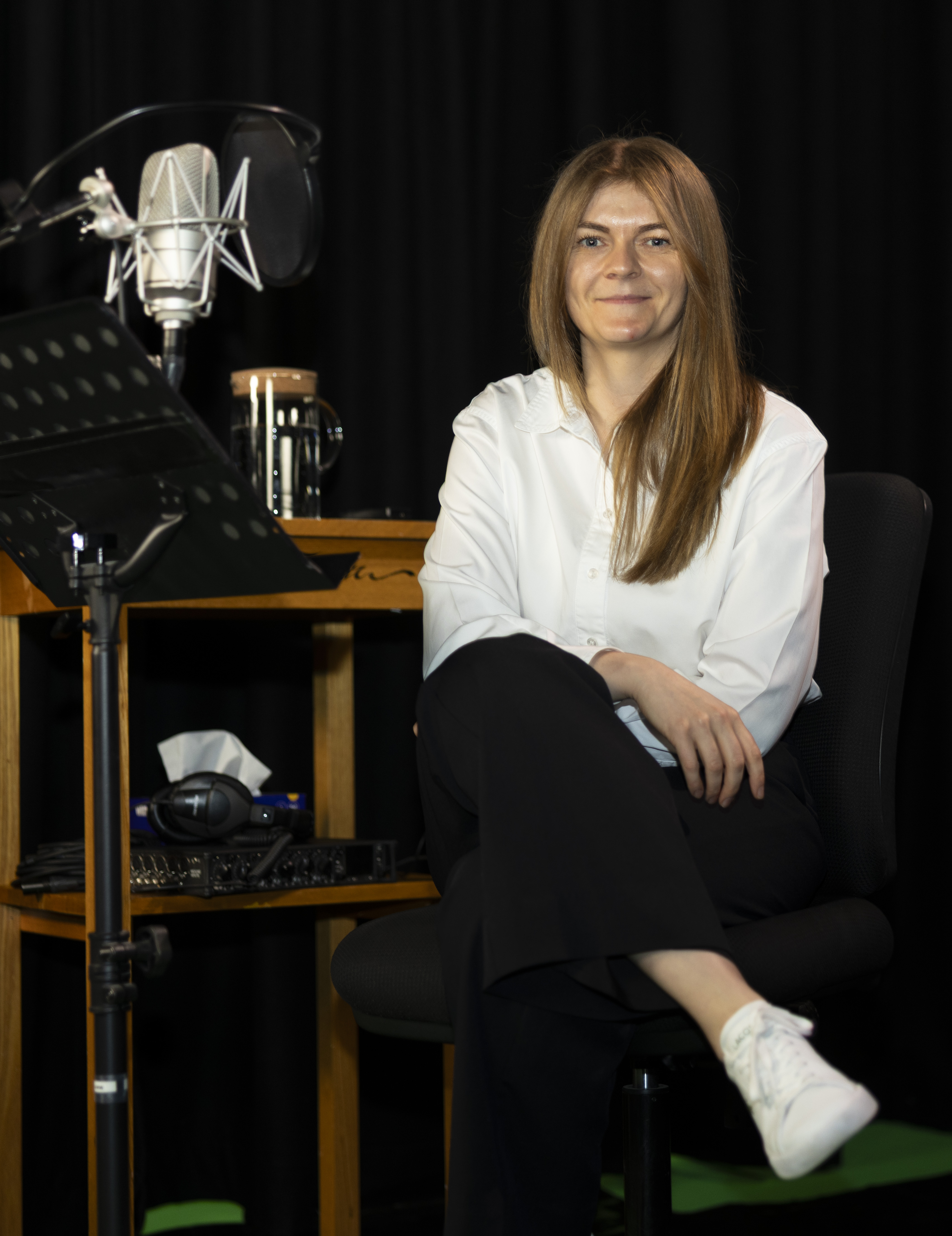
Emily Pyke. Photograph taken by Lachie Townsend. AWM26.PR.122
Explore more about Emily Pyke and UndaTech
- Explore the innovative protective clothing Emily and her team are developing on the UndaTech website
- Learn more about Emily's transition from Navy to entrepreneurship in Defence Australia's article
- Discover how Emily's experiences in the Royal Australian Navy inspired her to develop protective clothing in this ABC News article
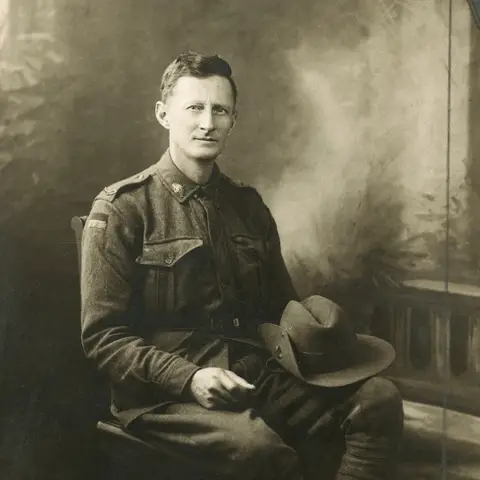
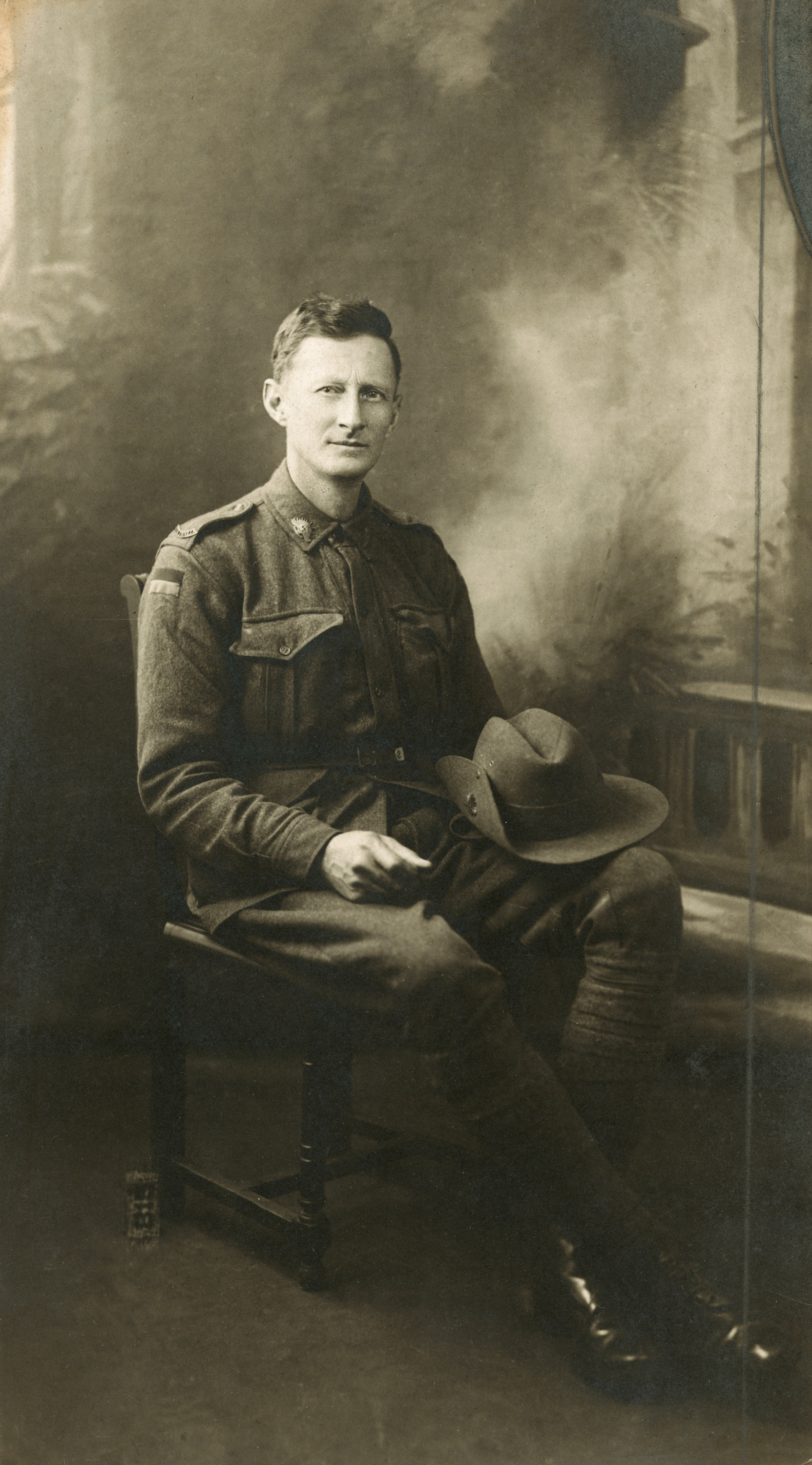
Studio portrait of 7478 Private Lancelot Eldin de Mole, 10th Battalion AIF.
Explore more from Lancelot de Mole and his tracked armoured vehicle
- Discover de Mole's early tank design in the AWM's collection of his prototype model
- See Private Lancelot de Mole's studio portrait and biographical description
- Take a closer look at de Mole's proposed vehicle, its design and how it might have worked, in this Tank Encyclopedia article
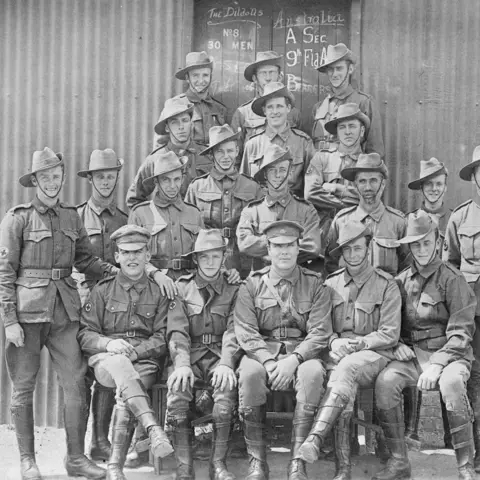
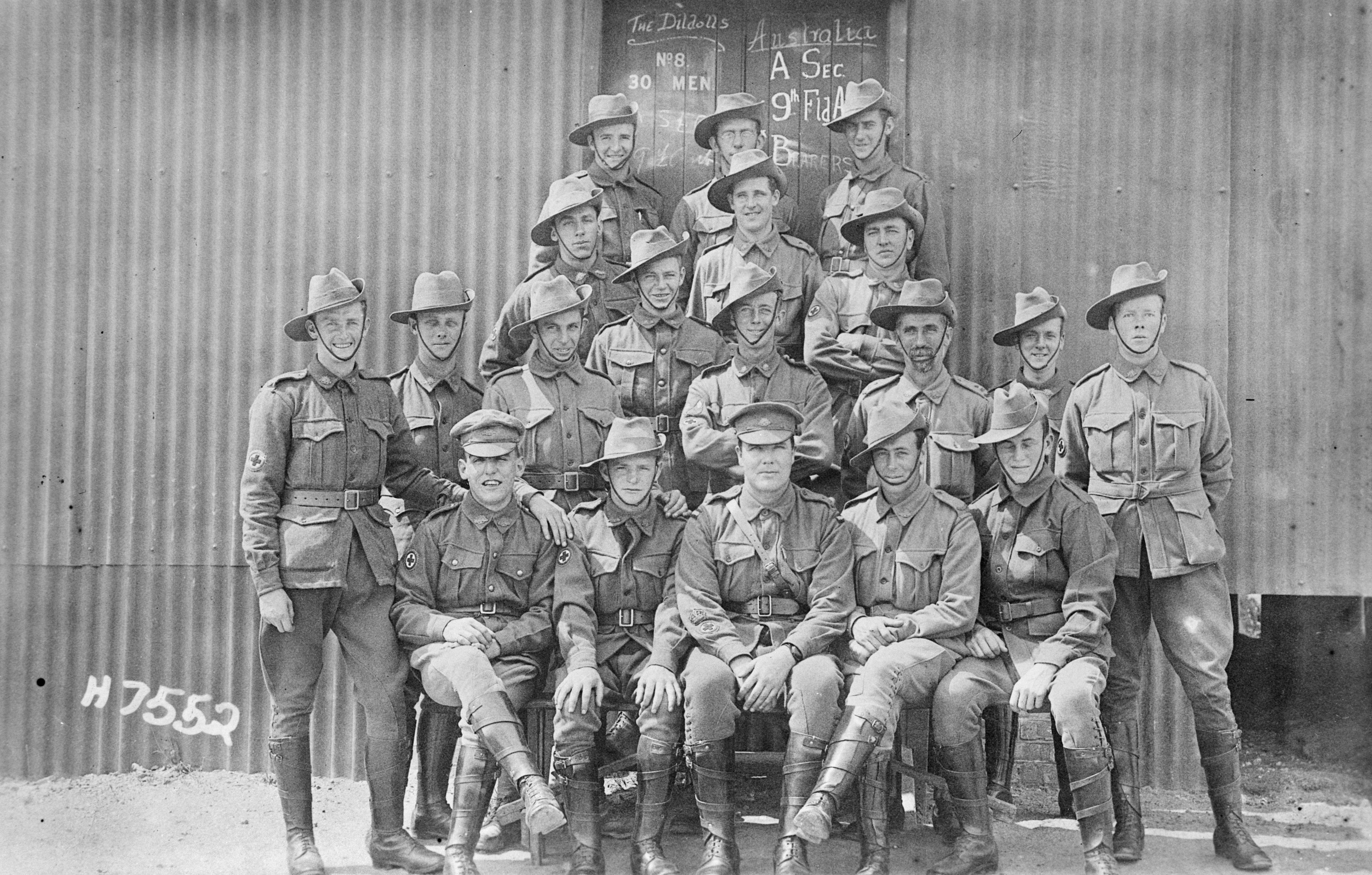
Group portrait of stretcher bearers with 'A' section, 9th Field Ambulance
Explore Alexander Worsfold's story and his ingenious inventions
- See Worsfold's innovative stretcher transporter design in the AWM collection
- Read the original 1915 newspaper article, 'Who is Worsfold'
- Look at the transporter with special attachment for hauling along an aerial line
- Listen to Charles Edward Bingham's oral history from 1984
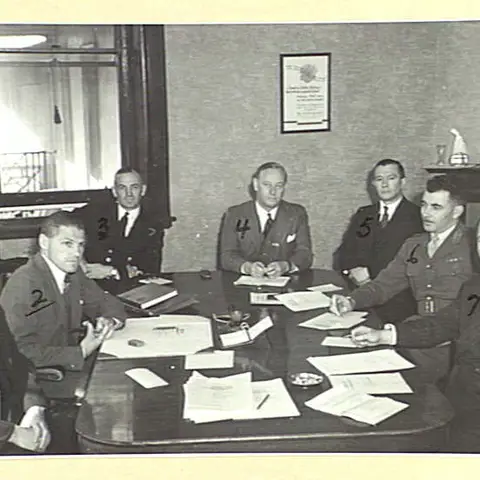
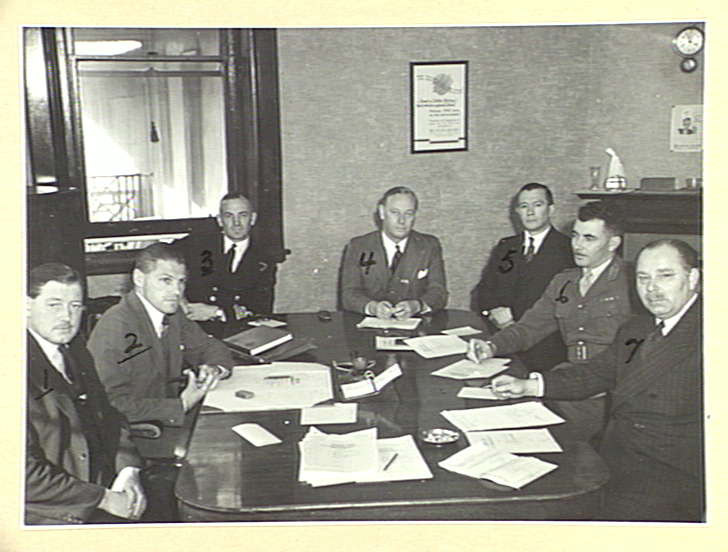
The executive committee, Army Inventions Directorate in session.
Explore the Army Inventions Directorate innovations
- Discover Major Cyril Murray's booby-trap switch
- Explore the remarkable Jeffrey the Robot in 3D
- Explore objects from the AWM's Australia Under Attack exhibition
- Learn more about the Army Inventions Directorate on the National Archives website
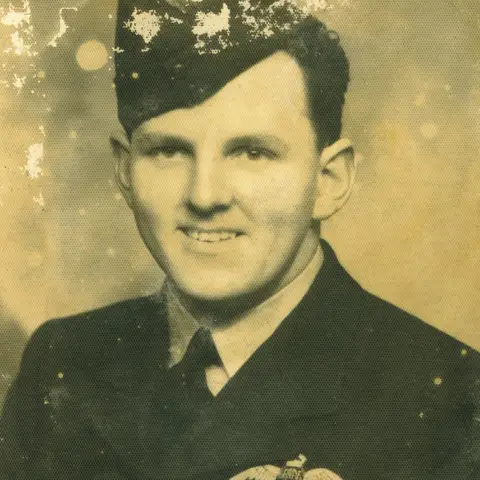
Studio portrait of 424778 Squadron Leader (Sqn Ldr) Charles Joseph Merryfull (later MBE) RAAF.
Explore more about Charles Merryfull and the Window launching machine
- Explore Merryfull's innovative history of the Window launching machine and image
- Hear Arthur Doubleday recount his wartime experiences in his AWM oral history
- Discover more about the dangers faced by Australians in Bomber Command
Voices
- Shane Casey
Senior Curator, Military Heraldry and Technology, Australian War Memorial - Kate Johnston
Assistant Curator, Military Heraldry and Technology, Australian War Memorial - Dr Kerry Neale
Curator, Discovery Zone, Military Heraldry and Technology, Australian War Memorial - Emily Pyke
Royal Australian Navy veteran and co-founder and CEO of UndaTech - Lenny Preston
Sound/Production Operator, Photo, Film and Sound, Australian War Memorial - Stephen Toaldo
Manager Production, Photo, Film and Sound, Australian War Memorial

About the host
John Barrington
John is the host of Through Their Eyes. Drawing on his experience presenting and reporting for 3RRR Melbourne, Good Shout Stories, triple j HACK, ABC Radio and The Project, he brings a fresh perspective to Australian War Memorial storytelling, connecting you with the people and experiences behind Australia’s military history, inspired by his father's Second World War service. As your guide through the podcast, John helps reveal the human stories and overlooked perspectives, making history accessible and relevant.